Review 2557: Cousin Rosamund

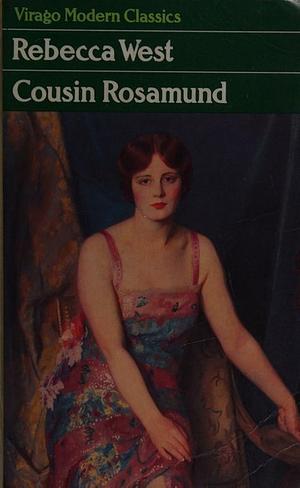
Cousin Rosamund is the third book in West’s Aubrey family series, and another was planned. I couldn’t tell when reading it, but apparently West died before finishing the second book, This Real Night, so it was finished from fragments and notes. Cousin Rosamund was assembled the same way, although West’s style was certainly captured.

The novel begins sometime after World War I. The three Aubrey girls, Rose, Mary, and Cordelia, are the only ones left of their immediate family, but they still have Nancy, their old neighbor; their beloved cousin Rosamund; and the folks at the pub on the river. Cordelia, always the odd girl out, has become less hostile since her marriage.

Cousin Rosamund comes to tell Rose and Mary that Nancy is getting married. Mary especially is upset that Nancy didn’t tell her herself, but Rosamund’s intercession, they see later, is needed so that they will not judge Oswald on sight, for he is gauche, awkward, unattractive, and a man-‘splainer. But he loves Nancy and she him, and that is all that counts.

Rose and Mary are now both successful and famous pianists, but neither is interested in marriage. Mary, in fact, seems to find the idea distasteful, although they are glad to see their friends happily married.

Inexplicably, Rosamund, who has been working as a nurse, marries one of her patients. The girls are all hurt not to be invited to the wedding, and once they meet the groom, they are horrified. His name is Nestor Ganymedios, and he is rich, extremely vulgar, ugly, and probably dishonest in his business dealings. Further, they see almost nothing of her after the marriage.

This novel is about marriage, which West examines in several incarnations. Unfortunately, it ends before we learn the explanation for Rosamund’s choice, but at least West’s intentions for the entire series are explained in the Afterword of my Penguin edition.

All of these novels are beautifully written and show a profound knowledge of music. The girls have such pure affection for the small number of people they love, yet the characters are realistically drawn.

One caveat: In this novel some characters express outdated ideas about homosexuality, and some homosexual characters in the book are not depicted positively, but it is not clear when she wrote this. The first book went to the publishers in 1956, at which point she said she planned three more, but though she finished most of the second, she seemed unable to finish this one. It ends about 1929, but her original plans were to encompass World War II.

Although it doesn’t fit the context of what I’ve discussed, I wanted to give just one quote because it’s so lucid and poetically spare. Rose has seemingly been disgusted with her long-time friend Oliver after he told her the story of his first marriage despite its end not being his fault. She is really fighting a battle with herself. She enters a room where he is.

He came toward me and I became rigid with disgust, it seemed certain that I must die when he touched me, but instead, of course, I lived.

Wow.

Related Posts

The Fountain Overflows

This Real Night

They Were Sisters

Review 2554: #ReadingAusten25! Pride and Prejudice

For years, I read all of Jane Austen’s novels once every year, but I haven’t done that since I started this blog. Now, Reading Austen 25 has given me an excuse to do it again.

The neighborhood is thrilled, because Netherfield Park, a large estate that has been vacant, has been leased. More importantly, the new occupant is Mr. Bingley, a young, single man of fortune. Foolish Mrs. Bennett, with five single daughters, is certain he will marry one of them.

Mr. Bingley has come with friends, and the first time everyone meets them is at a local ball. Although Mr. Bingley seems attracted to Jane Bennett, Elizabeth Bennett’s beautiful older sister, his friend Mr. Darcy stays aloof from the locals and will only dance with members of his own party. (That may seem okay to modern readers but is really very rude for the time.) When Mr. Bingley tries to get him to dance, suggesting Elizabeth as a suitable partner, Darcy slights her.

Later, Lizzy meets Mr. Wickham, a pleasing young man who grew up with Mr. Darcy. He tells her that Mr. Darcy has treated him wrongly, especially that he withheld a living from him that was promised to him by Darcy’s father. Lizzy is shocked.

Things look good for Jane, though, as Bingley is very attentive. Unfortunately, at a ball hosted by Bingley, all of Lizzy’s family except Jane behave in an embarrassing manner—her mother loudly discussing Jane’s chances with Bingley, her foolish younger sisters making exhibitions of themselves, and her father loudly correcting Mary. The next thing they know, the entire Bingley party has left for London with no intention of returning. Lizzy blames Jane’s disappointment in love on Caroline Bingley—Bingley’s sister—and on Mr. Darcy.

This novel is a domestic drama, a romance, and a witty social satire. Austen is gifted at creating characters whose personalities become obvious almost as soon as they open their mouths. I find it hard to choose my favorite Austen novel, but this one is certainly the funniest, with such characters as Mr. Collins, Mrs. Bennett, and Lady Catherine De Bourgh.

Harking back to a discussion last month about Austen’s wobble between sense and sensibility, I see more evidence of it here, when Mr. Darcy takes Jane’s calm demeanor for indifference to Mr. Bingley and when, later, he doesn’t speak to Lizzy because he can’t tell if she cares for him.

Anyway, of course, this novel is great.

Related Posts

Sense and Sensibility

Persuasion

Mansfield Park

Review 2553: September

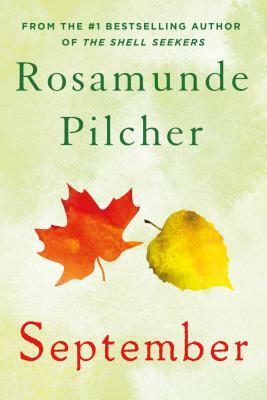
I think Rosamunde Pilcher is considered a romance novelist. Judging from this book, though, I wouldn’t call her that. Although there are some romantic situations in it, this book, in its focus on family and the beauties of Scotland, reminds me more of something by Molly Clavering’s or D. E. Stevenson’s family-oriented novels, although much more recently written.

The novel is about two families in small-town Scotland and particularly what happens when a neighbor decides to hold a ball for her daughter in September.

Violet Aird is a mother and grandmother. Her son Edmund is a businessman who spends a lot of time traveling. His daughter Alexa is a shy young woman living in a house she inherited from her other grandmother in London. His second wife, Virginia, is an American who loves being home and taking care of their eight-year-old son, Henry.

The other family is the Balmerinos. Archie Balmerino is the local laird, and although he owns a lot of land, the family isn’t as prosperous as it was, especially since Archie lost a leg in Northern Ireland. His wife Isobel has arranged to take paying guests in the summer as a result. Archie’s sister Pandora ran off with a married man when she was 18 and hasn’t returned. Archie and Isobel have children, twelve-year-old Hamish and much older Lucille, who has been living in Europe.

Lucille is traveling around Europe with her Australian friend, Jeff, when she decides to go to Majorca to visit her Aunt Pandora, whom she has never met. Pandora is beautiful, rich, and generous. Lucille hadn’t been planning to return home for the ball, but Pandora decides they should all drive back together for the party.

Trouble is brewing between Edmund and Virginia, because Edmund has signed Henry up to go to boarding school in the fall without consulting Virginia. When Virginia objects that he is too young, Edmund thinks she is babying Henry and is coldly insistent. About then, she meets a man Alexa has invited home, who turns out to be an old friend.

Alexa herself has become involved with a man for the first time. He is Noel Keeling, up to now a lady’s man who usually dates women a lot more attractive than Alexa.

I said this novel isn’t exactly a romance, but it unfortunately employs some romance conventions. One is to describe almost everything everyone wears. The other is to describe almost every room people enter. Pilcher also tells us the contents of almost every meal, no matter how commonplace. In fact, I found the book to be about two hundred pages longer than it needed to be.

Another issue I had with it was that although it was published in 1990 and gave no clear indication of its time setting, it seemed so horribly out of date for then that I wondered if it wasn’t an old manuscript that had been set aside until the success of The Shell Seekers. One example is that the American Virginia spots an American across a room and wonders why you can always tell an American. He doesn’t even wear a crew cut. What? I haven’t seen a crew cut on anyone except the military since about 1961!

And then there is Archie with his false leg made out of either tin or aluminum. In the 1970s-90s, legs were being made out of such things as polymers, and I think I can safely say that no one has ever made an artificial leg out of tin or aluminum, neither of which would support the weight. (Oh, I see now that artificial legs were made out of Duralumin, a hard, lightweight alloy of aluminum, during World War I. Well, the time setting may not be specified, but the novel is set a lot later than that, at least in the 1960s or 70s and I suspect later.)

I was interested enough in the story to finish it, even though Pandora’s big secret was pretty obvious from near the beginning of the book, but thought the novel was only a middling effort.

Related Posts

Because of Sam

Love Comes Home

Family Roundabout

Review 2549: A Bend in the River

Salim is a young man of Indian descent who was born and raised on the east coast of Africa, at that time a cosmopolitan and wealthy area. Feeling the need for a life change, he buys a store in an unnamed Central African country (probably Congo) based on the stories his friend has told about the town. He makes the difficult journey there. It is the mid-20th century when African countries were throwing off their colonial rulers. He arrives to find the rebellion has destroyed the town.

Salim makes a life there, following a second rebellion, a boom and rebuilding, the reappearance of Europeans, and so on. However, he struggles with a sense of inertia and lack of identity.

This novel has been criticized for leaning toward colonialism. I’m not sure it does, but certainly it spends a lot of time looking at the characteristics of what Salim might call “bush Africans.” The new leader of the country is such a man, and at first, he seems to be a symbol of hope and prosperity, but eventually things change.

I was enthralled by the beginning of the book but not as interested as political issues emerged. There is a long section about an area called The Domain, sort of like the unoccupied cities the Russians and Chinese have built, that bored me. Also, there is a shocking scene when Salim attacks his lover.

Related Posts

Afterlives

The Promise

Things Fall Apart

Review 2545: This Real Night

This Real Night is the second book in West’s Aubrey family trilogy, which starts with The Fountain Overflows. I put The Fountain Overflows on my Top Ten list for last year, and this novel is just as good.

The novel begins just after the girls’ father leaves them. He is beloved by all, but he is a gambling addict who has lost all their money many times, and when he leaves, goes with a collection of jewels he had hidden from their mother. Since he left, their mother has sold some paintings that she pretended were worthless, so they, although nowhere near well off, are comparatively comfortable.

Their mother was once a famous concert pianist, and she has trained the twins, Rose and Mary, to become pianists. Soon they will start music school. Their older sister, Cordelia, who was convinced by a teacher that she was a talented violinist, has finally realized that she is not, but she decides she wants to become an assistant in an art gallery. She begins studying art history. Their brother Richard Quin is still a schoolboy.

Their household is expanded because their Aunt Constance and beloved cousin Rosamund have moved in. Constance’s husband, although wealthy, is so stingy that they can’t support their household, as he only spends money on his spiritualism hobby.

One advantage of their father’s absence is that they can continue their friendship with Mr. Morpurgo. He had been a great supporter of their father, hiring him to be an editor of his paper, for their father was a brilliant political writer. Like all of their father’s past supporters and friends, Mr. Morpurgo broke with him, probably over a series of unpaid debts.

The novel begins with a visit from a strained, ill-looking Mr. Morpurgo, lately returned from a trip abroad. It is Richard Quin and Rosamund who figure out that their father has died, probably a suicide, but they don’t tell anyone. Rose only learns after she overhears them talking sometime later.

The family story continues relating fairly mundane events, but they are made interesting by the vibrant narration and the perceptions of this highly intelligent and gifted family. They are also very loving with each other except for Cordelia, whom Rose thinks hates them all and who definitely processes information differently than the others. For example, they all deeply love Richard Quin, who is attractive, charismatic, and kind, but Cordelia thinks he is going to be a failure.

The family faces difficulties such as the girls’ sense that people, especially men, don’t like them, the problems of Aunt Lily, whose sister is serving time for murder, and the revelation by Rose’s new professor that she has been trained wrongly for her talents. They are a family you fall in love with. The novel ends at the beginning of World War I.

Related Posts

The Fountain Overflows

Family Roundabout

The Big Music

Review 2543: The Feast

At the beginning of The Feast, we’re informed that a cliff came down near a resort town in Cornwall, obliterating a bay and a hotel beneath the cliff. Some of the people from the hotel survived.

With that information in hand, Kennedy begins the novel a week before the cataclysm. So, she cleverly sets out a source for some suspense while the readers form an opinion about which people they hope will survive.

The small hotel is owned by the Siddal family, run somewhat incompetently by Mrs. Siddal. Mr. Siddal is an educated man who has done nothing for years. They have three grown sons, the oldest of whom, Gerry, is the most helpful and least appreciated.

Other characters do almost nothing, too. Miss Ellis is supposed to be the housekeeper, but she does nothing but spread vicious gossip and order the maid around. A character who acts like an invalid is Lady Gifford. The Giffords have adopted three children, but Lord Gifford works all the time and Lady Gifford spends all her time in bed. She seems to dislike her mischievous daughter Hebe.

Mrs. Cove has three young daughters who yearn to give a feast like one they’ve read about in books. In reality, they have very little. Their mother is so stingy that she sells any candy they’re given, saying it is to buy children’s books. But they have no books. Blanche, the oldest, has problems with back pain but has never seen a doctor.

Two women are abused by their male relatives. Evangeline is at first so shy that she can barely utter a sentence. But her father, a Canon, accuses her of chasing after men and berates everyone else. At the beginning of the novel, they have been tossed out of another hotel because he is so obnoxious.

For his part, Mr. Paley seems to be holding something against his wife, but she doesn’t know what it is. Instead of talking to her about it, he bullies her.

These are a few of the characters, which also include a lady author who likes to take on younger male writers as protégés, her chauffeur being one. And there is Nancibel, the housemaid who does most of the work in the hotel . . . and others.

Despite pending fate, I enjoyed this novel very much. It shows a lot of insight into human nature. I have only read one other book by Kennedy, but I enjoyed it as well.

Related Posts

Troy Chimneys

A Wreath of Roses

Grand Hotel

Review 2542: The Scapegoat

It’s been some years since I read du Maurier’s The Scapegoat, so when I saw it filled a hole in my A Century of Books project, I took it down from the case and placed it on my project pile. I find I remembered the plot fairly accurately.

John, an English lecturer in French history, is finishing his yearly vacation in France. This year, he feels dissatisfied with his life. He has no close connections and lives alone. He suddenly feels a lack of purpose in life and decides to drive to a monastery. But first he stops for the night in LeMans.

There, he bumps into a stranger who looks exactly like him. This man introduces himself as Jean and invites him for a drink and then to spend the night at his hotel. When John awakens, he is in the other man’s room with his things. The man is gone and so are all John’s own things, including his car. John finds a chauffeur has arrived to collect him in the new identity of Jean, Comte de Gué. He realizes that he has no proof of his own identity to convince the police, so he goes along.

At the Comte’s home, no one suspects a thing. He must guess who all these people are, but when he makes mistakes, he finds that no one expects him to behave nicely. His counterpart is apparently prone to cruel jokes.

John finds himself slowly becoming involved in the lives of the Comte’s family, who have secrets and problems from events during World War II. In addition, the family fortunes depend upon the Comte’s pregnant wife bearing a boy—or dying.

As usual with du Maurier, there aren’t very many unshadowed characters in this novel. It’s quite dark despite John’s intentions to do good for the family. The plot is interesting and involving, though.

Related Posts

Jamaica Inn

Rebecca

Daphne Du Maurier: The Secret Life of a Renowned Storyteller

Review 2534: #ReadingAusten25! Sense and Sensibility

My original intention for ReadingAusten25 was to reread only the books I hadn’t reviewed yet. But I can’t resist Austen, so here I am reviewing Sense and Sensibility. I am not going to repeat my review of 2022, though, so you can find it here. Instead, I thought I’d look at whether the book struck me differently this time and a little at Claire Tomalin’s point of view (the wobble), as cited by Brona.

It did strike me differently. Although Elinor is still my favorite of the two sisters, they both struck me more extremely this time. Marianne seemed like a true modern teenager, not as much for her reactions to Willoughby but more in her sulking (call it what it is), her rudeness to various kind characters whom she thinks ill-bred, and so on. But the thing is, 16 in the early 19th century meant she was supposed to be an adult, or almost. (Of course, she is also under the influence of the Romantic movement in art, literature, and music.)

As for Elinor, sometimes I felt she carried her comments a little too far, into preachiness. I got a little tired of her dissections of other people’s behavior.

I also appreciate the wit of the novel more. Although I always find Austen witty, she has drawn us some priceless characters and written quite a few zingers.

I am not so sure about Tomalin’s “wobble.” I looked for it but didn’t find much evidence for it unless you count Elinor’s dash out of the room after she finds out Edward isn’t married. I’d like to hear if anyone was struck differently. I remember not agreeing with some of Tomalin’s interpretations when I read her biography of Austen.

Related Posts

Jane Austen: A Life

Jane Austen at Home

Persuasion

Review 2533: The Stone Angel

When I was looking for books to fill a hole in my A Century of Books project, I found this one. I thought I had read a book by Laurence before, but apparently not. The Stone Angel is the first in her Manawaka series.

Hagar Shipley is 90 years old. She is a proud, tough woman who has never expressed any of her gentler feelings. Now she finds that her son Marvin and his wife Doris are thinking she needs to move to a senior home. She understands this idea as greed for her home and possessions, although that is not the case. She is fighting the idea as best she can.

Hagar, though, is prone to falling and has memory lapses. In between the scenes from her current life, she returns in her memory to important events and tragedies in her life.

Hagar is not a pleasant person, but Laurence makes us interested in her and manages to make us understand and even sympathize sometimes with this complex character.

Related Posts

The Night Stages

Fifth Business

The Northern Lights

Review 2531: The Bell Jar

I’ve meant to read The Bell Jar for years, so when I saw it would fill a hole in my A Century of Books project, I got it from the library. I was also interested in it after reading the biographical fiction Euphoria, about Sylvia Plath and her husband, Ted Hughes.

In 1953, Esther Greenwood has earned an opportunity from a major fashion magazine, an internship with a group of other girls in New York. At first, she studiously applies herself to her assignments, but she becomes distracted by her fascination with Doreen, who seems more worldly than the other girls. She is tempted out by endless partying until Doreen gets a boyfriend and Esther has several unfortunate encounters with men.

She returns home from her internship suddenly adrift. She has not been accepted into a writing program, she doesn’t want to live with her mother, and none of the careers she can think of are appealing. Everything seems gray and uninteresting.

Of course, this is the story of Esther’s fall into mental illness, wrapped up in her inability to see a path for herself aside from marriage, which she clearly fears.

The novel is clearly based on Plath’s own experiences. It is clearly and vividly written and looks deep into the psyche.

Related Posts

Euphoria

Song of a Captive Bird

My Brilliant Career