Review 2650: The First Woman

The First Woman is one of two books left in my James Tait Black Prize project, which I began winding up in 2023. I’ll come right out and say that although I’m sure many people will enjoy reading the book, it was not really for me at times. I had trouble getting through it, although I found the end more interesting.

First, I don’t really enjoy dreams in novels, and at the beginning there are plenty of them. Also, although I may read a volume of folk tales, I don’t always like them mixed in with my fiction. However, I understand that here, they are a strong part of the culture portrayed.

At the beginning of the novel, Kirabo is a thirteen-year-old Ugandan girl. She is just beginning to enter womanhood even though she and her best friend Giibwa are still playing with dolls. Perhaps it is the upcoming passage that has made her wonder about her mother. All she knows is that her father, Tom, brought her home to his parents when he was attending university, and they raised her. When she asks about her mother, no one tells her anything, so she decides to consult Nsuuta, the witch.

Nsuuta and Kirabo’s grandmother, Alikisa, don’t speak, so Kirabo is surprised to find out that once they were best friends. Nsuuta is reluctant to talk to Kirabo, but she is plainly lonely and blind, so she agrees to talk to her if she will come for lunch. But she mostly tells her folk tales with a feminist bent.

I have to say that at this part of the story I was a bit shocked by Kirabo’s immersion into sexual considerations. Not that she does anything sexual, but, for example, as soon as she has her first period, she is told how to stretch her labia so she’ll have more pleasure from sex—about a week after she had her baby doll out! I read more about labia in this section than I have in any book except one by Simon Mawer.

Kiribo is about to have a shock. Tom has been telling her he is going to take her to the city to live with him. One day shortly before she is to start school at a secondary boarding school, he tells her to pack and takes her away. But when they arrive at his house, she finds he is married with two children she never met before and her stepmother doesn’t want her in the house.

The novel follows Kirabo for several years in the 1970s and 80s while she tries to reconcile the demands of her patriarchal culture with her desire to be educated and have a career. It also covers the effects of the reign and overthrow of Idi Amin, when, for example, Kirabo’s boyfriend Sio’s father is murdered because he has a Tanzanian wife.

After the almost purely sex- and marriage-related first half of the novel, I was more interested in the second half. However, about 75 pages go back in time to when Kirabo’s grandmother was a girl, to explain what happened between her and Nsuuta. I thought this material could have been covered more effectively in a story lasting a few pages.

Related Posts

Girl

Something to Hide

An Orchestra of Minorities

Review 2168: The Deadman’s Pedal

I had a few thoughts when I began reading this novel that weren’t necessarily connected with how well I liked it. One was how much male writers and critics love coming of age stories, at least if they’re about boys. If they’re about boys, they’re literary fiction (hence the James Tait Black prize win). If they’re about girls, they’re women’s fiction. Take Philip Roth, for example. He’s written the same novel over and over, and back at the turn of the century, he was the only writer who appeared twice in Time magazine’s list of the 100 Best Books of the 20th century. This coming of age novel was one I read for my James Tait Black prize project.

My second observation was more personal. In the beginning of the novel there is some joking around between 15-year-old Simon Crimmons and his friends. Now, I know that at this age a lot of things are said between boys to impress each other, but I found the way they talked about girls disturbing. I actually asked my husband if when he was this age, boys talked this way, and he said no. But he would have been about ten years older than these boys at the time these scenes are set in 1973. Everything they said was so objectifying, it’s no wonder young girls have image problems.

Anyway, Simon is nearly 16 at the beginning of the novel and wants to quit school and get a job. His father owns a fleet of trucks, but Simon can’t work for him until he is 18, so he ends up accidentally applying for a railroad job. His parents are very much against his quitting school, but he is headstrong. Another title for this book might be “Adolescents Making Poor Decisions.”

Simon seems to be a grounded individual who knows who he is, but even as he is getting sexually involved with his girlfriend, Nikki, he meets Alexander and Varie Bultitude and is fascinated by them. They are the teenage children of the area aristocrats, and they seem much more fluid in nature, trying on the hippie look of the times. Simon and Alexander have books and music in common, but we get the sense that to Alexander, Simon is just a way to spend time while he’s home from school. Simon and Varie, on the other hand, have little in common. She’s interested in horses, geology, and the occult. But she is beautiful and he’s fascinated by her.

Much of the novel is about class. Simon complains once that he is too middle class for his fellow railroad workers and too working class for the Bultitudes. Varie is surprised to find he lives in the largest house in his village, and she mistakes his mother for the gardener. His parents have worked their way up from the working class and are dismayed to see him going back down.

Warner seems to have captured the banter of the railway men and the dynamics of small-town Scotland, remote Scotland, too, where they are nearly at the end of the railway line.

I became more interested in this novel when it moved away from Simon’s school friends, especially the frightful Galbraith, to the working world of the railroad. However, I wasn’t much interested in the adolescent obsession with sex.

Related Posts

The Rehearsal

Young Mungo

The Bass Rock

Review 1839: #1954 Club! Go Tell It on the Mountain

Reading Go Tell It on the Mountain checked off some boxes for me. Not only does it qualify for the 1954 Club, but it is on my Classics Club list. In addition, it’s been a long time since I’ve read anything by Baldwin.

Fourteen-year-old John Grimes is in rebellion. His stepfather, Gabriel, is a deacon in a Black Pentacostal church. Gabriel is a man who believes himself bound for heaven, but John sees his faults. He is self-righteous and treats John harshly while he is kinder to his own scapegrace son. He is cruel to John’s mother, Elizabeth, because she had John out of wedlock. He has other faults that John doesn’t know about but Gabriel’s sister Florence does. John sees his hypocrisy and that of the “saints,” as the novel calls the church faithful, and stands aloof from the frenzied religious services.

The novel is divided into three sections. The first explores John’s frame of mind. The second is divided into thirds, which explore the thoughts of Florence, Gabriel, and Elizabeth. Finally, in the third section, John is forced to confront his feelings in a service at church.

This novel is powerful, and its language is masterful. As I am an atheist, it’s hard for me to conceive of the characters’ mindset, in which everything is about the acceptance or rejection of God and all others are sinners. I thought it was interesting to explore this world, but I found especially the last, hallucinogenic section, and the resolution of John’s dilemma, to be a bit too much.

Related Posts

Gilead

Religion and the Decline of Magic

The Brothers Karamazov

Review 1822: Shuggie Bain

Shuggie Bain lives the first five or six years of his life in his grandparents’ flat in Glasgow with parents and older sister Catherine and brother Leek. The family is poor but respectable. His father Shug is a taxi driver, and his mother and grandmother keep a neat house. Shuggie’s mother Agnes is beautiful and always immaculately made up.

Shug is a horrible womanizer, though, and from jealousy Agnes hounds him by making calls to his dispatcher. Then Shug decides they should move to get a fresh start. What he describes as an outdoor paradise turns out to be a tiny shack next to a mine in a neighborhood built for miners’ families. But the mine is all but closed. It isn’t until the family unloads their possessions that they realize Shug’s aren’t among them. He has taken Agnes and her children out into the country to dump them.

Agnes descends into alcoholism, and as his older siblings grow old enough to leave, Shuggie is left trying to hide money for food, trying to keep Agnes’s drinking buddies out of the house, trying to get her to eat. All the while, he has a growing realization that he’s not like other boys. He likes pretty things and colors and is attracted to boys.

This novel is a moving and empathetic portrait of working-class Glasgow in the 1980’s, when there is not much hope for many people. It’s also a convincing depiction of the effects of alcoholism. It is absolutely gripping and heartbreaking. It was the winner of the 2020 Booker Prize, and it deserves it.

A Little Life

A Heartbreaking Work of Staggering Genius

Crow Lake

Review 1814: Temptation

From before his birth in a Hungarian village in 1912, Béla is unwanted. His mother, away working in Budapest, pays Rozi to care for him. But when his mother can’t pay, Rozi doesn’t feed him. So, at age seven, he begins stealing to feed himself.

Rozi also makes him work instead of going to school, that is until he, thirsting for knowledge, goes to the schoolteacher. At school, he begins finding success, until an incident results in him being shipped off to Budapest to live with his mother.

Béla must forget about schooling in Budapest, because his mother has found him a job in a fancy hotel. Unfortunately, as an apprentice he is not paid, and he and his mother are barely scraping by, scrambling to pay rent and eating seldom.

At work, Béla meets Elamér, who begins instructing him in Socialism. Although the Democratic Socialist party is legal, the right-wing government behaves as if it is not. Then Béla is distracted by his infatuation with Her Excellency, a beautiful member of the nobility who uses the boys in the hotel for sex.

Within a background of a country sliding toward chaos and Fascism, we follow Béla in his enthralling journey toward political self-awareness. This picaresque novel is vital and exciting. What a great story!

Jamrach’s Menagerie

American War

The Spoilt City

Review 1712: Pippa Passes

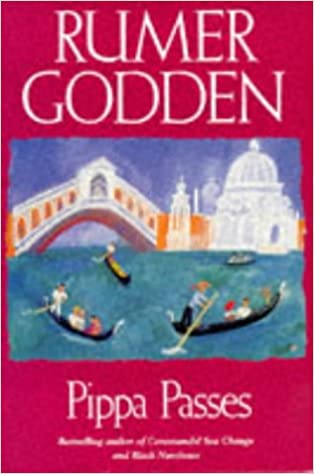
I have been reading the Indian novels of Rumer Godden, so I’m not quite sure how Pippa Passes got in there. It was published in the 1990’s and is set mostly in Venice. It doesn’t seem to have much to do with the Browning poem except by its being about a young, innocent girl. It does relate, however, to many of Godden’s novels that have a theme of the loss of innocence.

Pippa Fane is a 17-year-old ballet dancer who is new to the corps de ballet of an up-and-coming company from the English Midlands. The company is getting ready to tour Italy, and Pippa, as the newest member, doesn’t expect to be invited to come, but she is, at the insistence of Angharad Fullerton, the ballet mistress. Pippa’s friend, Juliette, warns her to beware of Angharad, but since the mistress has only been kind to Pippa, she pays no attention.

Pippa is enchanted at first sight of Venice and disappointed that Angharad expects the girls in the corps to do nothing but work and rest. When the other girls try to get her to go out the first night, she argues that Angharad told them to stay in and is left behind and taunted as Angharad’s pet. But instead, Angharad and the other company leaders take her out when they find she’s been abandoned.

Pippa’s star is beginning to rise with the company, but she has also met a gondolier named Niccolo who fascinates her. The company gives her a solo part after another dancer is injured, and at the same time Niccolo wants her to sing with his band.

I wasn’t as interested in this novel as I have been in the others by Godden that I have been reading. For one thing, it seems absurdly outdated for the 90’s, as Niccolo and his band make a splash dressed like gondoliers and singing such songs as “Santa Lucia” and “I Feel Pretty” from West Side Story. Yet, there’s no indication that the novel is set earlier. Also, although the information about the workings of the ballet company is interesting, I don’t think it was necessary to include pages describing the action of The Tales of Hoffman. And for the 1990’s, Pippa seems far too naïve about the intentions of both Angharad and Niccolo, and some readers may understand the novel as slightly homophobic. It’s possible that the novel was written many years earlier, but then there should have been some indication that it was set, say, in the 1950’s, if it was.

Related Posts

The Peacock Spring

The River

Death in Venice

Review 1654: The Panopticon

Best of Ten!
Anais Hendricks, 15, arrives at the Panopticon, an old prison designed so that someone can see the inmates at all times, which is now being used as a home for juveniles. The police believe she beat an officer and put her in a coma, but she was so high that she can’t remember what she was doing.

Anais has been in the system since birth, and the system has failed her on every front. Although at first she seems to be hard and criminal, she is a feisty girl, and most of her offenses have been a defense of someone else or an act of protest against an injustice. Her trouble with the law began when Theresa, her adoptive mother, was murdered. Anais now believes she is part of an experiment that wants her to fail.

At the Panopticon, Anais makes some friends and gets a better social worker in Angus, but she still ends up in trouble. Soon, the police tell her that one more offense will result in her being transferred to detention.

In Anais, Fagan has created an unforgettable character. The novel is full of bad language, but it is fluent and lively, and makes a riveting story. I read this book for my James Tait Black project.

Related Posts

The Death of Bees

Mountains of the Moon

The Girls

Review 1650: The River

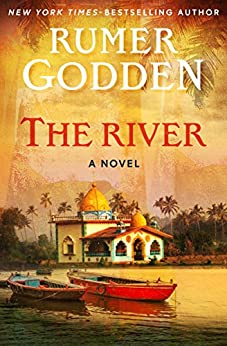
Harriet and her family live along the river in a town in India. Harriet is dismayed at the changes in her sister Bea, who is becoming a young lady and is no longer fun to play with. Her brother Bogey spends his time looking at insects and animals in the garden. Victoria is just a baby. Harriet spends some time each day writing in her book that she keeps hidden away, and she also is fascinated by her parents’ guest, Captain John, who was injured in WWI. Captain John, however, likes Bea best.

This little novel has a plot, but it is mostly atmospheric and descriptive, of the garden and house, of life on the river. I was just a short way in when I realized that I had seen the movie based on it by Jean Renoir. I said, “If there’s a snake, I’ve seen this.” There was a snake.

The semi-autobiographical novel is about Harriet waking up from childhood and complete self-involvement and learning to become a writer. It is beautiful and touching.

My Virago Modern Classics version also included two short stories, “Red Doe,” about Ibrahim, a bakriwar nomad who is on the way to another encampment to claim a wife, and “The Little Black Ram,” about Jassouf, a bad boy who is tamed by being give a black ram to care for.

Related Posts

Coromandel Sea Change

A God in Every Stone

Sea of Poppies

Review 1628: My Brilliant Career

My Brilliant Career is the very singular story of the life of an Australian teenage girl in the bush in 1901. It isn’t so much singular in its plot as in the personality of Sybilla, the main character.

Sybilla’s childhood was spent in comfort, as her father was a prosperous horse breeder. However, well before this novel starts, her father decided his talents were wasted, so he sold his property and began a career selling livestock. He was unsuccessful, and he drank heavily in entertaining prospective clients. When the novel opens, the family is struggling to run a dairy with their father drinking away the money he makes selling butter.

Sybilla at 15 is admittedly a difficult person. Her mother never gives her a kind word, and her mother and brother twit her about her lack of good looks. She angrily resents their life of endless labor for no good result. In fact, she is ambitious to become more but doesn’t know how to go about it. She is an unusual mixture of self-confidence and self-hatred and is angry and rebellious.

Sybilla’s mother becomes so angry with her that she arranges for her to go live with her grandmother farther into the bush. There, Sybilla blossoms under the kind treatment of her grandmother, her uncle, and her Aunt Helen. Her aunt helps her look more attractive, but she never gets over believing she is ugly. Romance even seems to be on the horizon.

I thought that the view this novel gives of Australian frontier life is really interesting, and I was particularly struck by the amount of traffic going by the grandmother’s house and the number of homeless, wandering men. However, I was unsatisfied with this novel, and to explain why, I have to include spoilers, so be warned.

A feminist interpretation of this novel might be that the heroine chooses to write a novel instead of getting married, but that would be ignoring Sybilla’s difficult personality. Continually, she seems to bite off her nose to spite her face, and in the case of marriage, really declines out of a sense of inferiority rather than anything else. She decides not to marry Harold and stays in a life she hates because she can’t believe he loves her and she thinks she is not good enough for him. I find that really frustrating. It’s not that I wanted a romantic ending so much as it bothered me how she never really sees herself or is able to get past being told how worthless she is by her mother.

I read this for my Classics Club list.

Related Posts

I Await the Devil’s Coming

My Mortal Enemy

The Vet’s Daughter

Review 1480: This Side of Paradise

I have a high opinion of The Great Gatsby, but I haven’t read any other Fitzgerald that I can remember. So, when I was making up my current Classics Club list, I put This Side of Paradise on it.

It isn’t a good choice for me, though. I have so far disliked almost every book about privileged males’ schooldays, especially when the boys think they are sophisticated (the exception being the beginning of Brideshead Revisited). The nostalgic tone they frequently take about boys behaving badly is especially grating. I don’t think This Side of Paradise is supposed to be nostalgic, but it is definitely smug.

The main character, Amory Blaine, is described as an egoist. He spends most of his time putting people into snobby little categories and working the system to be successful in school. Successful, of course, means socially, not intellectually.

It’s not too much of a stretch to think that Amory is Fitzgerald himself, only richer and with a childhood spent in Europe.

I would like to think that Amory evolves in the book, but my understanding is he doesn’t, much. I stuck it out for nearly half the book but didn’t find anything in it to interest me, so I stopped.

Related Posts

All That Man Is

Rules of Civility

City of Girls