Review 2659: Study for Obedience

The unnamed narrator moves to another country, one she describes as a northern country of her family’s ancestors, to live with and be housekeeper to her recently divorced brother. She has been raised, she says, to curb her natural inclinations and be obedient. Certainly, her relationship with her brother looks more and more disturbing as the book progresses. For example, a point that comes out early on, she bathes and dresses her brother, who is not an invalid. Later, we learn that he insists she watch TV with both the sound and the subtitles off.

But how trustworthy a narrator is she? Her whole existence seems colored by a twisted view of life. For example, early on, she says that when she quit her job, her coworkers were so pleased to get rid of her that they gave her a big party. Well, isn’t that a tradition for a long-serving employee?

Her attitude is entirely negative—taking everything on herself. Despite being fluent in several languages, she is unable to learn the language of her new home. Almost immediately after her arrival, her brother departs for an unexplained reason, so she finds herself cut off, unable to make herself understood, with only a three-legged dog for company. She begins to sense that she’s being blamed for a series of agricultural disasters, as if she’s a witch. Since her Jewish ancestors were forced to leave this area during the war, she reads a lot into this.

Actually, she reads a lot into everything, tortuously examining every glance, every event. The book doesn’t really have a plot; it’s more about her exhaustive examinations of everything. If it hadn’t been so short, I would have quit reading it, because as another StoryGraph reader said, I felt like I was being psychologically tortured.

There is a turn to the book, but it just becomes more perverse. I read it for my Booker Project.

Related Posts

The Safekeep

The Weight of Ink

The Gustav Sonata

Review 2654: #NovNov25! Why Did I Ever

Technically, Why Did I Ever is a little longer than the page limit for Novellas in November at 210. But I found it in a list of recommended contemporary novellas and read it for this event.

Part of me doesn’t want to present a cogent plot synopsis for this book, because it isn’t presented cogently. Instead, the novella is written in fairly unconnected snippets, some of them titled but in a way that seems to have nothing to do with the snippets.

So, maybe not a synopsis, but here are some of the things that are going on. Melanie Money (we don’t learn either name for quite some time) hates her job as a Hollywood script doctor. She lives somewhere in the Deep South but occasionally flies to California for bizarre meetings about an inane script.

She has two grown children. Mev, her daughter, is methadone-dependent and has trouble keeping a job. Paulie, her son, is in New York under protective custody before testifying against a man who held him prisoner and viciously abused him.

In her home in a small Southern town, she has two very odd friends—the Deaf Lady, an old lady who is not deaf, and Hollis, a driving instructor who seems to spend most of his time in Money’s house.

Money has a boyfriend in New Orleans named Dix who calls a lot but from whom for a while she is keeping her address secret. She doesn’t regard him as very smart, but he seems to care for her.

Aside from the states of her various relationships, in which every character seems to respond to what is said with a non sequitur, the ongoing plot is about the state of the script and whether Melanie will be fired and about Paulie’s situation.

Melanie herself obsessively covers everything in her house (literally everything, even her books) with a coat of paint or alphabetizes everything, seems to drive aimlessly around the South, and worries about her missing cat and her kids.

It’s a very disjointed account, but it’s quite funny at times, especially about the movie industry.

Related Posts

Milkman

Girl, Woman, Other

A Girl Is a Half-Formed Thing

Review 2650: The First Woman

The First Woman is one of two books left in my James Tait Black Prize project, which I began winding up in 2023. I’ll come right out and say that although I’m sure many people will enjoy reading the book, it was not really for me at times. I had trouble getting through it, although I found the end more interesting.

First, I don’t really enjoy dreams in novels, and at the beginning there are plenty of them. Also, although I may read a volume of folk tales, I don’t always like them mixed in with my fiction. However, I understand that here, they are a strong part of the culture portrayed.

At the beginning of the novel, Kirabo is a thirteen-year-old Ugandan girl. She is just beginning to enter womanhood even though she and her best friend Giibwa are still playing with dolls. Perhaps it is the upcoming passage that has made her wonder about her mother. All she knows is that her father, Tom, brought her home to his parents when he was attending university, and they raised her. When she asks about her mother, no one tells her anything, so she decides to consult Nsuuta, the witch.

Nsuuta and Kirabo’s grandmother, Alikisa, don’t speak, so Kirabo is surprised to find out that once they were best friends. Nsuuta is reluctant to talk to Kirabo, but she is plainly lonely and blind, so she agrees to talk to her if she will come for lunch. But she mostly tells her folk tales with a feminist bent.

I have to say that at this part of the story I was a bit shocked by Kirabo’s immersion into sexual considerations. Not that she does anything sexual, but, for example, as soon as she has her first period, she is told how to stretch her labia so she’ll have more pleasure from sex—about a week after she had her baby doll out! I read more about labia in this section than I have in any book except one by Simon Mawer.

Kiribo is about to have a shock. Tom has been telling her he is going to take her to the city to live with him. One day shortly before she is to start school at a secondary boarding school, he tells her to pack and takes her away. But when they arrive at his house, she finds he is married with two children she never met before and her stepmother doesn’t want her in the house.

The novel follows Kirabo for several years in the 1970s and 80s while she tries to reconcile the demands of her patriarchal culture with her desire to be educated and have a career. It also covers the effects of the reign and overthrow of Idi Amin, when, for example, Kirabo’s boyfriend Sio’s father is murdered because he has a Tanzanian wife.

After the almost purely sex- and marriage-related first half of the novel, I was more interested in the second half. However, about 75 pages go back in time to when Kirabo’s grandmother was a girl, to explain what happened between her and Nsuuta. I thought this material could have been covered more effectively in a story lasting a few pages.

Related Posts

Girl

Something to Hide

An Orchestra of Minorities

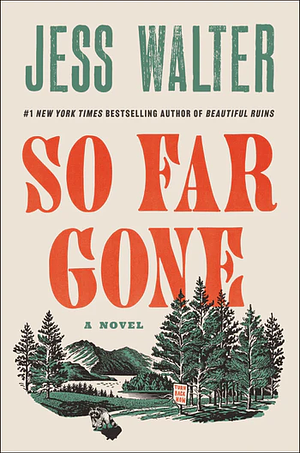
Review 2630: So Far Gone

Rhys Kinnick has been leading a relatively isolated life for seven years. Back then, he lost his job as a journalist, was dumped by his girlfriend, and at a Thanksgiving dinner at his daughter’s house, got into such a big dispute with his ultra-religious, conspiracy theorist son-in-law that Bethany said she never wanted to see him again. At that point, he decided the world had no more use for him, so he moved to his grandfather’s off-the-grid shack in Eastern Washington.

But now, he finds three people on his front porch. Anna Gaines, Bethany’s neighbor from Spokane, has brought him his grandchildren—14-year-old Leah and 7-year-old Asher. Apparently, Bethany left home for somewhere unspecified, leaving instructions with Anna that if her husband, Shane, left to try to find her, she should bring the kids to her father.

Given their rocky relationship, Rhys is surprised. He has only seen his daughter and her kids once since their falling out, during Covid, when Bethany came to visit for a few minutes.

Asher is worried about missing a chess tournament, so Rhys drives the kids into Spokane, where they find out they got the date wrong. But two big thugs appear, saying that Shane has asked them to pick up the kids and bring them back. Rhys has already learned that there is a plan in Shane’s religious group to betroth 14-year-old Leah to the pastor’s son, so he is reluctant to agree. When he tries to come along or get them to agree to call Shane, one of the men hits him in the head with a black jack.

Rhys is now determined to get the kids back, because Bethany entrusted them to him. His ex-girlfriend Lucy hooks him up with ex-cop turned P. I., Chuck Littlefield, who traces them to the Rampart, a religious compound in Northern Idaho. Rhys and Chuck set off to bring them back.

This description makes the novel sound like a thriller, but although it certainly is full of action, it’s really about Rhys trying to pull his life together and recognize his responsibilities to his family. It is also about the dangers of extremist thinking, which really strikes a chord within me these days.

I see that Walter has written quite a few more books than I have read. I need to catch up, because I always enjoy his books, and the three I’ve read have all been completely different from each other.

Related Posts

Beautiful Ruins

The Cold Millions

Idaho

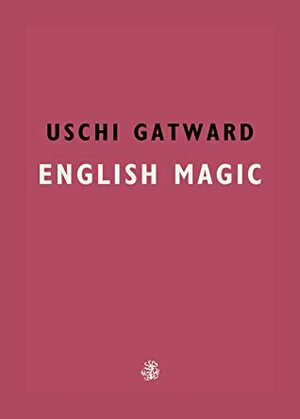
Review 2618: English Magic

I read English Magic for my James Tait Black prize project, which I have been trying to wrap up—or let’s say intending to wrap up but not doing much about it. The book is a slim volume of 12 short stories.

Repeat readers of my blog may know that I sometimes have problems with short stories. Generally, this is because if I am enjoying something, I want it to last. I had problems with some of these stories for other reasons.

“The Clinic” is a mysterious story. It seems to be set in a dystopian future. A couple has a baby who is very advanced, and they are trying to hide that from the clinic at which they apparently have mandatory visits. Their plan is to run away and hide somewhere in the woods. I think this story was intentionally written to leave readers with lots of unanswered questions, but I found it frustrating, and I can handle a lot of ambiguity.

“My Brother Is Back” continues the air of mystery. It’s about a Muslim being returned to England after years of imprisonment in the U. S. It’s written like a snapshot of time.

I stopped reading “Oh Whistle And” because of its style. It’s a fairly long story written in snippets of reports about surveillance of unions and socialists and about whistle blowing, mentioning Edward Snowden. All the characters, if you can call them that, are referred to by single letters of the alphabet. I lost track of who was who almost immediately, and the snippets were driving me crazy.

And skipping way ahead, Gatward uses almost the same approach for “Lammas,” except the snippets are pieces of conversations. This story is about a man’s long life in activism. It was difficult for me to track what I took to be real events, but I think it went back and forth in time. I finished this story.

“Beltane” is a slightly surreal story about a couple who join a Beltane ceremony, and related to that is the story “Samhain,” about a woman’s unique way to celebrate Halloween. Or is it a sinister way? I found both stories interesting.

“The Bird” is about a bird trapped in a couple’s chimney. Both it and “On Margate Sands” are vivid snapshots again, just capturing small events.

I won’t cover all the stories, but I will mention two that feature the same character. In “Lurve,” Ollie is an artist, not a successful one, who hangs out with Lottie and Jeanie, two party girls, and occasionally writes art reviews. He and his friends live in squalor. He is in love with Jeanie, but she doesn’t care.

We meet Ollie again in “Backgammon,” in which he is hanging out with his old girlfriend Ria. Ria used to be an addict, but she is getting her act together. Ollie is not an addict, but he realizes his act is not together.

Overall, I felt indifferent to many of the stories, although they are minutely observed and well written. I’m guessing the title is ironically intended.

Related Posts

The Candy House

In a Strange Room

Sudden Traveler

Review 2576: Moo

I have an uneven relationship with Jane Smiley. I have by no means read all her books, but I found some of them to be entertaining (The All-True Travels and Adventures of Lidie Newton and Horse Heaven) but her trilogy beginning with Some Luck to be over-rated. However, The Greenlanders was excellent, and I thought A Thousand Acres was one of the best books I ever read. Checking her oeuvre, I see now that I haven’t read any of her more recent books. This book is not one of the more recent.

Moo is set in the 1980s in Iowa in what used to be called an agricultural university (nicknamed “Moo U”). I believe the novel is supposed to be a satire. It starts with students, a boy named Bob whose job is to feed a pig as much as it can eat and take measurements, a project that seems only to be known about by the faculty member who is paying him, and four freshman girls, roommates.

But we don’t really get to know them, because then we meet a bunch of faculty members, administrators, and staff. The Spanish professor begins sleeping with the English professor. The Dean has decided, on almost no acquaintance, to marry the lunch lady. The provost seems to be entranced by money and about to make some sort of shady deal with the rich Texan who almost ruined the university’s reputation years ago. He’s seeing dollar signs in his eyes at a time when the college is cutting costs to the bone.

At page 120, I felt like I’d been introduced to about 50 people I only knew one or two things about and didn’t care. I assumed it was a satire, but nothing was funny, and it didn’t seem to be getting anywhere. So, sadly, this was a DNF for me.

Related Posts

A Thousand Acres

Horse Heaven

The Greenlanders

Review 2551: #ReadingIrelandMonth25! A Girl Is a Half-Formed Thing

I was going to review this book in February, but then I decided to hold it a few weeks so it could be part of #ReadingIrelandMonth25 hosted by 746 Books. This may be my only contribution, because I’m busy finishing my A Century of Books project. And now for my review.

When he was two, the unnamed narrator’s brother had brain cancer. To her mother’s mind, her praying rather than the surgery saved him, and she became extremely religious. Her father left, saying he couldn’t take it. So, she, the younger child, her brother, and her mother grew up in a sort of microcosm.

When she isn’t praying, their mother is full of anger, which is expressed at them, particularly at her. Their classmates think they are weird—he because he is slow and has a scar across his head, she because she scorns them and is intelligent. She doesn’t care, but he wants to fit in.

Then at 13, she begins a sexual relationship with an older relative that forms her later relationships with men around violence and mistreatment.

This book isn’t for everyone. For one thing, it is written in an experimental, half-incoherent style. It takes a while to get used to it. However, it is bold and bleak and ultimately it made me cry, which to me means it’s very good. It’s ground-breaking.

It contains scenes of verbal and physical abuse, sexual violence, and rape. Also, suicide and death. So be warned.

Related Posts

The Lesser Bohemians

Milkman

The Virgin Suicides

Review 2541: Erasure

If you’ve seen the movie American Fiction, you already know the plot of Erasure. I haven’t seen it yet, and I read this book for my A Century of Books project.

Thelonius (Monksie) Ellison is a writer of high intelligence whose dense, uncompromising novels have failed to make a hit with the general public. He has just put out his latest book, but his agent, Yul, is having difficulty placing it and has been told that Ellison is too far from his ethnic origins as a Black man.

Ellison lives in California, where he is a university professor, but on a visit to Washington, D. C., for a conference, he finds that his mother isn’t doing well. Eventually, he is forced to move back to D. C. to take care of her. That means taking a leave of absence, but he hasn’t sold his book. His mother’s affairs are in poor shape, so he finds he needs money.

He is infuriated by a recent book that is making a splash, We’s Lives in Da Ghetto. It’s written by a middle-class midwestern Black woman based on one week that she spent with relatives in New York, and it employs every known cliché about the lives of Black people.

On a whim, Ellison sits down and writes a parody of this kind of novel, which he titles My Pafology. He submits it to Yul, who is horrified, and asks him to submit it to publishers under the name of Stagg Leigh. Shockingly, Random House takes it as straight and offers him lots of money.

This novel produces spoof upon spoof. Even Everett’s character Ellison takes himself so seriously that I think he’s being mocked. Certainly, he starts out mocking academia with the learned talk he gives at the beginning of the novel. This talk is incomprehensible, and yet it makes another academic leap up and shout, “Bastard!” at him. He also hits the publishing industry, the reading awards organizations, and television interview programs.

The novel is presented as Ellison’s diary, so it includes learned jokes (most of which I didn’t understand), imagined conversations between various dead people in the arts, recollections from his past, especially about his father, and the entire text—about 50 pages—of My Pafology.

As My Pafology gains attention, Ellison begins to lament that he ever compromised his standards. Forced occasionally to masquerade as Stagg Leigh, he feels as if his own persona as a cultured Black man is being erased. Maybe he feels that that whole culture is being erased.

Parts of this novel were above my head, particularly some of the little scribbles in the diary. Also, when I say Everett is heaping on the satire, I’m not saying that the novel is funny (although some of it is). Most of the time I felt sorry for Monksie, who is too unyielding for his own good and knows it, but cannot stop.

Percival Everett is having a moment lately, which has resulted in four of his books being in my pile, of which this is the second. I’m not sure if I like his work, but it is at least interesting.

Related Posts

The Trees

Flights

Ferdydurke

Review 2523: The Bee Sting

The Barnes family is having a difficult time. On the surface is a monetary issue because in the downturn no one is buying cars from the family dealership. But actually, each family member has been making poor choices.

The novel starts with Cass, the oldest child, who in the beginning is in the final year of school before starting university. She has long been best friends with Elaine, on whom she has a crush, but there are indications that Elaine is not as good a friend to her. Elaine gets interested in boys, and the two girls begin drinking at bars every night instead of studying for their leaving exams. Suddenly, Cass is sure she’s flunked her exams. If that’s not enough, she learns that her mother, Imelda, was engaged to her father’s brother and married her father soon after his brother was killed in an accident. The timing shows that her mother was pregnant for the wedding, so whose daughter is she?

The next section is about PJ, Cass’s preteen brother. He is disturbed because his parents seem to be always arguing since the business got into trouble, with his mother blaming his father. His friends have been dropping him, and a bully tells him his father ripped off his mother, so he owes him €163. PJ tries to collect the money while his attempts to talk about it to his family members are cut off by their preoccupations with their own problems.

Next is Imelda’s turn, in an unpunctuated section. Now that her husband, Dickie, is having financial problems, she begins to dwell on the past. Dickie’s brother Frank had been a golden boy—rich, handsome, good at sports, and charismatic—liked by everyone. But Imelda, although she comes from an impoverished, abusive background, didn’t love his money. She was madly in love with him. This section is more revealing about the circumstances that led to her wedding with Dickie. Now, she is furious, blaming Dickie’s poor salesmanship for their problems.

Finally, there is Dickie’s point of view. A family story that he went to Trinity only to be hit by a car on the first day and return home turns out to be completely fictitious. He had been a serious scholar and was happy in his university life. But then he was called home by his brother’s death. Now after acting the upstanding citizen for nearly 20 years, he begins to make some serious missteps.

Each section reveals more about the family secrets and the problems ensuing from this misguided marriage. This doesn’t necessarily sound like gripping material, but it really is. I was fascinated immediately. And the last 50 or so pages are unexpectedly suspenseful. Finally, the ending blew my mind. Not everyone will like it, but to me it is a great book.

I read this for my Booker Prize project.

Related Posts

Faith Fox

The Birds of the Innocent Wood

The Weird Sisters

Review 2505: Novellas in November! Fever Dream

Fever Dream was another book I found on Literary Hub’s 50 Best Contemporary Novels under 200 Pages list. It is mysterious and unsettling and qualifies for Novellas in November.

Amanda, a young woman, is in bed talking to a boy named David. Together, they are trying to reconstruct the story of what happened to Amanda. Amanda is telling David the story, prodded by his questions, but it is clear that David remembers more than Amanda does. The story starts out with David’s mother, Carla. It soon becomes clear that Amanda is dying.

I don’t want to tell much about this story because almost anything I say would interfere with the plot unfolding itself. Let me just say that the story is eerie and a ghost story, in its own way. And to watch out where you pick to go on vacation.

The novella is sparingly written, so sparingly that the lines were given extra space just to make it to 185 pages. It’s quite a creepy little book, combining superstition and ghosts with an unstated environmentalism.

Related Posts

Such Small Hands

Picnic at Hanging Rock

We Have Always Lived in the Castle