Review 1615: Swimming Lessons

Best of Ten!
I was interested in reading Swimming Lessons when it came out, but I never actually got hold of a copy. Then I read Fuller’s next novel, Bitter Orange, and liked it so much that I had to read Swimming Lessons.

Gil Colman, a famous writer who hasn’t written anything for years, is now elderly and dying of cancer. He has discovered letters from Ingrid, his wife who was presumed drowned years ago, tucked away in his thousands of books, many of which were removed from his house by his daughter Nan and sold to a bookstore. He is in the bookstore, having discovered one of the notes, when he thinks he sees Ingrid out in the street. Rushing after her, he gets injured.

That is the setup of the novel. From there, chapters alternate between the letters telling the story of their marriage from Ingrid’s point of view and Gil’s daughter Flora’s point of view as she returns home because her father is in the hospital. She tries to learn more about Ingrid, who she believes is alive. Although the sections about the current time and Flora’s struggles are interesting, most enthralling are Ingrid’s letters to her husband, describing a marriage in which, as a naïve girl thirty years Gil’s junior, she falls into a life she does not want, of marriage and children, to a husband who is serially unfaithful, and who, in a way, co-opts her past.

This is a fascinating and haunting story about the secrets of a marriage.

Related Posts

Bitter Orange

The Wife

The World’s Wife

Review 1611: Flights

Olga Tokarczuk’s Drive Your Plow over the Bones of the Dead was unusual, but Flights is in another category altogether. It is an attempt to escape the boundaries of the conventional, linear novel.

It is written in snippets. Some of them are stories, some little vignettes or descriptions, some philosophical discursions, some lectures. Some of the snippets are observations from the narrator, an unnamed Polish woman who likes to be constantly traveling, often to visit museums of curiosities, particularly those that show the workings of the human body. Others are stories about people she meets on her journeys or just stories about people. Some of the threads recur in the novel; most do not.

Anchoring all this is the theme of movement. Most of the stories are about people on their way somewhere else, occasionally to another stage of being.

This novel was widely acclaimed by reviewers and won the Man International Prize. How it will strike ordinary readers is hard to guess. It’s not easy. I found parts of it interesting and other parts, particularly the lectures on travel psychology, which I doubt anyone would ever listen to, incomprehensible, as if someone were reading from a dense professional manual.

Related Posts

Drive Your Plow over the Bones of the Dead

Outline

Ducks, Newburyport

Review 1583: The Northern Lights

I so much enjoyed Howard Norman’s My Darling Detective that I made a note to myself to read more by him. I finally chose The Northern Lights because of its setting.

In the 1950’s, Noah Krainik lives with his family on an isolated lake in northern Manitoba. His father Anthony is a geographer who is mapping the far reaches of Manitoba and Saskatchewan, so he leaves Noah, his mother Mina, and his cousin Charlotte alone for months at a time. He blames his work, but there are some events that don’t add up. For example, while out working he somehow ended up in Halifax and arranged for Charlotte to live with them after her parents were killed in a factory collapse. Halifax is a long way from either Manitoba or Saskatchewan.

Every summer, beginning when he is nine, Noah takes the mail plane to Quill, 90 miles away, to live with his best friend Pelly and Pelly’s aunt and uncle, Nettie and Sam. There he experiences the richer life of a village of Cree Indians, trappers, and others who prefer this wilderness life that smacks of a much earlier time period. The novel begins, though, in 1959, when 14-year-old Noah learns of Pelly’s death.

This evocative novel explores the life in the wilderness and what happens when Anthony’s desertion provokes a move out of the wilderness to Toronto. There, Mina gets a job at the Northern Lights movie theater, where she first met Anthony.

This is a novel full of interesting, colorful characters, and I greatly enjoyed it. I especially liked the portion set in remote Manitoba.

Related Posts

My Darling Detective

A Place Called Winter

Pastoral

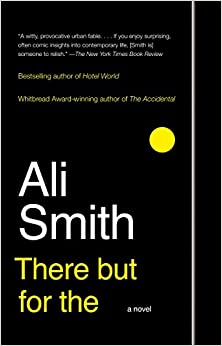
Review 1577: There but for the

I have enjoyed most of what I have read by Ali Smith, but at first the premise of There but for the seemed a little too absurdist for me. The novel is really four separate stories that are related to the event in the first story and share characters.

In “There,” Anna is summoned by Gen Lee to Gen’s house, because Gen found Anna’s contact information in Miles’s jacket pocket. At a dinner party at Gen’s, Miles, whom Gen does not know, locked himself in a guest room and refuses to come out. At first, Anna barely remembers Miles from a trip to Europe when she was 18, 30 years before, but then she remembers his act of kindness.

In “But,” Mark Palmer, who took Miles to the Lee’s dinner party, recounts his initial meeting with Miles, notable for Miles’s kindness, and invites him to Lee’s party. Some of the conversation of the party is marked by astounding stupidity, rudeness, and bigotry by some of the guests, so much so that I found it hard to believe, especially as a mixed-race child was there.

In “For,” a dying old lady is determined not to be sent to a depressing nursing home she visited long ago. After the death of her youngest daughter, she has been visited every year by one of her daughter’s friends, even though she doesn’t like him. This year he doesn’t come, because he is Miles, locked up in the Lee’s spare room, outside of which has formed a circus-like gathering of observers. But Miles has sent a substitute.

In “The,” Brooke, a precocious nine-year-old who also attended the party, recounts her ideas and memories, particularly a meeting with Miles.

Almost despite myself, I got caught up in this novel even when impeded by its verbal gymnastics, which were sometimes amusing but often annoying. I had a great deal of trouble, though, with the semi-stream-of-consciousness approach to the last section. At first, it was fun, but eventually I got tired of it and felt it could use some editing.

I read this book for my James Tait Black project and found it inventive but a bit overwhelming. Too many ideas are thrown out to us, in the end.

Related Posts

How to Be Both

Autumn

Winter

Review 1566: Coromandel Sea Change

Best of Ten!
Rumer Godden was around for so long as an author that when I couldn’t find the book by her that I had on my Classics Club list, I thought nothing of substituting Coromandel Sea Change. Even when I noticed a publication date of 1991, I assumed it was a reprint. It wasn’t, however, which brings up something I’ve been thinking about, and that’s how do we decide something is a classic if it’s not tested by time? I associate Godden with the 30’s through 50’s, when she was very active, and which I considered long enough ago to put her on my list. Oh well. We had this discussion on the Classics Club blog, in fact, this book was the one that gave me the idea. In any case, it is a wonderful, atmospheric book.

Newlyweds Blaise and Mary Browne arrive at Patna Hall on the Coromandel Sea evincing different reactions. Mary is enchanted by this view of the “real India,” while Blaise is enraged that their rooms are not in the main hotel and offended by the bathroom arrangements. As a couple, they seem particularly ill-suited—the young Mary is eager to observe ordinary people and take part in their customs while the older Blaise, a diplomat, is interested only in schmoozing with important people. Very soon, they are bickering like children while the other guests and hotel staff look on in dismay and Kuku, the young assistant manager, hopes to get her chance with Blaise.

The hotel is busy with an upcoming parliamentary election, and Mary meets Krishnan, one of the candidates, out on the beach one night. He is young and charismatic and seems genuinely concerned to help his people. Mary is happy to oblige when the campaign asks for her help, but Blaise is offended and misinterprets her interest.

In this novel, the stories of Mary and Blaise are not the only interest. The hotel staff are important, and the country itself is vividly evoked and almost a character. The election is charming in its own way. Even a donkey named Slippers, an elephant named Birdie, and a squirrel have their places. Mary is likable, although very naive, while Blaise is pretty unbearable.

Despite the sad ending to this novel, I found it colorful and charming. It made me want to visit the Coromandel Sea. Research has told me that the area was virtually destroyed by the tsunami in 2004, but apparently Chennai, mentioned in the book, is considered a top location to visit by Lonely Planet, so perhaps the area has recovered. In any case, perhaps it isn’t the paradise described by Godden anymore.

Related Posts

The Ministry of Utmost Happiness

In a Strange Room

The Lives of Others

Review 1557: Idaho

Best of Ten!
If you prefer the kind of novel that answers all your questions and ties everything up in a neat little bow, then Idaho is probably not for you. It is a haunting, atmospheric novel that ponders the depths of the human heart—love, guilt, friendship, regret.

The novel begins with Ann, married to Wade, a man with a tragic past. A year before his marriage to Ann, while he and his first wife Jenny were out cutting firewood, Jenny killed their youngest daughter, May, with an ax. Thinking only to keep his wife away from their older daughter, June, Wade drove the truck containing his wife and dead daughter down the mountain looking for help, leaving nine-year-old June there. Misunderstandings with the police prevented him from immediately returning, and June was lost.

Now Ann lives with Wade on their remote mountain farm, but she doesn’t really understand what happened. Wade prefers not to discuss it, and anyway, his memory is beginning to fail from hereditary early-only Alzheimers.

This novel explores this event and its ramifications through about 50 years of time and the viewpoints of a number of characters, some only peripheral to the story. It is beautifully written, provocative, and tragic. It is absolutely a wonderful novel.

Related Posts

Solace

Elmet

Wild Decembers

Review 1553: Whippoorwills

Full disclosure: Peggy Schimmelman is my cousin’s wife, although I have never met her.

Whippoorwills is primarily an epistolary novel set in the Missouri Ozarks and Northern California. The premise of the novel is that Leigh, in California, wants to write a novel about Rosie’s friend, Chrystal, who disappeared when the girls were in high school. The two women are also linked by Melody, Rosie’s friend and Leigh’s sister, who is now dead.

The story is told in a rambling, folksy way by Rosie in Missouri, as she tries to convey information for the novel to Leigh. Intermittently, we also get a slice of Leigh’s life in California as she struggles with a job she hates and tries to find time to write.

This novel is well written and full of local color, both in its eccentric but likable characters and its vivid colloquial style. For all its expressed premise, it is really about the life of Rosie, whose fundamentalist background and natural naiveté combined with several horrific experiences send her into periodic mental illness.

For patient readers, there is a certain amount of payoff, but you have to embrace its many circumlocutions in Rosie’s eccentric way of expressing herself and just go along for the ride. At first, I wondered if the story of what happened to Chrystal was ever going to get anywhere, but then I realized the story was really about Rosie.

I did feel, though, that the novel was a bit too long and wandering and that the sections about Leigh didn’t add much to it. I enjoyed much of it, though, and found some of it touching.

Related Posts

Winter’s Bone

Mercy Snow

Wit’s End

Review 1550: Literary Wives! Alternate Side

Today is another review for the Literary Wives blogging club, in which we discuss the depiction of wives in fiction. If you have read the book, please participate by leaving comments on any of our blogs.

Be sure to read the reviews and comments of the other wives!

Cynthia of I Love Days
Eva of Paperback Princess
Lynn of Smoke and Mirrors
Naomi of Consumed By Ink

* * *

At first, I didn’t think I would be interested in the characters of Alternate Side, privileged and wealthy New Yorkers who live on a dead-end block on the West Side. Nora Nolan explains they are only wealthy because of the value of their homes, but their concerns are of private schools, servants, high-powered jobs, and other areas of privilege. However, I liked Nora and some of the other characters.

Nora loves New York and their little neighborhood. She is aware, though, that her husband, Charlie, is not as happy. His job in investments has not worked out as he hoped, and he is upset when he hears that his boss, Bob Harris, has approached Nora to run a new foundation he’s setting up. To avoid making Charlie upset, Nora takes a job for a woman who is opening a jewelry museum.

Charlie is also interested in the money they could make if they sold the house, and he often suggests other cities where they could live, but Nora, loving New York as she does, pays little attention.

Then things in the neighborhood are changed by an ugly incident. Charlie has scored a space in a small lot in the neighborhood. Before that, he engaged in the “alternate side” game of moving his car to another side of the street just in time to avoid a fine. But the lot proves to be a source of contention in which he is soon involved. People try to park there without permission, and occasionally the exit is blocked.

The hothead of the neighborhood is Jack, one of the two men on the block whom Nora doesn’t like. One day, Ricky, the neighborhood handyman, parks his van a little too close to the exit of the parking lot, although there is enough room to get out. Jack doesn’t think so, though, and becomes so angry that he takes out a golf club from his car and begins hitting the van. When Ricky runs up asking Jack to stop, he hits Ricky and breaks his leg.

The block begins to take sides. Nora, who thinks Jack is a horrible man, believes he is guilty of assault, while Charlie, who was there, says it was an accident. Then when Nora visits Ricky in the hospital, Jack’s wife Sherry—whom Nora likes—becomes angry with her. At the same time, Nora notices changes in the cleanliness of the area, and someone begins leaving little bags of dog poop on her front porch. She has a dog but always picks up his poop.

Quindlen makes the disintegration of the neighborhood a metaphor for the disintegration of Nora and Charlie’s marriage. She does this without too much drama, in a way that is interesting and well written. Still, I have to say as a minor caveat about the novel as a whole that I don’t have that much sympathy for someone whose biggest worry is whether her housekeeper will quit now that the kids have gone to college.

What does this book say about wives or about the experience of being a wife?

This is a nuanced depiction of two people whose needs are no longer the same. Nora seems cynical about Charlie rather than loving and disdains his business ambitions. As I’ve mentioned, she loves New York, while Charlie has grown to hate it. Nora acknowledges that Charlie would be more successful in any other city, but she isn’t interested in moving. In effect, she isn’t willing to compromise her own life for Charlie’s happiness any more than she has already done by turning down the job for Charlie’s boss.

Charlie also disdains Nora’s career, and later we learn that he has always felt like Nora’s second choice in mates, because she was deeply in love with her college boyfriend, James, who turned out to be gay. In fact, it is his fresh and honest personality that she turned to then and that stands in his way at work (although, another caveat, I wasn’t persuaded by Quindlen’s depiction of this personality and in fact had only a vague notion of Charlie’s personality). Charlie himself is turning too often to drink.

I loved this novel for showing an undramatic parting of the ways, a story about people growing apart. There is no deceit, no affairs, no big fights, just a realization that parting needs to occur and the beginning of new lives.

Review 1526: Olive, Again

Best of Ten!
Reading Olive Kitteridge years ago was a revelation to me, first about structure—how Strout could create a novel of a bunch of loosely connected stories—and second about her empathy for her characters, ordinary people in a small Maine town. Finally, there was that force of nature, Olive herself.

Olive, Again is no disappointment. This novel is structured much the same as Olive Kitteridge, stories about Olive and stories in which she is a secondary character or is simply mentioned or thought of. Olive herself is an old woman, who nevertheless toward the beginning of the novel embarks on her second marriage. The novel revisits her difficult relationship with her son, who brings his family for a disastrous visit that gives Olive insight into their relationship as well as that between herself and her first husband, Henry.

Olive is still her straightforward, brusque self, but many of the stories are about troubled people who feel better after encounters with her. Because they live in a small town, people who are the focus of one story appear or are mentioned in the others. For example, in “Helped,” Suzanne Larkin, from a disturbed family, has a heartfelt talk with her father’s lawyer, Bernie, whom Olive meets when she is living in an assisted living facility later in life.

Characters from some of Strout’s other books appear here, too, perhaps more characters than I remembered. Certainly, there are Jim and Bob Burgess from The Burgess Boys, a story about Jim and his wife visiting from New York, as well as Isabelle from Amy and Isabelle, whom Olive befriends in assisted living.

This is another warm and empathetic novel about complex but ordinary people. Strout is a master crafter of a tale.

Related Posts

Olive Kitteridge

The Burgess Boys

Amy and Isabelle

Review 1523: Eleanor Oliphant Is Completely Fine

Eleanor Oliphant leads a life of routine. She’s worked at the same company for years, doing the same job. She stops at the same stores on the same days and buys the same things. She has no friends, and her only human contact besides work and shopkeepers is her Wednesday phone call from her abusive mother. She doesn’t quite understand many interactions and often offends people. She also has a scar on one side of her face.

At a rock concert, she decides she has seen the man for her, the lead singer. She begins preparing a systematic approach to attract him. Around the same time, she meets the new corporate IT guy, Raymond, who is kind to her.

I have commented before about how much I dislike the custom of comparing a book to another book in its publicity. I understand that publicists are trying to build on the other book’s popularity, but if I loved the other book, I am always skeptical that I will find any resemblance. In this case, the comparison kept me from reading this book because I felt that the book it was compared to, A Man Called Ove, was cheap and manipulative. I finally read Eleanor Oliphant because a friend recommended it.

I have to say that I found this novel endearing and touching. At first, I was afraid that all of its humor would be around Eleanor’s eccentricities, but the depiction of her is more nuanced than that. You grow to care about Eleanor and the other characters as her friendship with Raymond opens her up to other people. There are hints of a horrific past, and you eventually come to admire Eleanor’s courage and resilience.

Related Posts

Where’d You Go, Bernadette

Bitter Orange

The Death of Bees