Day 1092: Commonwealth

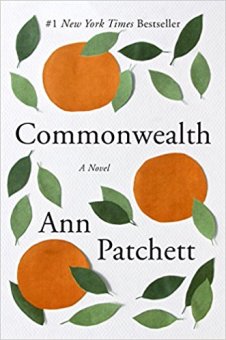
Cover for CommonwealthIt’s difficult to explain what Commonwealth is about without either telling too much or failing to make it sound interesting. Yet, it is a very interesting novel about how one afternoon changes the lives of everyone in two families, or at least that’s partially what it’s about.

The novel begins when Albert Cousins, an attorney from the district attorney’s office, crashes a christening for Fix and Beverly Keating’s youngest daughter. Fix only vaguely knows Bert Cousins from his work as a police officer. Bert has crashed the party in an effort to get away from his own household with his three children and pregnant wife, Teresa, as he does every weekend.

But once Bert sets eyes on Beverly Keating, he decides she is his future. One kiss in the upstairs bedroom with a sleeping child begins an affair that results in divorce for both families.

The novel concentrates on the effects of this divorce on both sets of children. Although Carolyn and Franny Keating beg year after year to stay in California with their dad, they are uprooted to Virginia to live with their mother when she and Bert move back to his home state. Bert demonstrates again and again that he doesn’t care to be around his own children, but he wins custody of them for the whole of each summer, while Teresa gets a job and keeps it together the rest of the year by the skin of her teeth. The result is that the kids grow up with virtually no supervision, especially in the summer, when Bert leaves everything to Beverly, who can’t cope.

This novel reminded me in some ways of Jane Smiley’s Last Hundred Years trilogy, although it spans only about 45 or 50 years. However, it felt that the characters in this novel are much more knowable. I always enjoy Patchett’s writing, and her novels are all different from each other. I enjoyed this one very much.

Related Posts

State of Wonder

The Children’s Crusade

Early Warning

Day 1083: Everybody’s Fool

Cover for Everybody's FoolBest Book of the Week!
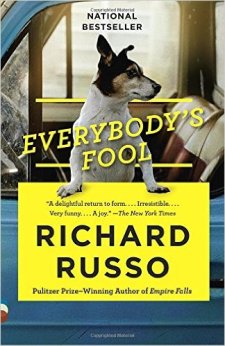
I don’t think I am the only one to be delighted when I learned that Richard Russo was returning to the familiar ground of North Bath, New York, and Sully, of Nobody’s Fool. Sully has been diagnosed with a heart condition and has less than two years to live unless he undergoes a procedure he’s been avoiding. This situation leads him to consider a little more deeply some fundamental questions.

Sully’s friend Rab has felt a change in their relationship since Sully came into money. They no longer work together, and Rab feels that Sully neglects him. Rab is ridiculously dependent on him.

Sully is concerned for Ruth, his long-time lover, and her daughter, Janey. Janey’s abusive ex-husband is back in town, fresh out of jail.

A major character of the novel is Douglas Raymer. Once the rookie who waved his gun at Sully for driving on the sidewalk, Raymer is now the chief of police.  He has always been obsessively self-conscious and unsure of himself. His self-esteem has not been improved by finding out on the day of his beloved wife Becka’s death that she was leaving him for someone else. The problem is, he doesn’t know who, but he has found the remote for someone else’s garage door under the seat of Becka’s car.

Raymer is already considering quitting his job when he begins one of the worst days of his life. While attending the funeral of a judge, he passes out from the heat and falls into the grave. Later he realizes that he must have dropped the remote, which he planned to use to find Becka’s lover, in the grave.

Russo is great at creating flawed but lovable and believable characters, and he specializes in settings of beaten-down working class towns in the rust belt. He also doesn’t flinch from pushing his characters to the heights of absurdity, in a sort of tongue-in-cheek style. Sometimes he goes too far with this, but other times it works perfectly to produce a serio-comic effect. This is one of those times. Empire Falls remains my favorite Russo novel, but this one is right up there.

Related Posts

Empire Falls

Bridge of Sighs

Straight Man

Day 1081: Days of Awe

Cover for Days of AweIsabel is struggling. It is almost a year since the death of her beloved friend, Josie. Her husband, Chris, has moved out, and her 12-year-old daughter, Hannah, blames her for it. She has become alienated from her childhood friend, Mark, who was Josie’s husband, because of his romantic choice.

This novel is a character study more than anything else, of Josie and of Isabel, as Isabel revisits memories and tries to deal with the sadness in her life. As Isabel grows to understand that she was missing cues from Josie, she slowly learns to handle Josie’s death.

I enjoyed this novel. It is well written, with funny dialogue. Both Isabel and Josie express themselves with imagination and humor. We learn to care for Isabel, with all of her foibles.

Related Posts

The Sense of an Ending

The Goldfinch

Tell the Wolves I’m Home

Day 1080: Moonglow

Cover for MoonglowMichael Chabon’s newest novel is supposedly inspired by his grandfather’s stories before he died. But I don’t think we’re supposed to take that literally, if only because he also says the novel was inspired by the stories of his mother’s uncle. In any case, it is a wandering, fascinating story of a complex life.

Grandfather’s stories begin with that of his arrest, when he was fired from his job to provide a place for Alger Hiss, newly out of jail, and attacked the corporation’s vice president. He was left with a hospitalized mentally ill wife and their teenage daughter. But the story wanders back and forth in time from his grandfather’s childhood in Philadelphia, his experiences searching for German scientists at the end of World War II, his work in the space industry. And always, there is his interest in the moon and space travel.

As always, Chabon manages to tackle some weighty topics while entertaining us like crazy. In this novel, he tackles German atrocities during the war and the stain they put on our own space program. Still, Grandfather’s life reads very much like an adventure story.

I really enjoyed this novel, much more so than I did Telegraph Avenue. Sometimes I enjoy Chabon more than other times, but I always find the journey interesting.

Related Posts

Telegraph Avenue

Gentlemen of the Road

The A

Day 1078: How to Be Both

Cover for How to Be BothI thought How to Be Both was only a bit experimental until I read that the book, which is divided into two related stories, appears in some editions with one story first and in the other editions with the other first. I can see that switching the order of the stories would change the novel quite a bit.

In the version I read, a Renaissance artist watches a boy who is really a girl look at one of the artist’s paintings hundreds of years after the artist has died. The artist follows the girl through a few incidents in her life. As the painter follows her, we learn about the painter’s own life.

I am purposefully not using a pronoun to refer to the artist, because we learn fairly early that the painter is a woman passing as a man to receive art instruction and be able to work as an artist. Only a few people know he is a woman, and he comes down through posterity as a man.

In the second story, a teenage girl named George is grieving the death of her mother. As she copes with her feelings, she remembers conversations between them. Shortly before her death, her mother took George and her brother Henry to Italy just so she could see the work of the painter from the first story.

This novel is about the role of art in our lives, but it is also about finding ourselves and about the relationships between mother and daughter. George’s mother tries to challenge George by presenting her with provocative ideas. Some of these ideas are difficult to grapple with.

Although during the first pages I didn’t think I was going to like this novel, I found both of the stories and the connection between them deeply interesting. This novel is another surprising shortlister (surprising for me, that is) for the Booker Prize that I probably would not otherwise have read. I’m glad I did.

Related Posts

The Blazing World

We Are All Completely Beside Ourselves

A Visit from the Goon Squad


Day 1077: Four Letters of Love

Cover for Four Letters of LoveBest Book of the Week!
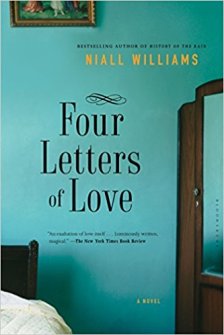
I was so enchanted by History of the Rain that after finishing it, I soon looked for other novels by Niall Williams. Four Letters of Love is his first.

Nicholas Coughlin is a boy when his father abandons his career as a civil servant to paint, saying that God wants him to. For two summers, he leaves Nicholas and his mother home alone while he goes out to paint. The rest of the year, he obsessively reworks the paintings he did in the summer.

Then Nicholas’s mother dies, but stays to haunt the house. His father intends to go out as usual and leave Nicholas home alone for a few weeks, but Nicholas follows him. His efforts all along are to try to capture some of the attention of this obsessed, abstracted man.

Isabel Gore is the daughter of a schoolmaster on an island off the coast of Galway. Her brother Sean is a gifted musician, but one day after playing for hours while she dances, he has a fit and after that is mute and wheelchair bound. Isabel blames herself for Sean’s condition.

The Master sets all his ambitions on Isabel’s academic career and sends her to Galway to a convent school. But Isabel has a streak of wildness in her and sometimes walks off from school. On one such expedition as a teenage girl, she meets Peader O’Luing. He is a poor excuse for a man, but she doesn’t see that and falls in love.

The novel makes no secret that it is moving toward the meeting of Nicholas and Isabel. To get there, it tells their stories with some whimsy, some pathos, and a touch of magical realism. Although the writing style and voice are not as distinctive as that of History of the Rain, the novel is still beautifully written. I enjoyed it very much.

Related Posts

History of the Rain

The History of Love

The Storied Life of A. J. Fikry

Day 1071: Anything Is Possible

Cover for Anything Is PossibleLike Olive Kitteridge, which this book reminds me strongly of, Anything Is Possible is a series of linked short stories. What links these stories is Lucy Barton, the main character of Elizabeth Strout’s previous novel. Each story is about a family relation of Lucy or a resident of her home town in rural Illinois, and Lucy appears as a character in one story.

In “The Sign,” Tommy Guptill, who was the janitor at Lucy’s school when she was a girl, goes to visit Lucy’s brother Pete. There he learns that Pete has long believed a terrible thing about the night long ago when Tommy’s dairy farm burned down.

In “Windmills,” Patty Nicely, a school mate of Lucy’s, is able to overcome an insult from Lucy’s niece and help her make her own escape from town. Patty also reviews her life with her gentle husband Sebastian, who has died.

“Cracked” explores the strange marital life of Linda Peterson-Cornell, Patty Nicely’s niece. Although Linda has married a wealthy man and escaped poverty, her husband has some disturbing pastimes.

link to NetgalleyIn “The Hit-Thumb Theory,” Charlie Macauley, to whom Patty Nicely is attracted, is devastated to find out the truth behind his relationship with a woman. In an attempt to recover before going home, he goes to stay at a B&B. Later, we hear from the B&B’s owner, another relative of the Nicelys.

And so on. These stories are beautifully and perceptively told, evoking sympathy for even the most unlikable characters. As I was for My Name is Lucy Barton, I was caught up in the gentleness and empathy of these stories.

Related Posts

My Name is Lucy Barton

Olive Kitteridge

The Burgess Boys

Day 1068: Cloud Atlas

Cover for Cloud AtlasBest Book of the Week!
Cloud Atlas is a reread for me, and I think when I first read it, it was my first postmodern fiction. I found it, and still find it, astonishingly inventive and compelling.

Like its namesake, “Cloud Atlas Sextext,” the musical composition that recurs throughout the book, Cloud Atlas is composed of six stories, but with various themes and motifs linking them. Each story is set farther into the future. A story begins and is cut off at a climactic moment until we get to the sixth, which is complete. Then, going back toward the past, the stories are completed.

“The Pacific Journal of Adam Ewing” is the journal of a man traveling in the Pacific in the 19th century. On his travels he observes the shameful treatment of the natives by missionaries, rescues a native from slavery, and encounters a series of scalawags. A quack befriends him and begins treating him for a supposed worm.

In “Letters from Zedelghem,” Robert Frobisher writes his dear friend Rufus Sixsmith about his adventures. Frobisher is a gifted composer but impoverished and a bit of a scalawag himself. In 1931 Belgium, he talks his way into a position of amanuensis for a great composer. While there, he begins writing the haunting “Cloud Atlas Sextet.” But he finds he is not the only con artist in the house.

“Half-Lives: The First Luisa Rey Mystery” is a manuscript mystery novel about a reporter who finds out about safety hazards in a nearby nuclear power facility. Her informant is Rufus Sixsmith, now in his sixties, a Nobel winning scientist. After Sixsmith is murdered by the corporation that employs him, Luisa begins trying to get a copy of the report he wrote, which is being suppressed.

“The Ghastly Ordeal of Timothy Cavendish” is a movie set in the present or near future. In it, a publisher in debt is being threatened by thuggish clients. When he goes for his brother’s help, he is tricked into committing himself to a home for the aged.

“An Orison of Sonmi-451” is an oral history dictated by a fabricant from prison, some time in the future. She relates how she became enlightened and got involved with a revolutionary movement against the corprocacy  that controls the 12 cities still habitable on the planet.

“Sloosha’s Croosin’ an’ Ev’rythin’ After” is a story told to listeners in the far future. By now, most of the world is living as primitive tribes, and Zachry’s tribe lives in Hawaii as farmers and goat herders. But a Prescient named Meronym comes to live in the village. These people are the only ones who have kept the scientific knowledge of the time before. Zachry suspects her of motives for being there that she has not told them.

Each of these stories is written in a different style reflecting its time period and with language evolving in the future. The stories share thematic threads and invoke each other’s characters, mixing together the “fictional” characters with the “real” ones. Luisa meets Sixsmith, Robert Frobisher finds Adam Ewing’s journal, Zachry’s tribe worships Sonmi as a god, Sonmi watches the movie about Cavendish. Intricately plotted and fitted together like puzzles, these stories comprise an amazing novel.

Related Posts

Ghostwritten

The Thousand Autumns of Jacob de Zoet

A Visit from the Goon Squad

Day 1064: The Shadow Land

Cover for The Shadow LandBest Book of the Week!
Although I was a little disappointed by The Swan Thieves, I liked Elizabeth Kostova’s The Historian so much that I was excited to get my hands on an early copy of The Shadow Land. It has a few minor problems, but overall, does not disappoint.

Alexandra has arrived in Sophia, Bulgaria, early for her teaching job so that she can have the summer to see the sights. However, a series of errors sets her on a different path. Instead of dropping her at her hostel, her taxi driver takes her to the Hotel Forest. There she helps an elderly couple and middle-aged man with their luggage as they get into a taxi. Only once she is in another taxi does she realize that one of their pieces of luggage got mixed up with hers. To her horror, she finds it contains an urn with someone’s ashes.

With her driver Bobby’s help, Alexandra begins trying to find the family. They had not been staying at the hotel they came out of. Alexandra feels she has no option but to go to the police. Once she has visited with them, though, and has been given an address based on the name on the urn, Stoyan Lazarov, she and Bobby begin to receive threats. Eventually on their search they find a potentially explosive manuscript about Lazarov’s experiences during the Communist regime.

Although the main intent of the novel is to tell about this dark time in Bulgaria’s history, this novel makes a great suspense story in the manner of Mary Stewart, with just a dash of romance. Like Stewart’s novels, it is evocative of its setting, as Alexandra and her friends travel from place to place in Bulgaria.

link to NetgalleyAlexandra’s adventures in Bulgaria are interrupted, first by the story of her brother Jack’s disappearance when she was younger and later by chapters from Stoyan Lazarov’s manuscript. These interruptions pose one of the slight problems with the novel. There doesn’t seem to be much reason for the first story—as a backstory for Alexandra it is important but could have been handled more economically. The second narrative serves both to finally provide the key to the plot and to prolong the suspense. But I found it to be a bit too prolonged, with too much detail about how Stoyan Lazarov keeps up his inner strength during his trials. The effect of both interruptions was to slow down the main narrative.

Those are minor criticisms, though. A little larger one is that the identity of the villain and his reason for pursuing our heroes are both fairly easy to guess. Still, I found this novel suspenseful and fun to read, with a chunk of Bulgaria’s dark history as a bonus.

Related Posts

Strangers in Company

This Rough Magic

The Broken Road: From the Iron Gates to Mount Athos

Day 1063: The 1951 Club! Hangsaman

Cover for HangsamanI picked Hangsaman to read for the 1951 Club. Unfortunately, although I have read other books published in 1951, I haven’t done so recently enough to have reviewed them on this blog.

Hangsaman is a very strange book about a young woman and her first months away at college. Although it does a masterful job of exploring her consciousness, that is unusual territory. The first scenes of the novel show her interacting with her parents while she imagines being questioned by a detective about her father’s murder.

And no wonder. Her father is an arrogant and pompous editor, who, under the guise of helping her with her writing, daily subjects her to alternating insults and compliments and tries to enlist her sympathies against her mother. Her mother also tries that, apparently with more reason.

1951 Club logoIn these circumstances, Natalie is delighted to go off to college for a fresh start. But things don’t go well there. The students are cliquish and cruel. The one girl who seems to be seeking her out as a friend turns out to be mentally unstable. And two other girls use her to torment a young university wife whose husband is having an affair with one of them.

Natalie finally makes a very strange friend, and at that point the novel goes off into murky territory, where I didn’t quite understand what was going on. When I read later that the novel was inspired by the actual disappearance of a Bennington student—the girl’s college where Jackson’s husband was employed—I understood it a little better. If you have read Shirley by Susan Scarf Merrell, it will ring some bells.

Related Posts

Let Me Tell You

Shirley

Wylding Hall