Day 1064: The Shadow Land

Cover for The Shadow LandBest Book of the Week!
Although I was a little disappointed by The Swan Thieves, I liked Elizabeth Kostova’s The Historian so much that I was excited to get my hands on an early copy of The Shadow Land. It has a few minor problems, but overall, does not disappoint.

Alexandra has arrived in Sophia, Bulgaria, early for her teaching job so that she can have the summer to see the sights. However, a series of errors sets her on a different path. Instead of dropping her at her hostel, her taxi driver takes her to the Hotel Forest. There she helps an elderly couple and middle-aged man with their luggage as they get into a taxi. Only once she is in another taxi does she realize that one of their pieces of luggage got mixed up with hers. To her horror, she finds it contains an urn with someone’s ashes.

With her driver Bobby’s help, Alexandra begins trying to find the family. They had not been staying at the hotel they came out of. Alexandra feels she has no option but to go to the police. Once she has visited with them, though, and has been given an address based on the name on the urn, Stoyan Lazarov, she and Bobby begin to receive threats. Eventually on their search they find a potentially explosive manuscript about Lazarov’s experiences during the Communist regime.

Although the main intent of the novel is to tell about this dark time in Bulgaria’s history, this novel makes a great suspense story in the manner of Mary Stewart, with just a dash of romance. Like Stewart’s novels, it is evocative of its setting, as Alexandra and her friends travel from place to place in Bulgaria.

link to NetgalleyAlexandra’s adventures in Bulgaria are interrupted, first by the story of her brother Jack’s disappearance when she was younger and later by chapters from Stoyan Lazarov’s manuscript. These interruptions pose one of the slight problems with the novel. There doesn’t seem to be much reason for the first story—as a backstory for Alexandra it is important but could have been handled more economically. The second narrative serves both to finally provide the key to the plot and to prolong the suspense. But I found it to be a bit too prolonged, with too much detail about how Stoyan Lazarov keeps up his inner strength during his trials. The effect of both interruptions was to slow down the main narrative.

Those are minor criticisms, though. A little larger one is that the identity of the villain and his reason for pursuing our heroes are both fairly easy to guess. Still, I found this novel suspenseful and fun to read, with a chunk of Bulgaria’s dark history as a bonus.

Related Posts

Strangers in Company

This Rough Magic

The Broken Road: From the Iron Gates to Mount Athos

Day 1063: The 1951 Club! Hangsaman

Cover for HangsamanI picked Hangsaman to read for the 1951 Club. Unfortunately, although I have read other books published in 1951, I haven’t done so recently enough to have reviewed them on this blog.

Hangsaman is a very strange book about a young woman and her first months away at college. Although it does a masterful job of exploring her consciousness, that is unusual territory. The first scenes of the novel show her interacting with her parents while she imagines being questioned by a detective about her father’s murder.

And no wonder. Her father is an arrogant and pompous editor, who, under the guise of helping her with her writing, daily subjects her to alternating insults and compliments and tries to enlist her sympathies against her mother. Her mother also tries that, apparently with more reason.

1951 Club logoIn these circumstances, Natalie is delighted to go off to college for a fresh start. But things don’t go well there. The students are cliquish and cruel. The one girl who seems to be seeking her out as a friend turns out to be mentally unstable. And two other girls use her to torment a young university wife whose husband is having an affair with one of them.

Natalie finally makes a very strange friend, and at that point the novel goes off into murky territory, where I didn’t quite understand what was going on. When I read later that the novel was inspired by the actual disappearance of a Bennington student—the girl’s college where Jackson’s husband was employed—I understood it a little better. If you have read Shirley by Susan Scarf Merrell, it will ring some bells.

Related Posts

Let Me Tell You

Shirley

Wylding Hall

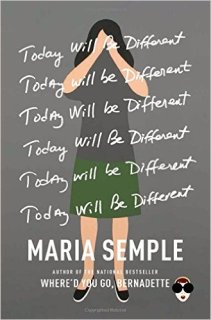
Day 1062: Today Will Be Different

Cover for Today Will Be DifferentI so much enjoyed Where’d You Go, Bernadette that I was really looking forward to Today Will Be Different. That said, this novel bears many of the same characteristics as the previous one while lacking its originality of expression.

Like Bernadette, Eleanor Flood is also a once-successful professional who is now leading a depressed life as a Seattle housewife and mother. At one time she lived in New York and was the animation director for a successful cartoon series. After the series was cancelled, she agreed to move to Seattle for ten years for her husband’s career as a hand surgeon and sports team doctor. She has been depressed because of her alienation from her sister, Ivy.

The morning of the story, she wakes up determined to do better. Soon she notices that her husband, Joe, is behaving oddly. She thinks she has a lunch appointment with an annoying friend only to realize it’s with a man she once fired from her show. And her eight-year-old son Timby is faking illness to get out of school.

When Eleanor takes Timby to Joe’s office, she finds that he has told his employees the family is on vacation. Where is Joe and what is he up to?

One of my issues with this novel is how most of Eleanor’s problems get solved in one day. Of course, this novel is meant to be light and funny, so something like that has to happen. I guess it’s more my problem with a whole genre of fiction. Still, I felt sympathy with Eleanor and liked most of the characters. I missed the zingers about Seattle from Bernadette, which I understood even though I have only been there a few times. Instead, Semple replaces this kind of thing with Eleanor blaming herself for her New York sense of superiority.

So, a middling review for this one.

Related Posts

Where’d You Go, Bernadette

To Rise Again at a Decent Hour

The Interestings

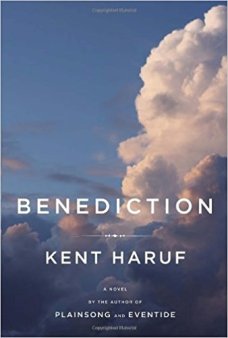
Day 1055: Benediction

Cover for BenedictionBest Book of the Week!
Goodreads has Benediction listed as Plainsong #3, which makes me wonder what that means. The first two novels in the series, Plainsong and Eventide, were very closely related, but this one not so much. All three of them are set in Holt, an imaginary town in Eastern Colorado, but then again, all of his novels are set there. Yet, these three novels all have titles related to religious services and song.

Dad Lewis is dying. That’s the central focus of the novel. But this novel even more than the others provides a picture of small-town life by looking at the neighbors and others in touch with Dad during his last weeks.

Dad is loved by his wife Mary and daughter Lorraine, but his son Frank has long since disappeared from their lives. When Frank was a young man, Dad was not understanding at all about his homosexuality, and that conflict eventually resulted in a complete break.

Dad is also perhaps not being fair to his long-time employees. When he was 22, his boss gave him an opportunity to buy the hardware store, and he has owned it ever since. Now he wants a reluctant Lorraine to take it over instead of extending the same opportunity to his two employees.

There are other things Dad frets over and even hallucinates about, but the novel isn’t just about Dad. The Lewis’s next-door neighbor Berta May has taken in her granddaughter Alice after her daughter’s death. Lorraine lost her daughter years ago, and she and retired schoolteacher Alene take Alice under their wings.

Reverend Lyle has been sent to Holt after a problem in Denver. His wife and son John Wesley are unhappy in Holt, and soon Lyle begins expressing opinions that leave some of the town in an uproar.

This novel is written in Haruf’s lovely spare prose. In theme and plot, it seems more diffuse than his other novels, but it is profound and moving.

Related Posts

Our Souls at Night

Gilead

Pastoral

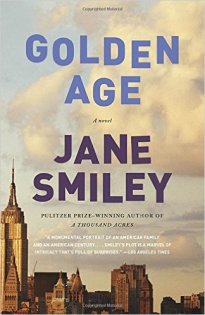
Day 1050: Golden Age

Cover for Golden AgeGolden Age is the last book in Jane Smiley’s Last Hundred Years trilogy. It begins in 1987 and finishes a couple of years into a slightly dystopian future.

The Langdon family tree has expanded since the first book. Now, the original Langdon children are in their 60’s and 70’s. One has died of cancer, and by the end of the novel, only one of them is still living.

By necessity, this novel concentrates more on some of the Langdon descendants than others. Frank and Andy’s sons Richard and Michael are continuing to clash. Richard forges a political career by being a compromiser, while Michael makes it big on Wall Street and subsequently misappropriates funds from several member of his family. Joe’s son Jesse continues to struggle with the farm while both of his sons go to war. Claire finally finds happiness with Carl. Felicity becomes an environmental activist, while Janet spends most of her time with horses. Henry and Andy are also important characters.

Like the other novels, Golden Age covers most of the important events in its time period, the past 30 years—recessions, wars, 9/11, climate change, and fiscal crimes. Guthrie goes to Iraq. A family member is killed on 9/11. Michael is a major criminal on Wall Street.

Although I still felt some distance from the characters because there were so many and because the narration skips around from one to another so often, I couldn’t help but be caught up by the sheer volume and breadth of the trilogy. I wasn’t sure what I thought about the projection into the future of a country largely devoid of rain and mounting in chaos. Smiley, of course, couldn’t predict our current peculiar election results, which shows up the problems with this type of predictive writing in a largely realistic novel. Some aspects of her last chapters remind me a bit of Margaret Atwood’s Maddaddam series.

Related Posts

Some Luck

Early Warning

Maddaddam

Day 1047: The Beggar Maid

beggar-maidLike Olive Kitteridge and a few other books I’ve read the last few years, Alice Munro’s The Beggar Maid is a novel constructed from short stories. It tells the story of Rose and of her relationships with other people in her life.

The stories about her childhood and adolescence are mostly about her complex relationship with her stepmother, Flo. Rose feels she can never please Flo, but at the same time she finds Flo rude and vulgar. These early stories also portray an environment of ignorance and poverty, her stories about school particularly shocking.

“The Beggar Maid” is what Rose’s first boyfriend Patrick calls her. But as Rose marries Patrick, who moves them to Vancouver to run one of his father’s department stores, Rose slowly learns that both of them have overestimated Patrick’s own gentility. Rose has thought she was marrying a scholar not a department store heir. As she is attracted more and more to the bohemian crowd in Vancouver, it becomes more obvious how unsuited the two are.

Munro’s stories are insightful about people, and as I believe Rose is Munro’s alter ego, unsparing in looking at herself. Her prose is, as always, spare and beautiful.

Related Posts

Family Furnishings

The View from Castle Rock

Olive Kitteridge

Day 1041: Enon

Cover for EnonEnon is the second novel by Paul Harding and it follows the story of the same family as in his first novel, Tinkers. That novel was about George Crosby and his memories of his epileptic father. Enon is about George’s grandson, Charlie Crosby, and his life in the village of Enon.

At the beginning of Enon, Charlie’s beloved 13-year-old daughter Kate is killed when her bicycle is hit by a car. Soon after, without much attempt to work anything out, Charlie’s wife Susan returns to her parents’ home and he never hears from her again. Charlie begins a downward spiral into grief, anger, and an addiction to pain killers.

In some respects, Enon is a little more accessible than Tinkers. It is characterized by the same beautiful prose, especially in the descriptions of nature. Further, the setting in the old New England village with its sense of history is fully imagined.

Yet, I wasn’t so interested in watching Charlie fall apart, nor did I enjoy his hallucinogenic dreams about Kate, where she turns to obsidian, for example. I’m starting to realize I don’t enjoy reading about dreams in fiction.

I was also nonplussed by Charlie’s relationship to Susan. No wonder their marriage fell apart. Although they seem to be a happy family at the beginning of the novel, Susan is always somewhere folding clothes while Charlie and Kate go off on adventures. I was surprised when she left just a few days after Kate’s death, but it became clear she wasn’t important to her own family.

So, if this subject matter attracts you, you might enjoy this book more than I did.

Related Posts

Tinkers

The Snow Queen

Pastoral

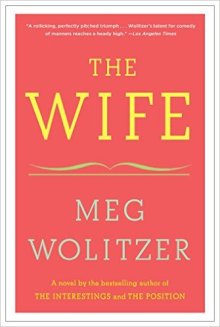
Day 1035: Literary Wives: The Wife

Cover for The WifeToday is another review for the Literary Wives blogging club, in which we discuss the depiction of wives in modern fiction. If you have read the book, please participate by leaving comments on any of our blogs. Be sure to read the reviews and comments of the other wives!

Ariel of One Little Library
Emily of The Bookshelf of Emily J.
Kate of Kate Rae Davis
Lynn of Smoke and Mirrors
Naomi of Consumed By Ink

My Review

I’ve only read one other book by Meg Wolitzer, and I found it mildly interesting. The Wife, however, I found much more impressive.

Joan Castleman is traveling to Finland at the beginning of the novel. Her husband Joe is a famous novelist, and he is on his way to accept the Helsinki Prize for literature. On the flight, Joan decides their marriage is over. For too long, Joan has put up with Joe’s selfishness, including his infidelities. But their marriage is founded on a more fundamental lie.

The novel flashes back to incidents in the couple’s life, beginning with Joe’s seduction of her when she was a Smith co-ed in the 50’s and he was her literature instructor. Their relationship caused the end of his marriage and his fatherhood of a new baby.

Aside from a deft and insightful portrait of the end of a marriage, this novel deals with such feminist themes as the bias against women in the publishing industry and the sexual politics of marriage. Although I sometimes dislike Wolitzer’s apparent fascination with bodily functions, I found this carefully observed novel both dryly amusing and terribly sad. It had a twist that I saw coming, but that did not lessen the power of the novel.

What does this book say about wives or the experience of being a wife?

Although this novel comments on the experience of wives from the Greatest Generation, these experiences continue, in their own way, in many current-day marriages. In her marriage, Joan continually caters to the needs of her selfish and unfaithful husband on the grounds that he is a great writer. But she does even more for him than raise the kids, keep his house, meet his every need, and be a loyal wife. In fact, their relationship is entirely one-sided, with him becoming ever fatter and more self-satisfied.

In fact, the sacrifices Joan makes for her husband are shocking. But I am determined not to tell too much. Although Joan thinks the bargains they’ve made are exciting at first, she goes into her marriage with extreme naivety. In fact, over time, it is difficult to understand what Joan gets from the marriage at all, while it is clear what Joe gets from it.

Related Posts

The Interestings

The Blazing World

Ahab’s Wife Or, The Star-Gazer


Day 1030: Outline

Cover for OutlineIt was hard for me to decide what I thought of Rachel Cusk’s novel, Outline. It is a difficult novel to describe and seems to be an experiment in fiction. It consists of a series of dialogues where most of the time only one side of the conversation is reported.

The almost unnamed narrator, Faye, is a writer on her way to Athens to teach a writing class. Something about her encourages the people she meets to tell her their stories. The narrator herself seems to be exploring the possibilities of passivity so that she doesn’t herself do or say much; instead, things happen to her. But not much, and that isn’t the point.

The characters’ monologues are written as little gems—sparely expressed and containing interesting intellectual ideas. But there are too many of them for me now to remember which concepts struck me. The overall effect is very cerebral, even though some of the characters express strong emotions.

I am not generally fond of monologues. It was hard for me to tell whether we are to assume that the narrator seldom speaks or whether, as one reviewer assumed, her part of the dialogue has been excised. In addition, the monologues are not written as speech but mostly as narrative, lending even more inertness to the work. I remember going to a play called “Danton’s Death” where instead of talking to each other, the characters took turns declaiming. The effect to me was a series of rants. This novel doesn’t have that effect because of the narrative. I was interested in the characters’ stories, but I wasn’t moved by them.

Related Posts

The Sunken Cathedral

Great House

My Name is Lucy Barton

Day 1016: Orfeo

Cover for OrfeoBest Book of the Week!
Richard Powers is clearly a lot smarter than I am, for I did not always understand him. But I enjoyed his novel Orfeo immensely. It is by coincidence the second reworking of a Greek myth that I’ve read recently.

Peter Els had a career as an avante-garde composer, although with one exception most of his works were only heard by a few hundred people. Now retired, he has taken up a hobby in chemistry, the field he originally intended to work in. Although he has broken no laws, he is trying an experiment to compose music that will last forever, in the genetic code of bacteria.

When his dog unexpectedly dies, an unfortunate series of incidents brings the police to his door. They are alarmed by his chemical periphernalia. He thinks all he will have to do is explain himself, but when he arrives home to find Homeland Security raiding his house, he flees in alarm.

During his flight, he revisits the memories from his past. Most of these have to do with music, and Powers’ use of prose is lyrical as it describes what Peter hears and imagines. The world for Peter is full of music, from bird song or a penny whistle to the most formidably intellectual modern composition. I wasn’t familiar with many of the pieces Powers describes, but his descriptions make me want to hear them.

Although Powers’ writing can be so cerebral that it is thought by some to limit its emotional power, I did not find that to be the case with this novel, even though I did not grasp every idea. Ils decides to visit the important people from his past to make amends for any wrongs he’s done them. As he travels, we continue to revisit his memories. A strong theme of paranoia in the post-9/11 world also prevails.

I found this a touching and powerful novel, full of the joy of music. It probably also includes the best evocation of the creative scene from the 60’s that I’ve ever read.

Related Posts

Half-Blood Blues

The Blazing World

The Hour I First Believed