Review 2470: The Topeka School

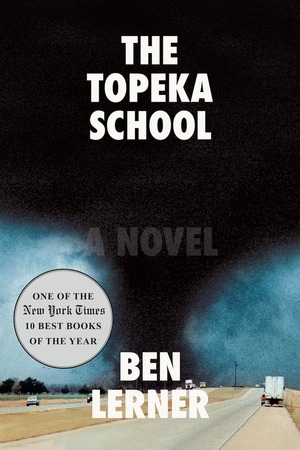
It’s unfortunate for me that Ben Lerner’s books seem to be devoted mostly to exploring his own psyche, as evidenced by his main character’s biographical details matching his own, because I’m not much interested in his psyche. Sadly, his books keep ending up on the shortlists of the projects I’m pursuing. This one is from the shortlist for the 2020 Pulitzer prize.

In The Topeka School, we encounter Adam Gordon, the protagonist of Leaving the Atocha Station. In this novel, he is sometimes older, sometimes younger than in the other, but the bulk of the novel is set in 1997, when Adam is a senior in high school.

Adam is the son of two psychoanalysts who work at the Foundation, a prestigious psychiatric hospital. His mother Jane has become famous by publishing a popular book about the relationships between men and women, and his father Jonathan works mostly with disturbed teenage boys. Adam is navigating relationships with friends, sex with his girlfriend Amber, and preparations for debating competitions.

Lerner has a fascination with words, and words play an important part in the novel. For example, Adam’s high school group includes a boy named Darren he’s grown up with who is behind developmentally. Although the group has been taught not to leave Darren out, inclusion involves submitting him to indignities, like leaving him to walk home from the lake after a party. But mostly, he is called names. Names are what hurts him most.

Aside from being a champion debater, Adam likes to participate in rapping with his friends (I’m probably using the wrong words) even while realizing that he and his upper-middle-class friends have little in common with the people they’re imitating and no true understanding of the idioms they’re using.

We also periodically check in with Darren, who has feelings he can’t express. And there’s Jane, who begins receiving abusive phone calls from men after her book is published. She responds by pretending that the phone connection is poor, so she can’t hear, which eventually makes them hang up.

One of the funniest scenes in the book is the first one, where Adam is in a boat with his girlfriend at night. He is pontificating about something only to realize that his girlfriend has left the boat and swum to shore. Later, when he finds her again, she tells a story about sneaking out of the room while her stepfather is talking, and he doesn’t notice that no one is there. Adam does not at this point understand what this story has to do with him.

Then there is a type of debating described in great detail, where the object is to present as many points as possible as fast as possible even if they are ridiculous, because the opponent loses points for missing an argument. And at several points, characters speak gibberish .

All the while, there is a tension going on between Adam’s pro-feminist familial upbringing and the hyper-masculine society he’s lived in as a young man. Unfortunately, although Jane is a great character, she isn’t very important in the novel. Nor are the other women. Only Adam is important.

The novel explores the past of the family and how it affects the present, using Jonathan, Jane, and Adam as narrators. But really, almost all of it is about Adam.

Related Posts

Leaving the Atocha Station

Edinburgh

Straight Man

Review 2462: Weyward

Bookish Beck has a meme called “book serendipity” where she finds things in common between books she’s read recently, and I have a doozy. Not to give too much away, but this is the second book I’ve read in two weeks where women decide that the only way to deal with their abusive husbands is to murder them.

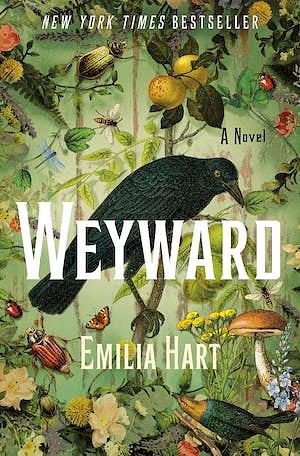
This novel is set in three time frames. In 1619, Altha is being tried for witchcraft. In 2019, Kate has discovered she is pregnant, so she has decided she must leave her abusive boyfriend, Simon. She has inherited a cottage from her Aunt Violet that he doesn’t know about and she has quietly saved some money, so she goes. In 1942, Violet has grown up isolated, not even allowed to go to the village and never told anything about her mother. At 16, she is jealous of her brother Graham, who is allowed to study interesting topics while she is forced into a traditional feminine role. She wants to travel the world and study bugs, but her father has apparently already chosen a husband for her.

Back at the cottage, Kate begins looking into her family history, into the women who called themselves the Weywards and have an unusual connection to animals.

This is an interesting novel with supernatural overtones that are fairly slight. I was interested in all three stories, although I found the outcomes of Altha’s and Kate’s stories fairly easy to guess. In this novel, I wasn’t as disturbed by the husband murder as I was in the other novel, in which I thought the wife could have easily gotten away. In any case, almost all the men in this novel are rotten to the core. So yes, I liked this novel fairly well.

Related Posts

Recipe for a Perfect Wife

The Harpy

The Family Upstairs

Review 2456: The Wren, The Wren

Just a quick note before my review: I’ll be posting during the next three weeks from various locations in the U. S., and Europe. So, my reviews may come out at funny times or may even be sporadic. I hope not.

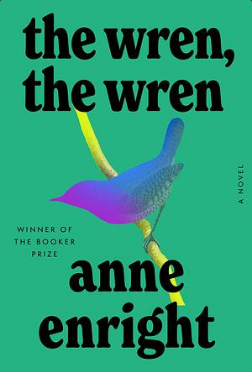
The Wren, The Wren is the story of three generations of an Irish family and how they are affected by the desertion of a father.

The first section of the novel is narrated by Nell, the granddaughter of the Irish poet, Phil McDaragh. At first, her section is delightful—exuberant, funny, it made me laugh out loud. But then she unfortunately falls in love with Felim, neglectful and abusive.

The next section is from the point of view of Carmel, Nell’s mother and Phil’s daughter. She has a close relationship with Nell until Nell’s teen years, but she is haunted by memories of her father, who deserted his family while Carmel’s mother Terry was ill with cancer. It is Carmel’s memory that the last thing he did before he left was throw a tantrum about a missing wristwatch, which Carmel later spots on his wrist during a TV interview.

We briefly see a few things from Phil’s point of view, mostly about his own childhood, and chapters are separated by his poetry or by old songs translated from Celtic. There is a lot of bird imagery in all the sections. The McDaraghs are conscious of birds.

This is a powerful novel about lasting damage from a harmful act and the time it can take to heal. It is often funny, with a dry humor, and just as often sad.

Related Posts

The Green Road

The Gathering

So Late in the Day

Review 2452: La Rochelle

Mark Chopra is a neurologist who lives alone and has apparently never had a partner. He also seems at first to have no friends except a much younger couple, Ian and Laura. The draw there is Laura, with whom he is in love. As for friends, it gradually becomes clear that he has other friends, but he disregards them.

Mark judges the stories Laura has told him and his own observations and thinks that Ian doesn’t treat Laura the way she deserves. At the pub at the start of the novel, Ian tells Mark that Laura has left him to think about their future. He doesn’t know where she is and doesn’t look for her, saying she’ll come back when she’s ready.

Mark is a highly intelligent person who tends to overthink things. He starts worrying about Laura, thinking she could have had an accident or even have been kidnapped. But he does nothing except hang out with Ian every night, getting so drunk that he can’t remember things and smells like booze at work. He ignores the warnings of coworkers (his other friends that he doesn’t seem to recognize) about his job.

Toward the end of the novel, Mark finally does something, but the trip there wasn’t pleasant for me. Mark is not a reliable narrator. He knows more than he tells until toward the end of the novel. But I also found him an unpleasant person. Despite being, he finally claims, willfully abstinent, he seems to think of women only in terms of sex. He meets a couple and immediately wonders how often they have sex. He makes constant demeaning comments about female anatomy. He expresses his gratitude toward a female friend and coworker by mentioning her bra size! Is this supposed to be a side effect of Mark’s lifestyle choice? Is it supposed to be funny? I have no idea. I found this character to be deeply unpleasant despite his desire to be a knight errant for Laura. It was no surprise at all to me to find him ultimately having no interest in what he finally gets, even though it’s what he wanted.

The plot eventually has some surprises, but after a labyrinthian scheme finally reveals itself, the whole idea just seemed stupid to me. The characters go to all kinds of trouble instead of speaking a single sentence. (I think Roger Ebert used to call that the “idiot plot,” in reference to movies.) I really wouldn’t have finished this book if it hadn’t been part of my James Tait Black project.

Related Posts

Amsterdam

The Sense of an Ending

Eileen

Review 2446: The Collected Regrets of Clover

Clover is a death doula who is still in mourning for her grandfather. She is a lonely person, but she avoids getting to know new people. At a death café, she meets Sebastian, who seems to want to get to know her, but she avoids him. When he finds out she is a doula, he hires her to be with his grandmother.

Her new neighbor, Sylvia, also wants to get to know her. Clover reluctantly agrees to meet for coffee.

From about page two, I realized this wasn’t the book for me. It had all the earmarks of the manipulative feel-good novels that are so popular now and I dislike. In addition, it was clunky and obvious, especially the flashbacks of her as a child with her grandfather. Brammer doesn’t write a convincing child.

I gave the novel 104 pages to see if it improved, but it didn’t.

Related Posts

A Man Called Ove

Once in a Blue Moon Lodge

The Trouble with Goats and Sheep

Review 2441: Real Life

Almost from the beginning of this novel, I was struck by how morose it seemed. Yet I couldn’t quite figure out why it seemed so much more dour than novels with similar stories, like A Little Life or Shuggie Bain. Both of the main characters in these novels are White, while Wallace, the main character of Real Life, is Black, but is that the difference? It doesn’t seem like it should be.

Wallace is the only Black student in a graduate biochemistry program at an unnamed Midwestern university that is probably the University of Wisconsin at Madison. He has been having problems in his program. His supervising professor, Simone, seems to disapprove of him, and he has been blamed for the carelessness of another student, Dana. Simone seems to think Dana is a star. Later in the novel, Dana makes a racist remark to him and then reports him as being a misogynist.

Wallace and his fellow graduate students seem to be working toward their degrees expecting real life to begin once they get them. Wallace, though, is considering how much he wishes to continue despite knowing the degree is his best chance to succeed, as a Black queer man from a poor family.

Wallace has a group of friends he hangs out with, but they are all White and he doesn’t really feel he fits in with them. He is attracted to Miller but doesn’t even know if Miller likes him.

This novel minutely documents a few days in Wallace’s life. The writing is detailed, whether describing Wallace’s experiment, which has been contaminated, perhaps intentionally by Dana, or a character’s eating habits, or a gay sex scene. Wallace faces quite a few slights and insults in just three days, but he doesn’t really defend himself or point them out. He feels he is trying to fit in, but he keeps himself removed from everything, including his friends, by always saying everything is fine, even when it’s clearly not. I felt frustrated several times by his refusal to tell his side of the story or stand up for himself.

I also didn’t understand the violence in his eventual sexual relationship with Miller (who insists he is not gay). In fact, I often didn’t understand characters’ interactions with each other.

Although I believe this novel ended on a slightly more positive note (or did it? it was certainly ironic), it seemed in some ways that Wallace makes things more difficult for himself. Also, although he certainly faces incidents of racism, he also often makes broad judgments about White people, including his friends. I personally also do not enjoy explicit sex scenes, but that’s just me. I read this novel for my Booker Prize project.

Related Posts

A Little Life

Shuggie Bain

To Paradise

Review 2428: The Green Road

The Madigan family centers its activities around Rosaleen, the mother. At the beginning of the novel, she takes to her bed, assuming the horizontal, after she learns her favorite son Dan is planning to become a priest. The family has to run itself around her until youngest daughter Hanna, the narrator of this chapter, returns from a visit to her brother with information that gets Rosaleen out of bed and on the attack.

In that chapter we learn of the tangled history of the village. The Considines, Rosalee’s family, always looked down on the Madigans, Rosaleen mocks other families for their pretentions, but it’s true that she married below her, and the Madigans have never made very much money. But Rosaleen doesn’t care about money. She would like her husband to fix a few things around the house, but he generally doesn’t.

The next chapter picks up eleven years later in 1991 New York City. This chapter is narrated by Greg Savalas, a gay man deeply in love with a man named Billy. Dan Madigan comes on the scene, and although he is not out, he begins an affair with Billy. This is the time when men are dying of AIDS, and Billy is suddenly stricken. Dan is not helpful.

Eleven years later we encounter oldest son Emmett, who is an aid worker in Mali. This chapter details his insufficiencies in his relationship with his girlfriend Alice.

The Madigans all seem to reserve themselves from deep attachments. The second half of the novel is set in 2005, when they all gather together for Christmas for the first time in years because Rosaleen decides to sell the house. It’s clear that everything is still revolving around her. We get more insight into Constance, the oldest daughter, who has her own family but is the only one left in the area to meet Rosaleen’s demands. Finally, there is Hanna, an actress who is not coping well with motherhood.

I always feel that Enright’s characters are absolutely believable and her families fraught with realistic complications. Her descriptions, too, of the Western Ireland scenery are gorgeous.

Related Posts

The Gathering

Small Things Like These

This Is Happiness

Review 2338: My Death

The unnamed narrator of My Death is a novelist who has been unable to write since her husband died a year ago. She has been isolated in a house in the west of Scotland. She decides to try biography instead and chooses the figure of Helen Ralston, whose accomplishments as an artist and writer were overshadowed by her tumultuous affair with her mentor, W. E. Logan, another artist.

When she begins to look into the subject, she finds that all of Ralston’s books are out of print but Logan’s are not. However, Ralston is in her 90s and eager to meet her and share her journals and photos. The narrator is struck with unease, however, when she sees a painting by Ralston entitled My Death, a supposed landscape of an island that is really a painting of the artist’s most intimate parts. As she continues her research, she keeps finding odd echoes of her own life.

This novella is described as gothic, but I wouldn’t exactly call it that, although it is unsettling and weird. Important to Tuttle is the theme of, as the Introduction by Amy Gentry puts it, “the erasure of women’s authorship by men.” That is certainly at work here, as she based some of the details of Ralson’s life on that of Laura Riding, an American poet and lover of Robert Graves, who accused Graves of stealing material.

This is an involving story that at first seems straightforward but gets odder and odder. I found it fascinating. Tuttle is in general a science fiction writer, but despite that I may look for more by her.

I received this book from the publishers in exchange for a free and fair review.

Related Posts

The Bloody Chamber

Luckenbooth

Ghostly

Review 2337: The Berry Pickers

Joe’s Mi’kmaq family travels every year from Nova Scotia to Maine, where his dad is the foreman of the berry pickers and the rest pick berries, too. In 1962, Joe’s little sister Ruthie disappears from where they left her sitting on a rock eating a sandwich near their camp. The police don’t give them much help. The family searches for her for days but does not find her and continues to look for her in subsequent years..

Now an older man dying of cancer, Joe has lived most of his life away from the family, blaming himself for events caused by his anger. He has finally returned home to die, surrounded by his family but not Ruthie.

While Joe looks back over his life, we hear from Norma. As a child, Norma had dreams of another home, another mother, a brother named Joe. She also had an imaginary friend named Ruthie. But her mother told her it was just her imagination—her neurotic, overprotective mother who barely let her go outside. It’s not too hard to guess Norma is Ruthie.

Every other chapter is Norma’s, as she grows up, sometimes receiving clues about her identity but never really going there.

The novel is built around whether Norma will find her family before Joe dies. There’s not much doubt about that, although the ending is touching.

I thought the idea behind this novel was an interesting one, although in Norma’s mother Peters has invented a monstrous creation, as proved by her family keeping her secret to pacify her. I think we’re supposed to feel some sympathy with this grief-stricken woman, but I absolutely didn’t, and even though her husband is a sympathetic character, I couldn’t fathom his actions.

That aside, Peters’ writing is fairly commonplace, with lots of clichés. I found her characters flattish. I was a little disappointed in this one.

Related Posts

There There

History of Wolves

Guy Mannering

Review 2330: Somebody’s Fool

Somebody’s Fool is the third of Richard Russo’s North Bath novels. The first two (Nobody’s Fool and Everybody’s Fool) centered around the character of Donald “Sully” Sullivan. Sully is now dead, but he is certainly not forgotten, and in a way, you could say that this novel also centers around him.

These books of Russo’s are equivalent to ensemble cast programs. There are lots of characters, and the novel moves among them.

Peter Sullivan, Sully’s son, is one of the main characters. He is a college professor who spends his weekends fixing up, first, the house his grandmother left him and now, the one Sully left him. He enjoys this work, but his plan is to leave North Bath as soon as he finishes and sells the second house. On the other hand, he’s always planned to leave but doesn’t seem to do it.

Peter is surprised to receive a visit from his son, Thomas, whom he hasn’t seen since he and his wife split up when Thomas was a boy. Thomas doesn’t seem to mean well, even though he is friendly, and we learn later that he has a plan but not right away what it is. Thomas, we learn from letters to his brother, is eaten up with resentment against Peter for deserting them (even though his mother didn’t want to have anything to do with Peter) and with jealousy against Will, the oldest brother, for getting to go with Peter.

(Just as a side note, I can’t be sure, but I think this is the first time we ever hear that Peter has two other sons besides Will. They are certainly convenient for this plot but make Peter’s lingering resentment against Sully for deserting him and his mother even harder to understand.)

Another important character is Doug Raymer, the ex-Chief of Police of North Bath. North Bath has recently been dissolved as a political entity and absorbed by nearby Schuyler. Raymer was offered the job of Chief of Police there but decided to retire. He is mostly missing Clarice, his girlfriend and ex-officer, who wanted to take a break and has accepted the Chief of Police job. When he meets up with Clarice, he finds she is dealing with a breakdown on the part of her twin brother, Jerome, and the misogyny and bigotry (she is Black) of her new staff, led by Lieutenant Delgado.

Raymer gets involved with a case of identifying a badly decomposed suicide at an abandoned estate when his old officer, Miller, calls him for help. Clarice hires him as a consultant and asks him to take Jerome as a housemate.

Another main character is Janey, a woman with a history of poor choices in men. Although a lot of her space is occupied with her relationships with her mother (whom she resented for years for carrying on with Sully outside her marriage) and her daughter, she ends up being key because of her relationship with Delgado.

Russo’s characters tend to be self-doubting and over-think things. Usually I enjoy him, but in this novel some of these tropes became a little repetitive. And at times they slowed the action to a halt. For example, Peter hears someone moving around in his supposedly vacant house. He grabs a baseball bat but then Russo takes two pages to have him wonder who it is (including Sully’s ghost) before going up to see. Eventually, the plot gets going but before that, there were times that I got impatient.

Russo is a really good writer, though, who creates complicated and mostly likable characters. It seems like he wanted to use this novel to wind up the fates of his sometimes comic North Bath characters. If that was his intent, he succeeded.

Related Posts

Everybody’s Fool

Empire Falls

Mohawk