Review 2314: Bolla

Arsim is an Albanian literature student in Pristina, Kosovo, in 1995 when he meets Miloš, a Serbian medical student. They are immediately attracted to each other and soon begin a torrid affair. Although he is young, Arsim has already been married for four years to Ajshe, and on the day he consummates his relations with Miloš, she tells him she is pregnant.

The affair continues through Miloš’s graduation, but shortly thereafter, it becomes too dangerous for Albanians to stay in Kosovo, and Ajshe and her brother arrange for the family to leave the country. As soon as he learns Arsim is leaving, Miloš joins the Serbian army.

Arsim’s relatively linear narrative is broken by short sections narrated by Miloš that are harder to understand and move back and forth through time. He is the more fragile of the two and becomes damaged by his war experience.

This novel, which I read for my James Tait Black project, is beautifully written and ultimately haunting. However, I so disliked Arsim that it was hard for me to read. He is absolutely vile in his behavior to almost everyone in the book but especially to his wife and children, whom he periodically deserts and beats when he is there. When he thinks later that he did his best by them, he defines this as financial support. Really, he deserts anyone who poses any difficulties.

Related Posts

The Tiger’s Wife

The Great Fortune

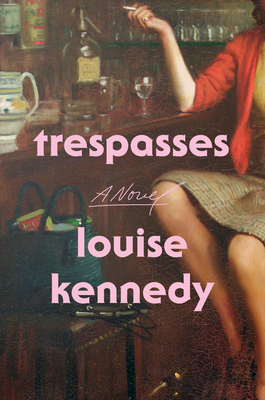
Trespasses

Review 2302: Trespasses

I read somewhere that Kennedy inserted the romance into Trespasses to make the political and social environment of her childhood palatable to readers. If that is so, I personally found the political and social parts more interesting, although the romance seems to take over the novel. However, the addition of the romance helped create the extremely touching ending.

Cushla is a Catholic schoolteacher who helps out at her brother’s pub in 1970’s Northern Ireland. One day Michael Agnew comes into the pub. He is nearly twice as old as she is, a Protestant, married, and a lawyer. She is immediately attracted to him even after she finds out he’s known as a womanizer. Soon he invites her to teach a group of his friends Irish, which leads to an affair.

At school, the children pick on one of her students, an eight-year-old named Davy McGeown, who is poor and who has a Catholic father and a Protestant mother. The family is threatened at home, and soon after Davy’s father finally gets a job, he is beaten mercilessly and left a cripple. Even the principal of the school treats Davy and the family badly, and there are hints of potential child abuse in the attentions toward Davy from the local priest. Cushla begins trying to help out Davy and his family, including his sullen older brother, Tommy.

Although Cushla’s family has successfully stayed out of the internecine conflict and serves people of both religions at the pub, things begin to change for them.

For quite a while that I was reading this novel, I was only mildly interested in the main story line but fascinated with the other things that were going on. However, towards the end, I was completely drawn in and found the ending particularly touching.

Related Posts

Milkman

The Last September

Troubles

Review 2294: Hotel Silence

Jónas Ebeneser has begun to think his life has no meaning. His wife Gúdrun has divorced him, and recently she told him his daughter Gúdrun Waterlily isn’t his. Aside from getting a lily tattooed on his chest, hanging out with his neighbor, and visiting his senile mother, he hasn’t been doing much, except fixing things, which he is good at.

He decides to kill himself, but he is worried that Gúdrun Waterlily will find his body. So, he decides to travel to a dangerous foreign country, feeling sure he can find a way to die. He travels to an unnamed country where a war has just finished, taking a shirt, his tool box, and his old diaries, and checks into Hotel Silence, formerly occupied by the famous and now run down with three guests.

This quietly quirky novel is another joy from Ólafsdóttir. It’s at times serious and sad but full of hope.

Related Posts

Miss Iceland

Pastoral

This Is Your Life, Harriet Chance!

Review 2293: A Haunting on the Hill

I haven’t read a book by Elizabeth Hand in a while, but as I remember, the two I read involved the supernatural. That probably makes this homage to Shirley Jackson’s The Haunting of Hill House a natural fit for her.

Holly has recently won a grant that allows her to take leave from her school-teaching job for a semester and work on a play she’s written. She and her partner Nisa are celebrating by spending the weekend in a B & B in upstate New York when Holly goes for a drive and comes upon Hill House.

Holly decides that the mansion would make a perfect place to workshop and rehearse her play. She is barely able to afford it, and the rental agreement comes with all kinds of relinquishments of liability.

Holly assembles her small cast at the house. There is Nisa, who has written some haunting songs for the play and is going to perform them; Amanda Greer, an older actress who will play the main character, a woman who was burned as a witch in the 17th century; and Holly’s best friend Stevie, who will play a dog/Satan and do the sound. Although Amanda used to be a name, all of them have been struggling for success.

The house makes Nisa and Stevie uncomfortable, and odd things happen right away, but Holly is too obsessed with her play to pay them much heed. And she has spent too much of her money to back out.

Nisa is resentful, because Holly always talks about her play and seems to be jealous when attention is paid to the music. Also, Holly doesn’t know, but Nisa has slept with Stevie repeatedly. Amanda hasn’t worked much since her costar fell to his death from a catwalk while arguing with her. She is inclined to think the others are mocking her. Stevie is a fragile soul who struggles with drug and sex addictions.

At first there are just the huge black hares outside and sounds that might be talking. But each character experiences odd things that he or she dismisses. As the tension builds, it becomes clear that they need to leave.

This is a creepy novel, although not as creepy as the original. But it’s involving and sometimes scary.

Related Posts

Wylding Hall

Mortal Love

The Bird’s Nest

Review 2292: Pomegranate

I have to admit that Pomegranate was a slog for me, even though I liked that central image. A review called it a fresh look at the problems faced by newly released prisoners, but that does not reflect my problem. It all seemed very predictable and trite to me.

Ranita is a Black woman who has recently been released from four years in prison on a drug charge. Although her Aunt Jessie has offered her a temporary place to stay, she faces the challenges of staying clean, getting a job, getting her own place, and regaining custody of her children. Her social worker expects her to fail, and although her therapist seems more open, she is not ready to open up. She also is having difficulty with her sexual identity, having had her first meaningful relationship in prison with a woman.

The novel flashes back to incidents in her life that explain how she ended up in jail, starting with a cold and disapproving mother.

As compelling as I feel this story could have been, it was not. I didn’t really feel pulled into it. Even the revelatory moments seemed contrived.

Related Posts

The Sentence

The Panopticon

The Mars Room

Review 2283: Foster

Foster is so good it made me cry. It is beautifully and sparely written, about a little girl who is sent away to stay with strangers, the Kinsellas, while her mother has yet another baby. Her father, we learn very quickly, has gambled away their heifer and tells lies for no reason. He tells the Kinsellas, “You can have her as long as you want her.” He forgets to leave her clothes.

The girl is scared and mistrustful. When she wets the bed, she expects to be punished and sent home, but Edna Kinsella says the old mattress has been weeping and merely cleans and airs it. The Kinsellas are kind. They give her clothes to wear and feed her well, and she helps Edna with chores. She begins to love living on the farm.

I will say no more except this is a lovely book.

Related Posts

Small Things Like These

Antarctica

Our Endless Numbered Days

Review 2266: Old God’s Time

I started reading Old God’s Time without any idea of what it is about, and at first it seemed to be just meandering inside a retired policeman’s head. But eventually, a story begins to crystalize.

In the 1990’s, Tom Kettle is a retired Irish cop who has spent the last nine months alone in his seaside apartment. He has found the time peaceful, but he’s been retreating into memories of his life with his beloved wife June and his children Winnie and Joseph. He’s not always sure whether has has dreamt of scenes with them or not.

Then two police detectives come to his home to ask him questions about an old case concerning a priest’s abuse of children that was shut down by higher-ups. Oddly, though, they don’t ask him anything but spend the night during a storm and leave.

Next his old chief Fleming stops by to ask him to come in and help them with the case, Slowly, with the discussion of this case, the secrets and sorrows of Tom’s life are revealed. At the same time, Tom gets more involved with his immediate neighbors.

This is an eloquent novel but also a very sad one, with a strong message about the effects of child sexual abuse.

Related Posts

On Canaan’s Side

Days Without End

Edinburgh

Review 2264: Tom Lake

On the farm in Northern Michigan that has been in her husband’s family for generations, Lara has been coaxed by her three grown daughters to tell them about her relationship with Peter Duke, a now famous movie star. There has been a triggering event for these stories, but we don’t learn about it for a long time. In any case, these stories take place between sessions of cherry picking and other hard work.

Lara becomes an actress without planning to. When she is in high school helping with auditions for Our Town, the girls trying out for Emily are so bad that she tries out herself and gets the part. Later in college, she takes the part again, and it happens that Ripley, a movie producer, has been persuaded to attend to see his niece. Instead, he decides that Lara is perfect for an upcoming role.

Lara makes a movie, but there is a long delay before it comes out, so she ends up taking the part of Emily again at a summer stock theater in Michigan called Tom Lake. At Tom Lake, she is swept into an affair with Peter Duke, a young, charismatic actor, on her first day. The summer starts out magical, but Lara has a lot to learn about acting, herself, and Duke.

The present-time novel is set during the pandemic, but even though the story has some heart-wrenching parts, its overall atmosphere is so cozy, so happy in its setting, that it feels like the family has its own little nest. You want to go and live with this fictional family. I was born and grew up in Michigan, and although I never lived on a cherry farm, this book made me nostalgic.

Patchett is also a terrific storyteller. This novel is paced brilliantly. The sections where she tells her story seem just about right in length while the rest portrays a warm family life and hard work on the farm. I loved this book.

Related Posts

Commonwealth

State of Wonder

Once upon a River

Review 2248: Road Ends

Mary Lawson’s subject is always dysfunctional families in distress living in the far north of Ontario. That sounds deadly, but her novels are absorbing and touching, and Road Ends is no exception.

The novel is told from three different perspectives at slightly different times. Megan Cartwright begins it in 1966, although there is a prologue set in 1967. In the prologue, the best friend of her brother Tom commits suicide where Tom will find him. This doesn’t at first seem to have much to do with Megan’s earlier section but informs Tom’s behavior throughout.

The Cartwrights is a large household of boys with only Megan and her mother the females. Megan’s mother Emily keeps having babies, and Megan is the only one keeping the household organized. Emily retreats to the bedroom with the baby, and Edward, her father, to his study after work. In 1967, baby Adam is a toddler, and Mary has overheard the doctor telling her parents he must be the last child, so she feels free to leave, having realized she will never have a life if she stays. She makes plans to go to Toronto in order to save money to go to London and stay with a friend, but when her father learns her plans, he pays for her to go to London.

Edward has withdrawn himself from the family. One reason is that he is terrified of becoming like his father, a drunkard who used to beat him. He has felt an overpowering anger at times, especially against his sons Peter and Corey, who are always fighting and breaking things. His section of the novel is set in 1969 in roughly the same timeframe as Tom’s, but because of his withdrawal, he hasn’t noticed the household descending into chaos.

For Tom, his friend’s suicide has sent him into a tailspin. He thinks he could have saved him if he had paid more attention. Tom was graduated from college and had job offers in engineering from two aircraft companies, but six months later, he is driving the snow plow at night and spending the day reading the newspaper. He can’t stand to be around people. But he starts noticing that Adam, now four, isn’t being cared for. His mother has had another baby and seems to only care for it. The house is filthy, the child is filthy, and there is no food in the house.

Mary, after a very rough start, has found her dream job in London running a small hotel. She was furious to hear her mother was pregnant again, and she is still homesick but determined not to go back.

I was extremely touched by the ending of this novel. Another really good book from Lawson. I can’t seem to go wrong with her.

Related Posts

Crow Lake

A Town Called Solace

The Other Side of the Bridge

Review 2245: LOTE

This is a very unusual book, and von Reinhold has created an unusual protagonist in Mathilda.

Mathilda worships beauty, a particular baroque, florid kind of beauty. Black, gay, and from a poor background, she is trying to work her way into higher echelons of society to live an opulent life. She periodically becomes obsessed with different figures from the 20s and 30s, Black artists in the periphery of the Bloomsbury Circle, and doesn’t so much research them as immerse herself in them. She calls them her Transfixions. The latest is a Black poet named Hermia Druitt.

Because Mathilda does not always earn her money honestly, she has to sometimes change her identity. She’s been staying in a vacant flat of a friend who is away when her host returns and meets neighbors who know her as Sadie. She has just lost a job at an archive because it wasn’t an official position. She needs somewhere to live and some money, so she thoughtlessly applies for an artists residency that she sees is located in Dun, a town in Europe where Hermia lived. To her surprise, she gets it.

When she arrives in Dun, she finds the town enchanting but the residency dire. The other residents seem to be uniformly drab, so much so that at first she fears she has unwittingly applied for a business residency. They always carry around textbooks written in incomprehensible jargon and speak in that jargon. Mathilda continues her search for evidence of Hermia while pretending to do her work on the residency.

Behind the bemusing and sometimes funny portrait, von Reinhold has a serious theme—the erasure of Black European culture from the public consciousness. A good deal of Hermia’s story is told by excerpts from Mathilda’s Bible, a book called Black Modernisms. Sometimes this novel was a bit esoteric for me, but it was always interesting. I read it for my James Tait Black project.

Related Posts

Heads of the Colored People

The Hours

How to Be Both