Review 2243: Antarctica

Looking for more to read by Claire Keegan, I came across this collection of short stories written in the late 1990s.

In the title story, a happily married woman decides to try a one-night stand, with disastrous results.

In “Men and Women” a girl still young enough to believe in Santa gains some insight into her parents’ relationship.

“Where the Water’s Deepest” contrasts the care an au pair has for a boy with her employer’s disdain of her.

“Love in the Tall Grass” tells what happens after Cordelia’s married lover asks her to wait for him for ten years.

“Storms” is about a young girl’s memories of her mother, who has been put away in an asylum.

These are summaries of the first few stories, but there are several others. Many of them are about the mistreatment of women by their partners. Keegan’s writing is always beautifully lucid and her stories contemplative.

Related Posts

Small Things Like These

Not the End of the World

Flights

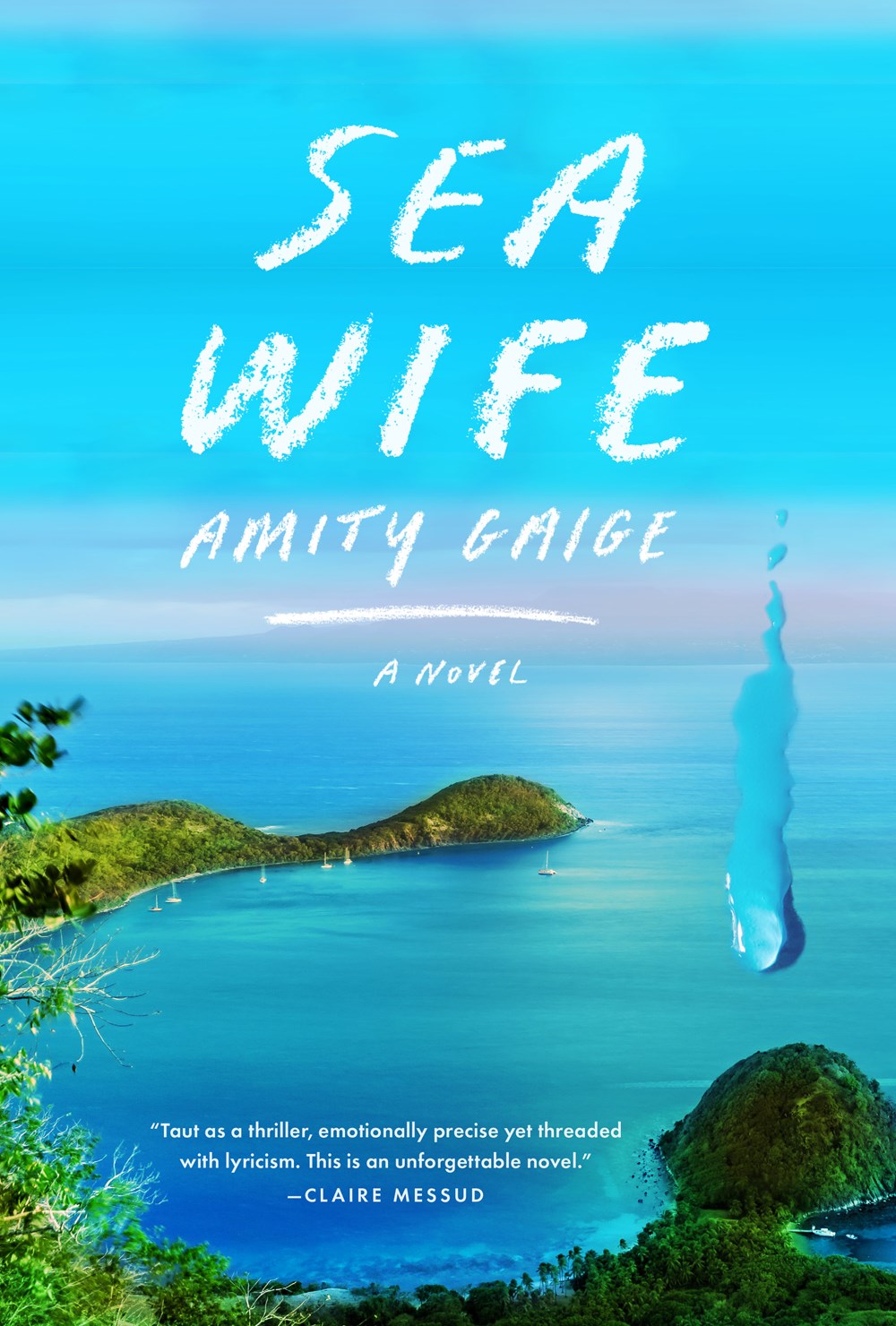
Review 2231: Literary Wives! Sea Wife

Today is another review for the Literary Wives blogging club, in which we discuss the depiction of wives in fiction. If you have read the book, please participate by leaving comments on any of our blogs.

Be sure to read the reviews and comments of the other wives!

My Review

At the beginning of Sea Wife, I thought, oh no, it’s in he said/she said format, which I’m already sick of. That’s not really what’s going on, though. Eventually we realize that Michael’s ship log entries are interspersed with Juliet’s thoughts as she reads them.

Juliet is home after a voyage in the Caribbean. Before the trip, she had been suffering from post-partum depression since the birth of her 2 1/2-year-old boy George (or Doodle). Then her husband Michael convinced her they should buy a sailboat and go to sea. She was terrified of this idea, having no sailing experience herself. However, eventually she agreed. Michael wanted to sail around the world, but she convinced him to sail in the Caribbean off Panama, where they ended up buying the boat, so they could stay near land. Along with them went Doodle and seven-year-old Sybil.

Michael is right about one thing—the adventure forces Juliet out of herself. It also focuses attention on their marriage. They have some lovely moments, but dread arises as we slowly realize that Michael has not returned home.

After my initial bad reaction, which only lasted a few pages, I found this novel absolutely compelling. The descriptions of their stops and of the seas are vivid and beautiful. Both Michael and Juliet have the opportunity to unearth some of their own demons.

What does this book say about wives or about the experience of being a wife?

Literary Wives logo

First I have to rant a little about how unprepared this couple were to take on this kind of trip. Michael’s teenage years spent doing a few trips on Lake Erie were definitely not enough experience to set sail on the ocean with his family, especially when Juliet has never sailed. They’re not sailing on a cabin-cruiser-type yacht but on a sailing vessel, which is much more complicated. He tries to teach her during the trip, but she gets confused about the names of things and is afraid of doing something wrong. This mid-life crisis experiment seemed so stupid to me that it took me a while to get past it. They lived in Connecticut, for heaven’s sake. As this was supposed to be his life-long dream, he could have rented a boat and taught her to sail before they went.

In any case, a sailboat, however large, is a good place to focus the mind on the family problems. Michael seems to have been breathtakingly self-absorbed during Juliet’s depression, leaving her alone with the kids almost all the time and not helping with the housework.

Michael loves Juliet, but he harbors a lot of resentment against her for being depressed and for focusing on her memories of being abused by a family friend. He seems angry that she turned out to be a different person than she seemed to be when they met, a woman he thought was brave and self-assured..

Juliet is afraid she no longer loves Michael. Her political beliefs are opposite to his and he hasn’t handled her depression well.

I like how their relationship ebbed and flowed during the trip, with good times and not so good, like a real marriage, instead of (more common with our Literary Wives books) being unrelentingly bad. Living the dream, Michael is nicer and more involved with the kids even though he is occasionally impatient and Juliet has gotten out of herself. The couple end up really having adventures, as well as working out some of their problems. But how does it end? I’m not telling.

Related Posts

Ahab’s Wife, or The Star-Gazer

Dept. of Speculation

Happenstance

Review 2228: The Island of Missing Trees

I’ve now read three books by Elif Shafak, but I always have the same problem. Some choice she makes in the narrative style separates me from getting fully involved. In this case, it’s the blasted fig tree.

In the 2010s, Ada is the sixteen-year-old daughter of Cypriot parents living in London. Her mother died the year before, and she is grieving. Her father, an introverted plant scientist who is also grieving, is not much help. Her parents went through traumatic events when they were in their teens during the invasion of Cyprus. Further, their marriage meant a break from their families, as Kostos is Greek and Defne was Turkish. Ada would like to understand more, but Kostos promised Dephne not to talk to Ada about their past.

Just before the holidays, Ada has a sort of breakdown in school, and her behavior is recorded and put on social media. She is depressed and hostile until her Aunt Meryem, whom she has never met, arrives for a visit. She is angry with her aunt because she didn’t come to Dephne’s funeral, but from her she begins to learn about Cyprus and her parents.

The chapters involving humans are separated by chapters narrated by a fig tree that Kostos brought from Cyprus. This fig tree knows all about the history of Cyprus as well as about various creatures. Plus, it is visited by numerous birds and insects, all of which have stories to tell or the tree has facts about them to impart. Every time I came close to getting involved in the flow of the story, there was a chapter by the fig tree to interrupt it. I finished the book, but I almost put it down numerous times, and I started skipping through the tree’s sections.

Related Posts

The Bastard of Istanbul

10 Minutes 38 Seconds in This Strange World

The 40 Days of Musa Dagh

Review 2222: Bitter Orange Tree

As Omani university student Zuhour pursues studies and friendships in England, she is haunted by thoughts about the woman she considered her grandmother, whom she neglected and avoided before her death. She revisits her family history, from the time when Bint Aamir, an impoverished relative taken in by her grandfather, was ejected, along with her young brother, from their father’s house at the urging of his new wife.

Back in England, Zuhour befriends Suvoor, a wealthy girl of Pakistani heritage brought up in England. Suvoor is devastated because her sister, Kuhl, has chosen a young man who she deems socially unworthy of their family. But Zuhour grows closer to Kuhl instead of Suvoor.

This novel is a poetic examination of the past and future of this character, where her contemplation of Bint Aamir’s life—in which her father did not permit the only marriage she was asked for—seems to predetermine her own—in which she is in love with her friend’s husband. The most interesting parts for me were the historical ones. The novel refers often to Zuhour’s dreams and sometimes seems dreamlike itself, but I didn’t feel touched by it. I read this book for my James Tait Black project.

Related Posts

A Thousand Splendid Suns

And the Mountains Echoed

In the Shadow of the Crescent Moon

Review 2211: Horse

This novel tells the story of a famous racehorse and the people connected to him evoked through some objects—his own skeleton and three portraits of him. Although the main characters in the novel are fictional, many of the historical characters are not. The horse, Darnley, who is renamed Lexington, is still considered one of the best racehorses of all time, and many of his offspring have been champions.

In 2019 Theo is a Nigerian graduate student of art history at Georgetown. He plucks a painting out of the trash of his neighbor. It is of a horse, and he recognizes that it is well painted, so he decides to write an article about having it cleaned and valued.

Jess is the head of a lab at the Smithsonian that cleans and articulates animal skeletons for display and study. She has recently located the skeleton of the famous race horse Lexington for a scholar studying equine bone structure when Theo brings in his cleaned painting. Jess recognizes it immediately as one of Lexington painted by Thomas J. Scott, a 19th century horse painter.

In 1850, 13-year-old Jarrett is a slave working with horses for Dr. Warfield in Lexington, Kentucky. Jarrett’s father, Harry Lewis, is a well-known horse trainer who has bought his own freedom and is saving to buy Jarrett’s. Jarrett is with Alice Carneal when she gives birth to Darnley, the horse that will be renamed Lexington. After a promise from Warfield to give Darnley to Harry instead of his yearly wage, Jarrett develops a close relationship with the horse.

Thomas J. Scott is a young artist who specializes in painting horses and is hired by Warfield to paint some of his horses. While he is there, he paints a copy of his picture of Darnley and gives it to Jarrett. Later, he returns to paint an older Lexington.

These are the characters whose points of view are used to tell the story of Lexington. Brooks’s story is based on what is known of the real horse and characters with some inventions. It’s an interesting story with vivid descriptions of the races, of 19th century New Orleans, and of the racing industry of the time. It also has strong themes of the effects of slavery, racism, and cruelty to animals.

Related Posts

Horse Heaven

The Sport of Kings

People of the Book

Review 2207: Birnam Wood

Well, this is quite a novel. Unfortunately, I don’t know how to explain what it is like without giving too much away. But I’ll try. Let me say that I don’t know whether I liked it, but it certainly is effective.

First of all, you’re not going to find a character in this novel to outright like. Catton has fully realized her characters as flawed people, and she keeps turning back to them and showing another side. There is definitely a villain, though.

Mira is the founder of Birnam Wood, a gardening collective that plants vegetables in unused spaces. Mira is not picky about whether they do this with permission from owners or even steal water or tools to do their work. However, most of the members believe their activities are legal.

Shelley is Mira’s roommate and best friend but also the person in Birnam Wood who does most of the management and publicity work. She is tired of not being listened to or having her contributions unacknowledged.

Mira reads that a landslide near Korowai National Park has cut off one of the accesses to the park, leaving only one road to a nearby town. A prominent businessman, Owen Darvish, who has property in the area that he had been planning to subdivide, took the property off the market because after the landslide it will not sell. Mira decides that this large, unoccupied property in a remote area would be perfect for a major planting operation, so she drives there to check it out.

On the property, though, she is apprehended by Robert Lemoine, an American billionaire who has been in the news because of a deal with Darvish. Eventually, he explains that he is buying the property from Darvish and is interested in donating a large sum of money to Birnam Wood to help ramp up their organization.

Tony, a radical Birnam Wood member who has been away teaching in Mexico, comes back to a meeting. When Mira presents Robert Lemoine’s proposition, he is very much against it but is outvoted. He walks out but decides to go to the area, thinking an article on what Lemoine is doing there would help his attempts to become a journalist.

Lemoine has a secret agenda that none of these characters know about. The novel moves from seeming to be a combination of a study of characters and somewhat of a sendup to a plot full of suspense.

Related Posts

The Rehearsal

The Luminaries

The Bone People

Review 2201: Homecoming

To a certain extent, you know what you’re getting with a Kate Morton novel—a split time-frame story with family secrets revealed. The storytelling is always very well done, and more often than not, the story is engrossing. Homecoming is no different.

On Christmas Eve, 1959, Percy Summers is riding past Halcyon, the estate in the Adelaide Hills recently purchased by Thomas Turner, when he trespasses to water his horse in the river. By the river, he finds Isabel Turner and her children apparently asleep near the remains of a picnic. Only they’re not asleep. In his shock, Percy fails to notice a basket hanging from a tree—where Isabel put her baby. Later, everyone realizes the baby is missing.

In 2018 London, Jess is summoned home to Sydney because her grandmother, Nora Turner-Bridges, is seriously ill, having fallen while trying to go up to her attic. Jess, a currently unemployed journalist, has not been home in 20 years, but it was her grandmother who raised her.

Nora has told Jess stories about her brother Thomas, but it is not until she begins looking through Nora’s things for a letter Nora’s caregiver said upset her that she learns Thomas had a house in the Adelaide Hills where his family was killed when he was abroad. Jess can’t believe Nora never told her about this. In fact, she finds a book about the crime in Nora’s bedroom.

While Jess investigates the old crime, we learn about it from flashes back and from the book she found, which is contained in its entirety. For me, this was an unfortunate choice that made the slow unwrapping of the plot more artificial, particularly because it is far too short to really be a book. However, I got used to it.

There were several big mysteries wrapped within this crime, but the two big ones are, what happened to the baby? and did Isabel poison her family? I was fairly sure I knew the answers to both early on, but I didn’t guess the details or complications. In all, I felt that this novel, while not my absolute favorite of Morton’s books, was right up there.

Related Posts

The Forgotten Garden

The Secret Keeper

The Lake House

Review 2199: This Mournable Body

I have already complained about the tendency of Walter Scott Prize judges to pick novels for their shortlist that are in the middle of a series. Now I find the Booker Prize judges selecting the third book in a series. I understand that reading the first two books would have helped me understand this one, but I am not sure my spirit could stand up to two more.

Set in 1990s Zimbabwe during the Mugabe dictatorship, This Mournable Body follows the struggles of Tambudzai, an embittered and sometimes unstable woman. At the beginning of the novel, she is unemployed and living in a youth hostel that she’s too old for, having quit her job as a copywriter for an advertizing agency because credit for her work was going to white employees. Right away, after a disturbing incident where she is turned away from an interview for lodging by a servant, we see an unpleasant side of her when she joins a mob attacking one of her hostel mates because of her short skirt.

Tambodzai makes two moves hoping to improve her lot. She takes a room in the crumbling compound of a rich widow, and she takes a job as a teacher in a girls’ school. Because of her education, she feels she deserves a better position in life, and that’s all she thinks about. She is embarrassed and depressed by her surroundings and sees her teaching job as a comedown. Finally, she has a breakdown in class.

Permeating this novel are references to the recent war, with war veterans complaining that the country, which is poor and struggling, and of course led by a corrupt government, is not what they fought for. But to me many things just seemed vicious. Women are assaulted by strangers, mobs, their husbands and basically told to get over it. The success of one businesswoman who opens a popular store is rewarded by a mob trying to threaten her. Later, when our heroine gets a new opportunity and is enjoying her work in ecotourism, the farm where they lodge tourists is taken over by war veterans with government approval, presumably because it is owned by a white family but perhaps not.

Tambudzai herself is not a nice person for most of the novel, until she experiences some self-revelation. More, though, is that there is a lot of this book I didn’t understand, about people’s attitudes and about the oblique references to the government. The ending provides a small lift; otherwise, I found the novel depressing and hard to stick with.

Related Posts

In the Shadow of 10,000 Hills

When Rain Clouds Gather

Travelers

Review 2196: Lucy by the Sea

Lucy by the Sea is the latest in Elizabeth Strout’s Lucy Barton novels. As usual, it references all the others, including her books that are not about Lucy. It is also a Covid chronicle.

The beginning recaps a bit of her previous novel, Oh, William! Lucy is still grieving the death of her second husband, David, when her first husband, William, calls to tell her the virus is coming and he’s taking her away from New York City. Lucy is oddly oblivious to what’s happening and only packs for a few days. William has to take her laptop himself.

Lucy finds them in a house in Maine all by itself at the end of a point above the sea. Bob Burgess (of The Burgess Boys) has arranged this home for them. William has also talked their daughters, Chrissy and Becka, into leaving Brooklyn for Connecticut.

From this distance, William and Lucy experience all of the dislocating effects of the pandemic—the worry about others, the isolation, the shock of hearing about friends’ deaths, the yearning for contact. Lucy is as always naïve but wise, full of anxiety and affection. She finds she cannot write.

I always love the Lucy books, which have a deepness to them that lies beneath an almost childlike storytelling style, but this one seems even more lovely.

Related Posts

My Name Is Lucy Barton

The Burgess Boys

Oh William!

Review 2189: Faith Fox

The cover of my Europa edition of Faith Fox is a little misleading, because although the plot of the novel revolves around a child, the child is a baby, not the young girl shown on the cover. You have to wonder sometimes if the artist ever reads the book or even knows what it is about.

When Holly Fox dies in childbirth, her mother Thomasina can’t bear to see the baby, Faith. The baby’s father, Andrew Braithwaite, seems oddly uninterested in her and anyway works brutal hours in the hospital. So, he decides to take her to his brother Jack, an Anglican priest who runs any experimental farm up in Yorkshire.

Jack is a sort of living saint, whose work barely supports a small community made up of ex-cons and Tibetans. The down side of this is his lack of sense. He trusts everyone, has no concept of a feasible project, and tends to forget the practical aspects of life. His little community lives in extreme discomfort and doesn’t accomplish much. He forgets Faith almost as soon as she arrives and his wife Jocasta has her reasons for avoiding Faith—she has been in love with Andrew since they met, but he could not afford to marry. So, he dropped her and her son off at Jack’s and later got engaged to Holly.

In fact, the only people yearning to see and care for Holly are Andrew’s parents, Toots and Dolly. But they are elderly and Andrew avoids bringing her to visit. Philip, Jocasta’s ten-year-old son, also cares about Faith and worries about her at school, but her care is basically left up to the Tibetans.

In the meantime, Thomasina scandalizes her friends by missing her daughter’s funeral to go to Egypt with Giles, an elderly colonel she just met. And Andrew and Jocasta have revived their affair after he brought Faith up to Yorkshire.

Gardam certainly has a gift for depicting dotty upper-class characters, selfish people, and hopeless charitable projects in the novel, as well as some peculiar lower-class characters. She also clearly understands the workings of grief, both bereavement and the lovesick kind. I’ve discovered Gardam late, but I’m really enjoying her.

Related Posts

Old Filth

The Man in the Wooden Hat

Last Friends