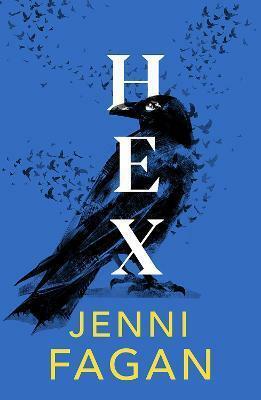
Review 2683: Hex

I actually read Hex for Novellas in November but somehow forgot to schedule it for November. Oh well.

It seems I have been reading the Darkland Tales series in order without even knowing it existed. I read the first, Rizzio by Denise Mina, because I usually read everything by her. Hex is the second.

Darkland Tales is a series of retellings of incidents in Scottish history, written by well-known Scottish writers. In this case, Hex is about the hanging of Geillis Duncan (not the Outlander Geillis Duncan) as a witch in 1591 Edinburgh.

The story begins with a witch from 2021 using a seance to visit Geillis in her cell the night before her execution. Iris, the real witch, is determined that Geillis will not spend her last night alone. Geillis is a young housemaid, a healer who has fallen afoul of her master’s plot to steal the inheritance of his wealthy sister-in-law.

This story interprets the witchcraft trials as misogyny, which they were, and so its two main characters express a great deal of the opposite. This work is symbolic and poetic, sometimes a little too abstract for me, but also angry. It’s powerful.

Related Posts

Luckenbooth

The Panopticon

Rizzio

Review 1892: Rizzio

The Scots mystery writer Denise Mina is still concerned with crime, but with this novel, she has turned to historical true crimes. Rizzio is a novella that deals with the 1566 murder of David Rizzio, a musician and favorite of Mary, Queen of Scots.

The murder has been engineered by Lord Lennox and Lord Ruthven, with the aid of Henry Darnley, Mary’s worthless husband. Darnley thinks the shock will cause his hugely pregnant wife to miscarry, most likely causing her to die. Then, he can be king. This is what came of their love match of the year before. To Lennox, Darnley’s father, this outcome would put him in power over his weak son. Lord Ruthven, almost dead already, is the tool of a group of aristocrats about to be dispossessed by parliament.

The novella is mostly description with little dialogue, but it has deep insight into the thoughts and personalities of its characters. It is mostly concerned with the activities of one night, March 9, 1566, in Edinburgh.

It is fast-paced and interesting. Mina has made no attempt to reflect the language of the time, and in fact wrote using modern idioms. Hence, perhaps, the lack of dialogue.

Note: At the time I reviewed this novel, I was unaware that it is one of the Darkland Tales, a series of re-imagined tales from Scotland’s history, written by well-regarded contemporary Scottish authors.

Related Posts

Conviction

The Less Dead

Queen’s Play