Review 2512: Dean Street December! The Dancing Bear

The rate I’m knocking out books for my A Century of Books project has been slow lately because first I was reading books for Novellas in November (some of which also qualified for ACoB), and I also wanted to read at least a few books for Dean Street December. And I don’t know what I was thinking, but I also put several books for my other projects on my library reserve list, and they have arrived. I must be crazy! Anyway, I read The Dancing Bear for Dean Street.

Although The Dancing Bear is set in time after Faviell’s A Chelsea Concerto, it is actually her first memoir. It covers her time in post-World War II Berlin, where her husband was part of the Occupation. The people in the city are freezing and starving, and even their occupiers are on strict rations of many commodities.

Much of the book is about Faviell’s relationship with the Altmann family. She is being driven in her car when she spots Frau Altmann, an older lady of fragile build, trying to move a heavy cart of furnishings through the streets. Faviell’s German driver thinks it’s hilarious when she falls, but Faviell stops to help her and shames him into helping, too. Despite the dictum not to give rides to Germans, she takes Frau Altmann home in her car.

There, she gets to know Herr and Frau Altmann, two gentle and dignified older people, their daughters Ursula and Lilli, and their sulky son Fritz, a former member of a Nazi youth group against his parents’ wishes. Ursula is the only bread-winner, making money by fraternizing with the British and American soldiers. Lilli, extremely frail, is a ballet dancer.

Aside from descriptions of the living conditions and the changing situation between the Soviet and the other occupiers, much of the story is about Faviell’s relationship with the Altmann’s and with her regular driver, Stampie, who trades on the black market to keep some German families alive.

This is a fascinating account of how some people meet and overcome difficult situations and some don’t. I also wasn’t aware of the conditions in Berlin (although I had heard of the Berlin Flyover) and all the manipulation the Soviets did to try to claim the entire city from their other allies.

Related Posts

A Chelsea Concerto

In the Garden of Beasts: Love, Terror, and an American Family in Hitler’s Berlin

The Oppermanns

Review 2286: #DeanStreetDecember! Because of Sam

I could fairly easily guess the main plot of Because of Sam from about page 3, but that didn’t make it any less enjoyable to read.

Mild-mannered Millie Maitland has not had an easy life. Her feckless husband died leaving her badly off when her daughter Amabel was a child, and she has had a financial struggle ever since. When a relative died and left money for the use of Amabel, Millie was only delighted that she could provide for her daughter. Even though her lawyer believed she could fairly spend some of the money for her own benefit, or rather for the benefit of both of them, she refused. She has done everything for Amabel, so that her daughter has no idea of how hard Millie has worked. The result is that Amabel, now in her late twenties, is a little spoiled, plain-spoken, used to being waited on, and inconsiderate.

The farmer Martin Heriot catches sight of Millie looking young and pretty at a wedding and decides he wants to get to know her better. She makes a little money taking care of people’s dogs, so he soon makes arrangements for her to board Sam, a Labrador puppy he says belongs to his cousin. This gives him an excuse to visit Millie. But Millie, with no idea of her own attractions, gets it into her head that he is coming to see Amabel.

On another front, a new arrival to this small post-World War II Scottish village is causing problems. Mrs. Noble is a predatory blond whose husband is stationed abroad. She first goes after Martin and then after a young husband of a new mother.

Although Clavering’s books are similar to those of D. E. Stevenson, her friend and neighbor, I think that without becoming at all heavy reading, they go a little more below the surface. I enjoy them very much.

Related Posts

Mrs. Lorimer’s Quiet Summer

Near Neighbors

Dear Hugo

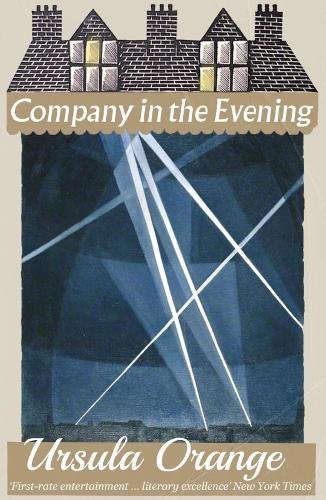
Review 2282: #DeanStreetDecember! Company in the Evening

I finally could fit a book for Dean Street December into my schedule! This event is being hosted by Liz of Adventures in Reading, Running, and Working from Home.

In 1940 London, Vicky is fairly satisfied with her life. Five years ago, in the midst of divorcing her husband Raymond for infidelity, she discovered she was pregnant. But she is getting along fine raising her daughter Antonia with the help of an old family retainer, Blakey. She works three days a week as a literary agent and devotes the other days to Antonia. She is an independent woman who doesn’t feel the need for company except for an occasional visit or outing and dislikes sentiment and receiving sympathy.

However, she finds herself inviting company when her mother tells her she’d like to sell her house and move in with her sister. The problem is what to do about Rene, Vicky’s widowed and very pregnant sister-in-law, who has little money and no family and lives with Vicky’s mother. Vicky has a spare room and feels she owes it to her mother to offer Rene a place to stay, even though she and Rene have almost nothing in common. She has no desire to invite her, but she does.

Soon enough, she becomes convinced that they are incompatible. Her efforts to get along with Rene usually end up being misunderstood. Worse, Blakey dislikes her. She is always brusque, but to Rene she is sometimes disrespectful.

Then Vicky runs into Raymond. The other woman returned to her husband, and Raymond is just recovering from a bout of tuberculosis and hopes to take a desk job in the army. They begin occasionally spending time together.

This novel takes a thoughtful look at marriage and at Vicky’s preconceptions of how marriage should be as she takes another look at what broke up her own. It is an intelligent, witty, and involving story. I liked it very much.

Related Posts

Begin Again

Sally on the Rocks

Bewildering Cares

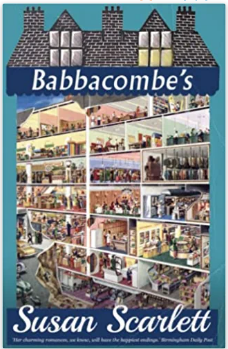
Review 2084: Babbacombe’s

I asked Dean Street Press to rush me some books so that I could participate in Dean Street Press in December, and they have responded beautifully. Here’s a review of a book I received on Tuesday.

Beth Carson is a little disappointed after leaving school with high honors to take the job her father has arranged at Babbacombe’s, the large department store where he’s been employed for 30 years, instead of going to secretarial school. However, money has always been tight in the Carson household, and she is eager to help contribute.

Despite things being tight, the family is reluctant to take on a paying guest—George’s orphaned niece, Dulcie. But George feels guilty about neglecting her even though he didn’t like her father. When Beth goes to the railway station to collect her, she meets a nice young man after she is tripped up by his dog.

Dulcie turns out to be an unpleasant surprise for the family, but Beth finds herself enjoying her job in the dress department, even though it is at first exhausting. Then one day she is stuck in the elevator with the man from the railway station and finds out he is David Babbcombe, the boss’s son. When Beth learns he doesn’t work but collects an allowance from his father, she says she’d be ashamed to take money she didn’t earn.

Smarting from this, David, who threw away an opportunity at Babbacombe’s once already, goes to his father’s office and asks for a position. His delighted father starts him at the bottom this time instead of the top—in the meat department. He also has a secret from his father, he has submitted plans for a plane he designed to the government.

As David pursues Beth, her scruples interfere. Her father believes people should stay in their places, and she is sure Mr. Babbacombe wouldn’t approve of David dating one of his shop girls. Also not helping is Dulcie, who has decided she wants to marry David.

I’m having an inconsistent reaction to Scarlett’s work, probably because I don’t read too many straight romances. Although I liked another of her Cinderella stories, Clothes-Pegs, I often find the devices meant to keep the couple apart until the end are a little clumsy. In this case, Beth is almost stupidly obsessed by what their fathers will think, and Mr. Babbacombe’s confusion of the two girls doesn’t seem like him at all. Also, it seems to be a trope with Scarlett’s plots to involve a jealous, mischief-making other woman, which is a 50’s cliché. Still, this is pleasant light reading.

I received this book from the publishers in exchange for a free and fair review.

Related Posts

Clothes-Pegs

Summer Pudding

Begin Again

Review 2082: Mrs. Lorimer’s Quiet Summer

Liz of Adventures in Reading announced Dean Street Press in December long after I read this book, and the press is trying to get some new books to me in time, but since this one came up in my regular review schedule, I’ll take credit for it!

Because she has been trying to talk her husband Jack into buying it, Mrs. Lorimer is disappointed to learn that a nearby home, Harperslea, has been sold. Now that all their children except Guy are married, and some of them have children, their home, Woodside, is not big enough when they all come to visit, which they are doing this summer. With all the income from her writing, they can afford to move, but Jack refuses to consider it. So, her good friend Gray Douglas, also a writer, will help her out by putting some of the guests up.

Mrs. Lorimer, who tends to be a worrier, is also worried about her son Guy. He has been mentioning a girl quite often in his letters, but Mrs. Lorimer is worried that she won’t be good enough for Guy.

At any rate, when the family shows up, Phillie seems to be the one with the problem. She begins behaving temperamentally, being rude to her husband, dashing off to Harperslea because she’s seen Miss Smellie, one of the new occupants, playing tennis and she wants a game. Then bringing Miss Smellie home to dinner and just abandoning her to her mother and Guy.

Miss Smellie is young and not very prepossessing, and they find out she hates her name, which is Nesta Rowena. So, the family dubs her Rona.

These and other family concerns enliven this charming novel. The novel cover claims the book is autobiographical, and it certainly has some likable and entertaining characters. So far, I have very much enjoyed the novels I’ve read by Clavering.

Related Posts

Dear Hugo

Susan Settles Down

Touch Not the Nettle