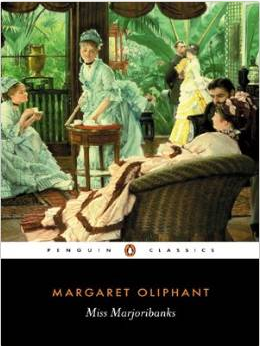
Day 664: Miss Marjoribanks

Cover for Miss MarjoribanksBest Book of the Week!
It’s not often that I discover a delightful novel by a classic author whose works I am unfamiliar with. But that’s the case with Miss Marjoribanks. It is a wonderfully ironic comic novel about middle class mores with an exasperating and ultimately lovable heroine.

We first meet Lucilla Marjoribanks at the age of 15. Her long-ailing mother has died, and Lucilla rushes home vowing to be a comfort to her father. Dr. Marjoribanks, who has been looking forward to a comfortable bachelor existence, wastes no time in sending her back to school.

Four years pass, and Miss Marjoribanks returns from her tour on the continent determined to devote herself to her father for the next ten years, suggesting that by then she may have “gone off” a little and will start looking for a husband. Lucilla is a young woman of energy and complete self-confidence who is determined to be a force in Carlingford society. But first she must deal with a proposal from her cousin, Tom Marjoribanks. She loses no time in dispatching him to India.

Dr. Marjoribanks watches in amusement as Lucilla calmly removes the reins of his household from his redoubtable cook Nancy and begins to take control of Carlingford society. Her first project is to begin a series of “evenings” every Thursday.

As Lucilla deftly and with dauntless good humor manages the affairs of her friends, somehow none of a series of eligible men ever come up to scratch with a marriage proposal when her friends expect them to. But Lucilla insists she will dedicate herself to her father’s happiness at least until she is 29.

Although Lucilla, with her managing ways, could easily be a figure of satire, I grew to admire her and like her friends and neighbors, who are fully realized even though  this book is the fifth in a series and I have not read the others. We even feel sympathy for Barbara Lake, the contralto whose voice goes so well with Lucilla’s that Lucilla invites her to her evenings. Barbara, from a lower strata of society, sees Lucilla’s actions as condescension and rewards Lucilla’s impulse with spite.

I was hugely entertained by Lucilla’s career and have already started looking for more books by Oliphant. Margaret Oliphant, I find, was once one of the most popular authors of the mid-19th century, and she deserves to be remembered.

Related Posts

Anderby Wold

Good Behaviour

Mrs. Dalloway


Day 654: Longbourn

Cover for LongbournBest Book of the Week!
There has been a plethora of Pride and Prejudice reinterpretations and sequels in the past few years, and I haven’t found the ones I’ve read to be very interesting. Longbourn, however, looks at the novel from a completely different angle, from the point of view of the servants in the Bennet household.

Sarah has been a housemaid for the Bennets since she was a child. Although she is grateful for the kindness shown to her by the housekeeper, Mrs. Hill, she chafes against the limits of her existence and the sheer hard work. She has begun to wish for more.

Mr. Bennet unexpectedly hires a servant named James Smith. There is some mystery about him, for Sarah overhears Mrs. Hill having a heated discussion with Mr. Bennet about him. At first excited to have a new member in the household, Sarah is disappointed by his unkempt appearance and the fact that he never looks at her. Besides, she soon meets the handsome and exotic Ptolemy Bingham, Mr. Bingham’s mulatto coachman.

Aside from presenting fully realized characters and an interesting story, Longbourn imagines a completely different view of the Bennet household and the action of the original novel, which here is only peripheral. We find unexpected sympathy for Mrs. Bennet through Mrs. Hill’s knowledge of her history. Mr. Bennet turns out to have a secret. Lizzie and Jane are still the most likable Bennet girls, but they think nothing of sending Sarah to walk to Meryton in the pouring rain to buy roses for the girls’ dancing shoes. The viewpoint from the kitchen is certain to be an unexpected one.

This novel is fascinating, providing its own rich story while carefully observing the events of Austen’s novel in the background. I loved this truly original re-imagining.

Related Posts

Persuasion

Jane Austen: A Life

Jack Maggs

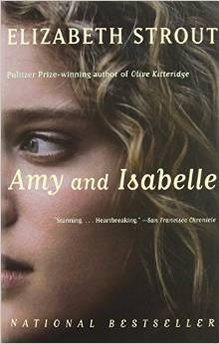
Day 652: Amy and Isabelle

Cover for Amy and IsabelleIn 60’s small-town New England, Isabelle Goodrow and her 16-year-old daughter Amy are having a tough summer. They are together all the time because Amy has a job in the mill office where Isabelle has worked for years, but they are presently resentful of each other and barely speak.

Although Amy has been harboring typical teenage feelings toward her mother, their problems go back a lot farther. Some of them have roots in how Isabelle has represented herself in town since she moved there. She has some social ambitions and thinks she is more refined than the other women who work in the office. Quietly in love with her married boss for years, she is concerned about how she and her daughter are perceived. She also has secrets.

But their immediate problems begin earlier that school year, when insecure Amy thinks she is in love.

This is my third Strout novel, and I like how observant she is of life in these small, conservative New England towns. She presents us with situations that are dramatic but common and has us examine the lives of ordinary people. Amy and Isabelle are hard on each other, as mothers and daughters can be, but they are also able to learn from their mistakes, even if the lessons are painful.

Related Posts

Olive Kitteridge

Giving Up the Ghost

Empire Falls

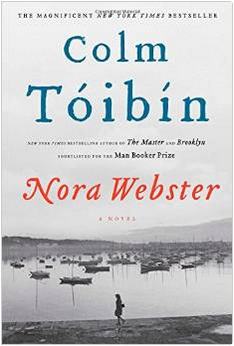
Day 650: Nora Webster

Cover for Nora WebsterIt took me awhile to place Nora Webster in time. Irish readers may be quicker to identify its setting from some events, but I am not familiar enough with recent Irish history. Finally, I identified the novel as set in the late 60’s and early 70’s. It wasn’t long after gaining that knowledge that I began to wonder how autobiographical the novel is. Since then, I have read that it is indeed autobiographical, as details about Nora’s husband match those of Toíbín’s father.

Nora Webster is in her 40’s a recent widow. She is finding it difficult. Not only does she miss her husband Maurice, but she finds the attention paid to her as a widow painful. She feels comfortable only with a few people, those who stayed with her and Maurice during his painful death.

Making things more difficult is the fact that she is left with little money. One of the first things she is forced to do is sell the holiday cottage where the family stayed every summer. She finds it hard to return there, especially under those circumstances.

She also has her children to worry about, particularly her two young sons. Donal has begun stammering since his father’s death, and when her Aunt Josie comes to call, it is immediately clear to Nora that all did not go well when the boys stayed with Josie while their father was dying.

Soon Nora is forced to return to her old job at Gibney’s, where she has not worked since she married 20 years before. She must report to Mrs. Kavanaugh, a woman she disliked when they were girls at work there together and who bullies the office staff.

There are no big events in this novel, which is more of a character study. It is about grief and the act of making a new life after a major event.

Nora is an interesting character. She doesn’t say much of what she thinks, so is sometimes misunderstood. She does not listen to other people’s opinions of who she should like or what she should do. She is intensely private and does not discuss things with her family, even things that she should perhaps discuss. She is also fiercely protective of her family.

This is a quiet, contemplative book and is not for those who read only for plot.

Related Posts

The Master

The Year of Magical Thinking

The Gathering

Day 644: The Wives of Los Alamos

Cover for The Wives of Los AlamosA little note from me: I noticed that for awhile WordPress applied a feature to my blog that showed related posts at the bottom of the page. Then yesterday I noticed that the feature disappeared at some time. I couldn’t figure out a way to implement it on my blog automatically, but I was amused at its choices sometimes. So, a new feature of my blog is that every time I review a book, I’ll try to find three other reviews that share something in common with it, whether it’s the subject matter, the setting, the author. The reviews are links at the bottom of the page. Let me know how you like it!

* * *

The Wives of Los Alamos takes an unusual approach to historical fiction. It is narrated collectively, in first person plural, by all the wives of the scientists at Los Alamos during World War II. Of course, this approach has its disadvantages, as there are no characters who stand out from one another. Still, it is a fascinating way to point out what these people shared—and did not share.

The novel begins as the wives depart their former lives. They know nothing about where they are going or what their husbands are going to do when they get there. What little they know, they are not allowed to say. The novel tells their story throughout the war and their reactions when they finally learn what their husbands have created.

At times we see these women as selfish and privileged, especially when they become bored with the restrictions and begin gossiping and complaining about the “help.” But other times we realize how difficult their situation is, shipped off to a primitive environment where their housing is not even ready when they arrive, unable to learn what is going on, subject to restricted movements and stringent security even though they know very little.

http://www.netgalley.comThis is an interesting book that touches on topics that emerged during the war and after—like equal pay for equal work, the ethics of creating this powerful weapon, and family relationships and roles.

Related Posts

Lucky Us

The Zookeeper’s Wife

Shanghai Girls

Day 628: Anne of Green Gables

Cover for Anne of Green GablesI have not read Anne of Green Gables since I was about ten, and I’m delighted to report that it is a book that offers as much enjoyment to an adult reader as to a child. As a child, I threw myself wholeheartedly into Anne’s delights and misfortunes, but as an adult, I am more able to appreciate the abundant humor of the novel.

Matthew and Marilla Cuthbert are an elderly brother and sister with a farm in Avonlea on Prince Edward Island. They have taken a momentous decision to adopt an orphan boy to help Matthew on the farm. They sent word to an acquaintance who went to adopt a girl, and she has brought an orphan back for them on the train.

But when Matthew arrives at the station, he finds not an orphan boy but a girl, a funny looking, skinny, red-headed girl. Matthew is a shy and reticent man, and he sees nothing to do but take the girl home and let Marilla break the news that there’s been a mistake. So, they set off home for Green Gables, the excitable Anne Shirley prattling all the way back.

When Anne learns she isn’t wanted after all, she is devastated. But when Marilla takes her to see another woman who might want an orphan girl, she can’t quite bring herself to leave Anne with the mean-mouthed woman with a reputation for mistreating the help (as an orphan would often be regarded at that time, not as a member of the family). Despite her better judgment, Marilla decides to keep Anne.

Thus begins this delightful novel about a young, imaginative girl who is always running into trouble. For Anne is romantic and dreamy and full of big ideas that often go wrong. The delight for me as an adult in reading this sentimental tale is the dry humor of Marilla, as she learns to love Anne and all her mischief. This is a lovely and fun book to read, particularly if you love any other volatile little red-headed girls.

Day 565: Olive Kitteridge

Cover for Olive KitteridgeThis collection of linked short stories lucidly illuminates the contradictions that make up the human condition. The link that binds the stories together is Olive Kitteridge, a retired schoolteacher in small-town Maine.

Olive is plain-spoken and gruff. Some people are afraid of her, but she can show sudden compassion and insight.

In “The Pharmacy,” Olive’s gentle husband Henry falls in love with his young pharmacy assistant without ever making his feelings known. In “A Little Burst,” Olive steals some of her daughter-in-law’s clothes during the wedding at the house the Kitteridges built for their son. She has overheard Suzanne saying nasty things about her. In “Tulips,” after Henry has a heart attack, Olive reflects upon their pain that their son Christopher moved away to California with his wife, and even after divorcing did not return or invite them to visit.

In other stories, Olive is less important or simply a presence. A timely conversation with her seems to keep a young man named Kevin from attempting suicide in “Incoming Tide.” In another story, the Kitteridges stroll to the restaurant through the bar where Angie plays the piano every night and thinks about the man she loved.

With neighbors and strangers, Olive says exactly the right thing in a difficult moment, and with her loved ones exactly the wrong thing. Many of the stories are sad but ultimately touching. Strout uses an unusual structure to create the sense of a lovely and affecting novel.

Day 509: Mountains of the Moon

Cover for Mountains of the MoonBest Book of the Week!
It will be difficult for me to put into words how unusual Mountains of the Moon is. The novel is about a woman’s act of creating herself despite a past that is nearly crippling, but its unusual quality is primarily in the style of narration.

At the beginning of the novel, Louise Adler is 31 and newly out of prison. She is doing what she can to make a fresh start, fixing up her dreary apartment, trying to find any kind of job.

The story shifts to when Lulu is a little girl. Brought up with her grandfather’s stories of the Mountains of the Moon, she pretends she is a Masai warrior, dressed in a bright strip of cloth and holding her spear on a perch high above the neighborhood.

Her home life is difficult. She loves her older brother Pip, but he is sent away to live with his father because of “disloyalty” to his mother. Her verbally abusive mother keeps her out of school and makes her stay up all night listening to her talk. Her physically abusive father is often away with his other family. When Baby Grady arrives, he is left to Lulu’s care much of the time, but she adores him.

This portrait of the imaginative little Lulu is charming, but fear always lurks around the edges of her world. We know something goes wrong for her, but Kay spins the story out by interleaving it with the present one. A third story line returns to when Louise is 21 and learning to deal blackjack at a casino. At that time, she becomes fatefully involved with a girl named Gwen and her friends.

Louise is a woman of many names and identities. As a child she plays gleefully with language, gobbling up new words but only saying parts of the ones she knows. As an adult she finally begins trying to make sense of herself as a person.

This novel is sometimes brutal and harrowing, other times endearing. Its narrative style reminds me a bit of that of The Bone People.We like Louise/Lulu and we want her to succeed, but there are secrets in store. This story is one of an unforgettable character.

Day 494: A View of the Harbour

Cover for A View of the HarborElizabeth Taylor was a mid-twentieth century writer who was interested in the realistic depiction of ordinary lives, particularly those of the working class. In A View of the Harbour, she provides glimpses into the lives of residents along the harbor of a shabby seaside village in post-World War II England.

Newby has seen better days. The trendy tourist area has moved away around the point, and all that is left aside from a few houses are a wax museum, a pub, a small store, a closed-down fun fair, and a lighthouse.

The main characters of this novel are Beth and Robert, a married couple, and Beth’s longtime friend Tory, recently divorced. Beth labors under the delusion that she is observant, but most of her focus is on her writing, as she is an author. Toward her family she is myopic. She doesn’t see when her five-year-old daughter Stevie is manipulating her, and she pays very little attention to her older daughter, Prudence, or to her husband. All family drama provides fodder for her prose.

Most people in town seem to think Prudence is slow, but she has noticed something that others haven’t—that her father is secretly visiting Tory.

Tory is torn between her feelings for Robert and her loyalty to Beth. She mostly seems to be at loose ends, however. She still cares for her ex-husband Teddy and makes a point of stopping in to see him if she is in London. In Newby she flirts with Bertram, a retired naval officer with ambitions to be a painter but little talent, and dallies with Robert.

Loneliness is a strong theme of this novel. Tory is clearly lonely, even though she is beautiful and has no trouble attracting attention. The attention she wants, from Teddy, is not available. Lily is a recent widow who goes to the pub nightly for companionship. She is timid and terrified of the walk home in the dark. The proprietor of the wax museum, she is afraid to pass the figures on the way up to her flat. The brief attention she gets from Bertram ends unfortunately.

Maisie, the hard-working daughter of invalid Mrs. Bracey, manages to attract Eddie, the boarder, but Mrs. Bracey is immediately jealous of the distraction of Maisie’s attention. Mrs. Bracey is a complex character. We have sympathy for her because she is paralyzed, but she has a terrible tongue and is a vicious gossip. She easily finds a way to squash Maisie’s romance.

Taylor’s characters are too realistic to be entirely likable, although Beth is less at fault than Robert or Tory. I found Maisie and Prudence the most sympathetic of the characters.

Taylor is highly regarded but relatively unknown because she was overshadowed in her time by the more famous Elizabeth Taylor. Her writing is observant of the small details of life. Although there is not much humor in the novel, Tory’s letters from her young son at school are believable and funny. My overall impression of the novel is that the lives of its characters are as sad and dilapidated as the village.

Day 471: Unaccustomed Earth

Cover for Unaccustomed EarthBest Book of the Week!

Although all of the stories in Unaccustomed Earth feature characters who are immigrants and first-generation Americans of Indian descent, they are about a lot more than that. They are about the common problems of all people.

In the story “Unaccustomed Earth,” Ruma grieves over the loss of her mother while her father fears she is making the same life for herself that embittered his marriage to her mother. In “Hell-Heaven,” a girl observes her traditional mother’s infatuation with a young graduate student in light of her mother’s detached marriage with her father. Amit and his wife Megan try to create a romantic weekend while attending the wedding of a woman Amit once had a crush on in “A Choice of Accommodations.” The best of the stories are the last three, interlinked, about two people who meet each other several times at significant junctures of their lives.

Lahiri’s stories speak to us deeply. With details of life and human behavior so finely observed, they become stories about characters for whom we care.

I am generally a novel reader, because short stories often feel to me as if a lot is missing. But Lahiri’s gift is for saying so much in so few words. You find yourself pondering her stories and characters long after you stop reading. They reveal a profound insight into the human heart.