Day 686: Everything I Never Told You

Cover for Everything I Never Told YouI just applied a new look to my site! Let me know how you like it.

* * *

From the beginning of Everything I Never Told You, we know that Lydia Lee is dead, but her family doesn’t, and it is awhile before we understand what happened. Lydia’s story has its roots in her family history.

In 1970’s small-town Ohio, the Lees are outsiders, the only mixed race family in town. James Lee is of Chinese heritage, a history professor at the local college. Marilyn Lee is white, a former Harvard medical student who gave up her dreams of becoming a doctor when she became pregnant with Nath, their son.

Once the police begin looking into Lydia’s disappearance, it soon becomes clear that she was leading a double life. Her parents believe her to be a popular girl and a good student with a brilliant future. But when police begin questioning her supposed friends after she is reported missing, the teens claim to hardly know her. She is close to failing some of her classes, and Nath is aware that she has been spending time with their neighbor, Jack, a boy with a bad reputation.

This novel is extremely sad, about the effect on young people of their parents’ insecurities and expectations, about misunderstandings and lack of communication, and about how an event in the family’s past affected Lydia’s behavior.

The novel is moving and well written, exploring the tensions between maintaining individuality and fitting in and the stresses caused by parents only wanting the best for their child. After being almost unremittingly sad for the entire novel, it ends on a more hopeful note, perhaps unrealistically.

Related Posts

We Are All Completely Beside Ourselves

Tell the Wolves I’m Home

The Possibilities

Day 685: A Thousand Acres

Cover of A Thousand AcresBest Book of the Week!
A Thousand Acres is a powerful novel set mostly in 1979 rural Iowa. It evokes a completely realized world that is complex and secret.

Ginny Smith has lived on the family farm all her life. Her husband Ty farms alongside her father, Larry Cook, and she and Ty live on what used to be their neighbor’s property, which Larry has bought to make his thousand acres of land. Ginny’s sister Rose also lives on the farm, and her husband Pete works with Larry as well, a bit less comfortably. The women’s youngest sister Caroline is a lawyer in Des Moines.

Ginny is proud of her family’s accomplishment in creating a fine, well-run farm out of the swampland her great-grandparents bought sight unseen. It soon becomes clear that the farm and the relationship to the land is the most important thing to her family—to all of the families in the area.

At a local barbecue, Larry makes an unexpected announcement. He will create a corporation of the farm and hand it over to his three daughters. Ginny, who is mild-mannered, is taken aback and has doubts, but she does not say anything. Rose seems to be enthusiastic. Caroline simply says “I don’t know,” at which point, Larry petulantly cuts her out. When she tries to approach him later, he slams the door in her face.

Harold Clark, another older farmer, has his prodigal son Jess return after an absence of many years. Almost immediately, he begins to favor Jess over his more loyal and hard-working son Loren.

If this all is beginning to sound familiar, it should, for A Thousand Acres is a modern re-imagining of King Lear. This novel, however, turns the original on its head, for we see it from the point of view of the two “greedy” sisters. In fact, Smiley accomplishes a rather clever trick, because while the neighbors and townspeople see events occur that, from their points of view, seem parallel to those of the play, the readers of the novel are conscious of a whole new layer of information, about how two old men lie and exaggerate when they don’t get their way, and how family secrets fuel Ginny’s timidity and Rose’s rage.

This novel presents complicated, flawed characters in a fully realized setting. It is really excellent and thought-provoking.

Related Posts

The All-True Travels and Adventures of Lidie Newton

King Lear

Home

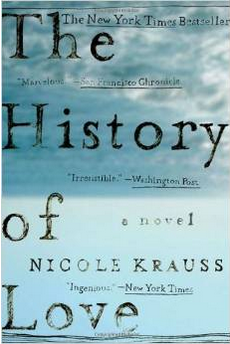
Day 677: The History of Love

Cover of The History of LoveBest Book of the Week!
At times I wasn’t sure that I would be able to figure out what was going on in The History of Love. This feeling may not be unfamiliar to readers of Nicole Krauss. My book club was so frustrated by Great House a few years back that I had to draw a diagram to help figure out the series of owners of a desk. However, The History of Love eventually becomes clear, with an eminently satisfying ending.

For most of the novel, we follow two main characters. Leo Gursky is an old Jewish immigrant in New York, a survivor of the holocaust from Poland. Years ago he fell in love with Alma Mereminski but was separated from her just before World War II when she went to America. When he tracked her down after the war, she had married. Her oldest son, though, was 6.

Leo has led a lonely life, during which he yearned for Alma and for his unacknowledged son, Isaac Moritz, who became a famous writer. As an old man, he spends part of each day trying to draw attention to himself in some small way, so that if he dies that day, someone will have seen and remembered him.

Alma Singer is a lonely 14-year-old. Years ago her father died, and her mother has ever since lived a life of quasi-mourning, seldom coming out of her room and only doing some occasional translation work. Alma’s brother Bird is a strange boy who believes he is blessed by god. He is preparing an ark for the coming flood.

Alma has been trying to find a boyfriend for her mother so she won’t be sad. One project that interests her mother is a request to translate a book called The History of Love by Zvi Litvinoff that had a small publication run in Chile. This book was very important to Alma’s parents, and Alma was named after a character in the book. Alma thinks she perhaps can strike up a relationship between her mother and the man who requested the translation. But then she notices that the only character in the book who doesn’t have a Spanish name is Alma Mereminski. Reasoning that it may be a real person’s name, she decides to find Alma.

It is Leo who actually wrote The History of Love, we understand, inspired by his love for Alma. But then what happened?

This novel is intricate and vividly imagined. Ultimately, it is emotionally involving. I did not really enjoy the excerpts from the novel within the novel, which seem to be trying too hard to be profound, but those make up only a very small part of the book.

Related Posts

Great House

Beautiful Ruins

Tomorrow There Will Be Apricots


Day 668: The Sea

Cover for The SeaIn this contemplative novel, recently widowed Max Morden returns to the small Irish seaside resort where his family used to live when he was a boy. It was there he met and became fascinated by the Grace family, much above his own in social strata.

Max’s memories are assisted by his residence as a boarder at The Cedars, the house where the Graces stayed that summer. The Cedars has become a boarding house that is now managed by Miss Vavasour.

The young Max became the companion of the Grace’s oddly feral twins, Chloe and Myles. They are two very unpleasant children who torment their teenage nanny Rose. At first infatuated with the voluptuous Mrs. Grace, Max eventually turns his attentions to the spiky Chloe.

Through his memories of the extraordinary events of that summer and his feelings about his wife’s death, Max eventually gains some self-knowledge. Looking back, he also gains some understanding of the dynamics between people that he did not grasp as a child.

The Sea is stylistically exquisite, with its sussurating and rhythmic prose a striking meditation on death, grief, and memory. Although I guessed one of its revelations much earlier than intended, that did not take away from the power of the prose.

Related Posts

The Sense of an Ending

Bridge of Sighs

Nora Webster


Day 652: Amy and Isabelle

Cover for Amy and IsabelleIn 60’s small-town New England, Isabelle Goodrow and her 16-year-old daughter Amy are having a tough summer. They are together all the time because Amy has a job in the mill office where Isabelle has worked for years, but they are presently resentful of each other and barely speak.

Although Amy has been harboring typical teenage feelings toward her mother, their problems go back a lot farther. Some of them have roots in how Isabelle has represented herself in town since she moved there. She has some social ambitions and thinks she is more refined than the other women who work in the office. Quietly in love with her married boss for years, she is concerned about how she and her daughter are perceived. She also has secrets.

But their immediate problems begin earlier that school year, when insecure Amy thinks she is in love.

This is my third Strout novel, and I like how observant she is of life in these small, conservative New England towns. She presents us with situations that are dramatic but common and has us examine the lives of ordinary people. Amy and Isabelle are hard on each other, as mothers and daughters can be, but they are also able to learn from their mistakes, even if the lessons are painful.

Related Posts

Olive Kitteridge

Giving Up the Ghost

Empire Falls

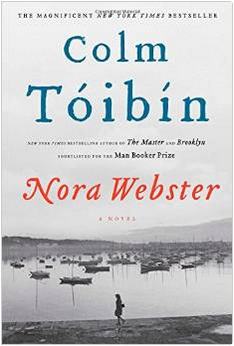
Day 650: Nora Webster

Cover for Nora WebsterIt took me awhile to place Nora Webster in time. Irish readers may be quicker to identify its setting from some events, but I am not familiar enough with recent Irish history. Finally, I identified the novel as set in the late 60’s and early 70’s. It wasn’t long after gaining that knowledge that I began to wonder how autobiographical the novel is. Since then, I have read that it is indeed autobiographical, as details about Nora’s husband match those of Toíbín’s father.

Nora Webster is in her 40’s a recent widow. She is finding it difficult. Not only does she miss her husband Maurice, but she finds the attention paid to her as a widow painful. She feels comfortable only with a few people, those who stayed with her and Maurice during his painful death.

Making things more difficult is the fact that she is left with little money. One of the first things she is forced to do is sell the holiday cottage where the family stayed every summer. She finds it hard to return there, especially under those circumstances.

She also has her children to worry about, particularly her two young sons. Donal has begun stammering since his father’s death, and when her Aunt Josie comes to call, it is immediately clear to Nora that all did not go well when the boys stayed with Josie while their father was dying.

Soon Nora is forced to return to her old job at Gibney’s, where she has not worked since she married 20 years before. She must report to Mrs. Kavanaugh, a woman she disliked when they were girls at work there together and who bullies the office staff.

There are no big events in this novel, which is more of a character study. It is about grief and the act of making a new life after a major event.

Nora is an interesting character. She doesn’t say much of what she thinks, so is sometimes misunderstood. She does not listen to other people’s opinions of who she should like or what she should do. She is intensely private and does not discuss things with her family, even things that she should perhaps discuss. She is also fiercely protective of her family.

This is a quiet, contemplative book and is not for those who read only for plot.

Related Posts

The Master

The Year of Magical Thinking

The Gathering

Day 645: The Secret Rooms

Cover for The Secret RoomsWhen British documentary producer Catherine Bailey began looking through family archives at Belvoir Castle, she was searching for information about the men from the area who served in World War I, including the 9th Duke of Rutland. What she didn’t find surprised her. Not only did she find few letters from the war, surprising for a family who wrote each other and others often, but the letters were missing from two other periods—when John Manners, later the 9th Duke, was nine years old and in 1909, when he was serving the ambassador in Rome.

Soon, Bailey learned that Manners spent the last days of his life, when he was dying of pneumonia, working among the archives in the room, that he died there, and that the rooms had been locked up ever since he died. It became clear that he was destroying correspondence and other papers. Further, she learned that the rooms had been broken into shortly after his death, the thief being identified later as John’s mistress, Hilda Lezard.

Bailey realized that without the letters for World War I, she could not complete her original project. However, she then decided to try to find out what happened during those three periods of the Duke’s life that he wanted hidden.

The result is a story as fascinating as any mystery novel. Although the entire truth of these periods will never be known—in particular, exactly what happened to the Duke’s brother Haddon when they were boys—the search is  as interesting as any modern crime story. The truth involves cruelty, duplicity, and a completely unscrupulous parent.

The Secret Rooms is an entertaining and interesting book. I highly recommend it.

Related Posts

The Forgotten Garden

Goodbye to All That

The House of Walworth

Day 639: The Children’s Crusade

Cover for The Children's CrusadeIt took me awhile to figure out the focus of The Children’s Crusade, which for some time just seems to wander backward and forward in time telling the story of a family. This is not really a criticism, though, as I was interested in the story.

It begins when Bill Blair discovers a piece of land outside San Francisco after his time serving in the Korean War. He envisions children playing there, so he buys the property, and eventually he marries and builds a house. He is a pediatrician, and he and his wife Penny have four children: Robert, Rebecca, Ryan, and James.

By the time the older children are nearing their teens, all of the children begin planning a Children’s Crusade. The purpose of the crusade is to try to think of activities that their mother will want to do with them. Although their father is warm and nurturing, their mother is distant and passive-aggressive, wanting, for example, her family to explicitly invite her on outings even though she knows they want her to come and will be disappointed if she doesn’t. When they don’t think to ask her, she stays home. She begins spending more and more time in a shed on the property working on art projects.

It is a usually unacknowledged fact within the family that the addition of James, large, obstreperous, and destructive, proved overwhelming for their mother. He feels this deeply, and it makes him more unruly. Affectionate and caring Ryan, closest to him in age, tries to make up for their mother’s neglect, but he is only three years older than James. Robert and Rebecca spend a lot of time keeping James out of their mother’s hair.

http://www.netgalley.comAs adults after their father’s death, the four siblings are forced to consider selling the house. No one originally wanted to sell, so they have it rented out, but then James forces the issue when he needs the money to make a home for his married girlfriend and her children. Even though Bill and Penny Blair were separated for years before Bill died, Penny must agree to the sale of the house. This arrangement forces James to talk to his mother for the first time in years after one of her art projects proved difficult to forgive.

The novel moves between the points of view of each of the siblings, only briefly touching on that of the parents. It is absorbing and well written and struck some chords with me. Its examination of the complexities of human relationships is thought-provoking.

Day 553: White Oleander

Cover for White OleanderBest Book of the Week!
This reading of White Oleander is my second, for my book club, although I have not reviewed it before now. I believe I appreciated the novel even more on the re-read.

Astrid Magnussen nearly worships her poet mother Ingrid. At twelve years old, Astrid has already lived an unusual vagabond life with her mother. Now the two have settled for awhile in the dry heat of Los Angeles, reeking of creosote with the forests bursting into flame.

Ingrid, herself stunningly beautiful, believes that nothing is important but beauty. She tells Astrid stories of ruthless Viking ancestors who take what they want, for she sees weakness in Astrid and wants to root it out. She is clearly a narcissist. For pleasure, she brings home beautiful young men and then unceremoniously discards them. She keeps Astrid up all night looking at the stars. Although Astrid fears Ingrid will one day leave her, she is smart enough to realize that with her mother everything is always about Ingrid herself.

Then Ingrid falls in love with Barry, an ordinary man. For once, Astrid feels a little secure, as if she has a father. But when Barry dumps Ingrid for a younger woman, Ingrid becomes insane with rage and does something terrible. She ends up in prison, and Astrid is abandoned to the foster care system.

This novel is sometimes beautiful. The beginning dealing with the relationship between the two and their earlier lives is poetically told. Other times it is brutally powerful, as Astrid is torn from her precisely kept home and thrown into a series of horrendous foster homes. Even more heartbreaking is what happens when she finally finds a loving one.

White Oleander is original and gorgeously written, about the search for love and a safe harbor, about betrayal, madness, self-absorption, and self-discovery. The lovely but poisonous white oleander is a symbol for Ingrid’s motherhood, as Astrid finally realizes she will always ache for her mother’s love and never have what she wants.

Day 267: Black & White

Cover for Black & WhiteI had an ambivalent reaction to Dani Shapiro’s Black & White. By coincidence, while I was reading it, I read an article about adult survivors of child abuse that helped me focus on what was bothering me about the themes and conclusion of this novel. I’ll talk about that later.

Clara Brodeur has not seen her mother since she left home at the age of 18. She is a seemingly ordinary housewife with a nine-year-old daughter, but she has a secret. Her mother is Ruth Dunne, a world-famous photographer who made Clara’s childhood miserable by documenting it with evocative, nude photos.

Clara’s life is interrupted by a phone call from her older sister Robin telling her that their mother is dying, and she can’t cope anymore. Despite herself, Clara finds herself in New York City, where she is forced to face her feelings about her mother.

The strength of this novel is its finely observed descriptions, especially of Clara’s memories of the photo shoots–both from the point of view of a young child and then overlaid with adult awareness. Shapiro accomplishes the difficult task of explaining only with words both how striking Ruth’s photos must be and why they are disturbing. Clara feels that she has had her life stripped bare for the entire world and her relationship with her mother destroyed because of Ruth’s obsessions.

Of course, the novel evokes questions about art and its importance, whether the creation of an object of art justifies Ruth’s treatment of Clara, the impact of abuse upon the family, and so on. Perhaps I should warn now about spoilers, although I will try not to reveal too much.

Emily Yoffe’s article in Slate deals with how there is often a societal pressure put upon adult survivors of child abuse to reconcile with their abusers  and bring them back into their lives as the abusers get older. She points out the possible destructiveness of this expectation as well as the possibility of more harm to the original victim, or as she puts it better, “the potential psychological cost of reconnecting.”

One of my problems with this book is that it buys wholeheartedly into this assumption that reconciling with and forgiving one’s abuser is automatically healing for the abused, with a much too indulgent and simple-minded conclusion. Robin has been telling Clara “it’s not about you,” and suddenly she realizes that is true. But it is about Clara. Moreover, when Clara asks why her mother didn’t stop, her husband answers “Because she couldn’t.” I’m sure that is true, and Ruth’s form of abuse is admittedly different than sexual or physical abuse, but if you ask a sex offender why he or she doesn’t stop, you’re going to get the same answer.

Shapiro’s novel provides too facile an answer to her heroine’s problems and then wraps everything up in a pretty package. Not a satisfying or particularly realistic ending to a novel of promise.