
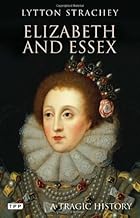
Years ago, I read Lytton Strachey’s Eminent Victorians and found it both informative and entertaining—full of scandalous information about some of the Victorian age’s most prominent citizens. I was hoping for something similar from this book, but it is a little more serious, although Strachey gets some zingers in.
The book is the 1928 version of history written for the general public. There are a very few footnotes and a couple of pages of bibliography at the end. It is written in Lytton’s liquid, sometimes sardonic style.
This book is about Queen Elizabeth and her last favorite, Robert Devereaux, Earl of Essex. He was more than 30 years younger than she and the stepson of her earlier favorite, Robert Dudley, Earl of Leicester. Elizabeth’s relationships with her favorites, at least with this one, seemed more like volatile love affairs than anything else, with fulsome compliments expected and fiery spats, which usually resulted in Essex stomping out and being forgiven after an apology. In fact, considering her own temper, I’m surprised that Elizabeth put up with him, because he certainly treated her less respectfully than he would if his sovereign was a man.
You have to get used to Strachey, because he starts out right away by making assertions about Elizabeth’s character without giving examples or showing how he is right, as a modern historian would do. And his depiction seems pretty sexist. Over time, he demonstrates some of these characteristics, though. Still, Elizabeth’s main problem with Essex seemed to be that he didn’t behave as if she was his sovereign. I think he had an inherent assumption that he was superior because he was a man, not surprising in that time.
Without going into all the details of the story, which Strachey labels “tragic,” I’ll say that it boils down to temperaments. Essex was proud and fiery, and he valued his family name. He had poor judgement about who to take advice from and was actually incapable of taking any that involved caution and circumspection. He was brave in battle and pictured himself as a great war commander, but he was not. In fact, he seemed to me like a charismatic, well-liked bear of little brain. But he wrote wonderful letters.
Strachey clearly didn’t like Sir Walter Raleigh, but I don’t know why. He just hinted around about him. According to Strachey, no one liked him.
Essex was a loyal friend to many, among them Francis Bacon. It was Bacon’s Machievellian advice that Essex was unable to follow. Despite Essex having supported him for several positions, Bacon did his best to put the nail in Essex’s coffin when he was tried for treason.
This is an interesting book and even though Essex seemed to me like a spoiled baby most of the time, I saw by the end that indeed it was a tragic story.
Related Posts
Hunting the Falcon: Henry VIII and Anne Boleyn and the Marriage That Shook Europe
 What? Me Read?