Review 2311: Big Ben Strikes Eleven

Financial tycoon and former politician Sir Robert Boniface is found shot to death in his limousine in the Vale of Health on Hampstead Heath. At first, the police aren’t sure if the death is murder or suicide—only the lack of the gun tells them it is murder.

The body is discovered by a window washer, but Matt Caldwell, an artist, is present in a nearby pub. He is not only able to identify the victim and his car, having painted Sir Robert’s portrait, but he is happy Sir Robert is dead.

Enquiries by Inspector Beckett and Superintendent Mooney lead in the direction of Sir Robert’s nephew, Frank Littlewood, who was recently fired by Sir Robert. However, two office mates, Sir Robert’s confidential secretary Miss Pritt and the obsequious Mr. Fuller, seem too eager to drop him in it.

Then the police find the gun and establish that it belongs to Matt Caldwell. Unfortunately, he is nowhere to be found.

I haven’t paid much attention to this issue until other bloggers pointed it out about other novels, but I would say this novel is about 100 pages longer than it needs to be. First, the action is brought to a screeching halt while the author lays out the case against the original three suspects—as if readers haven’t been paying attention—then we follow Matt Caldwell’s progress in a completely unnecessary romance that coincidentally brings more clues to light. The information is important, but it seems as if it could have been introduced in a different way that didn’t take two or three chapters.

But my biggest problem was with the actual investigation. Early on, Miss Pritt tells the police that the murder had nothing to do with business and uses that reason to withhold information about Sir Robert’s appointments. And the police just go along! Later, the Superintendent just hands her her handkerchief, which he found at the scene of the crime! In other ways, the approach to evidence is just as casual.

Finally, an interview with the Earl of Rollesborough, on the board of the trust that Sir Robert works for, seems called for from the beginning but doesn’t take place until the end. And no wonder, because it pretty much makes everything obvious.

I was able to identify the murderer fairly early on, but that didn’t bother me as much as the sloppy police work, or possibly lack of knowledge about police work.

I received this novel from the publishers in exchange for a free and fair review.

Related Posts

Death of an Author

Death of Mr. Dodsley

Partners in Crime

Review 2310: Jane Austen at Home

Although I read Claire Tomalin’s biography of Jane Austen years ago and thought it was very good, I feel that historian Lucy Worsley’s book provides a more personal look at Austen with more detail about her everyday life. Although some references are drawn from Worsley’s knowledge of Georgian society, she doesn’t hesitate to draw inferences from Austen’s novels and letters. Further, I think she has a better sense than some biographers of when in Austen’s letters she is joking

Worsley points out how important a settled home is in Austen’s fiction. Certainly, from the time of her father’s retirement from Steventon, that is something she and her sister and mother did not have that provoked much anxiety.

It was Tomalin’s suggestion that Austen was unable to write when she was unsettled, but Worsley suggests that Austen was working on novels all along but not doing much to market them. She also pointed out some subversive ideas in Austen’s fiction that I never noticed despite how many times I’ve read the novels. In any case, she does a good job of showing how revolutionary Austen’s fiction was for her time.

Related Posts

Jane Austen: A Life

Charles Dickens: A Life

The Life of Sir Walter Scott

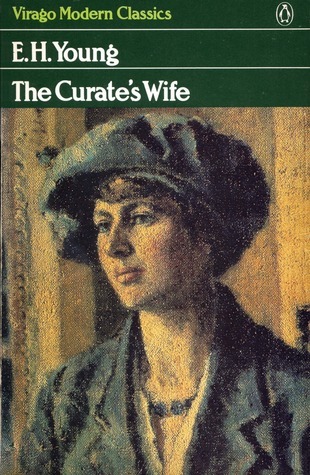
Review 2309: The Curate’s Wife

When I reviewed E. H. Young’s Jenny Wren, I remarked that I preferred Jenny’s sister Dahlia to Jenny. So, I was delighted to find that The Curate’s Wife is about Dahlia (although Jenny’s romantic fate is also involved).

Dahlia has married the curate, Cecil Sproat, on the basis of a friendship in which she feels she can say anything. But very soon, she finds that’s not true when it applies to religion, which has not formed part of her upbringing and which she finds silly. For his part, Cecil is rigid and has been unthinking in his religious beliefs. There is also the problem that Cecil is in love with Dahlia, but the reverse is not true.

Another issue is created by Mrs. Doubleday, the wife of Rector Doubleday, Cecil’s boss. She is an unpleasant woman who already dislikes Cecil and takes a strong dislike to Dahlia. She makes it her business to listen to gossip about the girls’ mother’s inferior social standing and her affair during the war. Their mother foolishly married farmer Thomas Grimshaw at the end of Jenny Wren, hoping that would remove a bar to Jenny’s marriage with Cyril Merriman, but that only made the situation more hopeless. Jenny has gone off to live with Mr. Cumming’s sisters and father and learn about the antique business.

Dahlia begins to feel as if she missed out. After school, she was first isolated on the farm and now is living with a dedicated man doing good works. She has never even been to a party or enjoyed other types of amusements. She begins to fancy herself in love with Simon Tothill, a young man she met at a theater rehearsal.

Just as Dahlia and Cecil are beginning to understand each other, Jenny arrives without warning. She has left the Cummings and expects to live with Dahlia and Cecil. Although Dahlia is happy to see Jenny, she begins to realize just how selfish her sister can be. For his part, Cecil is a little jealous of how close the sisters are.

Dahlia’s problems with Cecil have an interesting parallel in the relationship between the Doubledays. Mr. Doubleday is easy going and tries to avoid trouble but is afraid of his ill-natured wife. Their son is returning after three years of service in Africa, and Mrs. Doubleday wants him all to herself. But she soon makes a mistake in a remark that frees Mr. Doubleday from trying to please her.

This novel takes a complex look at new marriage and the lack of preparation people have for its problems. I didn’t like Jenny any better, but I have been impressed by how far below the surface Young’s novels go.

Related Posts

Jenny Wren

The Misses Mallett

Chatterton Square

Review 2306: The Midnight News

Is The Midnight News a love story? a murder mystery? an espionage tale? a story about a dysfunctional family? an exploration of how the stress of war affects people psychologically? I’m not telling.

Charlotte is the daughter of privilege. Her father is a peer and a member of Parliament with an important war job. But Charlotte has chosen to work as a typist in a government office and live in a respectable but middle class boarding house.

It is the Blitz, and Charlotte’s home is in a dangerous area south of the Thames. She and the other residents of the house have been spending their nights on the lowest level of the house.

The novel starts slowly. Charlotte spends a day with her best friend, El, who has been elusive lately. Then El is killed in the Blitz. Charlotte goes to visit her godmother, Saskia, after she hears that a well-known actress, a schoolmate, has also been killed. Then Saskia dies, too. Charlotte has noticed a square gray man in several different places and comes to believe he is following her and killing people she is close to. This may seem like a wild idea, and since Charlotte has begun hearing the voices of her dead friends and has a history of mental illness, we begin to worry about her.

Then there is Tom, the son of an undertaker whom Charlotte has noticed feeding the birds. He is waiting to hear about a scholarship and a place at King’s College, but notifications are delayed because King’s has been hit in the Blitz. He is in love with Charlotte but thinks she is above him.

Is Charlotte being followed or is she paranoid? Is there something else going on? This novel eventually because a fast-moving, tightly plotted, and satisfying tale.

Related Posts

The Body Lies

A Country Road, A Tree

Longbourn

Review 2303: Alice

Margaret admires her best friend, Alice, even from their days at school. She thinks Alice is beautiful and elegant and envies her her siblings. However, Alice’s sister Sonia disillusions Alice early by leaving home with a man and turning up at school to demand Alice give her her monthly allowance.

As the two naïve and protected girls emerge into womanhood, Margaret comes to understand that Alice is afraid of life and has no confidence in its success. After Sonia steals the boy that’s been courting Alice, she tries to commit suicide and then incautiously marries Cassius, the man who saves her, when she hardly knows him.

Although the marriage is clearly ill-advised, to Margaret Alice lives a much more exciting life than her own. Still, Margaret notices how suggestible Alice is to those giving bad advice, even people she used to avoid.

Although this novel, about young women in the upper echelons of society, works as a social satire, it also has a serious message about what happens to unprepared young women thrown into society, especially in the years between the wars, when mores where changing.

Related Posts

Sally on the Rocks

Beneath the Visiting Moon

Love in a Cold Climate

Review 2301: Someone from the Past

I found Someone from the Past to be the best of the British Library Crime Classics I’ve read so far. It has a smart, feisty, occasionally indiscreet heroine, is fast moving, sometimes exciting, and presents an interesting, character-based mystery.

Nancy is at a restaurant about to receive a proposal from her boyfriend Donald when her estranged friend Sarah approaches the table. This approach creates some awkward moments, because Donald was the last in a string of Sarah’s lovers and didn’t take her departure well. Finally, he leaves the table so the women can talk.

Sarah tells Nancy she is about to marry a wealthy man, Charles. Then she says that someone has been writing her letters threatening her life. As Nancy is a reporter and knows all the suspects—Sarah’s discarded boyfriends—Sarah asks her to try to find out who is writing the letters. She says she’ll send her one of them in the morning.

Nancy’s evening ends poorly, with Donald stomping off. But the next morning, he arrives at her flat, confused and frightened. He tells her he went to see Sarah in the early hours of the morning and ended up falling asleep in the sitting room. When he awakened shortly after eight, he found Sarah murdered in her bed. He is sure the police will think he did it.

To protect Donald, Nancy lets herself into Sarah’s apartment and tries to remove all traces of his visit. In doing so, she notices some odd things about the scene. Unfortunately, when the cleaning lady arrives, Nancy puts the chain on the latch instead of hiding or going out another way so it was obvious someone was in the flat.

Shortly after she arrives home, the police are at her door. They think she killed Sarah, partly because she left her own fingerprint in the apartment and because the cleaning lady recognized her when Nancy met one of Sarah’s other lovers in a pub before going home. Nancy thinks the only way to clear herself and Donald is to figure out who did it herself. The list of suspects consists of Sarah’s last four lovers, including Donald.

Nancy finds she isn’t very good at lying to the police, keeping secrets, or fleeing the country, but she is good at figuring out clues. I’m not so sure she’s that good at picking future husbands, though.

I received this book from the publishers in exchange for a free and fair review.

Related Posts

In a Lonely Place

Excellent Intentions

Water Weed

Review 2299: The Salt Path

The Salt Path is Raynor Winn’s memoir of walking with her husband the 600+-mile Salt Path from Wales around the tip of Cornwall and back to Devon. This may not sound extraordinary or appealing to everyone, but the circumstances that initiated the walk were difficult.

It must have been the worst few days of their lives to date. For years, Raynor Winn and her husband Moth had been fighting a lawsuit that, through no fault of their own, threatened their home and livelihood. They went to court having found a document that proved they owed nothing, but because they didn’t follow the proper procedures, they were not allowed to admit it as evidence. They lost the farm they built up from nothing and were homeless.

As if that weren’t enough, a few days later some pain Moth had in his arm for years was diagnosed as a terminal illness that would result in the degeneration of his muscles and end with him choking to death.

The Winn’s reaction to these circumstances was unusual. With a very small income and almost no ready cash, they decided to walk the Salt Path. And although Raynor wanted to walk it the easy way, from the southeast westward, because the best guidebook went the other way, they went that way.

This book is compulsively readable, as the couple deal with grief, bad weather, physical problems, lack of food and water, poor equipment, difficulty finding camp sites, and general bad treatment of the homeless. It is vividly written and although I tripped over some misplaced modifiers, impels you along with them on their journey.

Related Posts

Notes from a Small Island

Vanishing Cornwall

Wild

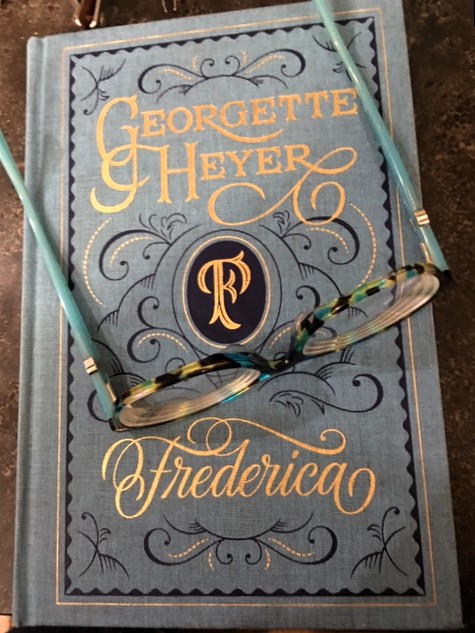
Review 2295: Frederica

I didn’t set out to reread Frederica, but the Folio Society just brought out a couple of beautiful editions of some of Heyer’s books, so I had to buy them. My original review is here, but I thought I’d talk about some things that struck me this time around.

Heyer has a great sense of humor, and I was tickled by the situation that brings about the climax of the book. Frederica has spent a good deal of ill-afforded money and enlisted Lord Alverstoke’s help with the aim of making a good match for her beautiful but dim-witted sister, Charis. Unfortunately, Charis has fallen in love with Endymion Dauntry, Alverstoke’s handsome but stupid heir. Frederica is skeptical of Charis’s affections because she has fallen in love many times before. Endymion has convinced himself that Alverstoke would prevent the match by having him sent on a mission. Not only does Alverstoke have no power to do so, but he doesn’t really care who Endymion marries. He thinks Endymion isn’t serious because he hasn’t consulted him about getting married.

The incident with the dog in the park

Endymion is friends with Harry, Charis’s and Frederica’s brother, and the two have been confiding their star-crossed misfortunes to him. Frederica makes him angry for some trivial reason, and he suddenly realizes he is Charis’s guardian. So, the three of them stage a totally unnecessary runaway marriage.

Felix and Jessamy, Frederica’s young brothers, are especially delightful characters. Heyer is an amusing writer and a master of silly situations such as the one that Charis and Endymion create for themselves.

Related Posts

The Corinthian

The Grand Sophy

Arabella

Review 2282: #DeanStreetDecember! Company in the Evening

I finally could fit a book for Dean Street December into my schedule! This event is being hosted by Liz of Adventures in Reading, Running, and Working from Home.

In 1940 London, Vicky is fairly satisfied with her life. Five years ago, in the midst of divorcing her husband Raymond for infidelity, she discovered she was pregnant. But she is getting along fine raising her daughter Antonia with the help of an old family retainer, Blakey. She works three days a week as a literary agent and devotes the other days to Antonia. She is an independent woman who doesn’t feel the need for company except for an occasional visit or outing and dislikes sentiment and receiving sympathy.

However, she finds herself inviting company when her mother tells her she’d like to sell her house and move in with her sister. The problem is what to do about Rene, Vicky’s widowed and very pregnant sister-in-law, who has little money and no family and lives with Vicky’s mother. Vicky has a spare room and feels she owes it to her mother to offer Rene a place to stay, even though she and Rene have almost nothing in common. She has no desire to invite her, but she does.

Soon enough, she becomes convinced that they are incompatible. Her efforts to get along with Rene usually end up being misunderstood. Worse, Blakey dislikes her. She is always brusque, but to Rene she is sometimes disrespectful.

Then Vicky runs into Raymond. The other woman returned to her husband, and Raymond is just recovering from a bout of tuberculosis and hopes to take a desk job in the army. They begin occasionally spending time together.

This novel takes a thoughtful look at marriage and at Vicky’s preconceptions of how marriage should be as she takes another look at what broke up her own. It is an intelligent, witty, and involving story. I liked it very much.

Related Posts

Begin Again

Sally on the Rocks

Bewildering Cares

Review 2274: The Misses Mallett

When I read that five years before she wrote this book, E. H. Young ran off with a married man, I had to wonder how much of it was autobiographical. Not that that’s exactly what happens in The Misses Mallett, but you’ll understand why I say this if you read it.

As a young woman, Rose Mallett rejects the proposal of Francis Sales. He is handsome, but she thinks he is sulky and boyish. And he is. Rose lives with her much older half sisters, whom she remembers thinking as a girl were like princesses. Now perhaps they are a little comic, but Rose doesn’t see them that way. Both are meticulously dressed in a style of twenty years before. Caroline, who likes to present a roguish effect but knows nothing about what she suggests, can be magnificent, while Sophia still looks girlish. Rose herself is beautiful in a cool, collected way, and dresses with a stylish severity.

Francis Sales goes away to Canada to learn farming and in a few years comes home with a wife, Christabel. Although Christabel says she wants to be friends, it’s clear she has some idea of Rose that is mistaken. Soon Christabel, in trying to prove her gameness at horse riding when she is actually afraid of horses, is badly injured so that she is a permanent invalid. For this incident she believes Rose had a part she did not play. Still, Rose begins a relationship with Francis that is not an affair but is more than a friendship.

When Rose is about thirty, the sisters’ niece Henrietta comes to live with them. Although the sisters never saw their brother Reginald unless he needed money, they still loved him. He has died, followed shortly by his widow, who rejected their money even though she and Henrietta were living in poverty, Henrietta having kept their lodgings by taking up the cooking for the whole house. When her mother dies, the sisters send for her.

Unfortunately, one of the first people Henrietta sees when she arrives is Francis Sales, who presents a romantic exterior riding his horse. She soon divines that Rose has a relationship with him even though they have lately broken up, and decides she will have him herself. As can be predicted, he’s not hard to get.

Because Henrietta sees Rose as a rival, she doesn’t understand the things Rose does for her. Rose has her flaws, but she isn’t the woman Christabel or Henrietta think she is. It is this misunderstanding that powers the plot of the novel.

I find Young fascinating. Her novels are not at all what I expect for her time, so early in the 20th century (this one is from 1922). Her heroines are complex and interesting. I have no idea what either of the heroines in this book see in Francis Sales, though.

Related Posts

Miss Mole

Chatterton Square

Jenny Wren