Review 2076: The Twyford Code

I know she is very popular, but I’m proving not to be a Janice Hallett fan. I almost finished her first book despite having serious problems with it, but unfortunately I had already purchased this one, because it was so popular, before I read that one. I quit reading The Twyford Code at about the 200-page point because it seemed rambling and pointless.

Steve Smith is a middle-aged ex-con who is determined to go straight. One day something reminds him of a day in school when his teacher took his class on a field trip because of an old children’s adventure story he found on a bus. Steve can’t remember that day very well, but he knows they went to Bournemouth to visit the home of the author, Edith Twyford, and he thinks that their teacher, Miss Isles, never returned from the trip. He decides to find out what happened to Miss Isles.

Steve doesn’t know that there is a whole internet culture around Twyford’s works, and people using them to search for treasure. He tries to get his old schoolmates to help, but they are not reliable for one reason or another. However, a librarian named Lucy is ready to help.

The entire novel is supposedly transcriptions of audio files Steve made on his phone, because the mission stated at the beginning of the novel is to figure out who he is (which would seem simple, but like the mission in the other Hallett novel, unlikely). I got a little tired of the misspellings this approach leads to as well as the rambling narration. The mystery seems to consist of word puzzles, and I wasn’t interested in solving them. I’m sure the book also includes a long and laborious explanation of the clues, which I’m not interested in reading. Finally, there is so much extra information thrown in that no one would be able to guess what is a clue and what isn’t. Hallett’s books seem to me to just throw in the kitchen sink in a very disorganized fashion and let the reader deal with it.
Related Posts

The Appeal

The Seven Deaths of Evelyn Hardcastle

The Dying of the Light

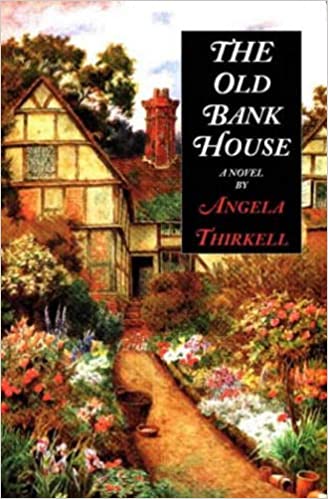
Review 2074: #ThirkellBar! The Old Bank House

Although I keep hearing that Thirkell’s post-war Barsetshire novels are not considered her best, I am still enjoying them and look forward to seeing what happens to the characters. In particular, The Old Bank House brought me to tears over one event, although I won’t say what it was.

The novel begins with wealthy industrialist Sam Adams’ purchase of the Old Bank House, but it deals mostly with the Grantlys, a family referred to in the series (and, of course, a major family in Trollope’s Barsetshire series) but not before met. The Grantlys are Adams’ new neighbors at the rectory. The oldest son, Tom, has just come down from Oxford where he has been studying Greats but feeling out-of-place because his war years make him older than the others (although that must have been common, as it was here in the States). In any case, he has decided he wants to work on the land, but he doesn’t want to return to college, even agricultural college, to do so. (Ironically, in his chafing, Tom seems younger than he is, not older.) The youngest son, Henry, has applied for the army and goes down to the post office at least once a day to see if his orders have arrived.

The novel is more concerned with the daughter, Eleanor, who has taken Susan Belton’s job at the Red Cross library. She yearns to live in London and has attracted the attention of Colin Keith, now a successful barrister. However, on a visit to Pomfret Towers, she gets a romantic crush on tired Lord Pomfret.

After Tom Grantly applies at a few places, he is taken on by Lucy Marling as an ordinary laborer in the market garden she runs for Sam Adams, but Martin and Emmy Leslie are also evaluating his capabilities for Rushwater. Lucy Marling is making the garden a success and has seriously impressed Mr. Adams.

Again, I found this novel deeply touching at times. It also serves as a record for the difficult living conditions that still prevailed in England four years after the end of the war and for everyday life at that time. Unfortunately for me, I got this book mixed up with the next one and read enough of the succeeding one that I knew from the start how a few of the surprises would work out, but I still enjoyed this one. In fact, it’s one of my favorites.

Related Posts

Love Among the Ruins

Private Enterprise

Peace Breaks Out

Review 2071: Death of Jezebel

Seven years before the action of the novel, Isabel Drew essentially pimped out innocent Perpetua Kirk to Earl Anderson by helping him get her drunk. Perpetua’s fiancé, Johnny Wise, broke in upon them and then drove his car into a tree.

Now the three people involved are working on a pageant. Inspector Cockrill is in town for a conference when Perpetua tells him she has received a threat to her life, blaming her for Johnny’s death. Later they learn that Isabel and Earl have also been threatened. It’s odd that so many of the people involved in the pageant knew and loved Johnny.

The pageant calls for 11 knights to ride out in front of a tower, from which Isabel, as the queen, comes and gives a speech. But Isabel falls from the tower and is found to be strangled.

Death of Jezebel is an example of the Golden Age puzzle novel, where the detectives concentrate on how the murder was done instead of who did it. My problem with this type of mystery is that the murders are usually ridiculously complicated and we have endless discussions involving the action of the knights and the backstage participants.

I received a copy of this book from the publishers in exchange for a free and fair review.

Related Posts

Green for Danger

Jumping Jenny

Death of a Bookseller

Review 2068: The Secret Adversary

I decided to read all of Christie’s Tommy and Tuppence novels after learning that they were her favorites of all her sleuths. There are unfortunately only a few of these novels, and The Secret Adversary is the first.

Tommy and Tuppence are old friends who haven’t seen each other for a while when they meet again after World War I. They are both broke and have been looking for work, so they decide to band together to look for jobs, calling themselves Young Adventurers, Inc. On leaving the café where they have been lunching and discussing this plan, Tuppence is approached by a man who overheard them and says he thinks he has a job for them, but when he asks her name, she says, “Jane Finn,” a name she heard mentioned in the café. He reacts indignantly and leaves.

After placing an ad, Tommy and Tuppence are contacted for work and find that the job oddly involves Jane Finn, who was a passenger on the Lusitania when it was sunk five years before and is believed to have been the recipient of a package important to the government. Tommy and Tuppence are hired to find Jane Finn.

The search brings with it many adventures, during which their steps are dogged by a mysterious Mr. Brown, apparently a criminal mastermind. This novel has a silly Cold War plot before the Cold War, and the slang spoken by an American millionaire seems completely unlikely. I think Christie must have watched too many gangster movies. However, Tommy and Tuppence are delightful and resourceful, so this was a fun reading experience.

Related Posts

By the Pricking of My Thumbs

The Seven Dials Mystery

Destination Unknown

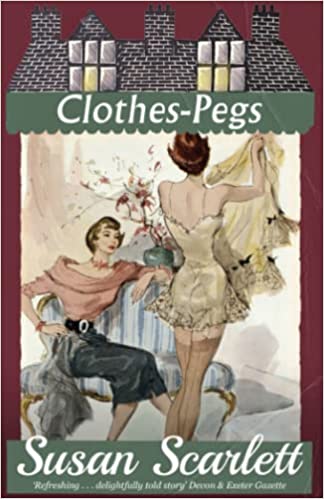
Review 2064: Clothes-Pegs

After reading Susan Scarlett’s Summer Pudding, I wasn’t sure she was my jam. However, I was surprised by how much I enjoyed Clothes-Pegs, a Cinderella story.

Annabel Brown is an unassuming young woman whose only ambition is to do well at her job as a seamstress before marrying some young man whom she loves. She has no idea that she is beautiful.

Her employer, Tania Petoff, has noticed her, though. Tania runs an exclusive dress shop, designing and making her own creations in the shop. When one of her models quits without notice, she decides to give Annabel a try.

At first, Annabel feels totally out of place in her promotion. Of the three other models, Bernadette, Freda, and Elizabeth, only Bernadette is nice, and she helps Annabel out with suggestions.

When Annabel sees Octavia Glaye at a fitting, she thinks she’s the most beautiful woman she has ever seen. But Octavia is jealous of how much attention her friend, Lord David de Bett, pays to Annabel. Annabel soon notices David, though, and falls in love with him on sight. She doesn’t have any illusions of a future with him. She is content to love him.

For his part, David is struck by Annabel’s naturalness and innocence but thinks he’ll probably marry Octavia. Octavia is ready to try to make Annabel regret any attention David pays her.

The Cinderella story was fun, but I especially enjoyed the parts about Annabel’s engaging middleclass family. Annabel is a nice, occasionally foolish but usually practical heroine who only gets into situations because of her lack of experience and the venom of others.

I received this book from the publisher in exchange for a free and fair review.

Related Posts

Summer Pudding

Beneath the Visiting Moon

Touch Not the Nettle

Review 2063: Can You Forgive Her?

Can You Forgive Her? is the first of Trollope’s Palliser novels. Phineas Finn, which I read first, is the second. Palliser doesn’t actually appear in this novel until page 150, but then he plays an important role.

At issue in this novel are three romances, which explore the theme of who has the power in courtship and marriage. The most important is that of Alice Vavasor, and as I read her story, I couldn’t help reflecting how different it reads now. Alice is in love with and engaged to John Grey, but she feels that he is too perfect. Further, she is inclined to marry a man in politics while he prefers a retired life in the country.

As Trollope explains it, she overthinks her impending marriage. She goes on a trip to Switzerland with her cousin Kate Vavasor and Kate’s brother George. Years before, Alice was engaged to George but he somehow betrayed her and the engagement was broken off. But Kate is determined that Alice will marry George. George seems indifferent, but he frankly needs Alice’s money for a run for parliament. Slowly, though, readers learn that George is a scoundrel.

Another love triangle involves Alice’s cousin Lady Glencora. Lady Glencora is newly married to Plantagenet Palliser, the heir to the Duke of Omnium. Lady Glencora, a great heiress, is very young, and she was madly in love with Burgo Fitzgerald, a young wastrel. Her horrified relatives quickly pushed her into a marriage with Palliser, but he doesn’t have much in common with her and doesn’t know how to handle her. Lady Glencora befriends Alice and confides in her that Burgo wants her to run away with him. She is unhappy enough to be tempted.

The final love triangle is a comic one. Kate Vavasor’s Aunt Mrs. Greenow is a wealthy widow who has two suitors. Mr. Cheeseacre is a vulgar wealthy farmer who talks about his money all the time. The other is Captain Bellfield, who has some style and panache but probably isn’t a captain and has no money.

Modern audiences may have problems with some of the assumptions of this novel, but I always try to keep modern judgements out of my opinion of older novels. I found this novel interesting and especially got involved in Alice’s situation. She is so honest yet so misguided that it made her story intriguing. I was a little bored with the comic romance, although it dealt with some of the same issues as the other relationships.

Related Posts

Phineas Finn

Doctor Thorne

Barchester Towers

Review 2061: The Seat of the Scornful

In the first scene of The Seat of the Scornful, we meet Justice Ireton, who really believes that an innocent man cannot be found guilty in his court. He lets a convicted man leave the court thinking he is going to be hanged when the justice intends to sentence him to life, as if that’s not punishment enough.

Later, his daughter Connie comes to see him at his seaside retreat, bringing along her fiancé, Anthony Morrell, a flashy dresser of Italian extraction whom Ireton immediately distrusts. Morrell, once alone with the justice, accepts an offer of £3000 to leave Connie alone.

The next night, the girl at the telephone exchange receives a call asking for help at the justice’s cottage followed by a gunshot. The justice is discovered seated at his desk holding a gun with Morrell’s body on the floor, shot in the head. Ireton claims to have been cooking in the kitchen when he heard a shot and came in to find the body and the gun.

Carr’s ungainly amateur detective, Gideon Fell, works with Inspector Graham to figure out what happened. Early the next morning Morrell’s lawyer explains that Morrell is actually a wealthy man with his own candy company who intended to give Ireton the £3000 as a gift for Connie to teach him a lesson.

Although the actual solution to this murder is very simple, it is followed by a series of fairly unbelievable events. However, I have a much bigger problem, without saying too much, with how Fell wraps up the case. Let’s just say that the victim, who was obviously not a nice guy but wasn’t the creep Ireton thought him, is not regarded at all. The introduction to the British Library edition says that other readers have questioned the book’s ethics. Let me say that I think the ending is extremely classist, that if Morrell had been a different type of person, the ending would have been different. Edwards states that Carr, Agatha Christie, and Anthony Berkeley were all pondering whether any murder is justified. Well, this one isn’t.

I received a copy of this book from the publishers in exchange for a free and fair review.

Related Posts

The Lost Gallows

Jumping Jenny

Murder on the Orient Express

Review 2055: #ThirkellBar! Love Among the Ruins

We meet many of the characters we’ve come to love in Love Among the Ruins, but principally the Marlings, the Beltons, the Deans, and the Leslies.

With a short stop-off to the Warings, where Mr. and Mrs. Waring have given over most of their mansion to their son-in-law, Philip Winter, for a boys’ school, the novel begins with the Leslie/Marling family, who are planning a birthday party for their beloved Lady Emily. Lady Emily tires easily and is sometimes confused, but still presents her overwhelming and charming personality. She is being capably cared for by her daughter, Agnes Graham, and Miss Merriman.

Lucy Marling has been manfully trying to keep her father’s estate running as neither of her brothers seem interested. They have no money, but she thinks if she can convince her father to sell some land, she can keep the rest going. But he is unwilling. Desperate to cultivate some wasteland, she looks to Mr. Adams for advice.

Oliver Marling is worried about Lucy, as she doesn’t seem to be marrying anyone and is depressed about her struggles with the estate. But Lucy is in love with Captain Freddie Belton and knows he doesn’t return her feelings. Oliver himself is spending a lot of time with Jessica Dean, the actress.

Jessica’s older sister Sue, a Red Cross librarian, has earned everyone’s respect with her quiet capability, and she has earned more than that from Freddie Belton. But a misunderstanding is keeping them apart. In the meantime, young Clarissa Graham is determined to land Freddie. And lest we forget Charles Belton, he has fallen, as do many younger men, for Agnes Graham.

This novel dwells a good deal on the difficult situation the British were in after the war, with limits on food, clothing, and gas, while apparently, I didn’t quite understand it, trying to prevent farmers from raising pigs. There are lots of snarky comments about the government, referred to as They, but I’m happy to say, far less snobbishness than in some of the previous novels. There is in some characters, though, an awareness of who is county and who is not, and it looks like the Deans may shortly be accepted as county.

The activities of this novel are centered around the fates of several characters, the Conservative Party Convention, and the Barsetshire Pig Show, so there’s a lot going on. I know Thirkell’s post-war novels were not considered her best, but I enjoyed this one about the same as the others, so so far, for me at least, they are not decreasing in enjoyment.

Related Posts

Private Enterprise

Peace Breaks Out

Miss Bunting

Review 2050: Summer Pudding

After Janet Brain’s employer’s office is bombed in the Blitz, she travels to the village of Worsingford where her mother and sister Sheila have made their new home. She has never been there before, but she makes a new friend on the train, Barbara Haines. Barbara’s reactions to some things she says should tell Janet that something is going on, but she doesn’t notice.

Janet arranged for her mother to move out of London into the country because her doctor urged her to make her mother get some rest without telling her she has a bad heart. Sheila was supposed to be doing the housework. But when she arrives at the cottage, she finds her mother more worn than ever and Sheila, beautiful and spoiled, doing absolutely nothing. Janet had planned to join the WAAFs but realizes she can’t leave her mother with Sheila.

Janet learns that Sheila agreed to teach Iris, the daughter of their neighbor and landlord, Donald Sheldon, months ago but has not kept her promise. So Janet goes over to Sheldon’s to offer her services. She is attracted to Donald, a widower, but finds him acting oddly when she tries to bargain for her pay. Donald also has a housekeeper, Gladys, who is jealous of him.

As Janet gets to know Donald, he alternates between seeming to care for her and seeming to disapprove of her even though she can’t figure out what she’s done. She doesn’t realize that Sheila has been telling lies.

Although the Furrowed Middlebrow books often involve some light, understated romance, they usually have other things going on as well. This is the first book I’ve read under this imprint that is a standard romance, with most of the action devoted to keeping the couple apart until the end. How good a romance is depends on how well you do this, and in this case, I think Scarlett (a pen name for Noel Streatfeild) doesn’t always handle it well. Characters over-react to other characters’ comments, for example. The situation isn’t too badly handled, though, and the book makes nice light reading. Straight romance novels are not usually my genre, though.

I received this book from the publisher in exchange for a free and fair review.

Related Posts

Ballet Shoes

Susan Settles Down

Touch Not the Nettle

Review 2049: Hester

When I was reading Hester, I reflected that it might more aptly be named Catherine. However, at the time it was written (published in 1883), many novels were named after their young and beautiful heroines. Catherine is neither young nor beautiful, but almost every action in this book refers back to her.

When Catherine Vernon was a young woman, she was engaged to marry John Vernon, her cousin and co-owner of Vernon’s, the family bank. The entire community is proud of Vernon’s, which is considered more trustworthy even than the Bank of England. John jilted Catherine to marry a gentle foolish woman, called Mrs. John in the novel. Later, John got the bank into financial difficulties and fled, presumably also embezzling some money. Although Catherine never had anything to do with the workings of the bank, she used her personal fortune to rescue it and took over its management.

Some years later, John Vernon has died, leaving his wife and daughter Hester destitute. Catherine has divided one of her properties into apartments and offered them to relatives who need them, so she kindly offers a home to Mrs. John and Hester. Hester, at fourteen, knows nothing about her father’s perfidy and is very proud. She notices that some of Catherine’s dependents are both sycophantic and ungrateful but also that their behavior amuses Catherine. Hester is offended by this and tends to misjudge Catherine. Since Hester is sulky and rude, Catherine misjudges her, and they proceed to misunderstand each other.

Catherine has brought two young cousins in to learn to run the bank, and by the time Hester is a young woman, they are in charge of it. Henry is a hard worker and is grateful to Catherine for the opportunity, but he is only moderately intelligent and depends on Edward for difficult decisions. Catherine has come to love Edward like a son and has given him a place to live in her own home. What she doesn’t know is that his apparent regard is false. He is bored at the bank and wants to be able to make his own fortune (presumably using the bank’s money to start it). He also misjudges Catherine and thinks she spies on him.

Hester grows into a beautiful independent woman who is used to being ignored and disregarded. However, she has an unusual relationship with Edward, who ignores her when Catherine is around because Catherine doesn’t like her but exchanges cryptic looks and comments with her.

The reader knows this behavior is ungentlemanly as is his two-faced behavior with Catherine, but while the steadfast Harry proposes to Hester and is refused, and she is briefly attracted to a young stockbroker, grandson to her neighbors, she eventually falls in love with Edward.

This is an insightful novel about complex human relationships. I really think Margaret Oliphant, especially with this novel, is right up there with George Eliot and Dickens. The Introduction to my edition calls Hester Oliphant’s masterpiece, and although I have read and enjoyed several of her books but not all (who could? she was unbelievably prolific), I so far agree.

Related Posts

Miss Marjoribanks

Phoebe Junior

The Perpetual Curate