Review 2648: #ReadingAusten25! Persuasion

Persuasion is a reread and re-review for me, and I see that my original post works just as well as it did before for a general review. So, I was trying to think of a topic I could discuss, and I decided to focus on its villains.

Maybe “villains” is too strong a word for this novel. The only outright villain in Austen that I can think of now is Mr. Wickham in Pride and Prejudice. But certainly Austen’s work features selfish people, people who wish ill to others, and even people who actively work against others. It strikes me that, although many of these characters are comic, they are less comic as she goes on. Is it my imagination, or are there also more of them?

First, there’s Anne Elliot’s entire family. Her father and sister Elizabeth are cold and snobbish and care only for appearances. Neither of them thinks Anne is of any account. And Sir Walter Elliot holds this high opinion of himself despite his having recklessly outspent his income, he and his daughter refusing to retrench where it might lessen their consequence. Above all, Sir Walter felt that Frederick Wentworth was beneath Anne when she fell in love with him seven years ago.

Anne’s sister, Mary Musgrove, is a little more bearable, but she is also self-consequential, as evidenced by her disdain of the Hayters, her husband’s cousins. However, she finds Mary useful (selfishly so, but Anne wants to be useful) and although she never considers Anne’s comfort, the contrast between Anne’s life in her father’s house and the one in Mary’s, with her nearby warm and welcoming in-laws and the visits with the neighbors, is striking. Of course, Anne has to bear Mary’s whining.

Then there is Mrs. Cox, Elizabeth’s friend, a poor widow and daughter to Sir Walter’s lawyer, so of inferior station. Pretty much everyone except Sir Walter and Elizabeth understands that Mrs. Cox means to marry Sir Walter if she can. However, she isn’t actively malevolent, and the only aspect we see of her is excessive agreeableness (sycophancy?). As she is living with two such people and probably endures many humiliations, I sort of feel sorry for her.

Now, if you don’t want spoilers, skip this part, because it’s about Mr. William Elliot, the young, handsome, well-mannered relative, Sir Walter’s heir, whom Anne encounters briefly in Lyme and meets later in Bath. Everyone thinks he and Anne will make a match (except Elizabeth and Sir Walter, who think he’s after Elizabeth), but Anne has one safeguard—she has been in love with Captain Wentworth since she was 19. Also, she instinctively feels that there is something about Elliot she doesn’t understand. He turns out to be the moral equivalent of Mr. Wickham, although he doesn’t do anything as dastardly. Still, his attentions to Anne get in the way for a while of her gaining an understanding with Frederick Wentworth.

These negative characters are maybe a bit more nuanced but also more seriously depicted than equivalent characters in her other books, where they are often comic. They’re not at all funny in this book, and notice how almost all of them are related to Anne.

Austen is certainly a master at showing us people’s foibles in a way that is absolutely believable.

Related Posts

Pride and Prejudice

Northanger Abbey

Emma

Review 2645: #RIP XX! Uncle Paul

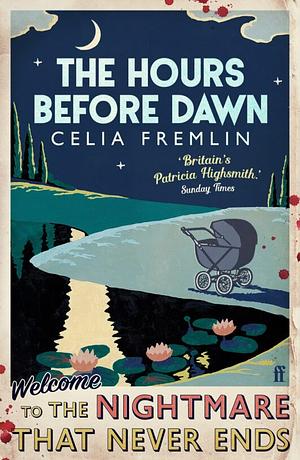
Why have I never heard of Celia Fremlin before? This book is great! When I first read a review of it last year, I could only find an expensive used copy, but another blogger this year (sorry, I don’t remember who) set me looking again, and I found an inexpensive set of three novels, including this one.

Meg gets an urgent message from her older sister Isabel asking her to drop everything and come see her at a vacation caravan site on the seaside. The telegram simply tells her that Mildred, their much older half-sister, is in trouble.

After talking it over with her friend, Freddy, Meg travels to the run-down caravan park to learn that Mildred’s problems have to do with Uncle Paul. Fifteen years ago, when Meg was a child, Mildred married Uncle Paul, and they spent their honeymoon in a cottage just a few miles away. It turned out, however, that Uncle Paul was not only already married but he was wanted for attempted murder of his wife for her money, and Mildred was also wealthy.

Now it is the end of Uncle Paul’s 15-year sentence. Mildred seems to think he will be coming to get his revenge, but she has perversely rented their old holiday cottage.

Both of Meg’s sisters seem permanently distressed. Isabel worries constantly about her husband Philip’s reaction to everything, while Mildred is often alarmed enough to scream. Meg talks Mildred into returning to town and looking for different lodging, which she finds for her at a comfortable hotel. She also finds Freddy there.

Her sisters’ alarm seems to be contagious, though. When she arrived at the cottage, she found Mildred all aquiver because she had been hearing footsteps—Uncle Paul’s footsteps. Isabel is hardly less nervous. And Meg learns that she may also be in danger, because she was the one who recognized Uncle Paul in an old newspaper.

Fremlin manages to work a good deal of suspense from what seems like trivial incidents, and from fears that Uncle Paul could be any of several men around. But just when I was deciding that everything was in their heads, things got going.

This book reminded me of a lot of Mary Stewart’s combinations of suspense and a bit of romance that I’ve always loved. The writing style is sprightly, the dialogue is witty, and the characters are vivid. Finally, Meg is an engaging, intelligent heroine.

Related Posts

The Unforgotten

Touch Not the Cat

The Lace Reader

Review 2642: #RIPXX! Bats in the Belfry

Bruce Attleton is a once-successful novelist married to the actress Sybilla Attleton. He has planned to meet up with his friend Neil Rockingham in Paris, but he doesn’t show up. When Rockingham finds that no one knows where Attleton is, he thinks of going to the police.

In the meantime, Robert Grenville, a journalist who wants to marry Attleton’s ward, Elizabeth Leigh, learns that a strange man with a beard named DeBrett might be blackmailing Attleton. He traces DeBrett to a weird studio with a tower, breaks in, and finds Attleton’s briefcase in the coal cellar.

Grenville goes to the police, and eventually they find a body plastered into what had been a niche in the wall. But the body has no head or hands, so is it Attleton or DeBrett, since both seem to be missing?

There’s no love lost between the Attletons, and both were unfaithful, so is that a motive for murder? Or has Attleton faked his own death? Did Grenville kill him since he was denying permission for him to marry Elizabeth? Or does it have something to do with his cousin, who recently died?

If this doesn’t sound complicated enough, the mystery gets more so as it continues. I guessed the motive, but the murderer was just one of many guesses.

I think I like Lorac’s rural mysteries better because of their atmosphere, although the studio is certainly creepy. Of course, Inspector Macdonald is going to solve the crime.

Related Posts

Checkmate to Murder

Murder by Matchlight

Post After Post-Mortem

Review 2639: #1925Club! #RIPXX! #HYH25! The Secret of Chimneys

My second book for the 1925 Club is The Secret of Chimneys. I usually don’t enjoy Christie’s political mysteries as much, but this one is a romp. It’s got everything—a missing jewel, impersonations and secret identities, secret passages, an arch-criminal, Italian gangsters, kidnapping, and Balkan assassinations.

In Zimbabwe, Anthony Cade is leading a bunch of old ladies on a guided tour when he runs into Jimmy McGrath, an old friend. Jimmy is about to depart on a gold-mining expedition, so he asks Anthony to do two favors for him. Jimmy once saved the life of Count Stylptitch, prime minister of Herzoslavakia, and the Count had his memoirs shipped to Jimmy after his death with a promise of £1000 if he gets them to the publisher before a specific date. Jimmy offers Anthony a cut if he will take them to England for him. Jimmy also came by a collection of letters that someone has kept with the idea of blackmailing the writer. He wants to return them so that the writer, Virginia Revel, addressing the letter from Chimneys, will feel safe. Anthony takes on both tasks and returns to England, traveling under Jimmy’s name.

It turns out that lots of parties want the memoirs. England is about to help the heir to the throne of Herzoslavakia, Prince Michael, ascend to the throne after a period of anarchy. As a friend to the monarchy, England will get an important oil concession. But perhaps the memoirs say something embarrassing about Prince Michael. Anthony is approached by Baron Lolopretjzyl asking to buy them. Anthony refuses. Then he hands them on to a man who says he’s a representative of the publisher.

Next thing he knows, the Italian waiter at his hotel has stolen the packet of letters, along with the newspaper clipping he found about Virginia Revel. He goes to see her and gets to her house just after she discovers the body of the Italian waiter in her study. She explains that he had come the day before and even though she knew the letters weren’t hers, she gave him some money just to see what it would feel like and told him to come back the next day. She is due at Chimneys, so Anthony disposes of the body for her and follows her.

The reluctant Lord Caterham and his daughter Bundle, who also appear in The Seven Dials Mystery, are entertaining important political guests at Chimneys—Prince Michael and Count Lolopretjzyl; the millionaire Herman Isaacstein, who is involved in the oil deal; Mr. Fish, an American collector of books; and Virginia. Anthony arrives late at night and approaches the house only to hear a gun shot. The next morning, Prince Michael is found dead. Inspector Battle has been summoned, and Anthony recognizes the prince as the man he handed the manuscript to. Anthony’s boot prints have been found outside, so he has some explaining to do.

And in all this, I forgot about the jewel, the Koh-i-noor, which King Nicholas last had at Chimneys and hid somewhere before he returned to Herzoslavakia and was killed.

The novel has two engaging protagonists in Anthony and Virginia and is lots of fun. There are several characters in disguise, and although I guessed the identity of one of them as soon as I heard of that person, the others fooled me. I also didn’t guess at all who killed Prince Michael.

This is a ridiculously unlikely but entertaining early book by Christie. Note, though, that there are several anti-Semitic comments as unfortunately isn’t unusual for the time.

Related Posts

The Seven Dials Mystery

The Secret Adversary

Destination Unknown

Review 2632: #ReadingAusten25! Northanger Abbey

Northanger Abbey is, of course, partially Jane Austen’s spoof of Gothic novels, and her heroine, Catherine Morland, is definitely a fan of them. But before that story line kicks in, Catherine gets to visit Bath in the company of family friends, Mr. and Mrs. Allen.

Catherine is not a well-informed girl and tends to be naïve and to take people as they present themselves. The first few days at Bath go slowly, because the Allens don’t know anyone. Catherine, however, has a dance with Henry Tilney and is inclined to like him. Then Mrs. Allen meets an old school friend, Mrs. Thorpe, and Catherine immediately becomes bosom pals with Isabella Thorpe.

It seems that Catherine’s brother James is friends with Isabella’s brother John, and Isabella has set her sights on James. Despite the vaunted friendship, Isabella and John (who is obnoxious enough that even Catherine notices it) do a great deal to disrupt Catherine’s growing acquaintance with Henry Tilney and his sister Eleanor in favor of foursomes with them.

Finally, Catherine is invited to stay with Eleanor and delighted to learn the Tilneys own an old abbey. Unfortunately, Catherine lets her taste for Gothic literature carry her away.

Catherine is one of Austen’s most serious heroines, trying to navigate society and do what is right but fallen in with people whose intentions aren’t as honorable. But she is adorable, and her naïve reactions are amusing. Henry is genuinely witty and just the man to teach her to examine her assumptions a little more thoroughly. All in all, this is one of the lightest and most fun of Austen’s works.

Related Posts

Pride and Prejudice

Mansfield Park

Sense and Sensibility

Review 2627: #RIPXX: The Strange Case of Harriet Hall

Since the beginning of September, I have looked for info about Readers Imbibing Peril, which I have participated in for years, since I couldn’t remember whether it started in September and went through October or started in October and went through November. Since I couldn’t find anything, I assumed it started in October. Well, it’s too bad that it actually started in September, because I missed marking three other mysteries for the challenge. It is usually advertised through Instagram, which I don’t use much.

So, despite this being my fourth book to qualify, it’s going to count as my first.

Well, there certainly are surprises in this book!

Amy Steer is a young woman looking for work, a necessity made worse by the empty state of her pockets and her landlady’s demands to raise her rent. She is looking through the want ads when she spots an ad looking for relatives of her father. She never knew her father, but she answers the ad and makes an appointment.

She meets a disturbing but seemingly kind woman who says she is Harriet Hall, Amy’s aunt. She says she is staying in a house in the country owned by friends and invites Amy to stay. She even gives Amy £100 to spend on nicer clothing.

On Monday, the day she is expected, nicely dressed Amy is on the train to her aunt’s. She meets a pleasant young man named Tony Dene who is getting off at the same station. They are getting along just fine until Amy tells him about Aunt Hall. Then he abruptly leaves the car. No one picks Amy up, so she is forced to walk five miles to Harriet Hall’s cottage, finding no one home. But the door is unlocked, so she stays.

The Denes lived with their uncle until he died the year before. Then Mary Dene, Tony’s mother, inherited everything and bought a property in the country. But soon Harriet Hall appeared. Mary has told her three children that Harriet is an old friend fallen on hard times. She lets Harriet live in the cottage rent-free, but Harriet comes over every day to sponge or take something. Tony and his sister Mollie hate her, but Lavvy, who is engaged to marry Sir Miles Lennor, only cares about her wedding.

Amy stays in the cottage Monday night, but Harriet never appears. Tony, who feels bad about abandoning her, drops by with his sister’s dog, and the dog’s barking at an old well in the back of the house causes Tony to remove the top. Inside the well is a body.

Tony calls the police, but once the body is identified as Harriet Hall and the police understand the relationship between her and the Denes, Tony is a suspect. He has no alibi because instead of driving home from the train station, he drove around aimlessly for hours.

Scotland Yard Inspector Collier is called in fairly quickly. Although more evidence comes out against Tony, Collier is reluctant to charge him. Then there is a shocking discovery followed by another death.

If Amy is supposed to be our heroine, we see remarkably little of her, spending more time with the Denes. However, she does get to be in peril.

There’s a little bit of a cheat here, as a person of interest doesn’t appear until page 150. But overall, we’re having so much fun we don’t care. Dalton’s books are well written and move along at a brisk pace. Some aspects of this one were obvious, but for 1936 the book seems fairly avant-garde.

I received this book from the publishers in exchange for a free and fair review.

Related Posts

One by One They Disappeared

The Night of Fear

The Body in the Road

Review 2625: Funny Girl

I have enjoyed some of Nick Hornby’s books very much, particularly some of his early ones, and others not so much. I have been watching the series Funny Woman, though, and when I learned it was based on this book, I thought I’d read it.

It’s the Swinging 60s, and Barbara Parker wants to make people laugh. Her relatives encourage her to enter the Miss Blackpool competition in hopes it will keep her in Blackpool instead of leaving for London. She wins, but when she realizes she’s supposed to participate in activities for a year, she decides not to accept. Soon, she is in London.

The novel follows her as she looks for work and a roommate, and finally an agent. The agent is more interested in sending her for modeling gigs, but she wants to act, so she gets him to send her for auditions. After some failures, she is lucky enough to come upon the writing team of Tony Holmes and Bill Gardiner, their producer Dennis Maxwell Bishop, and actor Clive Richardson. They are working on a different project that they’re not happy with, but they are so charmed by Barbara (now calling herself Sophie Straw) that they decide to write a show for her. Sophie’s offbeat humor makes her a sensation and the show Barbara (and Jim) a success. (Ironically, her character has her true name.)

I didn’t think this book was particularly funny, but it’s still a fun read that is full of detail about early British TV comedies (much of which I wasn’t familiar with), the craziness of London in the 60s, and the progress of our ambitious but likable heroine. Toward the end, it takes a turn toward conventional romance, but the ending lends perspective to everything. Although Sophie is engaging, a lot of this novel hangs on the existing synergy between the members of that original team and what happens when it inevitably cools off. And, of course, the difficulties of a young woman trying to make it in show business.

Related Posts

State of the Union

Miss Iceland

Sweet Caress

Review 2623: #RIPXX: Knock, Murderer, Knock

The mostly elderly occupants of the Presteignton Hydro spa resort like nothing better than to gossip about the other guests. Lately, they’ve had fuel for their fire by the arrival of beautiful Miss Blake, who dares to wear makeup, shorts, and backless evening gowns (this is 1938). Their tongues are wagging even more with the advent of Sir Humphrey Chervil, assuming a connection because he is young and handsome, even if they hardly talk to one another.

All the men at the resort like Miss Blake, but none of the women do. Nurse Hawkins has her eye on Admiral Urwin, so she certainly doesn’t like Miss Blake seeking him out. Even Mrs. Napier, who spends a lot of time falling down on purpose to get attention, thinks Miss Blake is a floozy.

On the night of an entertainment, Sir Humphrey spends some time with Miss Blake, staying up late talking in the drawing room. The next day she is found dead in the same room, a knitting needle plunged through her skull.

Inspector Palk locks onto Sir Humphrey when he finds he went into Miss Blake’s room instead of escorting her to the door. His fate is sealed when her jewels are found in his closet.

However, a few days later, after young Winnie Marston was seen canoodling with her father’s chauffeur, she is also found dead of the same cause. Inspector Palk still thinks he has the right man for the first murder and wants to arrest the chauffeur for the second—until he finds out he has actually married Winnie.

Mr. Winkley appears on the scene after Winnie’s death. He says his hobby is murder and talks everyone into staging a re-enactment of the first crime—the one supposedly solved. But who is Mr. Winkley, anyway?

Although I found this novel entertaining enough, it doesn’t spend a lot of time on characterization (which is common for the time)—usually just giving the characters some defining trait—and it wasn’t enough for me. I kept getting the little old ladies mixed up and even confused the Admiral and the Colonel. Plus, in one instance Rutland only brings in a character right before killing him off, even though he’s been there all along. Still, the novel was fun, except the last chapter where everything is explained, which I felt was an anticlimax.

I received this book from the published in exchange for a free and fair review.

Related Posts

Someone from the Past

The Circular Staircase

The Iron Clew

Review 2621: #RIPXX: The Body in the Road

I saw this book labeled Hermann Glide #1, but he actually appeared in Moray Dalton’s previous novel. Both times, he came in at the end. Or maybe I read them out of order by mistake.

Linda Merle takes a job playing the piano in a tearoom, and performing with her is the beautiful but not very talented Violet Hunter on the violin. The girls become friendly right away, and when Linda learns that Violet hates living with the oppressive friend of her mother, she invites her to move in with her. Miss Coleman has already taken a dislike to Linda and hates her when Violet moves out.

When Linda inherits a small sum, she decides to purchase a cottage in the country and open a tearoom, but she only feels she can do it with Violet’s help.

She and Violet spend a weekend working at the cottage. But Violet doesn’t help much and finally tells her she can do better for herself by going to London. Linda is angry that she didn’t tell her earlier, so they argue. Then on a walk they find a dog that’s been hit by a car. Linda sends Violet up to the main road to get help while she goes the other way, to a large house. Outside the house she meets a small, furtive man who says she’ll get no help at the house, where he works, and another man, David Chant, who is the new Lord Haringdon. Chant goes back with her, but the dog is gone and so is Violet.

Linda assumes Violet got a ride into town, but when she returns to their room, Violet isn’t there and she has taken nothing. Linda wants to go to the police, but Chant advises her to wait while he looks into it. He suspects that Violet’s disappearance may have something to do with the large house Linda went to. It is occupied by a Dr. Saigon, who is rumored to be running a mental hospital there.

While he is looking into that, the police get involved, and they clearly have trouble with Linda’s story. Then they find Violet’s body, buried in back of Linda’s cottage.

I thought that part of this novel was going to go way off the rails, but it didn’t. It becomes suspenseful as things start to stack up against Linda. It also does a good job of misdirection.

I received this book from the publishers in exchange for a free and fair review.

Related Posts

One by One They Disappeared

The Night of Fear

The Warrielaw Jewel

Review 2620: The Librarian

In the 1950s, Sylvia Blackwell arrives in the town of East Mole to take on the job of children’s librarian. She finds no fault with the dingy, musty cottage her landlady shows her. She is excited to start her new job and life.

Although she and her boss seem to dislike each other on sight, she fits into the town fairly quickly, reorganizing and making improvements to the library, making friends with her neighbors, all but one, and tutoring her landlady’s granddaughter, Lizzy, for the 11+ exams with the help of her whip-smart, eleven-year-old neighbor, Sam.

By and large, she is a creature of good will, happy to help the children learn and become interested in books. And she is succeeding but has not reckoned with the effects of envy and ill-will. And she makes the mistake of falling in love with a married man.

I thought at first that this book was going to be a standard romance, but it deals with some more complex issues. I was interested in the story and ultimately found it somewhat touching. I felt, though, that Part Two, the last 40 pages, was a little too concerned with trying to tie up every little loose end and takes too long to do it.

Related Posts

The Bookshop

The Library Book

The Sentence