Review 1847: #ThirkellBar! Marling Hall

Lettice Watson, the Marling’s older daughter, has moved back home with her two little daughters after the death of her husband at Dunkirk more than a year ago. The younger Miss Marling, Lucy, is one of those bouncing, hearty girls that Thirkell depicts so well. Brother Oliver, whose poor eyes don’t allow him to serve, has a job in the regional government offices. Mr. Marling is aggressively deaf and likes to play what his children call “the olde squire.” Mrs. Marling is a bit silly.

From the beginning of Marling Hall, we realize we’re going to encounter some familiar characters. The Marlings, along with Miss Bunting, their former governess (who gets her own book later in the series), go to call on the Leslies at Rushwater. It was David and John Leslie who made up two thirds of a love triangle in Wild Strawberries, and David very soon is trying his charm on Lettice. Soon after, Lucy brings home Captain Tom Barclay, a much steadier young man, who is also attracted to Lettice.

Because of this visit, we meet again the charming but disorganized Lady Emily as well as her daughter Agnes, so besotted with her own children that she can talk of nothing else. And we continue not to meet Agnes’s husband Robert. The efficient Miss Merriman also reappears on the scene. We hear about characters from Pomfret Towers and other books in the series.

Some newcomers to the area are the Harveys, who both work in Oliver’s office. Geoffrey Harvey is one of the artistic types that Thirkell likes to make fun of. His sister Frances is Oliver’s very organized assistant. The Harveys have been living with the Nortons and wish to find a house for themselves, but housing, along with everything else, is difficult to find during these days of war. They find the Red House, a repulsively decorated place owned by Mrs. Smith. A lot of the comedy of this novel comes from their encounters with Mrs. Smith, who, after she leases them the house, continues to return to it to remove one object after another, including the beans from the garden and the eggs from the chickens the Harveys purchased, and eventually the chickens themselves.

Unfortunately for me, more humor is derived from the visits of Harvey’s old French teacher and later her nephew. Although Thirkell has poked fun at the French before, she hasn’t actually included so much dialogue in French, which I don’t really know. Last time, it was little enough for me to type into my iPad and get a translation or simple enough for me to muddle out myself, but this time there was a lot more, also, I think, including some mocking of the quality of one character’s French. The part with the nephew was funnier because of being told the gist of what he was saying rather than the exact words.

In this novel, the difficulties of life during the war become more apparent, especially in regard to food and clothing shortages. However, it continues on in the Thirkell vein—funny, with its little side comments directed at the reader, insightful, touching, and certainly snobbish, but more as if she is laughing at her own and her characters’ snobbery. Another good one.

Related Posts

Wild Strawberries

Pomfret Towers

Cheerfulness Breaks In

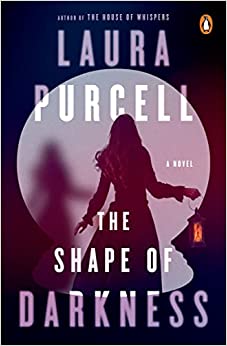
Review 1843: The Shape of Darkness

Newly recovered from a vicious bout of pneumonia, Agnes is still weak, but she is so poor she has returned to her job as a silhouette maker. Her mother is ailing, and she also has her nephew Cedric to support. Then she notices that her last few customers have been murdered—their throats slit.

Pearl is an 11-year-old albino who up until recently has been appearing as a ghost in her sister Myrtle’s seances. But Pearl seems to have a gift herself, so Myrtle has been advertising her as the White Sylph. Certainly something happens when she attempts to contact the spirits. She, though, doesn’t know what, because she passes out.

Agnes, worried that someone is targeting her business, decides that Pearl can help her.

Although I have been enjoying Purcell’s novels and this one is creepily Gothic, set as it is in old, dilapidated houses in Victorian Bath, it took me a while to get into it. However, I had patience that paid off. I had lots of theories about what was going on, but there’s no way I could have guessed the truth.

Related Posts

The Silent Companions

The Poison Thread

Sleep, Pale Sister

Review 1837: The Ashes of London

London is in the midst of the Great Fire of 1666. James Marwood is on an errand for his master when he stops to watch St. Paul’s burn. He is barely able to stop what he thinks is a boy from running right into the fire. When clothes begin to burn, the resulting dishevelment reveals a young woman rather than a boy. James puts his cloak around her, and she runs off still wearing it.

The girl is Cat Lovett, whose father is an attainted traitor as a result of the Restoration. She was supposed to meet him next to St. Paul’s. She has been living with her uncle’s family, the Alderleys, but they are trying to force her to marry Sir Denzil Croughton, a man she dislikes. She is hoping her father can help her. That night, though, her cousin Edward rapes her, and she stabs him in the eye, so she runs away with the help of her servant Jem to Jem’s sister.

James is also the son of a man who was on the wrong side of the Restoration. His father is a member of a sect called the Fifth Monarchists, who believed that after the King was put aside, Christ would be King. Now frail and senile, he keeps saying things that are deemed traitorous.

James works for the publisher Williamson, but soon he is asked to meet Mistress Alderley. She wants James to find her niece, and later he is asked by government officials to try to find Lovett.

There is also the matter of two bodies that have turned up. They both have their thumbs tied together behind their backs and have been stabbed in the neck.

I decided to read this series after the strong recommendation by Helen of She Reads Novels. I found it to be engrossing and entertaining. The atmosphere of burning London is well done as is the general paranoia following the Restoration. James and Cat are both appealing characters. Although it is quite a long novel at 400+ pages, it went very quickly. I’ll just have to look for the next one.

Related Posts

Merivel: A Man of His Time

The Devil in the Marshalsea

The Last Confession of Thomas Hawkins

Review 1836: Rhododendron Pie

Ann Laventie comes from an artistic and elegant family, all of whom are witty and have excellent taste. All, that is, except for Ann, who thinks they are wonderful but likes ordinary things and people. While her family disdains their solid Sussex neighbors and stays away from them, she likes them, especially the large and noisy Gayford family. Still, she feels she must be at fault.

A young film maker, Gilbert Croy, comes to stay and pays Ann a lot of attention. After Ann’s sister Elizabeth moves to London, Ann goes to visit her, convinced that she is in love with Croy and determined to come back engaged. But once in London, she begins to notice things. Her brother Dick’s sculptures, for example, all look alike. She absolutely adores a girl that everyone in her siblings’ group of friends shuns.

Rhododendron Pie is Margery Sharp’s first novel, and it’s quite funny as it explores the bohemian world of her upbringing versus the more mundane. Ann is an appealing heroine, and frankly I liked the Gayfords a lot better than the Laventies, especially in their reaction to Ann’s engagement. Her mother, though, an invalid who is mostly just a presence in the novel, gives a wonderful speech at the end. A fun one from Margery Sharp. I’m glad to have read it for my Classics Club list.

Related Posts

Harlequin House

Cluny Brown

The Stone of Chastity

Review 1833: Unsettled Ground

Twins Jeannie and Julius Seeder live precarious but contented lives with their mother Dot in the cottage where they were born. At 51, neither has much education. Jeannie was kept out of school so frequently with rheumatic fever that she never learned to properly read and write. Julius only attended school until 15. Jeannie and her mother keep a market garden while Julius earns what he can through various odd jobs. Their mother has taught them to be independent and not borrow money.

When Dot dies unexpectedly, however, the twins are thrown by one thing after another. They had always understood that their cottage was theirs for life, rent-free, because their landlord, Mr. Rawlings, was partially at fault for their father’s horrendous death. However, almost immediately after Dot’s death, Mrs. Rawlings arrives to tell them they owe £2000 for back rent. The man they sell vegetables to informs Jeannie that Dot owed him money, and the husband of her mother’s best friend says she owed him £800. But they can find no money in the house. Then, right before the wake, a thuggish young man tells them they are being evicted in a week. They have no money for a funeral.

Although Jeannie finds a job doing a woman’s garden, she is paid by check and has no idea how to cash it. The electricity has been disconnected. But Jeannie and Julius are too proud to ask for help or let anyone know what’s going on.

This story about people living on the margins of society had me utterly rapt. I could not do anything but wonder how it would all end. Fuller has done it again with another powerful, absorbing novel.

Related Posts

Our Endless Numbered Days

Swimming Lessons

Bitter Orange

Review 1832: The Lantern Men

Anthropologist Ruth Galloway has taken a job at Cambridge, and she and her daughter Kate are living with Frank, the American historian she met several books ago. She has made this move for a promotion but also to make a break from Harry Nelson, Kate’s father and her married occasional lover.

But fate pulls her back to Norfolk and the Saltmarsh, which she dearly misses. Nelson has got a conviction against Ivor March for two murders of beautiful tall blond women, but he thinks March murdered two more women whose bodies were never found. Although the two women’s bodies were found in the backyard of March’s girlfriend, Chantal Simmonds, and his DNA found on them, he has insisted he is innocent, and he has several acolytes who believe him.

Now March has told Nelson he will divulge the burial place of the other two women on the condition that Ruth perform the forensics rather than Ruth’s ex-boss Phil. Ruth agrees, and when she disinters the bodies, she finds three, not two.

The deaths seem to center around a group of people who used to live in a commune. The men called themselves the Lantern Men and went out to rescue lost women. But the legend of the Lantern Men is more sinister.

This series continues to be excellent, both in the mysteries and in the private lives of the recurring characters. Although Griffiths pulls a little bit of a fast one in the identity of one character, I didn’t hold it against her. My only regret is that when I read this book I only had one more book to read in the series until the next one came out.

Related Posts

The Stone Circle

The Dark Angel

The Woman in Blue

Review 1828: #ThirkellBar! Northbridge Rectory

Cover for Northbridge Rectory

Northbridge Rectory is the tenth book in Angela Thirkell’s Barsetshire series and another reread for me, so I won’t repeat my review but simply provide the link to it. Instead I’ll comment on what I noticed this time through.

Everyone is much more actively involved in the war in this one, so it seems closer. Yet it seems far away, too, as we busy ourselves with the emotional lives of several characters.

I’m starting to notice Thirkell’s tropes, and one is for the infatuation of a young man for an older woman. In this case, it’s the young officer Mr. Holden for Mrs. Villars, the rector’s wife. Sometimes, these infatuations are handled sympathetically and in one case a few books ago, it was a mutual regard that added a bit of pathos to the plot. In this case, it is more comic, with Mrs. Villars not noticing at first or making herself respond in a practical way after feeling in herself a tendency to want to imitate the fragile flower that he thinks he worships. However, his comments about how tired she looks make her more and more irritated.

The other very touching story is the restrained love triangle of the two penniless scholars, the terrifying Miss Pemberton and the timid Mr. Downing, and the comfortable and warm Mrs. Turner. Miss Pemberton, who seems at first a grim bully with Mr. Downing under her thumb, turns out to have a much more sympathetic side.

I loved the depiction of Mrs. Turner’s nieces, Betty and “the other girl,” and their swains, Captain Topham and Mr. Grieves. And I don’t know how Thirkell does it, but even though Betty has as many verbal tics as the voluble Mrs. Spender, Betty seems delightful while Mrs. Spender is just plain irritating.

Not only am I finding these novels just as delightful as I go on, but I’m also finding them deeper (in a light way) and more touching. We get just a sentence about the (backwards spoiler for Cheerfulness Breaks In) survival of Lydia Merton’s husband at Dunkirk, since Thirkell with this book is dealing with other characters, but it cheered me right up.

Related Posts

Cheerfulness Breaks In

Before Lunch

The Brandons

Review 1821: Berry and Co.

I hadn’t heard of Dornford Yates until a friend gave me a copy of Berry and Co. Apparently, Yates wrote a series of books about the same characters called the Berry books. This one was published in 1920.

The characters are Boy, the narrator, a major but certainly no longer serving; his sister Daphne, who is married to their cousin, Berry; and their cousins Jonah and Jill, all wealthy young people who live together at Whiteladies in Hampshire.

There isn’t really much of a plot to Berry and Co. In fact, I would have taken it for a collection of short stories except that it is clearly labeled a novel. Each chapter consists of a little adventure or some sort of prank, and the only recurring plot has to do with Boy flirting with a series of young women until he finally settles on one.

The novel is certainly meant to be funny and light-hearted, similar perhaps to Wodehouse’s Jeeves and Wooster series. Now, I do love a Jeeves and Wooster, but I did not much enjoy Berry and his pals. In fact, the reason I bring in the Jeeves books is because comparing them helped me understand why I liked one much more than the other.

Of course, Bertie Wooster and his pals are always getting themselves in ridiculous situations or pulling pranks similar to the ones in this novel. Here’s the difference. Bertie is essentially brainless, but he is also good-hearted. Almost all of his tangles result from him trying to help out a similarly dim-witted pal.

Berry and his friends, however, are highly intelligent, and their pranks tend to be mean-spirited. Sometimes, they are aimed at nasty characters, but other times these idle people, who have to be pushing 30 by 1920, just don’t like the way someone looks or is dressed. In other words, it’s a class thing.

I didn’t enjoy most of these jokes, which seemed juvenile, like something they would have done in college. Further, the zippy narration is periodically interrupted by rather florid descriptions of the scenery that don’t seem to belong to the same novel.

The characters, with the exception of Berry, aren’t very distinctive. They all engage in the same kind of banter, and a lot of time is spent with them rolling in laughter or trying to suppress it. Frankly, my favorite character was Noddy, a Sealyham terrier with a lot of personality.

This Side of Paradise

Empire Girls

On Her Majesty’s Frightfully Secret Service

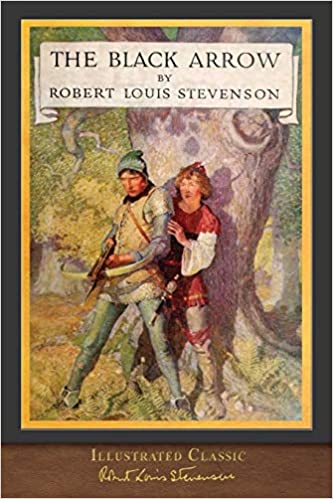
Review 1815: The Black Arrow

I occasionally collect children’s books, mostly those with good illustrations, and a few months ago I started thinking about the books that used to be readily available, all adventure stories by various authors but illustrated by N. C. Wyeth. I decided to look for some of those, and the ones I bought were both by Robert Louis Stevenson, Kidnapped (my personal favorite) and one I’d never read, The Black Arrow.

Young Dick Shelton has lived under the wardship of Sir Daniel Brackley for most of his life and is loyal to him even though he seems to switch sides in the Wars of the Roses rather frequently. But mysterious attacks against his men by a group calling themselves the Black Arrow begin to awaken Dick to feelings of just resentment against Sir Daniel. For he has used the war and his position to cheat people out of their property.

Dick is on his way from Sir Daniel’s encampment when he encounters a boy named Jack Matcham whom he met in the camp. The boy (who everyone but Dick can see is really a girl) asks Dick for his help to get to Holywood. Dick helps Jack, but they fall back into Sir Daniel’s hands. Once there, Dick begins asking about the death of his father, for he has heard rumors that Sir Daniel was responsible.

This is an entertaining adventure story, and I’m not sure why it isn’t as highly regarded as Treasure Island (which has never been one of my favorites). The only thing I can think of to make it not as popular is the archaic speech Stevenson uses, which, while probably not that authentic, did not strike me as inauthentic, if that makes any sense. The novel features plenty of action, some appealing characters and some villains, and Richard of Gloucester (eventually to become Richard III) even makes an appearance as a young man.

Treasure Island

Witch of the Glens

Richard III, England’s Black Legend

Review 1811: The Blue Sapphire

Julia Harburn is sitting on a bench in Kensington Gardens waiting for her fiancé when a young man sits down beside her and tells her he is on a business trip from South Africa and doesn’t know anyone in London. He is perfectly polite and friendly, but when the fiancé, Morland Beverley, arrives, Julia can tell Morland isn’t pleased.

Julia is taken aback, then, when she comes home one day to find the man, Stephen Brett, having tea with her stepmother. But this isn’t a tale of a stalker—it’s the story of how Julia finds herself.

Julia was close to her mother, who died when she was younger. She has never felt that her father paid attention to her. In fact, he’s always been quiet and depressed. Since he remarried, she has felt in the way, and her stepmother encourages her to move out and find a job. Julia finally finds a room with an eccentric but friendly landlady, who gets her a job in a hat shop. Morland isn’t very happy with her decision, but he has been delaying their wedding until he gets a partnership in his father’s firm, and anyway he is in Scotland golfing.

Julia’s parents are away in Greece when she gets a letter from Scotland from an uncle she didn’t know she had—her father’s brother. He says he is ill and wants to see her, so she goes, even though Morland is very much against her doing so. Thus begins an even greater adventure for her.

This novel is just what you expect from D. E. Stevenson: a heroine who didn’t know she had it in her, some light romance, some self-discovery, and some entertaining characters. Even though I could foresee the result of the romantic angle from the first pages, it didn’t make reading any less enjoyable.

I received a copy of this book from the publishers in exchange for a free and fair review.

Five Windows

Winter and Rough Weather

Vittoria Cottage