Review 1627: Hamnet

Hamnet explores the impulses that went into the writing of Hamlet as well as important moments in the marriage of Anne Hathaway and William Shakespeare. It focuses on grief from the death of a beloved son.

The similarity in the name of Shakespeare’s son to that of his most famous protagonist is obvious, but I wasn’t aware until this book came out that they were essentially the same name. O’Farrell’s newest book parallels scenes from the beginning of Shakespeare’s relationship with Anne (called Agnes in the book) with the hours leading up to Hamnet’s death from bubonic plague. Then she deals with the aftermath.

At first, I wasn’t sure how much I liked all the invention going on, as O’Farrell depicts Agnes as a sort of wild child/wise woman. Then I reflected that little is known of the couple and that I was reading fiction, after all. I don’t like it when a fiction writer knowingly distorts the truth, but O’Farrell stuck fairly closely to the few known facts. The result I found extremely touching. I admit that my initial reluctance to buy in changed to my being completely rapt. This is a deft, sensitive story that concentrates mostly on Agnes’s feelings and reactions.

Related Posts

The Vanishing Act of Esme Lennox

Instructions for a Heatwave

The Secret Life of William Shakespeare

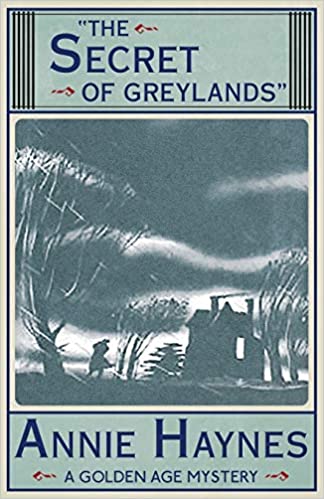
Review 1625: The Secret of Greylands

The Secret of Greylands is 219 pages long, and I realized the secret about 200 pages before the main characters did. Nevertheless, I found it an entertaining gothic novel, atmospheric and with a likable heroine.

Lady Cynthia Letchingham flees her new marriage when she finds out her husband ruined her best friend. She has nowhere to go, but she recently received a curious letter from her older cousin Hannah asking her to visit, so she goes to Hannah’s home at Greylands.

Hannah has married a much younger man, Mr. Gillman, who tries to send Cynthia away when she arrives, only to become a little more welcoming after he finds out she is friendless and hasn’t seen her cousin since she was a little girl. He doesn’t allow her to see Hannah, who he says has fallen and is paralyzed in bed, until the arrival of another cousin, Sybil. Cynthia has to admit Sybil looks a lot like Hannah when she finally meets her.

Hannah seems excitable and demanding but not fearful as she was in her letter except of having her door unlocked. Nevertheless, Cynthia can’t help feeling something is amiss, as she confides to the neighbor, Mr. Heriot.

There are plenty of hints about the true state of affairs at Greylands, including an outspoken parrot, a neglected pet, mysterious goings on at night, and Hannah’s hands, but the characters can’t quite put two and two together. However, it’s a fun read, and I enjoyed it. This is another good older (1924) mystery from Dean Street Press.

Related Posts

The Haunted Hotel

The Grey Woman

Dark Enchantment

Review 1623: Miss Buncle Married

How delighted I was to find out there are actually three Miss Buncle books, since I so enjoyed the first one. This second book continues in the first one’s gently comic, frothy tradition.

Barbara Buncle, now Mrs. Abbott, and her husband Arthur discover that neither of them has been enjoying their active social life. There seems to be no way to get out of it, however, because they’re such a popular couple. So, they decide to move.

It takes Barbara quite a long time to find a house she likes. When she visits a solicitor’s office in Wandlebury to view a house, Mr. Tupper, mistaking her for another client, has her read a will in which Lady Chevis Cobbe leaves her estate to her niece, Jeronina Cobbe, on the condition that she isn’t married before Lady Chevis Cobbe’s death. When Mr. Tupper discovers his mistake, he is horrified and asks Barbara to tell no one.

Of course, Barbara discovers the perfect house in Wandlebury, and after extensive renovations, it makes a comfortable home. Shortly after moving there, Barbara meets Jeronina Cobbe, who goes by Jerry. She is an industrious young woman who has been running her own stables to keep afloat financially and is worried about her brother Archie. Archie has been living beyond his means because he thinks he is Lady Chevis Cobbe’s heir.

Barbara and Arthur have been enjoying their new home immensely when Barbara discovers that Arthur’s nephew Sam has fallen in love with Jerry. So, without telling anyone about the will, Barbara feels she must keep the two apart until ailing Lady Chevis Cobbe dies, so as not to deprive Jerry of her inheritance.

If anything, I enjoyed this novel more than I did Miss Buncle’s Book. It’s a lot of fun.

Related Posts

Miss Buncle’s Book

Vittoria Cottage

The Baker’s Daughter

Review 1621: Bewildering Cares

Camilla Lacely has been asked by a friend to tell her more about her life in a letter, so she decides to keep a diary for a week. Aside from daily entries, though, this diary reads more like a first-person narrative.

Camilla is the wife of a vicar running a household on very little money, attempting to attend numerous meetings every day, and trying to help parishioners so they don’t all bother her husband with concerns as silly as what the railroad schedule is. Her cares range from how to afford a new hat to how to provide dinner for an unexpected visit by the archdeacon to how to be more attentive to her religious thoughts and prayers.

This novel is touching and amusing, although I occasionally found it bewildering. As an unreligious American from another time, I didn’t always understand the references or jokes. Because of its focus on religion, I had more difficulty with it than with other novels from this period.

The novel does have a plot. It concerns the furor of the village residents when the unbending, self-righteous curate gives a sermon preaching pacifism. Since this novel takes place in the early days of World War II and many villagers have relatives in the war, this sermon causes an uproar.

Related Posts

Chatterton Square

Somewhere in England

The Splendid and the Vile

Review 1619: The Outcast Dead

Elly Griffiths has always been good with characterization, but her mysteries are getting harder to solve, too. So, all is good with the series so far.

Forensic archaeologist Ruth Galloway is working on a TV series after her discovery during the excavation of castle grounds of a skeleton that may belong to “Mother Hook,” a Victorian childminder who was famously executed for murdering the children in her care. The show’s historian, Frank Barker, believes, however, that Jemima Green may have actually been innocent.

For Inspector Nelson’s part, he and his team are investigating the death of Liz Donaldson’s baby son. Her two other sons died as babies, but the deaths were found to be from natural causes. Something feels off about this one, though, and the forensics team finds indications of smothering.

The Donaldson case isn’t going very well when the baby of another couple disappears. This time, the police find a note saying that the baby is with the Childminder. Then another child disappears.

This time, I figured this one out about the time that one of the detectives did. Griffiths’ novels are always atmospheric and entertaining, and I continue to be interested in the characters.

Related Posts

A Dying Fall

A Room Full of Bones

The House at Sea’s End

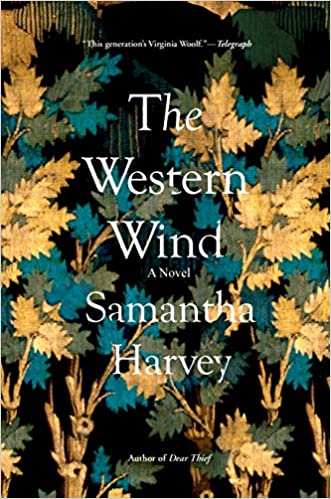
Review 1617: The Western Wind

On Shrove Tuesday 1491, Henry Carter awakens the local priest of the village of Oakham, John Reve, to tell him he’s seen a body floating in the river. For four days, Tom Newman has been known to be drowned, but the villagers have not been able to recover the body. When John and Henry return to the river, however, the body is gone.

Although there is no evidence to suggest that Newman’s death was other than an accident or suicide, the dean, who has taken it upon himself to investigate, is convinced that Newman was murdered. His reasoning is that Newman, as the wealthiest, most productive man in town, is unlikely to have committed suicide and that there was no reason for him to be by the broken village bridge so early in the morning unless he was meeting someone. Before the day is out, the dean has selected two possible murderers and is trying to force Reve to pick one, even though Reve believes neither is guilty.

The novel moves backward in time to the day of the drowning, during which time the villagers’ secrets are revealed—John Reve’s among them. The novel is deeply interesting for its view into the thinking and superstitions of the Medieval mind. I read this absorbing novel for my Walter Scott project.

Related Posts

Fair Helen

The Owl Killers

The Chalice

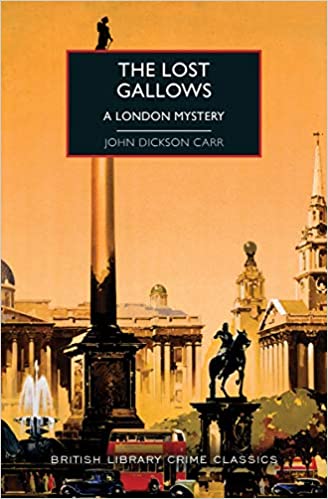
Review 1616: The Lost Gallows

The famous French detective Inspector Bencolin and his friend Jeff Marle are sitting with Bencolin’s friend Sir John Landervorne in the Brimstone Club in London while Bencolin tells a strange tale of a man seeing a gallows in the fog. Upon leaving the room, they find a toy model of a gallows there. Later that evening, Marle encounters a wealthy Egyptian, El Moulk, on the floor of his rooms in the club. He appears terrified.

On the way back from the theater that evening, Marle is nearly run down by El Moulk’s limousine. When he looks into the window, he sees the chauffeur is dead. Returning to the club where the car has stopped, they receive a message saying that El Moulk will die on the gallows at Ruination Street.

The three investigate the case along with Inspector Talbot, trying to rescue El Moulk and locate Ruination Street even though they become convinced that the Egyptian is guilty of a heinous crime for which someone is taking revenge.

Like many Golden Age crime novels, this one is extremely complicated, almost to the point of the ridiculous, as the perpetrator takes a bizarre revenge. However, it is fast-paced and even contains a love interest for Marle. I believe that long ago I read a locked room mystery by Carr. I liked this one a lot better.

I received this book from the publishers in exchange for a free and fair review.

Related Posts

Weekend at Thrackley

Thirteen Guests

Calamity in Kent

Review 1615: Swimming Lessons

Best of Ten!
I was interested in reading Swimming Lessons when it came out, but I never actually got hold of a copy. Then I read Fuller’s next novel, Bitter Orange, and liked it so much that I had to read Swimming Lessons.

Gil Colman, a famous writer who hasn’t written anything for years, is now elderly and dying of cancer. He has discovered letters from Ingrid, his wife who was presumed drowned years ago, tucked away in his thousands of books, many of which were removed from his house by his daughter Nan and sold to a bookstore. He is in the bookstore, having discovered one of the notes, when he thinks he sees Ingrid out in the street. Rushing after her, he gets injured.

That is the setup of the novel. From there, chapters alternate between the letters telling the story of their marriage from Ingrid’s point of view and Gil’s daughter Flora’s point of view as she returns home because her father is in the hospital. She tries to learn more about Ingrid, who she believes is alive. Although the sections about the current time and Flora’s struggles are interesting, most enthralling are Ingrid’s letters to her husband, describing a marriage in which, as a naïve girl thirty years Gil’s junior, she falls into a life she does not want, of marriage and children, to a husband who is serially unfaithful, and who, in a way, co-opts her past.

This is a fascinating and haunting story about the secrets of a marriage.

Related Posts

Bitter Orange

The Wife

The World’s Wife

Review 1614: A Pink Front Door

Stella Gibbons’s books always start out seeming to be froth, but there is an edge to them, I’ve found. Still, she handles her characters’ foibles with compassion.

In A Pink Front Door, her heroine, Daisy Muir, is engaging, but she has one big flaw. She tends to make the problems of a set of misfits her own, much to the discomfort of her husband, James. At the beginning of the novel, she’s trying to keep one silly friend, Molly, from running after men, in particular an Eastern European refugee named Tibbs, who keeps losing both jobs and his lodging. Lodging is difficult to find in post-war London, and the next thing Daisy knows, she has Don, a man she barely remembers from Oxford, at her front door. Don and Katie and their three young children have just lost their lodgings, and Don hopes Daisy can help.

Daisy remembers “little Katie” from university, the most promising student of her year. Later, Katie reflects that she became stupid with love and made only a poor third. Don, however, is only a few months from finally taking his exams to qualify as a chemist, and Katie hopes to find a quiet place where he can work. If he passes, he can take a good job and they can begin a better life, but until now, they have been living in cramped, noisy, unpleasant quarters.

Daisy thinks of a former neighbor and friend of her father, Mrs. Cavendish, a horrible snob who has an entire upper floor free. Mrs. Cavendish, like many of the upper classes, has fallen on comparatively hard times and has lost her last servant. She agrees that the family can move in but insists that the hard-pressed Katie spend some time every day cleaning in exchange for the low rent that is all they can afford. The house is inconvenient. Katie must haul all their water and coal upstairs. It is also not laid out for children. But it is quiet, and Don is finally able to work.

While Daisy is embroiled in the difficulties of her friends’ lives, Molly has homed in on James and has begun dropping by Daisy’s house especially when Daisy isn’t there, making tea for James and babysitting James Too. James himself, usually tolerant of Daisy’s projects, has begun to lose his patience.

Gibbons has an eye for social follies and foibles, and she employs it here with effect. I enjoyed this novel and was touched by its conclusion.

I received this book from the publisher in exchange for a free and fair review.

Related Posts

Nightingale Wood

Not at Home

Miss Buncle’s Book

Review 1613: O, The Brave Music

Seven-year-old Ruan Ashley leads a bleak existence. Her unhappy mother seems to care little for her, preferring her sister Sylvia. Her father is a dour nonconformist minister. They have little money and live in a poor area of a Yorkshire factory town. Ruan is misunderstood, a dreamer who loves reading, especially poetry, and thirsts for beauty.

Things look up when Rosie, the daughter of a wealthy factory owner, comes to visit with David, a boy Rosie’s father has adopted. They take her for a visit to their home up in the moors, where she and David run wild. Family illness calls for her to remain there for the summer.

Ruan’s life becomes one of loss, but it is also mixed with some times of great contentment. Daring it all, she remains herself, a person who refuses to conform to expectation.

This novel is touching as well as lyrical. It is a true ode to life, written in 1940 and looking back 40 years.

I received this book from the publishers in exchange for a free and fair review.

Related Posts

Lolly Willowes

Stoner

They Were Sisters