Review 1428: The Children’s Book

I have an inconsistent reaction to Byatt. I find her novels either completely absorbing, as I did Possession, or perplexing, as I did A Whistling Woman. The very long novel, The Children’s Book, nevertheless falls into the first category.

Byatt’s novel takes on the late Victorian and early Edwardian periods, a time when, she says, adults seemed to be trying to prolong childhood, when, for example, Peter Pan made its appearance. Fittingly then, a major character is Olive Wellwood, a writer of children’s tales. She has many children, and aside from her authorly output, she writes a continuing story for each one of them. It’s her oldest son, Tom’s, misfortune that she confuses fiction with reality.

The novel begins when, on a visit to a museum with his mother, Tom notices a ragged boy and follows him to find he is living in a closet in the museum. This boy is Philip Warren, a worker in a pottery factory who has run away because he wants to make pottery, not feed fires and do other mundane tasks. Major Prosper Cain, the museum keeper Olive is visiting to consult, thinks he may be able to find a place for Philip, and Philip ends up working at Prospect House for the brilliant but disturbed potter Benedict Fludd.

But first we have the Wellwood’s elaborate Midsummer play, where we meet all of the important characters of the novel. The Wellwood’s guests are artists, anarchists, socialists, fellow Fabianists, and even a banker in the person of Basil Wellwood, the host Humphry’s brother. Of course, other guests are these people’s children, who eventually become important characters in their own right.

The novel covers the time from 1895 to the end of World War I, although the war is covered only briefly. Over this time period, Byatt not only tells us the stories of her many characters but also checks in to events in the lives of actual figures of the time, for example, Oscar Wilde, Emma Pankhurst, H. G. Wells, and Rupert Brooke.

This novel is interesting both on an intimate level, as the children discover their parents’ secrets and have their own, and on the broader, more ambitious level of a portrait of the age. There are casualties in this novel, and it is at times very dark, the way Olive likes her stories.
Related Posts

A Whistling Woman

C

Mrs. Engels

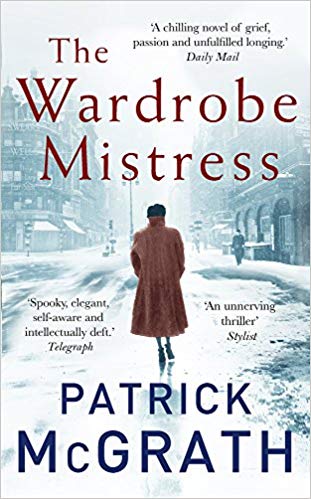
Review 1426: The Wardrobe Mistress

In post-World War II London during a cold winter, the famous actor Charlie Grice, called Gricey, has died. His widow, Joan, a wardrobe mistress, is bereft. When a young actor, Daniel Francis, takes over Gricey’s role as Malvolio and plays it exactly the same, Joan comes to believe that he has become Gricey.

As Joan is beginning to befriend Daniel Francis, or Frank Stone, his real name, she makes a horrible discovery about Gricey. Behind the lapel of one of his coats she finds a badge, the emblem of Britain’s fascist party. This is doubly horrible because Joan is Jewish. Asking around discreetly, she finds what everyone else knows—Gricey was indeed a fascist.

The stress on Joan becomes even worse as her friend Frank begins working with her daughter Vera on The Duchess of Malfi. Vera’s husband and his friend Gustl ask her to help them fight the fascists by infiltrating them.

This novel is written from an omniscient viewpoint with a first person plural accompaniment by the ladies of the chorus. This technique lends it a certain ironic tone. It’s a creepy and atmospheric novel that chills to the bone.

I read this novel for my Walter Scott Prize project.

Related Posts

Munich

Midnight in Europe

The Spoilt City

Review 1421: Death Has Deep Roots

I usually give older crime novels more leeway than modern ones, because the genre has evolved. Some of the older novels concentrate on the puzzle to the detriment of character, for example, or even plausibility. Not so with Death Has Deep Roots by Michael Gilbert, published in 1951.

Gilbert, rather than having an all-knowing detective, has recurring characters in his novels, apparently. Although Goodreads lists this novel as Inspector Hazlerigg #5, he is only a minor character. Instead, the novel rests on the combined efforts of the Rumbolds, father and son solicitors; Macrae, the barrister; and Major McCann, a former soldier and pub owner.

Victoria Lamertine is charged with murdering Major Eric Thoseby, once her British contact when she was in the French Resistance, in his hotel room. The police case is built around the fact that she had been trying to contact him and that no one else could have committed the crime based on who was in the reception area of the hotel. The police think that Thoseby was the father of her child, who died just after the war, that being deserted by her lover was her motive.

Victoria claims that in fact Lieutenant Wells was the father and that Thoseby had been helping her search for him, as he was last seen when the Gestapo raided the farm near Angers where he was hiding. Victoria herself was taken in that raid.

Nap Rumbold thinks the links to the crime lie in France and the war, so he goes off to investigate. McCann investigates Lieutenant Wells in England, hoping to verify Vicky’s story about the parentage of her child. They only have a few days to find the facts while Macrae mounts his defense.

This novel is an unusual combination of legal and action thriller, Rumbold’s part providing the action. It has compelling characters, an interesting plot, and zips along nicely. I think it’s the best of the British Library Crime Classics I’ve read so far. I’ll be looking for more Michael Gilbert, whom I wasn’t familiar with before.

I received this book from the publishers in exchange for an honest review.

Related Posts

Murder in the Mill-Race

Weekend at Thrackley

The Murder of My Aunt

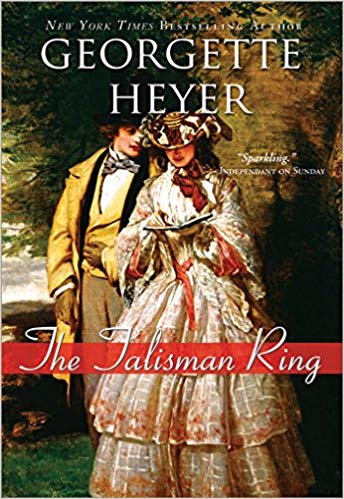
Review 1420: The Talisman Ring

Having greatly enjoyed a play based on The Talisman Ring, I thought it was about time I reread the original. So, I pulled out my old, tattered paperback copy (copyrighted 1964) and read it again.

Sylvester Lavenham is dying and wishes to assure that his granddaughter is taken care of. So, he proposes a marriage to his nephew, Sir Tristram Shield. The granddaughter, Eustacie de Vauban, is young, French, and volatile. She agrees to marry Sir Tristram, but having romantic tendencies, she is taken aback by his matter-of-face nature. Changing her mind, she decides to steal away at dead of night to London with the aim of becoming a governess.

Unfortunately, she is taken by smugglers who are trying to escape some excisemen. To her delight, she finds that the leader is her cousin Ludovic Lavenham, famously wanted for murdering a man who refused to return his talisman ring, which he pledged while gaming. During their escape, Ludovic is shot, and Eustacie takes him to a local inn for help.

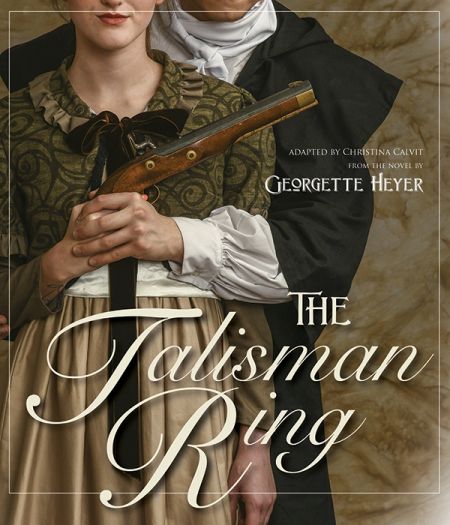
Here’s the poster from the play.

Of course, Ludovic is not guilty of murder and several characters join forces to prove his innocence. But if you think Ludovic and Eustacie are the romantic lead characters of this novel, you don’t know Heyer. For at the inn, they encounter Sarah Thane, an older young woman with a quick sense of humor.

The Talisman Ring is a typical Heyer romantic comedy, with a complicated, ridiculous plot, one brave but foolhardy hero, a vivacious heroine, and a likable older couple to anchor the romance. It’s lots of fun, as Heyer’s novels usually are.

Related Posts

Sylvester, or the Wicked Uncle

Cotillion

Friday’s Child


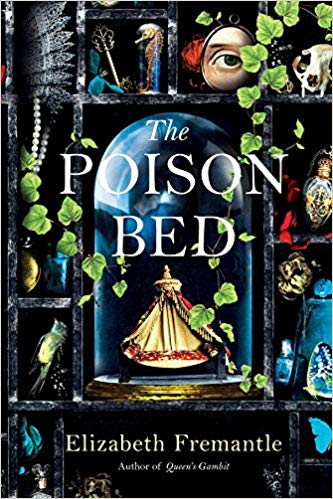
Review 1415: The Poison Bed

In 1615 London, a glittering couple was imprisoned in the Tower for murder. They were Robert Carr, long a favorite of King James, and his wife Frances of the powerful Howard family. The victim was Thomas Overbury, a friend of Robert’s who was poisoned while imprisoned in the Tower.

The narration of this novel is split between Frances in the third person and Robert in the first person. It tells the story of their meeting, when Frances was married to the Earl of Essex, and their subsequent struggles to be married, which resulted, almost as collateral damage, in Overbury’s death. One of these narrators is undoubtedly unreliable, however.

This novel was based on a scandal in Jacobean England, and Freemantle proposes a theory of its solution, although the truth is still not understood. A few reviewers have criticized it as being historically inaccurate. Based on my very little research, I can’t speak to that, but I can say that, considering the subject was interesting to me, the novel dragged curiously at times. Perhaps this was a result of the he said, she said format. It got a little more interesting when the truth about one narrator came out, but then it dragged again.

Related Posts

Viper Wine

Merivel: A Man of His Time

The Journal of Mrs. Pepys

Review 1412: Classics Club Spin Review! The Wise Virgins

The novel selected for me by the latest Classics Club Spin is The Wise Virgins by Leonard Woolf. This semi-autobiographical novel is partially about the courtship of Leonard and Virginia Woolf, in the characters of Harry Davis and Camilla Lawrence.

Harry and his family have just moved to the London suburb of Richstead and are shortly befriended by the Garland family, which has four unmarried daughters. Harry is disdainful of life in Richstead and of the fates of the spinster daughters, given up to good works or golf and tennis. The youngest daughter, Gwen, is naïve and gives undue weight to his discontented utterances. He amuses himself by giving her books and plays to read of Dostoevsky and Shaw.

In his art class, Harry is drawn to Camilla Lawrence, a cool beauty. When she invites him home, he finds it one of ideas and stimulating conversation. Camilla has suitors, but she is less interested in marriage than in a quest for self-fulfillment. She is repeatedly alleged to be passionless.

This novel was considered somewhat shocking in its time but was notable for examining the fates of conventional young women in Edwardian England. Harry is not a likable hero nor is Camilla very knowable. I personally did not like their glib and superior dismissal of whole classes of people. I always imagine the Bloomsbury circle snidely sniping at everyone else (and behind each other’s backs), and this novel didn’t make me rethink that idea.

This is probably taking the novel out of its time, but simply the continual reference to unmarried women by Harry as virgins irritated me to no end. He is so superior and supercilious. The introduction to the book says that “virgin” was synonymous with unmarried woman to Edwardians, but clearly for Harry there’s a sneer involved. One article I read calls Harry a truth-teller, but some of the things he says seem only designed to stir people up and make him seem more like eighteen than twenty-eight. Also uncomfortable for modern readers is the antisemitism that is accepted unquestioned by Harry and his family, who are Jewish.

Finally, there are lots of references to talking in this book, and for people who are looking for a purpose in life besides marriage and other predictable fates, they aren’t doing much actual acting. I think Woolf is pointing that out, though, by the chapter headings.

Related Posts

Mrs. Dalloway

To the Lighthouse

Flush: A Biography

Review 1411: The Crossing Places

Even though I often tire of series fiction, I still enjoy finding a promising series, and Elly Griffiths’ Ruth Galloway series is off to a good start. I selected this mystery to have a suitable review near Halloween and also for Readers Imbibing Peril.

Ruth Galloway is a forensic archaeologist who lives by the Saltmarsh near Norfolk and teaches at the nearby university. Detective Inspector Harry Nelson asks her to help him with some bones that were found on a beach near where she participated in a dig five years ago. Harry Nelson was involved in the case of the disappearance of five-year-old Lucy Downey several years ago and fears they are her bones, but Ruth finds they are from the Iron Age.

A few months later, another little girl disappears from the area. Nelson begins consulting Ruth about the case, showing her the letters he received during the first case. Now, new letters are arriving.

Around this time, friends from the dig five years ago begin to resurface. Ruth’s professor Erik travels in from Norway, and her old boyfriend, Peter, reappears.

This novel is very atmospheric, using the bleak Saltmarsh effectively as a setting. The characters also are colorful yet believable. Although I guessed the identity of the criminal fairly early, Griffiths threw in some interesting red herrings. I’ll gladly read another Ruth Galloway book.

Related Posts

The Child Garden

Quiet Neighbors

Go to My Grave

Review 1410: The Catherine Wheel

Jacob Taverner, a rich eccentric, invites some of the cousins of his extensive family to the family inn, The Catherine Wheel, for a reunion. He seems to have an ulterior motive, though, because he questions several about the stories of a hidden tunnel.

The inn has a past as a smugglers’ nest, and Detective Abbott thinks it is still so used, for drugs and stolen jewelry He asks Miss Silver to take a room at the inn to observe activities.

Jane Heron and Jeremy Taverner are among the cousins invited to the inn. It is cheaply furnished, ill kept, and creepy, and Jane’s misgivings are furthered when she recognizes Miss Silver as a detective she met before. She makes sure Miss Silver gets a room. That night, Luke White is found dead. Luke is a cousin on the wrong side of the blanket who worked as a waiter at the inn. Earlier, he was overheard telling Eily, the maid, that he was going to have her whether she wanted him or not, and if she tried to marry her sweetheart, John Higgins, one of the cousins who chose not to attend the reunion, he would murder him. Eily was discovered near the body, but so was another cousin, Florence Duke.

The dull-witted Inspector Crisp is ready to arrest John Higgins, but Miss Silver is quite certain something else is going on.

Wentworth is good at creating eccentric or likable characters, but she also telegraphs the bad guys fairly obviously, so that you know who was likely to be involved, just not why. The problem of repetition that irritated me in The Arlington Inheritance isn’t quite so pronounced in this one. Overall, the book is entertaining enough but not a great mystery.

Related Posts

The Arlington Inheritance

Mischief

Laura

Review 1407: Murder at the Vicarage – #1930Club

I decided to reread Murder at the Vicarage for the 1930 Club, but it also applies to Readers Imbibing Peril. It is the first Miss Marple book, and for much of it she seems like a minor character.

The novel is narrated by Len Clement, the vicar of St. Mary Meade. He is called away one evening by what proves to be a false call for help. He arrives home late for a meeting with Mr. Protheroe, a wealthy man who is disliked by many. In his study he finds Protheroe dead, shot in the head.

Of course, there are lots of suspects and red herrings. Mr. Hawes, the curate, is behaving oddly. Mrs. Protheroe had just decided to part from Lawrence Redding, who is in love with her. Lettice Protheroe has inconsistencies in her alibi. Rumor reports that a local poacher has a grudge. A team exploring the local barrow seems to be up to something besides archaeology.

No sooner does Inspector Slack appear on the scene when first Lawrence Redding then Anne Protheroe make confessions of guilt. Miss Marple lives next to the vicarage so has some testimony to offer about its comings and goings. And she also has some interesting ideas about who may be guilty.

Related Posts

4:50 from Paddington

At Bertram’s Hotel

A Caribbean Mystery

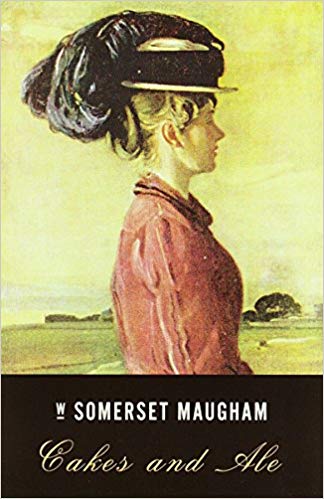
Review 1405: Cakes and Ale – #1930Club

I previously read only one book by Somerset Maugham, The Razor’s Edge. Frankly, I did not enjoy that book about two frightful people tormenting each other.

That was a long time ago, though. So, when I saw Cakes and Ale listed under books published in 1930, I thought, Why not give the guy and another chance and read it for the 1930 Club?

Another book I have already reviewed for 1930 is As I Lay Dying by William Faulkner.

* * *

William Ashenden, a moderately successful writer, unexpectedly hears from Roy Kear, another writer. Although Kear is a perfectly pleasant fellow, Ashenden knows he wouldn’t be hearing from him unless he wanted something. But Kear doesn’t come directly to the point.

Around the same time, Ashenden receives an invitation from Mrs. Driffield, the widow of Ted Driffield, widely considered Britain’s most important late Victorian novelist. He ignores this summons as he doesn’t know Mrs. Driffield. Finally, Kear admits he wants to pick Ashenden’s brain. He is writing an authorized biography of Driffield, and Ashenden knew Driffield and his first wife, Rosie, when Ashenden was a young man. Rosie was a beautiful, vibrant force of nature who was massively unfaithful to Driffield. The second Mrs. Driffield has dragged Ted into respectability and is concerned for his legacy. She wants Kear to leave Rosie out of the biography even though Driffield’s most important work was written during their marriage.

This novel about class snobbery is also a character study of an unusual woman. Because of Rosie’s promiscuity, the novel was highly controversial in its time. I wondered whether Ted Driffield was supposed to be Thomas Hardy and found out that others had supposed that at the time, although Maugham denied it. He did admit that Kear was modeled after Horace Walpole, however.

I enjoyed this novel and am willing to give Maugham another trial. The movie of The Painted Veil that came out a few years ago was beautiful, so I may try it next.

Related Posts

Tess of the D’Urbervilles

Consequences

Someone At a Distance