Day 763: The Vet’s Daughter

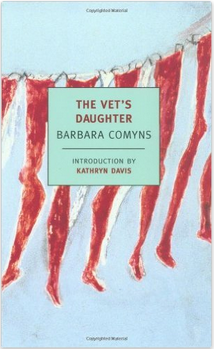
Cover for The Vet's DaughterIt was several days before the doctor came. It was my father who sent for him. Even he noticed something was wrong with Mother. When he saw her all doubled up over the dining room sideboard, he suddenly bellowed, “For Christ’s sake, woman, send for the doctor, and if he can’t put you right, keep out of my sight!”

Best Book of the Week!
Alice and her mother live in terror of her father, the vet, in this novel written in 1959. He ignores Alice and treats his wife with brutality and contempt. Alice is in her teens, living in a dreary house in a London suburb with only one friend, a deaf girl, when her mother becomes ill. The one bright light for Alice is it brings vulgar but kindly Mrs. Churchill to help.

Mrs. Churchill continues to come after Alice’s mother dies, but within weeks Alice’s father has brought his lover home to live there, so Mrs. Churchill leaves. Rosa Fisher moves into Alice’s mother’s room and stays until she tries to pimp Alice out to an acquaintance.

Alice occasionally seems to have what first appears to be some kind of fits. But they are actually the slow development of an uncanny ability.

As with Sisters by a River, the simple, innocent manner in which this novel is narrated gives it a distinctive tone. Alice is a naive and unsophisticated girl whose isolation from society means she doesn’t always understand very common things. The plot is impossible to predict, as it takes us to some unusual places. The Vet’s Daughter is another strange and vivid novel from Barbara Comyns.

Related Posts

Sisters by a River

The Lace Reader

The Death of Bees


Day 760: The Z Murders

Cover for The Z MurdersIn general, serial killer mysteries are a more modern invention, but that does not mean none were written in the Golden Age. Margery Allingham’s The Tiger in the Smoke is one example, although that killer’s victims are not as arbitrarily chosen as those in The Z Murders.

The main character of this novel is Richard Temperley, who has been traveling all night on a train when we meet him. His companion in the compartment, an elderly man, has been annoying him by snoring for hours. His train arrives at Euston Station at 5 AM, and he is perplexed about what to do with himself until a decent hour when the porter recommends the smoking room at a hotel across from the station.

When Richard arrives at the hotel, he is dismayed to pass his elderly railway companion in the hallway. In the room, he notices a beautiful young woman by the fire and thinks he will sit by the window. However, first he has an impulse to check on his baggage. When he returns, he finds the young woman emerging from the room looking upset. The elderly man is now sitting by the window, so he takes the woman’s seat by the fire. He is dozing off when he realizes the old man isn’t snoring. Sure enough, he is dead.

While Temperley is being quesioned by the police, he finds himself omitting information about the woman, particularly that he has found her purse in the seat of the chair he’s sitting on. The elderly man has been shot by a silenced pistol from the open window, the seat Temperley originally chose until he decided to check his baggage. A metal Z is next to the victim on the window sill.

Although Detective Inspector James doesn’t believe Temperley was involved in the crime, he thinks he knows more than he is saying. So, he puts a tail on Temperley. Temperley has found a card in the woman’s purse identifying her as Sylvia Wynne. He goes directly to her house and, finding no one there, is able to get in with a latch key. Richard finds a metal Z in the front hallway under the letter slot. A moment later, Sylvia comes through the window.

Of course, Richard has been smitten at first sight, but he is only able to speak with Sylvia briefly and give her his sister’s phone number before Inspector James is at the door. When he turns around, she is gone again.

link to NetgalleyThe resulting adventure/mystery involves a cross-country chase that reminds me a little bit of The 39 Steps without the espionage. The novel has a complicated plot, but the characters of Temperley and a cab driver named Diggs are nicely drawn. Although Sylvia is pretty much reduced to a damsel in distress, of the Golden Age mysteries I’ve been reading lately, I think I like Farjeon best.

Related Posts

Thirteen Guests

The Hog’s Back Mystery

Antidote to Venom


Day 757: Thirteen Guests

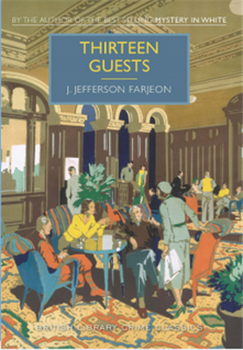
Cover for Thirteen GuestsJohn Foss is a young man running away from London at the end of a failed love affair when he injures his foot jumping off the train at a small station. Guests bound for the house of Lord Aveling take him to the doctor’s house only to find that the doctor is away treating Mrs. Morris, Lord Aveling’s mother-in-law. Nadine Leveridge, a beautiful widow, insists on bringing John along to Lord Aveling’s, the unwitting thirteenth guest at a house party.

Lord Aveling’s guests feature a cricket player, an actress, a member of Parliament, a society painter, a gossip columnist, and a novelist, but there are also some more unusual guests, a vulgar sausage king and his family and a shady couple, the Chaters. Some odd things happen almost immediately. Someone throws paint on Leicester Pratt’s painting of Lord Aveling’s daughter Anne, and an odd confrontation takes place between Zena Wilding, the actress, and a strange man at the train station. Mr. Chater seems to be around sticking his nose into everything.

After John’s foot is treated, he is parked on a sofa in an anteroom. Late that night, he hears a dog barking outside, several exchanges in the hallway, and some glass breaking. The next morning it is obvious that someone broke out of the studio that Pratt locked after he discovered his ruined painting, and the dog has been stabbed to death. Later, the strange man from the station is discovered dead at the bottom of a nearby quarry.

Of course, when Detective-Inspector Kendall arrives, he finds that many of the house’s inhabitants have something to hide. And the man no one seems to know is not the only one to die.

link to NetgalleyAlthough this Golden Age mystery involves time tables, the solution is fairly straightforward but hard to guess. Agatha Christie was a great admirer of Farjeon, who I think gives a good sense of his characters, enough to help me distinguish one from the other when there were so many of them.

Related Posts

Antidote to Venom

The Hog’s Back Mystery

Behold, Here’s Poison

Day 755: The Woman Who Had Imagination

Cover for The Woman Who Had ImaginationFor some reason, I have always associated HE Bates with such comic writers as PG Wodehouse and EF Benson. This notion was without having read him, mind. But the stories in The Woman Who Had Imagination are not at all what I expected.

Most of the stories in this collection are set in rural localities and are about ordinary country people. Many of them are closer to character sketches than plotted stories. “The Lily,” for example, describes Great-Uncle Silas, a lively, vulgar old man who likes his jokes and his “mouthful of wine.” A later story describes the circumstances of his death.

Many of the stories depict characters caught in their environments, such as “The Story Without an End,” which describes the life of a boy working in a restaurant who is terrified of his boss, or the title story about a bored young man on a church choir expedition who meets a young woman unhappy in her marriage.

link to NetgalleyAlthough the descriptions of rural settings are beautifully written, many of the stories in this collection depict the lives of people who are depressed by the limitations of their lives. However, that is not always the case. In “Sally Go Round the Moon,” a man helps his niece by marriage escape the life she hates in London and then decides to leave himself.

To give you a flavor of the lushness of these stories, here is part of the description of great-uncle Silas’ house from “The Lily”:

On summer days after rain the air was sweetly saturated with the fragrance of the pines, which mingled subtly with the exquisite honeysuckle scent, the strange vanilla heaviness from the creamy elderflowers in the garden hedge and the perfume of old pink and white crimped-double roses of forgotten names. It was very quiet there except for the soft, water-whispering sound of leaves and boughs, and the squabbling and singing of birds in the house-thatch and the trees.

Related Posts

Collected Stories of Carson McCullers

Anderby Wold

Wise Blood

Day 746: Sidney Chambers and The Shadow of Death

Cover for Sidney ChambersI’ve been watching the Grantchester series on Masterpiece lately, so I decided to read the first book the series is based on. Sidney Chambers and the Shadow of Death is really a collection of six short stories. They are light cozies about a mild-mannered Anglican vicar who gets involved in mysteries. In fact, if you’ve been watching the TV series and have been bothered by the darker aspects of Sidney’s character, you will not find any evidence of them in these stories.

Just after World War II, Sidney Chambers is a vicar in the village of Grantchester and also lectures in nearby Cambridge. He is young and well-meaning, his biggest faults being a tendency to get distracted from his duties and a certain lack of organization.

The first story explains how he gets involved in detecting. After presiding at the funeral of one of his parishioners, Stephen Staunton, who apparently committed suicide, Sidney is approached by Pamela Morton.

Morton is certain that Staunton couldn’t have killed himself. However, she doesn’t want to go to the police with her doubts, because she is a married woman who was having an affair with Staunton. She tells Sidney that they were planning to run off together in the new year and asks him to discreetly make inquiries.

Sidney’s friend Inspector Geordie Keating is not happy to find Sidney making discreet inquiries. But Sidney is able to identify Staunton’s killer using clues about his taste in whiskey and a code in his datebook.

Of course, Sideny is surrounded by colorful characters, especially his crotchety housekeeper and his intellectual curate Leonard. If you like cozies, you will probably enjoy this series.

Related Posts

The Tuesday Club Murders

Death in the Stocks

The Return of Captain John Emmett

Day 745: The Buried Giant

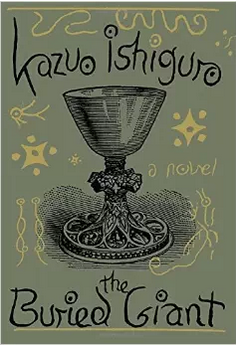
Cover for The Buried GiantI thought from what I read about The Buried Giant that it was a historical novel set in the days after the Romans left Britain. But it is really a fable or a fantasy novel or both.

Axl and his wife Beatrice are an old British couple who decide to go on a journey. They have recently become aware that their memories of the past are poor, as are everyone’s, but they vaguely remember they have a son. Years ago, their son moved to another village, and Beatrice has been wanting to visit him. Finally, they decide to go.

Beatrice has difficulty remembering the way to their first stop, a Saxon village she has visited before, but they find it by evening. The village is disturbed and possibly dangerous for the visiting Britons. A boy was taken by an ogre, but a strange warrior has brought him back. The villagers have seen a bite on the boy and want to kill him. But the warrior saves the boy, named Edwin. Once Axl and Beatrice leave the village the next day, they find themselves traveling with Edwin and the warrior Wistan.

This novel features ogres, pixies, treacherous monks, a British lord on the lookout for the Saxon warrior, an Arthurian knight, and finally a dragon whose breath has made everyone forget the past. It is about reconciliation, memory, aging, and death. As a fable, it doesn’t really characterize its protagonists; they are more like symbols. As such I wasn’t really compelled by the story.

In addition, a history class I have been taking recently indicates that it is unlikely any Britons would have been mixing freely with Saxons at this time. By the time the Anglos and Saxons began settling England in earnest, all the Britons had been pushed off to far western England and Cornwall. Although this novel does not really mention which part of England they are in, I understand that Britons did not tend to mix with the Angles and Saxons.

Related Posts

The Alchemist

The Wake

The Summer Tree

Day 743: Happy Returns

Cover for Happy ReturnsHappy Returns is one of Angela Thirkell’s books set in Barsetshire, the setting also of Anthony Trollope’s novels. Thirkell’s novels were written in the 1930’s-50’s and feature, in large part, pleasant and well-meaning characters, gentle romances, and problems bravely dealt with, particularly during and after the war.

Happy Returns is set in 1951 and 1952, just before and after Winston Churchill’s ascension to the office of Prime Minister. Much of the conversation at the beginning of the novel is about the government, called Them, the depredations its taxes have made to the neighborhood, and the characters’ hope that there will be an election that will bring Churchill into office.

The situation of Lady Lufton is one of the focuses of this novel. Her husband is recently dead at an early age, and she is struggling with grief and apathy. The family fortunes have suffered so from death taxes that she is forced to lease half her house to a tenant, Mr. MacFadyen of Amalgamated Vedge. She is concerned because her son, the young Lord Lufton, can’t afford to rent a better place when he goes up to London for Parliament and has to stay with a miserly relative, who does not feed him well in exchange for his ration card. Frankly, the gentle Lord Lufton fears he is too poor to marry.

Charles Belton is another important character. He has been engaged for a year to Clarissa Graham, but they show no sign of marrying. Clarissa has been behaving petulantly, so that Charles has begun to doubt that she wants to marry him. It takes his friend Eric Swan to notice that Clarissa is actually madly in love with Charles and fears he doesn’t love her back.

Swan, a schoolteacher, doesn’t seem very ambitious, but he is actually considering trying for a place at Oxford. But then he meets Grace Grantly and falls in love with her. At this time, fellows at Oxford couldn’t be married, so he decides to put his plans on hold and see what develops.

The whole neighborhood notices that Francis Brandon hasn’t been treating his nice wife Peggy very well lately. She, along with several other women in the novel, is very pregnant and despite her husband’s behavior keeps her good humor.

As an example of the flavor of this book, Lady Lufton and Lord Lufton are having a conversation when Mr. MacFadyen comes in. Mr. MacFadyen observes sympathetically that some of Lady Lufton’s comments are of the type to make a young man impatient, but Lord Lufton always replies gently and patiently.

Most of the characters in Happy Returns are nice people, except maybe the Bishop, who never actually appears. Throughout the entire novel, Mrs. Joram is planning a party but is waiting for the Bishop and his wife to depart for Madeira so she won’t have to invite them. The Bishop is apparently so disliked by many people that when he finally leaves for Madeira and his ship is overtaken by a storm, almost every character wishes for a shipwreck.

I enjoyed this novel with its depiction of the hardships of post-World War II Britain. My only problem with it was the plethora of characters, for I could not keep track of who they all were and what their relationships were. Probably someone following the series from the beginning would not have this problem. I have read several of the books, but that was a long time ago.

There are also quite a few cultural and literary references I didn’t get—and probably many jokes. For the tone of the novel, although it has touching moments, is one of humor, with many funny asides addressed directly to the reader about what will or will not be further explained. I think a fair comparison for someone who is not familiar with Thirkell’s work would be the novels of Nancy Mitford, although they are more obviously unrealistic and caricatured.

Related Posts

The Warden

The Pursuit of Love

Love in a Cold Climate

Day 740: Richard III: England’s Black Legend

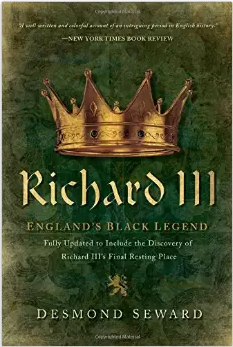
Cover for Richard IIIHistorian Desmond Seward explains in the introduction of Richard III that there are two views of Richard. He calls them the black legend—the traditional view—and the white legend—the notion that Richard’s reputation was blackened by the Tudors after Bosworth Field. This theory was first put forward by Horace Walpole in the 18th century and is famously supported by Josephine Tey’s The Daughter of Time. The Richard III Society has even claimed that Richard was not a hunchback, which claim was proved false by the recent discovery of his bones.

Seward’s view is that of the black legend, that Richard was a ruthless man who committed many dark deeds, including killing the princes in the Tower. Richard III is an interesting biography of Richard, based on what is known of his life. There are few of his own writings to base it on, unfortunately, because Richard was not much of a writer, a situation common to nobility of his time.

Of course, Richard’s entire life was lived during the turbulent period of the Wars of the Roses. England experienced little peace during this period, and what little there was occurred during the reign of Edward IV, Richard’s older brother. This peace was marred mostly by the rapacious behavior of the Woodvilles, Edward’s in-laws, and that of the Duke of Clarence, his erratic brother. However, that peace was destroyed by Edward’s early death, which plunged the country into another succession crisis because the prince was only 12 or 13 years old. The last time a young prince had become king, Henry VI, was disastrous for the country.

My own impression from reading this book is that Seward invariably looks at the darkest interpretation of events. I guess you could call me of the dark gray school. Certainly, the murders of the princes in the Tower was a shocking event, viewed with horror during its time and since, and there seems little doubt that Richard ordered the murders. Still, the situation for Richard was difficult. In doing his duty by his nephew, he faced the prospect of at least six years of an unstable regime with continual battles for power with the Woodvilles. This is not to excuse his actions, but it is possible to view them as an attempt to maintain stability in the realm, and that’s probably how he explained them to himself. Instead, the result was to almost completely exterminate the Plantagenet family.

Related Posts

The Wars of the Roses

Mary Boleyn

A Folly of Princes

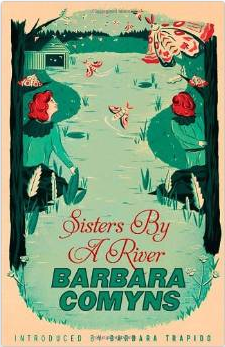
Day 739: Sisters by a River

Cover for Sisters by a RiverBest Book of the Week!
In trying to characterize the tone and atmosphere of the autobiographical Sisters by a River, I have to say that it reminds me a bit of Shirley Jackson’s We Have Always Lived in the Castle, minus the murder. As reported in the introduction by Barbara Trapido, this novel did not fit the 40’s vogue for fond and touching memories of childhood, so it was not published for six years after Comyns began looking for a publisher. Comyns wrote it as a private recollection.

It is difficult to explain just how gripping this novel is. It is an unordered collection of fictionalized memories written by Barbara about the life of her family. Barbara and her sisters suffer a combination of abuse and neglect. Her father, known as Daddy, met her mother, called Mammy, when Mammy was a young child and arranged with her mother to marry her. She began having children when she was eighteen and only stopped after her sixth childbirth made her deaf. She also seems to be insane, periodically rampaging around or talking to invented lovers. Aside from cooking delicious meals, she completely neglects her children.

Granny is a dark and unpleasant presence. She does not allow anyone to clean her room, which is filthy, the floor caked with spilled substances. There she spends most of her time brewing up potions. When Daddy leaves the house, he has to lock up the billiard room to keep her out of the booze.

Daddy is prone to attacks of rage and cruelty. He throws Beatrix downstairs when she is a baby because she is crying. He blackens Mammy’s eye right before they are to host a big party. Yes, both of them are conscious of their social position. Mammy tells her semi-illiterate, poorly dressed, neglected daughters how cultured they are while Daddy takes pride in his hundreds of pairs of polished boots and shoes and takes three hours to prepare for a monthly meeting in town. Meanwhile, the girls’ teeth go bad and one governess after another is fired for some silly infringement or because her feet smell.

The oldest sister Mary has learned bullying from her father. She won’t allow the younger girls to read any of the books she likes, and she chooses what color clothes they may wear. Barbara must always wear brown, which she hates.

I could go on and on about this violent and eccentric family. But what really stands out about the book is its style. All of these events, and many that are worse, are related in a completely matter-of-fact way, no pathos or complaining. The writing style is that of a very young person, including many spelling errors, and this air of innocence and matter-of-face quality give the novel its charm. It’s hard to figure out how old the narrator is. The novel moves back and forth in time, and it seems that at her oldest, she is about sixteen. But there are references to her husband, so it’s hard to tell. My guess is the book was written at different ages.

If you care to try this novel, prepare yourself for something truly unconventional. It sounds dreadfully harrowing, I know, but it actually is not.

Related Posts

The Pursuit of Love

Brother of the More Famous Jack

The Death of Bees

Day 737: The Hog’s Back Mystery

Cover for The Hogs Back MysteryThe Hog’s Back Mystery is another Golden Age mystery featuring Inspector French. This mystery is much more elaborate than Antidote to Venom, the other Crofts mystery I read, featuring four murders, and is set in rural Surrey.

Ursula Stone has arrived at the railroad station in Ash to visit Julia Earle and her sister Marjorie Lawes, her schoolmates from long ago. The first part of the novel is from Ursula’s point of view, and she is surprised to see how distantly Julia treats her husband James, a retired doctor. She is also a little shocked to see how casually Julia behaves with an infatuated neighbor, Reggie Slade.

Ursula is off visiting her friend Alice Campion when James Earle disappears. Both sisters testify that he was settled down in his den for the evening when they last saw him. He was dressed only in thin shoes suitable for inside and did not take his overcoat.

Inspector French is called in when James doesn’t reappear and no one can discover a trace of him. Soon afterwards, French finds that a nurse also went missing around the same time. Her name is Helen Nankivel, and French at first supposes Earle and the nurse have run off together. But the people who know Helen Nankivel insist that she wouldn’t do such a thing. However, she did meet Dr. Earle when they both attended the last illness of Mr. Frazer, a wealthy old man.

French explores many theories, but he is just about to decide that Earle ran off with Nurse Nankivel when Ursula Stone disappears, under remarkably similar circumstances. She was upstairs in her room at the Earles’ while Julia and Marjorie entertained the Campions downstairs. Later, when summoned for dinner, she was nowhere to be found. But Mr. French finds evidence that someone was standing behind a bush outside the den and finds blood in Earle’s den.

link to NetgalleyLike many Golden Age mysteries, The Hog’s Back Mystery a complicated solution. In fact, it is so complicated that it must be explained in a 20-page last chapter, which makes the novel lose quite a bit of impetus. Still, I was able to guess the broad strokes of the solution very early on by simply paying attention to what her friends said about the nurse. It took French a good hundred pages to catch up with me. So, not the best of these reprinted mysteries by Poison Pen Press, but I love the cover.

Related Posts

Antidote to Venom

The Tiger in the Smoke

Brat Farrar