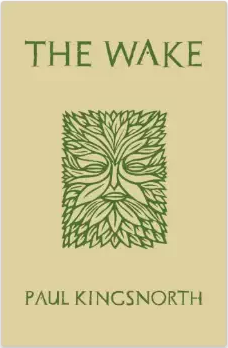
Day 728: The Wake

Cover for The WakeBest Book of the Week!
The Wake was one of the most unusual reading experiences I have ever had. The closest I can come to it is the revelation of reading Benjy’s sections of The Sound and the Fury. What Paul Kingsnorth has done is write a novel about the aftermath of the Norman Conquest entirely in a “shadow language” that approximates and gives the flavor of Old English while being understandable to the modern reader.

Buccmaster is a socman of Holland in the Lincolnshire fens. A socman, Kingsnorth’s glossary explains, owns his land and owes allegiance only to the king under Danelaw. At the beginning of the novel, Buccmaster is a well-off man who has a large house and about 90 acres of land, servants, and a seat on the Wapentec, the local court of justice. Buccmaster is a proud and angry man, and we find, not always a reliable narrator.

Soon word comes that King Harald is calling up the army against the invasion of Harald Hardrada, the King of Norway. Buccmaster owes King Harald six weeks’ service a year, but he refuses to go. His sons do, however. Of course, while Harald and his army are repelling Hardrada, William the Bastard (William the Conqueror) attacks.

Buccmaster soon finds his world destroyed. His sons never return from Hastings. The Normans arrive claiming all of the hamlet’s land. Buccmaster’s home is burned to the ground and his wife murdered one day while he is out eeling.

Buccmaster was raised by his grandfather to believe in the old ways, not the newer ones of the White Christ. He decides to take his great sword, which his grandfather told him was given to him by Welland the Smith, and raise a troop of Green Men, essentially guerilla fighters, to ambush the Normans.

This novel is as much about the conflict between the old Germanic-Norse ways of the English and Christianity as it is about the little-known war of resistance against the Normans after the conquest. Buccmaster makes a complex and troubled main character.

Kingsnorth has said that he chose his approach for the novel because he doesn’t like historical novels written in modern language. I am torn about that, because I would rather see modern language than clunky fake archaic language. But Kingsnorth has done a fantastic job of steeping himself in the time, and his goal of conveying the alienness of the 11th century English through language is certainly achieved.

The Wake is an enormously powerful novel. It is probably not for everyone. You have to be willing to invest yourself in it enough to tolerate some early slow going. There is a glossary, but it doesn’t include all the words. You can figure most of them out by sound or context. Still, I strongly believe it is worth the effort, and after awhile, I think I was reading almost as quickly as usual.

It may be hard to find this book. I had to order it from England. But if you are interested, you’ll find it very much worth the effort. I read it because it was long-listed for the Booker Prize. Frankly, I think it was better than the winner.

I’ll end with this quote, which begins the book:

I have persecuted the natives of England beyond all reason.
Whether gentle or simple I have cruelly oppressed them.
Many I unjustly disinherited, innumerable multitudes perished through me by famine or the sword.

Having gained the throne of that kingdom by so many crimes,
I dare not leave it to anyone but God.

Deathbed confession of Guillaume le Bâtard, 1087
Related Posts

King Hereafter

The Long Ships

The Adventure of English: The Biography of a Language

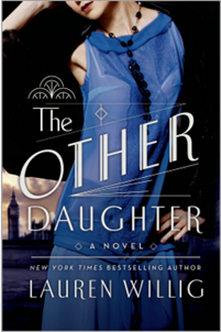
Day 726: The Other Daughter

Cover for The Other DaughterRachel Woodley has been working in France as a governess when she receives a telegram informing her that her mother is ill. Although she returns home immediately, the telegram was delayed, and she finds her mother dead, the funeral over, and the landlord giving her two weeks to vacate her home.

While she is going through her mother’s things, she finds a recent newspaper photo of the Earl of Ardmore with his daughter, Lady Olivia Standish. The Earl looks exactly like her father would have looked had he not died on a botanical expedition when she was four. But it’s not just a resemblance. He is the same man, with the same scar on his face.

Rachel goes to Oxford to see her Cousin David, who she’s sure would know the truth. David explains that her father was the second son and that he and her mother were forced to part after her father’s older brother died and her father became heir to the estate.

Rachel is furious to hear that her father left them, that she has been lied to, and that she is illegitimate. The thought of all the times she missed her father also makes her angry. She is expressing her displeasure when they are interrupted by Simon Montfort, Cousin David’s neighbor in rooms. He takes Rachel away to calm her down.

link to NetgalleyAlthough Simon is a social columnist for the Daily Yell, he promises to keep private what he has overheard. Soon, he is helping her get an opportunity to meet her father. After a makeover of a new haircut and his sister’s fashionable clothes, he lends her his mother’s apartment and presents her to young London society as the chic Vera Merton, his cousin. Rachel is not entirely sure of her own motives but is soon positive that Simon is doing this for his own purposes, especially when she learns her sister Olivia was once his fiancée.

This novel is sheer frivolity, set as it is in the 1920s among the wild young things. It is certainly a bit predictable—soon we guess Rachel will end up with either her sister’s current fiancé or her previous one. But it has lots of snappy dialogue and enough twists to keep things interesting. Although I’m not generally fond of this genre, I enjoyed The Other Daughter.

Related Posts

Lucky Us

Empire Girls

The Secret Keeper

Day 723: Greenbanks

Cover for GreenbanksBest Book of the Week!
This novel begins with a large family Christmas dinner at Greenbanks, the home of Robert and Louise Ashton. It is around 1910. Louise is in her late middle age, a quiet, kind woman who delights in her housekeeping skills and her garden. Her husband, a serial philanderer, has proved a source of pain and humiliation, but she has tried to live it down.

Although the Ashtons are grandparents, three of their grown children live at home. Jim works at the family business, allowing his father to devote little time to it. Charles also purportedly works there, but he prefers to spend time fiddling with inventions, tinkling the piano, and entertaining his adoring mother. Laura is just about to engage herself to Cecil Bradfield. Rachel, the five-year-old daughter of Letty and Ambrose, is Louise’s favorite grandchild.

Robert soon dies in embarrassing circumstances. But even though the novel follows the fortunes of the family over roughly 15 years, it concentrates on the relationship between Louise and Rachel. Rachel, with a self-absorbed mother and an officious father, loves spending as much time as possible at Greenbanks with her grandmother.

The novel has overtones that are feminist for the time, as Rachel finds she has a gift for scholarship. Her father’s rigid and old-fashioned ideas about the place of an education in the lives of young women cost her a scholarship at Oxford, but she manages to continue her education despite him.

Inside cover
The cover at the top is really plain, but for some reason Amazon shows this picture, which is actually the inside of the cover!

One source of disagreement in the family is Louise’s choice of companion. Louise always felt sorry for Kate Barlow when she was a child and tried to include her in family activities. When Kate was a young woman, it was rumored she became pregnant by a married man and had his child, then was thrown off by her parents. Louise meets her in town one day and begins a correspondence with the reluctant woman. After Charles leaves for South Africa and her other two children marry, she invites Kate to become her companion. But Kate never really accepts Louise’s kindness.

The story of the Ashtons is told in spare, matter-of-fact prose that makes no attempt to influence the reader. Many of the characters are flawed and some are unlikable, but there are no heroes and villains here, just a set of ordinary middle-class people. It’s difficult, then, to explain why I so much enjoyed reading this novel. Whipple is a master of style and shows us her characters in the fullness of their lives.

Related Posts

Someone at a Distance

A View of the Harbour

Mrs. Palfrey at the Claremont

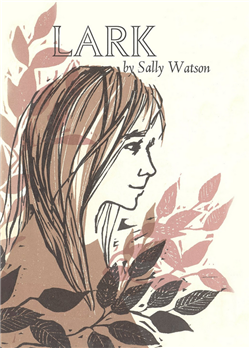
Day 715: Lark

Cover for LarkJust an aside to start. When I was in high school, I had a job at the public library. There I discovered lots of authors I may not have come across elsewhere, and one of them was a writer of books for teens and preteens who specialized in historical novels featuring likable, feisty heroines. I read every one the library had.

Years later, I would try to remember who this author was to see if I could find some of her books and discover whether I still liked them as much. But all I could remember was she had a relatively common name that started with W. I searched Amazon for children’s books with authors beginning with a W. There are a lot of them. Then one day just awhile ago, a word popped into my head, “Lark.” A Google query accomplished the rest. I found a wonderful page on a site specializing in children’s books called “Stump the Bookseller” where you could ask exactly that kind of question, and more than one person asking about the author of a historical novel with a character named Lark. The author was Sally Watson. A little more searching found she is back in print.

* * *

Elizabeth Lennox has not been called by her nickname of Lark since her Uncle Jeremiah came and took her away from her family. He always thought she would make a good wife for her cousin Will-of-God if she was just raised correctly. Since he is one of Oliver Cromwell’s officers and Lark’s father was away fighting with the Royalists, he could do what he wanted. So, he took Lark away and she has been living miserably in a Puritan household ever since. She has no desire to marry Will-of-God, whom she dislikes. She deliberately tries to appear young so that her uncle won’t realize how close she is to being marriageable.

Lark has had nowhere else to go, since her family had to leave for the continent after their property was confiscated. But one day she receives word from her sister up in Scotland, so she decides to go there, not realizing how far away the Highlands are from southern England. She sneaks out of the house in the middle of the night and sets off.

James Trelawney is a young Royalist who disguises himself as a Roundhead to run errands and pass messages in the interests of Charles II. He comes along as Lark is being accosted by a Puritan man after singing a Cavalier song on the road. James takes her for a child, for she looks much younger than her thirteen years. After tossing the Puritan into the river, he reluctantly agrees to take her north, but only because she seems to be too young to leave on her own and she won’t tell him who she is. The two of them have adventures involving intrigue, capture, travels with gypsies, and other exciting incidents.

When I reread a children’s or young adult book, I try to evaluate how interesing it is for both the adult and the intended audience. I don’t think Lark has as much to offer an adult as some of the old classics I’ve reread recently, such as The Secret Garden or Anne of Green Gables. However, I did enjoy it as a bit of light reading. It is written for girls around ten to thirteen or fourteen years old. Although I loved it as a sixteen-year-old, older teens today may be a bit too sophisticated for it. I’m not sure. Still, it has plenty to recommend it, a good background in the history and a pleasant way of presenting it—through James’ confusion about his own loyalties—adventure, humor, and light romance. It is much more innocent than many of today’s books for teens, but that’s not necessarily a bad thing.

Related Posts

Anne of Green Gables

The Loon Feather

Swamplandia!

Day 714: Rubbernecker

Cover for RubberneckerBelinda Bauer has stepped away from the locale of her first three thrillers, set in Shipcott on the atmospheric moors of Exmoor. Rubbernecker is a departure both in locality and tone, set in Cardiff and showing a bit of humor now and then.

Patrick is a young man with Aspergers. He is not as functional as he probably could be, especially with his people skills, having apparently received no help for his condition from anyone, including his apathetic and alcoholic mother. Patrick has been obsessed since he was a small boy by the death of his father, the patient and caring parent. He doesn’t really understand what killed his father, and above all he wants to understand things. So, he is enrolled in anatomy classes at Cardiff University.

Another character we follow at the beginning of the novel is Sam, a coma patient. Sam has begun to emerge from his coma but can’t speak. However, he first awakens just in time to see a man dressed like a doctor murder the man next to him. As Sam frantically tries to communicate, he begins to fear for his own life.

At first, we don’t know how these stories connect or even their relative time frames. We wonder if we should see anything sinister in Patrick’s obsessions.

link to NetgalleyThe novel provides us a few glimpses of humor as Patrick tries to navigate the world of roommates and anatomy class teams and his peers try to understand him. The novel is well-written and involving, but I think I prefer the black aura overhanging Bauer’s earlier efforts. There is plenty of action going on in Rubbernecker, but it is lacking the atmosphere and absolute terror of the previous novels.

Related Posts

Blacklands

Darkside

Finders Keepers 


Day 704: Henry VI, Part I

Cover for Henry VI, Part 1Henry VI Part I is my book for the latest Classics Club Spin! Enjoy the review.

The only one of Shakespeare’s history plays I’ve ever read previously is Richard III, although I once saw Peter MacNicol perform Richard II in Central Park (with Martin and Charlie Sheen two rows down in the audience). Henry VI Part I is Shakespeare’s first play as well as one of his Wars of the Roses plays, of which Richard III is the last.

As a history play, Henry VI Part I is more about the events at the beginning of Henry’s reign than about Henry’s life. In fact, he is very young through much of the play and only appears occasionally. The play depicts the discord among the powerful men surrounding Henry, culminating in the Wars of the Roses (although the seeds of the discord can be traced back earlier, to when Henry of Bolingbroke (later Henry IV) deposed Richard II). Henry IV and Henry V, in their turns, have held the country together, but Henry V’s young son shows no such ability. Although Shakespeare himself (and many historians) seems to be disposed toward the Yorkists, it is clear by the end of the play that the Lancastrians will prevail during Henry’s reign.

Painting of scene
The choosing of red and white roses, a scene from the play

The other main event of the play is the war in France. I should not have been surprised to find Joan of Arc (referred to in the play as Jean La Pucelle) the villain of this plot, since the English burned her, but it was a shock nonetheless. The gallant Lord Talbot is the hero, while Jean fights with the aids of demons.

The play is not as dramatic as some others, but it has its moments. I thought it was most interesting as showing the Tudor view of this great series of conflicts.

Related Posts

The Wars of the Roses

Macbeth

Lords of Misrule

Day 702: Dead Wake: The Last Crossing of the Lusitania

Cover for Dead WakeIn Dead Wake, Erik Larson has written another fascinating history—the story of the last voyage of the Lusitania. As he sometimes does, Larson goes after the story with a two-pronged approach: on the one hand following preparations for the voyage and the actual trip, on the other hand following the progress of the U-20, the German U-boat that sank it. In this book, the story has a third, weaker prong—the romance of President Woodrow Wilson with Edith Bolling Galt, who would become his second wife.

Even though everyone reading the book knows what will happen to the Lusitania, a passenger ship en route to England from the United States during World War I, Larson manages to create a fair amount of suspense. He tells us about a number of the passengers, and we want to know who survives, of course. I think this ability of Larson’s to create suspense even from a story where we know the outcome is quite a talent.

Aside from learning about the ship, the voyage, and the results of the attack, we also learn about things that are more surprising. In particular, Larson leads us to wonder whether the British admiralty was incompetent or whether the hope that some event like this would force the Americans into the war made them negligent. There were several actions the admiralty could have taken to keep the ship safer.

I recently read an article about the man who bought the wreckage of the Lusitania, who believes that the ship secretly carried armament meant for England. It is true that there was an unexplained second explosion after the U-boat’s torpedo hit the ship, but if the theory turns out to be correct, that makes the British admiralty’s conduct even more perplexing.

Related Posts

In the Garden of the Beasts: Love, Terror, and an American Family in Hitler’s Berlin

The Daughters of Mars

Midnight in Europe

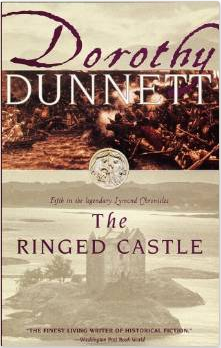
Day 701: The Ringed Castle

Cover for The Ringed CastleBest Book of the Week!
In this fifth book of the Lymond Chronicles, Francis Crawford of Lymond goes on a journey to an uncivilized land. He has already traveled and battled his way over Europe, North Africa, and Asia Minor, but this time he takes his small band of mercenaries to Russia. In an attempt to avoid the consequences he fears from a prophecy by the Dame of Doubtance, he feels he must stay away from his home in Scotland. So, he decides to go to Russia and offer to fight for Ivan IV (Ivan the Terrible) against the Ottoman Turks.

With Lymond and his mercenaries goes the mysterious Guzel, a beautiful, cultured former mistress of the Ottoman admiral Dragut Rais. She wants to make Lymond a powerful ruler. Lymond sees Russia as an undeveloped country full of opportunity for an intelligent leader, a place that will allow him the scope to create something great. Since Russia has no modern army in the sense of those of 16th century France and England, he offers to build one for the tsar.

Lymond’s struggles to work with the erratic tsar are complicated by his relationship with Dmitri Vishnevetsky, or Baida, the volatile Hetman of the Ukrainian Cossacks and a man of legend who has pledged his help to the tsar. Baida sees Lymond as a possible companion but also as a threat to his own power, and he desires Guzel for himself.

Back in England, Philippa Somerville has made a debut at the court of Mary Tudor that is surprising to even her mother, because her sojourn in the sultan’s harem has changed her from a scruffy teenager to a beautiful, polished, and sophisticated young woman. The treacherous Margaret Lennox and the queen’s sister Lady Elizabeth seem to be interested in involving her in their various schemes, but Philippa is tactful and cautious.

This novel, like the others, involves plenty of political maneuvering, adventure, danger, and battles, but also features winter sledge races and the burning of Moscow. Lymond, as usual, is arrogant, frightfully intelligent, and always ready with a blistering comment. Still, we find him irresistible. I cannot tell more for fear of spoilers, but if you decide to read this series, you will not regret it.

Related Posts

Pawn in Frankincense

The Disorderly Knights

Queen’s Play

Game of Kings


Day 699: Rustication

Cover for RusticationBest Book of the Week!
I was captured by this dark, twisty novel from the moment I started reading it. I only feared it may eventually disappoint, but it does not.

In winter 1863, Richard Shenstone, 17, appears without warning at his mother’s new home, a large dilapidated house on the southern coast of England. He has been rusticated, sent down from Cambridge for reasons not immediately explained.

Having received word of his father’s death too late for the funeral, he is surprised to find his mother and sister living in apparent poverty. Furthermore, although he doesn’t at first tell them he’s been sent down, his arrival is met by a surprising lack of welcome, indeed hostility on the part of his sister Effie.

There is some mystery about his father’s death, that is clear. His father’s pension has been denied to the family, and Richard’s mother is suing for her father’s estate as well. Effie is also up to something, for he twice sees her out accompanied only by a tall man, not proper behavior for a lady.

Richard is not a pleasant person, obsessed as he is by desire for every girl or young woman he meets and also addicted to opium. The novel is told as excerpts from his journal, interrupted by copies of a series of hateful letters that soon begin arriving at the homes of various people in the district. It is also clear from the beginning that some crime has been committed and the journal is a look back into the past. It is not clear to readers, however, how reliable a narrator Richard is or what’s going on when he roams the countryside at night in his opiated state. Soon the letter writer begins leaving corpses of mutilated sheep behind him.

This novel is atmospheric in the extreme and completely absorbing. As Richard begins trying to figure out who the letter writer is, he finds the finger pointed toward himself. He takes unwarranted leaps of logic that cause him to make many mistakes and ignores some clues that he has. Still, exasperating and unlikable as the main character is, you are urged along to the end of the novel.

Related Posts

Stone’s Fall

The Séance

The Darkest Room

Day 694: The Paying Guests

Cover for The Paying GuestsSarah Waters builds on some of her themes from Affinity in the post-World War I novel The Paying Guests. Frances Wray lives with her mother in the family home, a large house that is getting a little seedy. Since the death of Frances’ father, they have had to dispense with servants, and Frances does all the housework herself. Now they have been forced to take in “paying guests,” giving up most of the top floor of their house to be their lodgers’ apartment. The lodgers are a young couple, Leonard and Lilian Barber.

Frances did not see her life like this. Not so long ago, she was in love with a friend, Christina, and they planned to make a home for themselves. But after the death of her father, Frances discovered he had lost all his money, leaving her mother nearly destitute, and she decided to stay to help her mother. Now she feels as if Christina and her new friend Stevie are leading the life she and Christina planned.

Class is an important issue in this novel and comes up constantly. Frances and Mrs. Wray feel they’ve been deceived when they take stock of their new guests, who are considerably less genteel than they thought. Frances often refers to them as being in the clerk class, but Lilian’s family is considerably more common. On the other end of the class scale, Frances has to wait to do her housework when her mother is out, because it appalls her so to see her daughter doing physical work. Her mother herself does none.

Different classes or not, Frances and Lilian tentatively develop a friendship. Soon, though, their relationship becomes a love affair. Frances wants them to run away to lead their own lives, but Lilian thinks she is fantasizing. Soon, their plans put them into peril.

This novel creates a fully realized time and place, with reference to many of Britain’s post-war issues. Unemployed soldiers on the streets are a problem as well as a growing sense of a less-ordered society.

I found Frances to be an interesting character but was less interested in Lilian, who seems more formless. I found the story compelling, though, wondering how the women would get through a difficult situation.

Related Posts

Affinity

Practical Magic

Trick of the Dark