Review 2466: Table Two

One of the main characters of Table Two is more of an antihero. It’s Elsie Pearne, a bitter, disillusioned middle-aged woman who works for the Translation Office of the Ministry of Foreign Intelligence. She is intelligent and hard working, but she has a chip on her shoulder and a tendency to paranoia and doesn’t understand that it’s her own behavior that makes people dislike her.

She works at Table Two of the translation office with some eccentric coworkers. One blasts the room with cold air every morning while another can’t stop talking. A third takes delight in others’ misfortunes.

At the beginning of the novel, London has not had much of a problem yet with bombing, so the Ministry employees are simply bored and frustrated during the frequent occasions when they have to take shelter during the workday. But soon that changes.

Offsetting the character of Elsie is that of Anne Shepley-Rice, a young woman of the upper class who comes to work in the department. Elsie takes a fancy to her and takes her under her wing. But although Anne is grateful, she is much less invested in the friendship than Elsie is.

In the workplace, a plot centers around who is going to be appointed the Deputy Secretary of Table Two once the competent Mrs. Jury leaves for family reasons. The question is important because the Director, Miss Saltman, although a pleasant manager, is hopelessly disorganized, and Mrs. Jury does most of her work.

On the personal front, Anne feels she is hopelessly in love with Sebastian Kimble, her long-time friend and neighbor. Not only does Seb show no signs of wanting to settle down, but Anne’s family has lost its money, so she feels she is no longer a catch.

Although I’ve read quite a few novels set during World War II that are contemporary to that time, this is the first one that deals so much with the workplace. It is acerbically funny but also could be about a modern workplace, dealing with the same concerns of getting along with disparate people.

Elsie is not likable, and she creates her own problems, but I couldn’t help feeling sorry for her at times. Anne is sympathetic but a bit milk-toasty.

Related Posts

Mrs. Tim Gets a Job

The Halt During the Chase

Forest Silver

Review 2465: Ethel & Ernest

Ethel & Ernest is a completely charming graphic biography about the lives of Briggs’s parents from their meeting in 1928 until their deaths in 1971. The drawings are delightful, and the characters of the two emerge from the story.

Ethel is a lady’s maid and Ernest is a milkman when they meet. They marry two years later. The book shows their upward mobility starting with their purchase of a house that actually has a bathroom, to their astonishment, and continuing with their modifications and additions of appliances. Ernest is staunchly working class and pro-labor, while Ethel has pretentions to more, but through all, they are loving.

Through childbirth, World War II, and the Blitz, the privations of post-World War II Britain, and so on, the couple stick together and remain loving. The book has quite a bit of humor to it and is also touching. I was charmed by it.

Related Posts

Agatha: The Real Life of Agatha Christie

Ducks: Two Years in the Oil Sands

Britten and Brülightly

Review 2463: The House Opposite

I didn’t like the main character of The House Opposite at first. Elizabeth is having an affair with her boss, a married man with two children, and she sees his wife and children only as people who get in the way of her happiness. She’s dating a young serviceman, Bob, simply to hide her affair. She apparently referred to the boy across the street as a “pansy” in his hearing, and the remark has made him doubt his sexuality.

Nevertheless, she’s friendly to her coworkers and as she begins to help with the war—working as a warden and helping in the hospital—she begins to grow on me. As warden, she is partnered with Owen, that same boy she insulted, and it is the developing friendship between the two that is a focus of the novel—that and her own self-evolution.

One of the interests of this novel is the detailed descriptions of what it was like to live through the Blitz in London. Although other novels recount an incident or two, most of the characters in this novel have chosen to stay in London and sustain many attacks, most of them even staying in their homes and feeling a little superior to those who seek shelter.

Although Elizabeth takes a long time to recognize that her lover is a stinker, she otherwise shows herself to be quite likable. There are a lot of themes, involving Owen growing up, Elizabeth humanizing her lover’s wife and children, Owen’s father’s involvement in the black market, and so on.

Related Posts

The Midnight News

Company in the Evening

Spam Tomorrow

Review 2462: Weyward

Bookish Beck has a meme called “book serendipity” where she finds things in common between books she’s read recently, and I have a doozy. Not to give too much away, but this is the second book I’ve read in two weeks where women decide that the only way to deal with their abusive husbands is to murder them.

This novel is set in three time frames. In 1619, Altha is being tried for witchcraft. In 2019, Kate has discovered she is pregnant, so she has decided she must leave her abusive boyfriend, Simon. She has inherited a cottage from her Aunt Violet that he doesn’t know about and she has quietly saved some money, so she goes. In 1942, Violet has grown up isolated, not even allowed to go to the village and never told anything about her mother. At 16, she is jealous of her brother Graham, who is allowed to study interesting topics while she is forced into a traditional feminine role. She wants to travel the world and study bugs, but her father has apparently already chosen a husband for her.

Back at the cottage, Kate begins looking into her family history, into the women who called themselves the Weywards and have an unusual connection to animals.

This is an interesting novel with supernatural overtones that are fairly slight. I was interested in all three stories, although I found the outcomes of Altha’s and Kate’s stories fairly easy to guess. In this novel, I wasn’t as disturbed by the husband murder as I was in the other novel, in which I thought the wife could have easily gotten away. In any case, almost all the men in this novel are rotten to the core. So yes, I liked this novel fairly well.

Related Posts

Recipe for a Perfect Wife

The Harpy

The Family Upstairs

Review 2457: Westwood

Margaret Steggles is a girl who yearns for beauty in her life. She is a schoolteacher moving to London for a new job, and she has been taught by her mother not to expect marriage. She tends to drift into reveries when contemplating beautiful scenery, literature, or music.

A small accident brings her into the chaotic household of Hebe and Alex Nislund. She finds Hebe beautiful but rude and is disappointed by Alex, who is a famous painter, because he seems so ordinary. Their housekeeper, Grantey, learning where Margaret lives, walks her home, because Grantey is returning to her primary place of employment, where she is an old retainer of Hebe’s parents, the celebrated playwright Gerard Challis and his wife Seraphina. Grantey invites her to stop by to visit at their home, Westwood, which is just up the hill from Margaret’s Highgate neighborhood.

A famous playwright is heady stuff for Margaret, who loves Challis’s plays. Although she doesn’t drop in on Grantey, she meets Zita, a German refugee and servant from Westwood, in the hardware story trying to find someone to mend a fuse before a party begins. The store can’t help, but Margaret can. She meets Gerard Challis and is struck by hero worship.

But Gerard is a pompous, humorless, unaffectionate, and selfish man who delights in carrying on chaste affairs with beautiful young women until they become demanding, at which point he dumps them without ceremony. He has coincidentally set his eye on Hilda, who just happens to be Margaret’s best friend. Hilda has plenty of admirers, though, and isn’t impressed, even though he is clearly wealthy and has told her he is single and his name is Marcus. This rejection of course makes him more eager.

Margaret is accepted into the Challis household as a friend and visitor, especially after the Nislund house is bombed and they all move in, too. Margaret enjoys being there even though they mostly treat her as a convenient person for helping take care of Alex and Hebe’s three small children. Margaret’s friendship with Zita can also be difficult because Zita is volatile, but they go to beautiful concerts together.

Margaret has also started helping John, a coworker of her father. He has been struggling to care for his mentally challenged daughter while his housekeeper is ill.

This novel made me laugh out loud sometimes, especially at the descriptions of the plots of Challis’s plays. The introduction tells us that Challis is based on a real person. I’d like to know who! (It turns out to be some guy named Charles Morgan.) In other respects, I really enjoyed this novel about Margaret’s development in self-respect and her shedding of her romantic myopia. This is a good one!

Related Posts

A Pink Front Door

Nightingale Wood

The Swiss Summer

Review 2455: Spam Tomorrow

Spam Tomorrow is Verily Anderson’s memoir. Although it briefly hits other times of her life, it concentrates on the war years and ends shortly after D-Day.

The book begins with Anderson’s marriage to Donald, an event not encouraged by her parents because of his lack of wealth and an age difference that is unstated but I figure has to be at least 20 years.

At the beginning of the war, Verily, having already been warned off Donald , volunteers as an ambulance driver. At first, the drivers mostly just wait around to be dispatched, and later, she is erratic in her actual attendance at this job, getting very sick and later going off when she feels like it. She keeps running into Donald, though, who is found unfit for the military because of physical reasons and instead is working for the Ministry of Information. Finally, they decide to marry.

Most of the book has to do with the struggles—sometimes serious ones but related in a lighthearted manner—of living in London during the Blitz, of a difficult pregnancy, of motherhood, and of problems trying to find a suitable home to raise children when you’re not well off and being bombed.

Again, although sometimes concerned with serious problems, like Verily’s difficult first childbirth and subsequent illness, the memoir is related in a lighthearted manner and is often amusing. It provides yet another angle on British life during the war.

Related Posts

One Woman’s Year

Mrs. Tim Carries On

The Midnight News

Review 2453: The Square of Sevens

Now, this is the kind of historical novel I like. The time period seems to be well-researched, the flawed heroine is still likable, and the plot is twisty and interesting.

Red tells us about her life in 1730, when she was seven. She has been traveling all her life with her father, a Cornish cunningman named John Jory Jago. But he believes his life is in danger so is using an assumed name. He has taught her to read fortunes using the square of sevens, a technique passed down in her family. She knows nothing of her mother except she is dead.

They meet Robert Antrobus at an inn. He is an antiquarian who is interested in the square of sevens. Her father tries to get him to take Red, but he refuses. Red’s father dies, and Antrobus returns to take her home to Bath and adopt her.

Now named Rachel Antrobus, Red begins as a young woman to try to find out about her family. The pack of cards she has always used has a Latin slogan on it that is the motto of the rich and powerful De Lacey family. That family is engaged in a legal battle over the estate between most of the De Laceys and Lady Seabourne, a sister of Julius De Lacey who is estranged from the family. The dispute is about a codicil that Nicholas De Lacey left, leaving the bulk of his estate to his first grandchild. Lady Seabourne’s son is that grandchild, but the rest of the family claims that Nicholas burned the codicil.

Red learns enough about the family to believe that she is the daughter of a runaway marriage between John Jory Jago and Patience De Lacey. Then she finds the codicil in the tube that contained the document explaining the square of sevens and realizes she is the first grandchild.

Fairly early on, we see another point of view. Lazarus Darke is working for Lady Seabourne trying to find the codicil.

Someone breaks into the house, killing the housekeeper, Mrs. Fremantle, obviously looking for something. Then Mr. Antrobus dies. Red has reason to believe that her new guardian, Henry Antrobus, has stolen her inheritance from Mr. Antrobus, and then he sells the codicil. Red runs away from home to London.

Red finds herself a job telling fortunes at a show, an illegal activity. The show was once a joint enterprise between John Jory Jago and Morgan Trevthick. Red, who has thought her mother dead, finds out that Patience De Lacey is Lady Seabourne. She presents herself to her, but Lady Seabourne throws her out. So, Red decides to infiltrate the De Laceys as a fortune teller for Mirabel Tremaine, who she believes is her grandmother. But can she find the codicil? And how will she prove that she and John Jory Jago lived instead of both going over a cliff when she was a baby, as everyone believes?

Soon, Red realizes she has entered a nest of vipers. But are they all or only some of them vipers? It seems as if I have told a lot of the story, but there is much more to come.

Related Posts

The House of Fortune

The Last Confession of Thomas Hawkins

The Clockwork Girl

Review 2452: La Rochelle

Mark Chopra is a neurologist who lives alone and has apparently never had a partner. He also seems at first to have no friends except a much younger couple, Ian and Laura. The draw there is Laura, with whom he is in love. As for friends, it gradually becomes clear that he has other friends, but he disregards them.

Mark judges the stories Laura has told him and his own observations and thinks that Ian doesn’t treat Laura the way she deserves. At the pub at the start of the novel, Ian tells Mark that Laura has left him to think about their future. He doesn’t know where she is and doesn’t look for her, saying she’ll come back when she’s ready.

Mark is a highly intelligent person who tends to overthink things. He starts worrying about Laura, thinking she could have had an accident or even have been kidnapped. But he does nothing except hang out with Ian every night, getting so drunk that he can’t remember things and smells like booze at work. He ignores the warnings of coworkers (his other friends that he doesn’t seem to recognize) about his job.

Toward the end of the novel, Mark finally does something, but the trip there wasn’t pleasant for me. Mark is not a reliable narrator. He knows more than he tells until toward the end of the novel. But I also found him an unpleasant person. Despite being, he finally claims, willfully abstinent, he seems to think of women only in terms of sex. He meets a couple and immediately wonders how often they have sex. He makes constant demeaning comments about female anatomy. He expresses his gratitude toward a female friend and coworker by mentioning her bra size! Is this supposed to be a side effect of Mark’s lifestyle choice? Is it supposed to be funny? I have no idea. I found this character to be deeply unpleasant despite his desire to be a knight errant for Laura. It was no surprise at all to me to find him ultimately having no interest in what he finally gets, even though it’s what he wanted.

The plot eventually has some surprises, but after a labyrinthian scheme finally reveals itself, the whole idea just seemed stupid to me. The characters go to all kinds of trouble instead of speaking a single sentence. (I think Roger Ebert used to call that the “idiot plot,” in reference to movies.) I really wouldn’t have finished this book if it hadn’t been part of my James Tait Black project.

Related Posts

Amsterdam

The Sense of an Ending

Eileen

Review 2451: Endless Night

Mike Rogers is a wanderer who moves from job to job, never seeming to amount to much. But he has a taste for finer things. One thing he wants is to have an architect he’s met build a house at Gipsys’s Acres, but even though the property is going cheap because of the curse on it, he can’t afford it.

He goes up to look at the property one day and meets Ellie Guteman. She is a young, wealthy heiress who has slipped her leash from trustees who keep her so protected that she never has any fun. With the help of her companion, Greta, she contiues to see Mike, and they daydream about buying Gipsy’s Acres and building their dream house. Eventually, they decide to get married on the day she turns 21. (Here’s some book serendipity, a concept coined by Bookish Beck, two books within a week that have houses being built that may turn out to be haunted. The other is The House Next Door.)

All goes well until they move into Gipsy’s Acres. Ellie keeps meeting Mrs. Lee, an old gypsy woman who warns her of danger. Someone throws a stone through the window. Even though Ellie’s relatives are American, they show up for visits, and they are not very nice. And Ellie has offered Greta a place to live. Lots of people seem not to like Greta, including Mike.

The novel is narrated by Mike, who seems disarmingly straightforward. However, there is a lot going on under the surface, and Mike is an unreliable narrator.

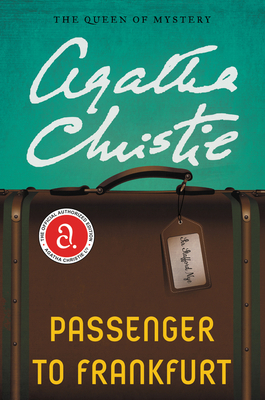
Although I guessed what was going on fairly early, that didn’t ruin my appreciation of how Christie slowly builds suspense. Then, at the very end, the novel took a turn I didn’t expect. Note that gypsies don’t fare well in the comments of characters.

Related Posts

They Do It with Mirrors

Taken at the Flood

Murder at the Vicarage

Review 2443: After Sappho

I read After Sappho for my James Tait Black project. It is experimental, written in short vignettes that jump around in time and from person to person. It tells the stories of lesbian women, mostly literary figures, trying to make a place for themselves. It begins in the late 19th century with women fascinated by the poet Sappho. Some of them study Ancient Greek, some dress like ancient Greeks or re-enact ancient plays, some travel to Greece.

The novel is vividly written in first person plural or in third person, at times slyly ironic, sometimes engaged in word play, often invigorating and with lots of sexual metaphors. It is interesting, telling of repressive laws against women, particularly in Italy, and reporting actual aggressively misogynistic “scientific” or political statements by men. It goes on to tell of the accomplishments and tragedies and love affairs of its protagonists, largely ignoring the men in their lives. For example, from this novel, you wouldn’t know there was a Leonard Woolf, just a Vita Sackville-West.

Although I found the novel very interesting at first, there were so many characters that I couldn’t keep track of them or remember which events happened to which ones. I could only track the ones I was already familiar with. For example, the novel begins and ends with Lina Poletti, even though she disappears about halfway through, so she is obviously important to Schwartz, but by the end I couldn’t remember her. I felt like I needed a chart.

And yet, I feel that with more character definition, I might have remembered all of them, but these short vignettes that tell of an activity or something they said didn’t really provide a cohesive picture to me of what the women were like.

So, I applaud this novel’s daring devices, but they didn’t really work for me.

Related Posts

The Hours

Crudo

LOTE