Day 117: Tinker Tailor Soldier Spy

After seeing the exciting movie this winter, I decided to read the novel Tinker Tailor Soldier Spy by John le Carré. George Smiley has been drummed out of the service and the entire leadership of “The Circus” (slang for Britain’s intelligence organization) replaced after the death of Control, their former leader.

But the ministry calls him in to listen to the tale of Ricky Tarr, a low-level operative from Penang, who has been missing for months. Tarr’s story includes information from the wife of a Soviet operative and an allegation that The Circus has a mole at the highest level, moreover, that the mole has been sending the Russians information for some time. The ministry wants Smiley to investigate. It is soon clear that the mole is one of only a few of Smiley’s colleagues, whom he has known and worked with for years.

The novel is breathtakingly suspenseful even though, having seen the movie, I knew the ending. Smiley puts the pieces together by going over records of significant events and interviewing several agents who were replaced because of suspicions they raised or events they witnessed.

This may not sound exciting in this day of explosions and car chases, but le Carré is a master at building up the intrigue and suspense. You will not want to put this book down. I recommend the movie as well, featuring a host of excellent British actors.

Day 116: 22 Britannia Road

Cover for 22 Britannia RoadAlthough the subject matter of 22 Britannia Road should have been interesting, a major flaw of this novel by Amanda Hodgkinson is that I always feel removed from the actions and characters. This feeling of distance may be because we, the readers, are immediately thrust into their woes without first getting a chance to know them.

One minute they meet, the next minute they have a baby, the next he is off to war. The two main characters, Janusz and Sylvana, are natives of Poland before the invasion of the Nazis, but aside from knowing that, you wouldn’t believe that anything unusual is going on. Later, they are in Poland, fleeing, with the Nazis invading, but except for a few events, you wouldn’t know there was a war. It’s as though the author is unable to imagine what it might be like first to live in Poland when the war is building and worse to be there once the Nazis arrive.

The novel actually begins after the war, with Janusz waiting in England, where he has spent most of the war, for the arrival of Sylvana and their son Aurek from Poland. Later it tells the story of their meeting, courtship, marriage, and war through unconvincing flashbacks.

It also tells the story of their floundering marriage, which happens because they tell each other nothing. This post-war story is a little more realized than the story of their past.

I have some sympathy for Janusz at the beginning of the novel, when he is waiting for his family to arrive. He has obviously meticulously prepared for them and is hoping to give them a good life. But I think Sylvana is a stupid woman, who is cloyingly overprotective of Aurek. She is harboring a big secret, but I guessed it almost from the beginning.

Although I was mildly interested in the story of the novel, I felt it could have been done much better.

Day 112: Fever of the Bone

Cover for Fever of the BloodVal McDermid is the author of an excellent series featuring Tony Hill, a troubled profiler. In Fever of the Bone, someone is luring teenagers over the Internet and murdering them.

Tony’s friend and colleague Inspector Carol Jordan’s new boss won’t allow her to employ Tony, so he goes off to Manchester to consult on a case. Later, two boys disappear in Bradfield. Neither Carol nor Tony know it, but they are both working on cases with the same killer.

Tony has also inherited some property from his father, whom he never met. He just wants to ignore the situation, but Carol thinks it’s important that he try to find out about his father.

As usual with a McDermid novel, the book introduces interesting characters and has an involving plot.

Day 102: Who Murdered Chaucer? A Medieval Mystery

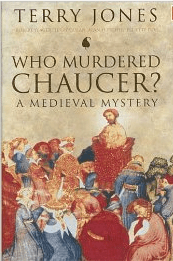
Cover to Who Murdered ChaucerIt is an accepted interpretation of history that Richard II was a weak, dissolute ruler who was hated by the English people. But Who Murdered Chaucer? A Medieval Mystery makes a plausible case for the truth having been rewritten by the victors after Richard was deposed.

The version of events that has been accepted for centuries is that Henry IV saved the English kingdom by overthrowing the corrupt Richard II at the urging of the populace. Authors Terry Jones, Robert Yeager, Alan Fletcher, Juliette Dor, and Terry Dolan provide plausible evidence that Richard was neither unpopular nor weak, but that he was a relatively enlightened monarch–a patron of the arts and an advocate for the new fashion of authors writing in their own languages instead of in Latin–and that he permitted criticism of the church.

However, his rule was periodically threatened by several of the more conservative members of nobility and the church, including especially Thomas Arundel, the younger brother of the Earl of Arundel. Richard eventually had to banish some of them, including Arundel, and others were killed. The end of Richard II’s reign actually came later when he felt secure enough to travel to Ireland.

As the result of a proposed duel, Richard also banished Henry of Bolingbroke, the son of John of Gaunt. Henry was considered the consumate knight and was admired throughout the kingdom. Richard seemed to be fond of him and probably considered him his heir. Henry’s dispute with Thomas de Mowbray resulted in charges of treason, and they were both banished. Henry was banished for 10 years, but Jones et al. find plausible indications that Richard had an agreement to allow Henry back early. One was that Richard initially did not take Henry’s property, as was usual.

But Henry met with Arundel on his European travels, despite strict injunctions not to have dealings with him. The two plotted to overthrow Richard, attacking England when he was away in Ireland with his army. Henry won and became Henry IV, treating Richard shamefully. No one was sure what happened to him, except that he was dead. (Henry’s own son, after he became Henry V, had Richard’s bones brought to Westminster to be buried.)

The book shows that Henry relentlessly rooted out records that were approving of Richard, even implicitly, or that were negative to himself. He assiduously promoted propaganda alleging that Richard was hated, weak, and dissolute. He gave Arundel free reign, as Archbishop of Canterbury, to burn heretics for the first time in England and to set his own criteria for judging heretics. In short, he instituted a reign of terror.

What does this have to do with Chaucer? This shift in power left him very vulnerable. His works under Richard II had criticized the very things about the church that Arundel considered to be heresy. Chaucer disappears from the historical record right around 1400, about a year after Richard was deposed.

The book makes a shakier case that Arundel either caused Chaucer’s death, possibly in imprisonment, or paid to have him killed. There is no evidence of this, of course; the authors’ conclusions are drawn from things that happened to other writers, from some vague accounting records, and from hazy interpretations of some of Chaucer’s work. Although I feel that they have certainly pointed toward some possibilities, even they admit that it is unlikely anyone will know the truth.

The book is easy to follow and amusing at times. It is beautifully illustrated with pictures from illuminated manuscripts. The political and historical theories about Richard’s and Henry’s reigns are very interesting. However, I believe the book falls off a bit at the end when it settles down to examining the story of Chaucer’s end, especially when it resorts to interpreting Chaucer’s poetry.

Day 101: The Uninvited Guests

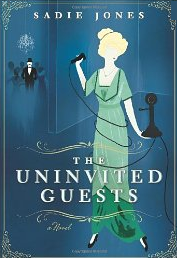
Cover for The Uninvited GuestsThe Uninvited Guests is a delightfully original novel. At first it seems to be an Edwardian family social comedy that reminds me of the light, eccentric novels written by Stella Gibbons or Dodie Smith, but then it takes a turn toward the bizarre.

The Torrington-Swifts live in a large, ramshackle house that is at risk because they can’t afford it. The grown children, Emerald and Clovis, make a show of resenting Edward, their kind, patient, one-armed stepfather. Clovis is sulky and irritable, while Emerald is more likeable. Charlotte, their mother, is selfish and used to being cossetted. Smudge, the youngest girl, is used to being ignored.

It is Emerald’s 20th birthday, and the family is preparing for guests and a party, but Edward must miss the party because he has to travel to Manchester to try to borrow money to save the house. The guests are settling in and a storm is building when other people begin to arrive. A horrendous train accident has occurred a few miles away, and the railroad has sent the passengers to the house for shelter. Among them is an odd character in a red waistcoat who insists upon inserting himself into the birthday party.

Here is where the story begins its strange turn as the party gets odder and odder.

The novel is extremely well written and completely captivating, with a touch of the bizarre.

Day 98: The Poison Tree

Cover for The Poison TreeWhat starts out as a seemingly ordinary novel about a young woman who makes a fascinating, exotic new friend builds slowly to the macabre in The Poison Tree by Erin Kelly. This is not a traditional mystery, but more the foreboding story of how several characters’ lives are changed irrevocably by the incidents of a careless summer in 1993.

In a story that begins ten years before the novel’s present, Karen Clarke is a naive but high-achieving linguistics student who is soon to graduate from a college in London. Her academic success has more to do with a natural ability to learn languages than application, and she finds herself unable to decide what to do with her life. After being very focused for years, she is inclined to let her near-term future be decided by fate.

One afternoon near the end of the term she meets the flamboyant, charismatic Biba Capel and is immediately captivated by her and drawn into her circle. Biba lives in a sprawling, ramshackle house with her brother Rex and other assorted people, and they spend most of their time partying.

The novel’s present day begins with Karen picking up her husband, Rex Capel, from prison, where he has served 10 years for murder. With her is their ten-year-old daughter Alice. Karen has been supporting her small family, economically and emotionally, for years, and knows she must continue to do so, as Rex will find it difficult to get work. She is very protective of Rex and Alice and afraid their new life will be ruined if people learn about their past.

How Karen goes from the carefree life she adopts that summer—which she spends with a bunch of irresponsible young people partying all night and sleeping all day—to the fearful present involves the Capels’ tragic history. As she learns about this history and learns more about her friend, she is drawn into tragedy.

Well written and absorbing, the book slowly builds from normalcy to a sense of dread.

Day 96: The Forgotten Garden

Cover for The Forgotten GardenKate Morton’s The Forgotten Garden was one of my big discoveries two years ago. I absolutely love this book.

A four-year-old girl walks off a ship in Australia in 1913 with a little white suitcase. No one meets her. She won’t say who she is or where she came from. The harbor master takes her home, calls her Nell, and adopts her, and she forgets her previous life. When she is 21 and on the verge of marriage, he tells her about it. This information is so shocking to Nell that she breaks with her fiancé and her family and isolates herself, feeling that she has been living a lie.

In 1975, Nell’s irresponsible daughter drops her own teenage daughter, Cassandra, at Nell’s house and drives away, never to return. Nell has other plans, but puts them aside to take care of her granddaughter.

In 2005, Cassandra is mourning Nell’s death. She has inherited Nell’s property but is only vaguely aware of her history. When she looks through Nell’s things, she finds a white suitcase with a book of fairy tales in it. She also finds that Nell never stopped looking for her real family. Continuing Nell’s search, Cassandra ends up in a small Cornish village where she learns she has inherited a small cottage on the Mountrachet estate.

Cassandra finds an entrance into a walled garden, and another one from there to the estate. Eventually, she also discovers the history of her grandmother’s parentage.

The book traces Nell’s history by alternating among these times. The modern story is one of investigating one’s roots, but the older tale is more gothic. Ultimately, it is the story of two cousins, the wealthy Rose Mountrachet and the slum-born Eliza Makepeace, who comes to live with her and be her companion.

A mystery about family secrets, the story is complex and enthralling. Some readers may be daunted by its length, but once you begin reading, you will not be able to stop.

Day 89: The Wars of the Roses

Cover for The Wars of the RosesThe Wars of the Roses were a series of complex events involving numerous significant figures. As such, when I have previously read about them, I’ve found it confusing to keep track of events and people.

In The Wars of the Roses: Through the Lives of Five Men and Women of the Fifteenth Century, Desmond Seward presents the clearest and most interesting explication I have read. He organizes the material and infuses interest by following the effects of the wars on five people–William Hastings, Edward IV’s best friend and one of the most powerful men in the realm during his (Yorkist) reign; John de Vere, Earl of Oxford, head of an ancient family and a loyal Lancastrian; Lady Margaret Beaufort, Henry Tudor’s mother; Dr. John Morton, a loyal Lancastrian clergyman who turned Yorkist; and Jane Shore, mistress of Edward IV and daughter of a successful London businessman.

A series of battles between rival factions of the Plantagenet family for the throne, the Wars of the Roses lasted 32 years. The roots of the dispute lay in Henry IV’s usurpation of the crown from Richard II years before. Henry IV and his son, Henry V, were strong rulers, but Henry V’s heir, Henry VI, succeeded at the age of 15. He proved a weak and ineffective ruler who was dominated by his favorites and his wife’s rapacious relatives. Henry also managed to lose the portion of France that his father had so arduously and expensively won back, and England’s state of law and order had almost completely broken down.

The shift in government began when Henry VI had a son who replaced Edward Duke of York (later to be Edward IV) as heir to the throne. This made Edward’s position precarious and he had to flee to Europe. His subsequent battles against Henry’s adherents were only the beginning of years of instability that resulted in the end of the Plantagenet dynasty and the beginning of that of the Tudors.

History can be written with too much detail or in a too academic and dry style, or it can be so lightly researched as to seem like fluff. Seward hits the perfect balance with a terrifically interesting book that is wonderfully well written.

Day 84: Bring Up the Bodies

Cover for Bring Up the BodiesBest Book of the Week! Year!

If Wolf Hall was a wonderful historical novel, Bring Up the Bodies is masterly. In this second of a trilogy, Hilary Mantel continues the story of Thomas Cromwell. Bring Up the Bodies is more focused than the last book, because it deals with a much shorter time period and defined subject–the downfall of Anne Boleyn.

The writing is elegant and impeccable. I have read a few comments that Wolf Hall was sometimes difficult to follow because the readers could not always tell who was meant by “him” or “he.” Mantel has written both books using a strict third person limited point of view, from that of Cromwell, and people don’t think of themselves by their first names. Hence, the difficulty, which I did not notice as a problem in Bring Up the Bodies. This technique is very difficult to employ successfully–we are much more used to a third person that changes from character to character or even to third person omniscient. But Mantel uses it effortlessly to create a memorable character in Cromwell–kind but implacable, one who fosters the growth of others but does not forget the crimes and indignities committed against Cardinal Wolsey, whom he loved as as a father.

Henry VIII has already decided he wants to rid himself of Anne Boleyn and marry Jane Seymour, but Anne has one more chance. She is carrying a child, and if it is born alive and is a boy, she is safe. Henry must have an heir, and he has decided that if he hasn’t been given one, God must have found some fault with his marriage to Anne just as there was one for his marriage to Katherine of Aragon. Thomas Cromwell must find him some way out of his difficulties.

Of course, Cromwell helped Anne to her position in the first place, but the Boleyns have made many enemies in their enjoyment of power, and they have treated him with disdain. More importantly, Anne Boleyn destroyed the Cardinal, and her brother mocked him in his downfall.

From the moment you begin reading, you find yourself plunged into the Tudor world of shifting politics and intrigue. Of course, we know what happens to Anne Boleyn, yet the novel maintains its suspense. The Boleyn and Howard families are going to suffer a huge defeat, but they will go down fighting.

Day 82: Cotillion

Cover for CotillionOne of my favorite authors if I want the lightest of reading material and a good laugh is Georgette Heyer. Although I am not a romance reader, for her meticulously researched and comic Regency romances I have to make an exception. Her period pieces are absolutely convincing, as she was an expert on Regency dress, deportment, and speech. In fact, she became such an expert on the period’s idioms that she once was able to successfully sue a plagiarizer by proving that the expression the other writer copied appeared only in some records to which she had been granted private access.

But Heyer was also an expert at creating charming comic characters and situations. Cotillion is one of my favorites of her books, and one of the silliest.

Kitty Charing is an impoverished orphan who has been raised in discomfort by her miserly old guardian, “Uncle” Matthew Penicuik. A great one for manipulating his putative heirs, Uncle Matthew announces that he will leave his entire fortune to Kitty, but only if she marries one of his four grandnephews. Then he invites them all to come calling. Priggish Reverend Hugh Rattney and doltish Lord Dolphinton arrive, and the married Lord Biddenden comes to represent his rakish brother Captain Claud Rattney, but dashing Captain Jack Westruther, whom Kitty has grown up hero-worshipping, does not make an appearance, as he is unwilling to be manipulated.

Kitty is furious that Jack doesn’t appear, but even more furious at being put in this position. She soundly rebukes all of her “cousins,” except Lord Dolphinton, who is too stupid to be responsible for his actions and has been compelled to come by his mama. But then Uncle Matthew announces that if Kitty refuses to marry one of her cousins, he will leave her with nothing. What is a spunky Heyer heroine to do but run off into a snowstorm with only a few possessions and an impractical plan to get a job as a house maid?

She arrives at the local inn to find her cousin Freddy Standen, who has absolutely no idea why he has been summoned. Freddy, not the brightest of bulbs but a kind-hearted young man, is perfectly wealthy in his own right and has no intention of getting married. When he meets Kitty at the inn, she talks him into pretending an engagement with her and inviting her to go up to London so she can acquire some “town polish,” buy some nice clothes, and (she hopes but doesn’t tell Freddy) enchant Jack into a proposal.

Freddy, an expert in deportment and fashion who can always be relied upon to accompany a young married woman to a dance or concert, is not really a lady’s man. When he and Kitty arrive in London to find his harassed mother attempting to care for a house full of children with mumps, he is dismayed to find he is left responsible for a naïve girl who tends to fall into difficulties and odd friendships.

The novel is crammed with comic characters, such as Kitty’s foolish governess “Fish,” who has a turn for quoting romantic poetry; Freddy’s frippery married sister Meg, who wears color combinations that shock him to the core and spends her time trying to avoid her mama-in-law; Camille, Kitty’s real French cousin, who is impersonating a lord; Lord Dolphinton, who is terrified of his mother but strictly charged by her to get Kitty to dump Freddy and marry him; and the silly doe-eyed Olivia, whom Kitty befriends but Jack is pursuing to be his mistress.