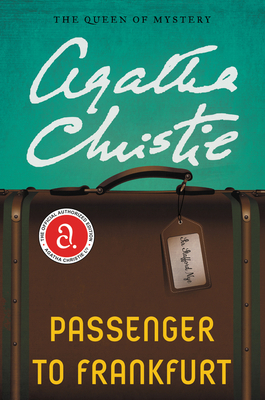
Review 2490: #1970Club AND RIPXIX! Passenger to Frankfurt

Usually, when an Agatha Christie books pops up as a possibility for the biyearly club reads, I am happy to choose it, especially if I haven’t read it before. This year, in looking for books for the 1970 Club (and also for #RIPXIX), I saw Passenger to Frankfurt, one of Christie’s stand-alone espionage novels. Unfortunately, it was not one of her best.

Sir Stafford Nye is a young mid-level diplomat often distrusted by his peers because of eccentric dress and a certain sarcastic sense of humor. He is returning from a trip to Malaya when his plane, bound for Geneva, is rerouted to Frankfurt and thence to London.

In the Frankfurt airport lounge, he is approached by a young woman asking him for help. She tells him that if the plane had landed in Geneva, she would be safe, but since it is going to London, she’ll be killed. She bears a certain resemblance to him. She asks if he will leave the burnoose he’s been wearing with his passport in it and allow himself to be drugged. She will cut her hair and use his passport, and he will wake up long after the plane has landed in London and claim he was robbed. And he agrees.

Back in London, he places an ad hoping to meet her and she ends up sitting next to him during a concert. He is carefully brought into a mission—one that she is already working—by some government officials who are alarmed about a plot that is rousing the youth worldwide to violence and anarchy. Nye travels with the girl, who has many names but might be Countess Renata Zerkowski, to view a Hitler-like rally headed by a young man referred to as the Young Siegfried. He is just a figurehead, but the officials want to find out who is in charge.

The plot of this novel is so ridiculous that I barely had any patience with it. But worse, there is hardly any action, just a bunch of meetings. Once Nye is recruited, we see him traveling with Renata and then he disappears about 2/3 of the way through, only to reappear at the end. The only real action takes place in one page at the end of the novel. This one is pretty much a stinker. The only interesting character is Nye’s elderly aunt, Lady Matilda Cleckheaton.

Related Posts

Destination Unknown

The Man in the Brown Suit

N or M?

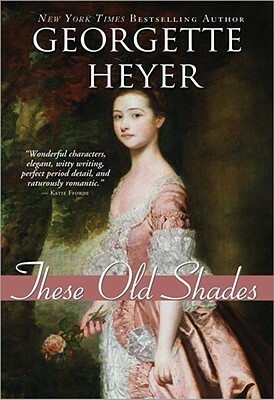
Review 2482: These Old Shades

In trying to fill some of the holes in my Century of Books project, I noticed that These Old Shades, which I haven’t read for many years, would help. This novel is Heyer’s first, and it is also the first of four about the Alastair/Audley family. (The others are The Devil’s Cub, Regency Buck, and An Infamous Army.)

Late on a mid-18th century night, His Grace of Avon Justin Alastair is walking through a Paris slum when a boy collides with him. The boy is fleeing his brutish brother. On impulse, the Duke buys the boy, but it is clear he is up to something. He takes the boy home and makes him his page.

The boy, Léon, has fiery red hair and dark eyebrows. The Duke has noticed this resemblance to his enemy, the Comte Saint-Vire, and takes Léon around to embarrass him. However, he begins to have other thoughts about the resemblance because of Saint-Vire’s reaction.

Soon, though, it is revealed that Léon is really Léonie, disguised as a boy since she was 12. The Duke takes her to England and leaves her with his sister while he arranges a chaperone, announcing that he intends to adopt her as his ward. Léonie is starting to enjoy being a girl when she is kidnapped by Saint-Vire.

This is an adventurous, amusing romantic novel. The Duke is enigmatic and Léonie is charming and feisty. Although the Duke has a bad reputation and is known as Satanas, as his relationship with Léonie develops, he becomes more human. Some of the interviews between Saint-Vire and Avon struck me this time as a little unsubtle, but overall, it is a great start to Heyer’s career and I enjoyed it very much.

Related Posts

Regency Buck

An Infamous Army

The Nonesuch

Review 2478: Village Story

Like Buckmaster’s Family Ties, Village Story presents us with lots of characters and we begin slowly to sort them out and differentiate them. Buckmaster, who frequently speaks directly to the reader, states that Mrs. Ethelburger is her heroine, but Mr. Noyce gets more attention.

The novel begins with the Darlingtons because they have the nicest garden in the village, but it’s only their daughter Linda who has a minor role in the story. Linda, we’re told, having been pronounced “gifted” in school, has been spoiled. Hoping to keep her out of trouble, Mrs. Darlington takes her up to the big house in the village, the Noyce’s house, and gets her a job as a housemaid. There, she proceeds to make trouble by telling everyone that Mr. Noyce has been making love to her in the drying cupboard. This is a lie. In fact, Mr. Noyce is hardly even polite to her. But from a 21st century viewpoint, this minor plot is troubling on lots of levels, not least of which is the author’s attitude toward girls’ education. We must try to view it in the context of its time, where these views were not unusual.

Next, we briefly meet Mr. Noyce, who led a cosmopolitan life before settling down in the village on the family estate after his father died. Mrs. Noyce is an artist, one whom Mr. Noyce believes could become great, so he encourages her to keep painting. Even though that’s what she wants to do, her relationship with Mr. Noyce is on edge, and she seems to be rude to everyone. Of course, the village thinks she shirks her household duties.

Mrs. Ethelburger isn’t much interested in household duties, either, and since she has several small children, her house shows it. We’re told she and Mr. Ethelburger love each other, but he isn’t much of a character in the novel, and she is just breaking off an affair with Mr. Browning, a young businessman who lives with his mother. Mrs. Ethelburger used to visit old Mr. Noyce, so one day she wanders onto the property—now much more private—and strikes up a friendship with Mr. Noyce.

Also in the village are the Sparks, the rector and his wife, an elderly couple. He tends to be studious while she has decided to become a Communist without really understanding anything about Communism.

The novel only has the suggestion of a plot, mostly about the party the Noyces decide to have and the fate of the Noyce’s marriage. But somehow Buckmaster ties it all in with the fate of the village itself. I was interested in the story but sometimes couldn’t remember who all the characters (many more than I described) were and wondered where it was going.

Related Posts

Family Ties

A House in the Country

Near Neighbors

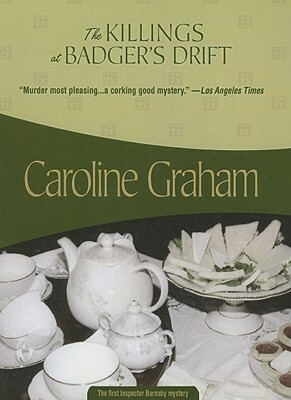
Review 2475: The Killings at Badgers Drift

Here’s another book that qualifies for RIP XIX!

As such a longtime fan of Midsomer Murders, I decided it was time to have another go at reading the books. I tried reading this one long ago, but I was so disappointed in the character of Sergeant Troy that I didn’t continue.

While Miss Simpson, an elderly ex-schoolteacher, is out in the woods looking for an orchid, she sees something she wishes she hadn’t. Later, she is found dead of an apparent heart attack. However, her friend Miss Bellringer goes to Inspector Barnaby because she thinks there are suspicious circumstances.

In investigating, Barnaby encounters a slew of colorful characters, all with secrets. There is Doctor Lessiter, who mishandled the death diagnosis, and his sexy wife Barbara as well as the doctor’s sulky teenage daughter Judy. There are the creepy Dennis Rainbird, an undertaker, and his mother. At the big house, Henry Trace, a wheelchair-bound middle-aged man, is preparing for his wedding to beautiful Katherine Lacey, 19 years old. This is a wedding not celebrated by either Trace’s sister-in-law, Phyllis Cadell, or Katherine’s artist brother Michael.

Barnaby begins turning up all kinds of secrets, and soon there’s another murder.

I’m so familiar with the TV show that it was hard to judge how difficult it would be to guess the solution. Sergeant Troy is hateful, but he didn’t bother me as much this time around. Warning that the text contains some homophobic comments, mostly from Troy.

I think Graham is a deft plotter and constructor of interesting characters. I note that the TV show chose to have the murder victims die in more spectacular ways than in the original novel.

Related Posts

Magpie Murders

As She Left It

The Killings on Jubilee Terrace

Review 2468: The New Magdalen

In The New Magdalen, Wilkie Collins has written a sensation novel that is by definition quite melodramatic. The subject, as you might guess from the title, is the reformed prostitute.

That’s what Mercy Merrick is, although she first appears as a nurse on the battlefield of the French/German war. An Englishwoman, Grace Roseberry, is stranded there on the way to England to live with her father’s friend, Lady Janet Roy, after her father’s death. Unfortunately, she was robbed on the way and has only her letter of introduction.

Grace confides in Mercy and then pressures her to confide in her, but she is not at all sympathetic to Mercy’s story of being forced by starvation into prostitution. Mercy reformed after hearing a sermon by Julian Gray, but every time she took a respectable position with the full knowledge of her past by her employers, she lost it once the servants or neighbors found out.

Mercy has loaned Grace some clothing. When after an attack, Grace is pronounced dead by the French doctor, Mercy takes her clothes and letters of introduction and assumes her identity, trying to get a better future.

Several months later, Mercy (now called Grace, confusingly) is Lady Janet’s adopted daughter and is betrothed to Horace Holmcroft. However, she can’t find it within herself to set a date without telling Horace the truth.

Then Julian Gray arrives. It turns out he is Lady Janet’s nephew. He has taken an interest in the case of a woman who has been hospitalized in Germany and claims to have been on her way to live with Lady Janet. Of course, this is the real Grace.

In Mercy’s absense, Grace appears and accuses her of stealing her identity. But Lady Janet doesn’t believe her and finds her offensive. And in fact, Collins depicts her as a horrible person.

That’s the message, really—the despicable virtuous woman versus the saintly ex-prostitute—for Mercy eventually decides to make things right.

Some of the Victorian values in this one are hard to stomach, but Collins knows how to keep readers interested in his story.

Related Posts

The Dead Secret

Hide and Seek

Basil

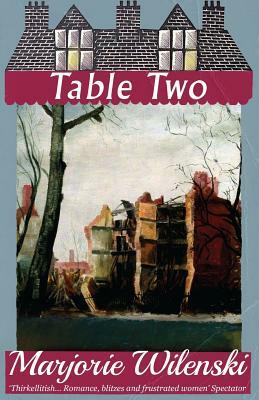
Review 2466: Table Two

One of the main characters of Table Two is more of an antihero. It’s Elsie Pearne, a bitter, disillusioned middle-aged woman who works for the Translation Office of the Ministry of Foreign Intelligence. She is intelligent and hard working, but she has a chip on her shoulder and a tendency to paranoia and doesn’t understand that it’s her own behavior that makes people dislike her.

She works at Table Two of the translation office with some eccentric coworkers. One blasts the room with cold air every morning while another can’t stop talking. A third takes delight in others’ misfortunes.

At the beginning of the novel, London has not had much of a problem yet with bombing, so the Ministry employees are simply bored and frustrated during the frequent occasions when they have to take shelter during the workday. But soon that changes.

Offsetting the character of Elsie is that of Anne Shepley-Rice, a young woman of the upper class who comes to work in the department. Elsie takes a fancy to her and takes her under her wing. But although Anne is grateful, she is much less invested in the friendship than Elsie is.

In the workplace, a plot centers around who is going to be appointed the Deputy Secretary of Table Two once the competent Mrs. Jury leaves for family reasons. The question is important because the Director, Miss Saltman, although a pleasant manager, is hopelessly disorganized, and Mrs. Jury does most of her work.

On the personal front, Anne feels she is hopelessly in love with Sebastian Kimble, her long-time friend and neighbor. Not only does Seb show no signs of wanting to settle down, but Anne’s family has lost its money, so she feels she is no longer a catch.

Although I’ve read quite a few novels set during World War II that are contemporary to that time, this is the first one that deals so much with the workplace. It is acerbically funny but also could be about a modern workplace, dealing with the same concerns of getting along with disparate people.

Elsie is not likable, and she creates her own problems, but I couldn’t help feeling sorry for her at times. Anne is sympathetic but a bit milk-toasty.

Related Posts

Mrs. Tim Gets a Job

The Halt During the Chase

Forest Silver

Review 2465: Ethel & Ernest

Ethel & Ernest is a completely charming graphic biography about the lives of Briggs’s parents from their meeting in 1928 until their deaths in 1971. The drawings are delightful, and the characters of the two emerge from the story.

Ethel is a lady’s maid and Ernest is a milkman when they meet. They marry two years later. The book shows their upward mobility starting with their purchase of a house that actually has a bathroom, to their astonishment, and continuing with their modifications and additions of appliances. Ernest is staunchly working class and pro-labor, while Ethel has pretentions to more, but through all, they are loving.

Through childbirth, World War II, and the Blitz, the privations of post-World War II Britain, and so on, the couple stick together and remain loving. The book has quite a bit of humor to it and is also touching. I was charmed by it.

Related Posts

Agatha: The Real Life of Agatha Christie

Ducks: Two Years in the Oil Sands

Britten and Brülightly

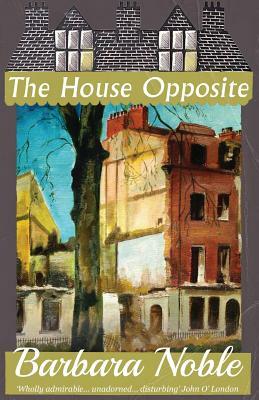
Review 2463: The House Opposite

I didn’t like the main character of The House Opposite at first. Elizabeth is having an affair with her boss, a married man with two children, and she sees his wife and children only as people who get in the way of her happiness. She’s dating a young serviceman, Bob, simply to hide her affair. She apparently referred to the boy across the street as a “pansy” in his hearing, and the remark has made him doubt his sexuality.

Nevertheless, she’s friendly to her coworkers and as she begins to help with the war—working as a warden and helping in the hospital—she begins to grow on me. As warden, she is partnered with Owen, that same boy she insulted, and it is the developing friendship between the two that is a focus of the novel—that and her own self-evolution.

One of the interests of this novel is the detailed descriptions of what it was like to live through the Blitz in London. Although other novels recount an incident or two, most of the characters in this novel have chosen to stay in London and sustain many attacks, most of them even staying in their homes and feeling a little superior to those who seek shelter.

Although Elizabeth takes a long time to recognize that her lover is a stinker, she otherwise shows herself to be quite likable. There are a lot of themes, involving Owen growing up, Elizabeth humanizing her lover’s wife and children, Owen’s father’s involvement in the black market, and so on.

Related Posts

The Midnight News

Company in the Evening

Spam Tomorrow

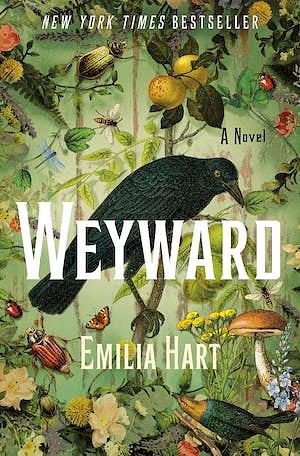
Review 2462: Weyward

Bookish Beck has a meme called “book serendipity” where she finds things in common between books she’s read recently, and I have a doozy. Not to give too much away, but this is the second book I’ve read in two weeks where women decide that the only way to deal with their abusive husbands is to murder them.

This novel is set in three time frames. In 1619, Altha is being tried for witchcraft. In 2019, Kate has discovered she is pregnant, so she has decided she must leave her abusive boyfriend, Simon. She has inherited a cottage from her Aunt Violet that he doesn’t know about and she has quietly saved some money, so she goes. In 1942, Violet has grown up isolated, not even allowed to go to the village and never told anything about her mother. At 16, she is jealous of her brother Graham, who is allowed to study interesting topics while she is forced into a traditional feminine role. She wants to travel the world and study bugs, but her father has apparently already chosen a husband for her.

Back at the cottage, Kate begins looking into her family history, into the women who called themselves the Weywards and have an unusual connection to animals.

This is an interesting novel with supernatural overtones that are fairly slight. I was interested in all three stories, although I found the outcomes of Altha’s and Kate’s stories fairly easy to guess. In this novel, I wasn’t as disturbed by the husband murder as I was in the other novel, in which I thought the wife could have easily gotten away. In any case, almost all the men in this novel are rotten to the core. So yes, I liked this novel fairly well.

Related Posts

Recipe for a Perfect Wife

The Harpy

The Family Upstairs

Review 2457: Westwood

Margaret Steggles is a girl who yearns for beauty in her life. She is a schoolteacher moving to London for a new job, and she has been taught by her mother not to expect marriage. She tends to drift into reveries when contemplating beautiful scenery, literature, or music.

A small accident brings her into the chaotic household of Hebe and Alex Nislund. She finds Hebe beautiful but rude and is disappointed by Alex, who is a famous painter, because he seems so ordinary. Their housekeeper, Grantey, learning where Margaret lives, walks her home, because Grantey is returning to her primary place of employment, where she is an old retainer of Hebe’s parents, the celebrated playwright Gerard Challis and his wife Seraphina. Grantey invites her to stop by to visit at their home, Westwood, which is just up the hill from Margaret’s Highgate neighborhood.

A famous playwright is heady stuff for Margaret, who loves Challis’s plays. Although she doesn’t drop in on Grantey, she meets Zita, a German refugee and servant from Westwood, in the hardware story trying to find someone to mend a fuse before a party begins. The store can’t help, but Margaret can. She meets Gerard Challis and is struck by hero worship.

But Gerard is a pompous, humorless, unaffectionate, and selfish man who delights in carrying on chaste affairs with beautiful young women until they become demanding, at which point he dumps them without ceremony. He has coincidentally set his eye on Hilda, who just happens to be Margaret’s best friend. Hilda has plenty of admirers, though, and isn’t impressed, even though he is clearly wealthy and has told her he is single and his name is Marcus. This rejection of course makes him more eager.

Margaret is accepted into the Challis household as a friend and visitor, especially after the Nislund house is bombed and they all move in, too. Margaret enjoys being there even though they mostly treat her as a convenient person for helping take care of Alex and Hebe’s three small children. Margaret’s friendship with Zita can also be difficult because Zita is volatile, but they go to beautiful concerts together.

Margaret has also started helping John, a coworker of her father. He has been struggling to care for his mentally challenged daughter while his housekeeper is ill.

This novel made me laugh out loud sometimes, especially at the descriptions of the plots of Challis’s plays. The introduction tells us that Challis is based on a real person. I’d like to know who! (It turns out to be some guy named Charles Morgan.) In other respects, I really enjoyed this novel about Margaret’s development in self-respect and her shedding of her romantic myopia. This is a good one!

Related Posts

A Pink Front Door

Nightingale Wood

The Swiss Summer