Review 2558: Reading Wales Month ’25! How Green Was My Valley

I didn’t intend to participate in Reading Wales Month ’25 this year, but when this novel fit into my A Century of Books project, I decided to fit it in for Reading Wales, too.

Such a lovely book this is, especially in the music of its language. It’s the story of the Morgans, a family of Welsh coal miners, told by one of its youngest members, Huw.

Huw is six when the novel begins. His family and those of the others in the valley are relatively prosperous, but there are signs that with the mine owners, profits are becoming more important than the lives of the men. Huw’s older brother Davy has been reading socialist literature and is talking about a union, but his father is against it.

It’s difficult to summarize this book because it’s full of family events, one of the first being Huw’s brother Ivor’s marriage to Bronwen. And there is the arrival of Mr. Gruffydd, the new preacher. But overarching everything for the men is the work, as pay gets lower and the valley begins experiencing periods of hunger and want.

I was as entranced by this novel as I ever was, the family so upright, god-fearing, and loyal, Huw’s experiences as he grows up. All the while, the fate of the valley is foreshadowed as Huw speaks from his 60s, returning just as his house is being destroyed by a mountain of slag.

It’s a real page-turner, not in terms of action, but for other reasons.

Related Posts

Germinal

That Lass O’Lowries

Country Dance

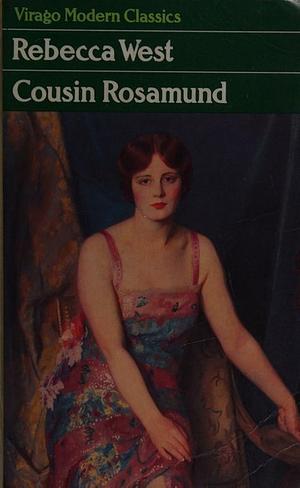
Review 2557: Cousin Rosamund

Cousin Rosamund is the third book in West’s Aubrey family series, and another was planned. I couldn’t tell when reading it, but apparently West died before finishing the second book, This Real Night, so it was finished from fragments and notes. Cousin Rosamund was assembled the same way, although West’s style was certainly captured.

The novel begins sometime after World War I. The three Aubrey girls, Rose, Mary, and Cordelia, are the only ones left of their immediate family, but they still have Nancy, their old neighbor; their beloved cousin Rosamund; and the folks at the pub on the river. Cordelia, always the odd girl out, has become less hostile since her marriage.

Cousin Rosamund comes to tell Rose and Mary that Nancy is getting married. Mary especially is upset that Nancy didn’t tell her herself, but Rosamund’s intercession, they see later, is needed so that they will not judge Oswald on sight, for he is gauche, awkward, unattractive, and a man-‘splainer. But he loves Nancy and she him, and that is all that counts.

Rose and Mary are now both successful and famous pianists, but neither is interested in marriage. Mary, in fact, seems to find the idea distasteful, although they are glad to see their friends happily married.

Inexplicably, Rosamund, who has been working as a nurse, marries one of her patients. The girls are all hurt not to be invited to the wedding, and once they meet the groom, they are horrified. His name is Nestor Ganymedios, and he is rich, extremely vulgar, ugly, and probably dishonest in his business dealings. Further, they see almost nothing of her after the marriage.

This novel is about marriage, which West examines in several incarnations. Unfortunately, it ends before we learn the explanation for Rosamund’s choice, but at least West’s intentions for the entire series are explained in the Afterword of my Penguin edition.

All of these novels are beautifully written and show a profound knowledge of music. The girls have such pure affection for the small number of people they love, yet the characters are realistically drawn.

One caveat: In this novel some characters express outdated ideas about homosexuality, and some homosexual characters in the book are not depicted positively, but it is not clear when she wrote this. The first book went to the publishers in 1956, at which point she said she planned three more, but though she finished most of the second, she seemed unable to finish this one. It ends about 1929, but her original plans were to encompass World War II.

Although it doesn’t fit the context of what I’ve discussed, I wanted to give just one quote because it’s so lucid and poetically spare. Rose has seemingly been disgusted with her long-time friend Oliver after he told her the story of his first marriage despite its end not being his fault. She is really fighting a battle with herself. She enters a room where he is.

He came toward me and I became rigid with disgust, it seemed certain that I must die when he touched me, but instead, of course, I lived.

Wow.

Related Posts

The Fountain Overflows

This Real Night

They Were Sisters

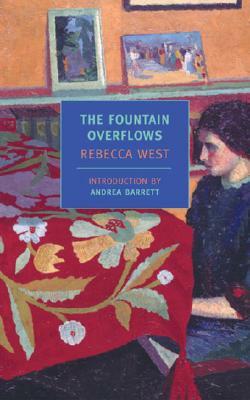
Review 2516: The Fountain Overflows

Rebecca West based The Fountain Overflows on her chaotic family life when she was a girl. I understand it is the first of an unfinished trilogy. If so, I’m interested in reading all of it.

Rose Aubrey is a daughter of an unusual couple. Her father Piers is a writer and editor whom many consider a genius, but he is a gambler who continually impoverishes his family. He has a pattern of collecting followers or benefactors who at first seem to worship him, but eventually they break with him, usually after lending him money. However, his family adores him. Her mother is a gifted pianist, formerly a famous concert performer, who is teaching Rose and her sister Mary with the expectation that they will become concert pianists, too. Their oldest sister, Cordelia, has no talent for music but doesn’t know it. She takes up the violin. Their younger brother Richard Quin is adored by all, a toddler at the beginning of the novel.

The novel covers about ten years of the family’s life. There is plenty of incident, from Mrs. Aubrey’s struggles to keep the family financially afloat to the girls’ struggles at school because they’re considered peculiar but also because they hate wasting time at school when they could be playing piano. Cordelia finds a mentor in one of her schoolteachers who encourages her in the idea that she is talented, which Mrs. Aubrey and the other girls deplore. Rose and Mary meet poltergeist activity at a friend’s house, and the family gets involved in a murder case. Also of importance is the girls’ cousin Rosamund.

It’s difficult to summarize this novel, but this family is so interesting, brilliant, chaotic, well-intended, and right behaving. I found the novel delightful.

Related Posts

Little Women

Apricot Sky

The Pursuit of Love

Review 2325: Homestead

In her research for Homestead, Melinda Moustakis incorporated her grandparents’ stories of homesteading in Alaska. Yes, in 1956, you could still receive a homesteading grant in exchange for working and making a home on the land. That was a surprise to me, too.

Lawrence Beringer is a withdrawn and hard man who has just filed homesteading documents for 150 acres of land when he meets Marie. Marie has traveled from Texas to stay with her sister Sheila and Sheila’s husband Sly with the plan of finding a husband so that she never has to return home. Within hours of meeting each other, Lawrence and Marie are engaged.

The couple live on a bus the first year while Lawrence clears land, plants a crop, and finally builds a cabin. Life is difficult, but for Marie, most difficult is understanding Lawrence, who is very withdrawn. For Lawrence has found he cares too much and must stay away to keep himself together. A miscarriage when Marie is almost at term doesn’t help, especially because Marie understands that her part of the bargain is providing children.

Conditions begin to improve, but even when things are good between them, Lawrence is aware that he’s keeping a secret from Marie.

I felt some distance from both of these characters but found the story fascinating nonetheless. It is written telegraphically, in short, sometimes partial sentences. Despite the descriptions of such activities as plowing, building a cabin, or planting potatoes, this novel is mostly a study of two distinct characters.

Related Posts

Coming into the Country

The Horseman

The Orchardist

Review 2321: Classics Club Spin Result! Weatherley Parade

Note: the name on this cover image is misspelled. The cover on the book I have looks the same but is spelled correctly.

In Weatherley Parade, Richmal Crompton takes a look at changes in society through the lens of one upper-class family, the Weatherleys. Her novel begins with the return of Arthur Weatherley from the Boer War in 1902 and ends in the midst of World War II in 1940.

The novel is written in vignettes, chapters that take up a few hours, a few days, or a few months. What with children, grandchildren, and other relatives, there are many characters. No one is completely lovable or unlikeable. They are shown with their good points and flaws.

During the years, there are many events—happy and unhappy marriages, separations, a divorce, and deaths. Among these events, there is one treatment of a child that is hard to forgive.

Among some of the characters is Aunt Lilian, a young woman in 1902 of whom her brother Arthur despairs. He can’t understand why she keeps jilting one fiancé after another. She runs with a fast crowd and seems restless and bored. At first, I thought she was just ahead of her time, dissatisfied with traditional women’s roles, but I liked her less as time went on, and she eventually turns to alcoholism.

Arthur’s two children are Clive and Anthea. Clive is a boy who thinks everything should be done properly and by the rules, which doesn’t make him a popular schoolboy or, later, schoolmaster or father, even though his intentions are good. Anthea likes to have people’s attention, which works well when she is the mother of many children but isn’t so successful when they begin leaving the nest.

The novel stops in to visit these characters and their descendants at key periods of their lives. The scope here is broad rather than particular, so we don’t get to know any characters extremely well. I thought the depiction of changing times and attitudes was interesting, but I felt fairly neutral about most of the characters.

Related Posts

Family Roundabout

The Old Man’s Birthday

Greenbanks

Review 2317: William

William Nesbitt is a successful ship builder and owner, and at the beginning of this novel, he is contemplating the successes of his life. The only thing he feels he has missed is some romance in life, his wife Kate being a very practical woman. But he experiences romance vicariously, through his favorite daughter, Lydia, whom he views as a source of light.

Kate Nesbitt is a worrier, and she has a sense of impending doom. She also is extremely conventional and I think old-fashioned, even for the time (1925). For example, she disapproves of her daughter Dora going to visit Lydia in London without her husband. Kate has a sense that something is going to go wrong with what she sees as her family’s happy and content existence.

Of course, she is being almost willfully blind. Their son Walter and his wife Violet are content, but their daughter Dora is increasingly discontented with her husband Herbert. Their daughter Mabel and her husband John are self-righteous, and Mabel likes to complain and pretend they are poor when John’s business is going well. Janet, the youngest, unmarried daughter is silent and unhappy. Later, it becomes obvious that she thinks she’s in love with Oliver, Lydia’s husband.

Then, something bad does happen: Lydia leaves Oliver for Henry Wyatt, a writer. William is still accepting of Lydia, thinking she is trying to live her life honestly, but he begins to see that Kate is more rigid and unaccepting than he realized.

This novel is an insightful and nuanced study of how a crisis can affect a family. Since Young ran off with a married man, it’s interesting to speculate how autobiographical this novel may be. I found the novel deeply interesting, with complex characters.

Related Posts

The Misses Mallett

Chatterton Square

The Curate’s Wife

Review 2289: Heat Lightning

Amy travels back to her childhood home in Michigan from New York ostensibly to recover from surgery but really to think about the situation with her husband, Geoffrey. There is tension among her relatives. The Westovers are a wealthy family, but it is 1930. Her father Alfred’s farm machinery factory doesn’t have many orders, but his brother DeWitt made some bad investments and is asking him for help.

Amy’s cousin Tom is drinking too much and soon has a more serious problem. Her redoubtable grandmother is managing her fortune but is dealing with requests for help from Tom and DeWitt.

Amy watches everyone’s interactions carefully, because she is looking for some inspiration. She feels that her generation has no code for behavior and is trying to formulate its own. She doesn’t know how she feels about Geoff and is looking for guidance in her parents’ loving interactions.

Although a lot of this novel is about family interactions, some of the dinner conversations are about scientific discoveries that came earlier than I expected, for example, about entropy. On the other hand, the idea of race expressed in the novel is not scientifically based (or perhaps language is not carefully used). Amy, for example, considers the European immigrant working class characters to be of a different race than her family and friends. They’re Italians and Swedes.

A distressing topic for modern audiences is what the family should do with Curly, the mentally disabled gardener.

Overall, I found this a thoughtful and interesting look at family dynamics.

Related Posts

The Tree of Heaven

Family Roundabout

Family Furnishings

Review 2082: Mrs. Lorimer’s Quiet Summer

Liz of Adventures in Reading announced Dean Street Press in December long after I read this book, and the press is trying to get some new books to me in time, but since this one came up in my regular review schedule, I’ll take credit for it!

Because she has been trying to talk her husband Jack into buying it, Mrs. Lorimer is disappointed to learn that a nearby home, Harperslea, has been sold. Now that all their children except Guy are married, and some of them have children, their home, Woodside, is not big enough when they all come to visit, which they are doing this summer. With all the income from her writing, they can afford to move, but Jack refuses to consider it. So, her good friend Gray Douglas, also a writer, will help her out by putting some of the guests up.

Mrs. Lorimer, who tends to be a worrier, is also worried about her son Guy. He has been mentioning a girl quite often in his letters, but Mrs. Lorimer is worried that she won’t be good enough for Guy.

At any rate, when the family shows up, Phillie seems to be the one with the problem. She begins behaving temperamentally, being rude to her husband, dashing off to Harperslea because she’s seen Miss Smellie, one of the new occupants, playing tennis and she wants a game. Then bringing Miss Smellie home to dinner and just abandoning her to her mother and Guy.

Miss Smellie is young and not very prepossessing, and they find out she hates her name, which is Nesta Rowena. So, the family dubs her Rona.

These and other family concerns enliven this charming novel. The novel cover claims the book is autobiographical, and it certainly has some likable and entertaining characters. So far, I have very much enjoyed the novels I’ve read by Clavering.

Related Posts

Dear Hugo

Susan Settles Down

Touch Not the Nettle

Review 2072: To Paradise

After reading Yanagihara’s deeply touching second book, A Little Life, I couldn’t wait to plunge into To Paradise. While reading the first section, though, I was afraid I was going to be disappointed, especially as it is of the genre speculative fiction, which is not one I’m usually interested in. But Yanagihara knows how to spin a tale.

The novel is split into three books, each set 100 years apart, starting in 1893. Although I’ve seen the novel described as a history of a family, let’s just say that names and personas repeat through the book, only with characters taking different roles. All of the books are set in New York City. They also feature strangely inert main characters.

This New York, though, is different from the one we know. After a civil war, the United States is fractured into pieces, one of which, called the Free States (in which New York resides), believes in freedom of religion and marriage between any two adults. David Bingham belongs to a family whose members are all in same-sex marriages. He is from a wealthy old family, and he is the eldest, but he has been a disappointment to his grandfather. He is subject to bouts of debilitating depression and seizures, and he has shown no interest in pursing any kind of career.

Another characteristic of the Free States is the prevalence of arranged marriages. David’s grandfather has been trying to arrange one for him, and the current candidate is an older man named Charles Griffith, whom David has at least agreed to meet. He likes Charles, but then he meets Edward Bishop, a poor musician. David falls for Edward, a man he knows his grandfather would consider a fortune hunter.

In 1993, David Bingham is a young Hawaiian who has left his home and his heritage as a native prince and with an incomplete law degree is working in a law firm. He is living with the wealthy older head of the firm, Charles Griffith, and although he loves Charles, because of this relationship, he spends most of his time with older men. AIDS is making its way through the community.

Also part of this book is a long narrative by David’s father, who is obsessed by his friendship with Edward Bishop, a Hawaiian nationalist with a dream of a return to a Hawaiian monarchy. Although this action causes a bit of a lull in the novel’s forward motion, we come to understand David’s alienation from his family.

In 2093, Charlie Griffith is a young woman living in a dangerous and autocratic society, the controls of which are designed to limit the spread of a deadly series of infectious diseases. Charlie herself is limited mentally and emotionally because she was a victim of one of these viruses when she was a child.

Her grandfather has arranged a marriage for her, but has traded a possibility of a loving marriage for a secure one with a gay male. Her husband has vowed to care for her in exchange for the appearance of a heterosexual marriage because homosexuality is becoming illegal. Then Charlie makes a friend named David.

This novel has many overarching themes, that of family, particularly relationships with grandparents, as none of the protagonists have functioning parents; sexuality in society; sickness and disease; and self-actualization. I was at first taken aback by the extreme passivity of its protagonists and in fact thought the first David Bingham was selfish and immature. Still, Yanigihara’s narrative pulls you in, and I found this novel completely absorbing. Some readers will be disappointed by Yanagihara’s decision to leave endings open, but I think that’s one of the things that makes this ambitious novel more interesting.

Related Posts

A Little Life

The People in the Trees

American War

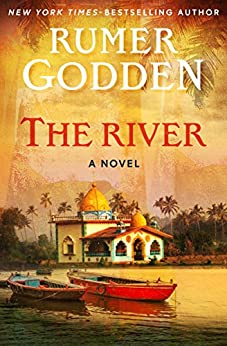
Review 1650: The River

Harriet and her family live along the river in a town in India. Harriet is dismayed at the changes in her sister Bea, who is becoming a young lady and is no longer fun to play with. Her brother Bogey spends his time looking at insects and animals in the garden. Victoria is just a baby. Harriet spends some time each day writing in her book that she keeps hidden away, and she also is fascinated by her parents’ guest, Captain John, who was injured in WWI. Captain John, however, likes Bea best.

This little novel has a plot, but it is mostly atmospheric and descriptive, of the garden and house, of life on the river. I was just a short way in when I realized that I had seen the movie based on it by Jean Renoir. I said, “If there’s a snake, I’ve seen this.” There was a snake.

The semi-autobiographical novel is about Harriet waking up from childhood and complete self-involvement and learning to become a writer. It is beautiful and touching.

My Virago Modern Classics version also included two short stories, “Red Doe,” about Ibrahim, a bakriwar nomad who is on the way to another encampment to claim a wife, and “The Little Black Ram,” about Jassouf, a bad boy who is tamed by being give a black ram to care for.

Related Posts

Coromandel Sea Change

A God in Every Stone

Sea of Poppies