Review 2660: Little Boy Lost

When World War II broke out in France, Hilary Wainwright left his pregnant wife Lisa in Paris to rejoin his regiment, thinking that the British would be fighting in France. He only saw his son, John, once, shortly after he was born. Later, he heard that Lisa, who was working with the resistance, was dead. He had no idea what happened to the baby, but he once received a visit from Pierre Verdier, the fiancé of Lisa’s best friend, Jeanne. He reported that Lisa had given the baby to Jeanne shortly before she was arrested, but that now Jeanne was dead, and he did not know what happened to the baby.

The war is over, and Pierre returns. He tells Hilary he wants to look for John for him. Hilary is now ambivalent about finding his son. When Lisa was killed, he envisioned getting comfort from raising his son, but it has been five years. Now he’s more worried about how to tell whether any boy they find is really his.

Pierre eventually traces a boy who might be John to a Catholic orphanage in Northern France. Hilary goes to Paris to meet the people Pierre traced. He has always loved France, but post-war, the country is in dire straits. Hilary travels to the northern town to try to determine whether the boy, called Jean, is his.

Frankly, I disliked Hilary pretty much all the way through this novel. The Afterword says that it takes Hilary until the last few pages to know his own mind, but in fact, he uses every excuse to try to disassociate himself from responsibility. When he thinks he would be betraying Lisa if he accidentally took home the wrong boy, for example, it seems clear from what is said about her that she would have taken Jean as soon as she saw his plight.

Small spoiler—when it seemed Hilary was going to use his lust for an obvious slut to break his promises, I was really disgusted.

That being said, I still enjoyed reading this novel, which is touching and insightful into human weakness. It also provides a post-war view of France that is bleak and that I hadn’t read of before.

Related Posts

The Château

To Bed with Grand Music

The Victorian Chaise-Longue

Review 2572: Sarah’s Key

In 1942, Sarah Starzynski is 10 years old, a Jewish child in Paris. There have been rumors of a raid on Jewish homes, but usually the French police take only the men. So, Sarah’s father hides in the basement while Sarah, her mother, and her four-year-old brother go to bed as usual.

But this time, the French police are there to take everyone. They don’t seem to know about her brother, so Sarah locks the little boy in his secret place, thinking she will come back soon and let him out. In the street, her mother has hysterics and screams her father’s name so that he comes out. All of them are taken to the Vélodrome d’Hiver, ultimate destination Auschwitz.

In 2002, Julia Jarmond, an American journalist who lives in Paris, is assigned to write an article about the 60th anniversary of the infamous roundup at Vel’ d’Hiv’, as the velodrome is known. Julia has never heard of it before. Aside from the ultimate destination, the Vel’ d’Hiv’ is known because, like with Hurricane Katrina, thousands of people, mostly women and children, were there for days without food, water, or sanitary facilities.

As part of her research, Julia asks French people if they know about this story. Most of them claim not to, but Julia learns from her father-in-law, Edoard, that the flat her husband Bertrand has been renovating became a possession of the family after the removal of its Jewish family on the night of the Vel’ d’Hiv’. In fact, that family was the Starzynskis.

The novel follows Sarah’s journey for a time, alternating with Julia’s story, as her personal life becomes entwined with her desire to find out what happened to the Starzynskis, particularly Sarah, who was not recorded as having died in Auschwitz. After about half the book, Sarah’s narrative stops.

I know I never read this book before, but some plot points seemed familiar, so perhaps I saw the movie. The plot was compelling enough, but I still had some issues with it, particularly that I couldn’t imagine that after a while a four-year-old child wouldn’t have made enough noise to be found in almost any apartment building.

I had more problems with the writing, though, particularly of Sarah’s sections, and the characterization. I think Sarah’s sections are written in a way to suggest childishness—the sentences are short, most of them in a subject-verb-object order that results in choppiness. Her reactions are naïve, much more so than I can imagine from any Jewish child of ten at that time and place. And ten-year-olds can have as complex thoughts as adults. She seemed, especially at first, more like a much younger child.

The writing is better for Julia’s parts, but there are still inapt word choices and no very strong use of language. It’s mediocre. For example, a glass of limoncello is described as “a beautiful yellow.” Ho-hum.

I felt the novel was interesting enough to finish, but just barely.

Related Posts

The Oppermanns

The Postcard

Suite Française

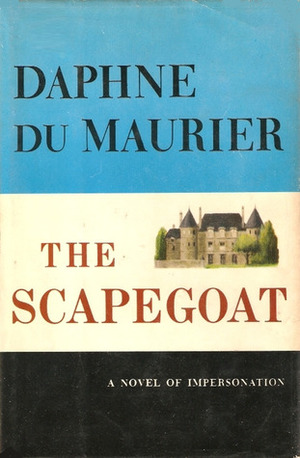
Review 2542: The Scapegoat

It’s been some years since I read du Maurier’s The Scapegoat, so when I saw it filled a hole in my A Century of Books project, I took it down from the case and placed it on my project pile. I find I remembered the plot fairly accurately.

John, an English lecturer in French history, is finishing his yearly vacation in France. This year, he feels dissatisfied with his life. He has no close connections and lives alone. He suddenly feels a lack of purpose in life and decides to drive to a monastery. But first he stops for the night in LeMans.

There, he bumps into a stranger who looks exactly like him. This man introduces himself as Jean and invites him for a drink and then to spend the night at his hotel. When John awakens, he is in the other man’s room with his things. The man is gone and so are all John’s own things, including his car. John finds a chauffeur has arrived to collect him in the new identity of Jean, Comte de Gué. He realizes that he has no proof of his own identity to convince the police, so he goes along.

At the Comte’s home, no one suspects a thing. He must guess who all these people are, but when he makes mistakes, he finds that no one expects him to behave nicely. His counterpart is apparently prone to cruel jokes.

John finds himself slowly becoming involved in the lives of the Comte’s family, who have secrets and problems from events during World War II. In addition, the family fortunes depend upon the Comte’s pregnant wife bearing a boy—or dying.

As usual with du Maurier, there aren’t very many unshadowed characters in this novel. It’s quite dark despite John’s intentions to do good for the family. The plot is interesting and involving, though.

Related Posts

Jamaica Inn

Rebecca

Daphne Du Maurier: The Secret Life of a Renowned Storyteller

Review 2514: Germinal

My copy of Germinal seems to be a special edition, released in 1942 by Nonesuch Press, and perhaps part of a book club, because inside its cover is a little insert that says it is part of a series called the Ten Great French Romances. Now, I’m not so sure of the other books, although some of them don’t strike me as Romances (not even using the original definition), but poor Zola would be rolling over in his grave. Why? Because he was basically the founder of a new kind of literary movement for his time that rejected Romanticism. It was called Naturalism and is supposed to be based in science and logic and takes an impersonal stance, observing but not commenting. It also takes determinism as one of its tenets—that is, a character’s fate is determined at the get-go.

One little personal comment before my review—I received this novel as a Christmas present from my brother after unthinkingly commenting that I had never read any Zola. After I started reading it, I realized there was a reason for that.

The novel begins and ends with Étienne Lantier. He is an engine-man who has lost his job after a dispute with the foreman, and he has been traveling north looking for work. He is starving and doesn’t expect to find any.

It’s 1866, and the revolution 70 years before has helped the middle class but not the poor. Étienne travels from place to place but finds nothing.

He meets an old man nicknamed Bonnemort whose family, the Maheus, has worked for the Montsou Mining Company for generations. He ends up hanging around one of the Montsou pits, the Voreau, and so is on hand when Maheu, Bonnemort’s son, learns that his best putter has died. (I never figured out what a putter is, but now I see it’s someone who brings empty containers up to the surface and brings filled ones down to the bottom.) Étienne has just walked off, but Maheu sends his daughter Catherine after him to fetch him back and gives him a job. (Yes, women worked in the mines, too.)

Étienne is a little better educated than the miners and has been writing to a representative of Workers International. Soon, he is talking about half-understood principles of socialism and unionism to the mine workers. The Maheus, whom he takes a bed with, are barely able to feed themselves on the wages of Maheu, Catherine, Bonnemore, and Zacharie, and in fact Zacharie is being prevented from marrying because his family needs his wages. Then the unexpected demand for repayment of a debt begins a period of starvation.

Although the novel is about an actual 1866 mining strike, a strong subplot is about Étienne’s relationship with Catherine. He at first takes her for a boy, she is so young, but because a man named Chaval is pursuing her, Étienne assumes she is loose, as most of the mining women are, so they start off badly. (Modern audiences may be upset, as I was, when they find that Catherine doesn’t enter puberty until long after she is involved in a sexual relationship with Chaval.)

After a period of hardship for all the miners, the company decides on a new policy of timbering that will essentially cut the miners’ wages. Étienne becomes their leader when the miners begin negotiations to avoid a strike.

This novel is unremittingly grim. Zola digs you right in to every detail of the miners’ lives and then includes a couple of passages that contrast this with what the middle class mine managers and owners are doing. For example, the village has just emerged from a period of starvation when Zola describes a several-course dinner party at the home of Hennebeau, the mine manager. Later, when the miners are destroying the mines, Hennebeau is too wrapped up in the discovery that his wife is unfaithful to pay much attention.

Although this novel is considered a very important work in French literature, naturalism is not for me. It is too brutal.

Related Posts

Manga Classics Les Misérables

Little

The Black Count: Glory, Revolution, Betrayal, and the Real Count of Monte Cristo

Review 2509: The Château

I found The Château when I was looking for a book to fill the 1961 hole in my Century of Books project. Although the blurb calls Maxwell “one of our greatest practitioners of the art of fiction,” I hadn’t heard of him before.

Harold and Barbara Rhodes, a young American couple, have taken one of the first opportunities of Europe reopening for tourists after World War II to visit France in 1948. Although they have some other adventures first, the bulk of the novel concerns the two weeks they have booked at a château, where they will be having meals with and visiting with the family. They made this decision to try to improve their French.

Although they meet mostly with kindness, they find post-war France difficult to travel in. The destinations they have in mind take several trains and sometimes other modes of transportation to get to, and they have brought too much luggage. Sometimes they are recommended not to go to a destination they planned. They end up going to the château early.

At first, nothing seems to be going well. No one meets them at the station, and although their room, when they finally see it, looks nice, it is cold and the fireplace is blocked. They were promised a bathroom and they get one but with only cold water from the sink and none at all from the tub, and the toilet is on another floor. The bicycles they were promised don’t appear. Moreover, their host, Mme. Viénot, seems cold and distant and their French isn’t up to the conversation. It is clear that the family is of the upper echelons of society, but now they are broke.

The Rhodes take a break of three days in Paris, and after that, they find things improving. They meet guests and younger family members whom they like very much, their French has improved, and Mme. Viénot seems happy to see them.

This novel takes a gentle, sometimes amusing look at the differences between the French characters and the Americans—Harold especially beaming good will but sometimes putting his foot in it—basically culture clash and a clash of social classes. It also describes the post-war conditions in France. I enjoyed reading the novel very much. Its descriptions of landscapes are lovely. It is both appreciative and ironic.

Related Posts

The Postcard

Wonder Cruise

The Flight Portfolio

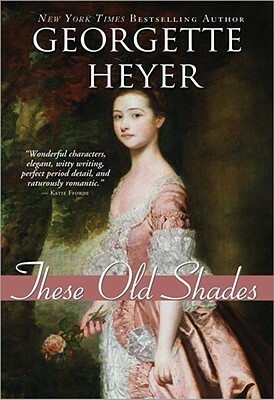
Review 2482: These Old Shades

In trying to fill some of the holes in my Century of Books project, I noticed that These Old Shades, which I haven’t read for many years, would help. This novel is Heyer’s first, and it is also the first of four about the Alastair/Audley family. (The others are The Devil’s Cub, Regency Buck, and An Infamous Army.)

Late on a mid-18th century night, His Grace of Avon Justin Alastair is walking through a Paris slum when a boy collides with him. The boy is fleeing his brutish brother. On impulse, the Duke buys the boy, but it is clear he is up to something. He takes the boy home and makes him his page.

The boy, Léon, has fiery red hair and dark eyebrows. The Duke has noticed this resemblance to his enemy, the Comte Saint-Vire, and takes Léon around to embarrass him. However, he begins to have other thoughts about the resemblance because of Saint-Vire’s reaction.

Soon, though, it is revealed that Léon is really Léonie, disguised as a boy since she was 12. The Duke takes her to England and leaves her with his sister while he arranges a chaperone, announcing that he intends to adopt her as his ward. Léonie is starting to enjoy being a girl when she is kidnapped by Saint-Vire.

This is an adventurous, amusing romantic novel. The Duke is enigmatic and Léonie is charming and feisty. Although the Duke has a bad reputation and is known as Satanas, as his relationship with Léonie develops, he becomes more human. Some of the interviews between Saint-Vire and Avon struck me this time as a little unsubtle, but overall, it is a great start to Heyer’s career and I enjoyed it very much.

Related Posts

Regency Buck

An Infamous Army

The Nonesuch

Review 2331: Skeletons in the Closet

A quote by Frederick Méziès on the cover of my edition of Skeletons in the Closet says, “Writing so dark it gives a new meaning to the word noir.” The novel was written in 1976, a bit after the height of French film noir, and it is certainly violent, although probably not as shocking to modern readers.

Eugene Tarpon is a private detective whose office is next to his bedroom. He only has one client when one of his contacts in the police department sends him an old lady, Mrs. Pigot. Her daughter, Philippine Pigot, has disappeared. She left for work one day and never arrived. Further, she is blind.

Tarpon’s contact, Coccioli, has strongly hinted that he shouldn’t actually look for Philippine, but he does. The next day, Mrs. Pigot arranges to meet him in a public square, and she is shot to death before his eyes. Soon, people are trying to kill him.

This novel is dark; nevertheless, there is a certain lightness and humor about it. Manchette is credited with redefining the noir genre for social criticism, but although there is certainly corruption going on, that theme is not so stressed in this novel.

I received this book from the publishers in exchange for a free and fair review.

Related Posts

The Disappearance of Adèle Bedeau

The Blank Wall

The Blunderer

Review 2324: Wonder Cruise

Just a little note to say that my biography index page has been selected as one of the Top 30 Biography Blogs on the web by Feedspot. I received a nice email from the founder, Anuj Agarwal, informing of this.

I don’t usually read romance novels, but a few reviews made Wonder Cruise sound like it was more than that. I received the book, to see that it was being marketed as a romance. However, it turns out to be an untraditional representative of the genre.

Ann Clements is a naïve and inexperienced 35-year-old. Before taking a tedious job in a London office as a typist, she lived with her brother, a strait-laced and judgmental rector, and his dull family. Ann dresses dowdily and goes back and forth between her boring job and her dreary lodgings.

Then she wins a sweepstakes—half of a six-hundred-pound winnings from a bet on a horse made by her office mate. All that morning something had been making Ann think of a Mediterranean cruise, so before she loses her nerve, she books passage, after encouragement of her boss.

Her brother Cuthbert vociferously disapproves and even says Ann should give the money to her niece. When Ann is finally on board, she finds herself to be afraid of almost everything. She is seasick, has brought the wrong clothes, and is afraid to do something wrong. Her dining mates are dreadful, but on her first night she meets Oliver Banks, a man she met briefly the day she won the sweepstakes.

This novel mostly dwells on Ann’s self-development—her emergence from a timid woman who thinks she is already old and past chances of happiness to someone who is much more open and wants a chance at happiness.

It’s hard to explain why this novel is not a standard romance without giving too much away. I’ll just say that it takes some unexpected turns.

Related Posts

One Afternoon

It Ends with Revelations

Yoked with a Lamb

Review 2271: The Child and the River

Here is my lone contribution for Novellas in November, but it’s a great one!

Pascalet grows up free on a farm in southern France, but his parents always tell him to stay away from the river. Of course, that means he is drawn to it, so while his parents are away and he’s in the charge of his aunt, he sneaks down to the river early in the morning.

There, he scrambles into a boat at the edge of the water and listens and looks, going into a sort of enraptured trance. Next thing he knows, his boat has drifted into the current. He is helpless, with no oars, until the boat comes aground on a small island.

On the island he spies on a gypsy camp, and there he sees a boy brought in and tied up. He waits for night, and when everyone is asleep, he cuts the boy free and they run away, stealing the gypsy’s boat. Pascalet and his new friend, Gatzo, begin living along the river.

This is a gorgeous, dreamy novella that fills your mind with the sights and even smells of the river. It is so evocative and beautifully written. The life along the river is minutely observed. It’s a lovely book.

I received this book from the publishers in exchange for a free and fair review.

Related Posts

Once Upon a River

The World My Wilderness

Dark Enchantment

Review 2225: The Postcard

Although sold as fiction, I believe that The Postcard is very much autobiographical and historical, the story of the fates of Berest’s relatives and her own search for an identity.

The search begins with a postcard, one that arrived years before but that Anne’s mother Lélia shows her much later. It is an old postcard containing only the names of Anne’s grandmother’s parents, sister, and brother. All of them died in Auschwitz. The postcard is addressed by another hand to Lélia’s mother Myriam, but at Lélia’s address, where Myriam did not live. It is a mystery. Is it a threat? A reminder?

Myriam has never spoken about their family’s past and now she is dead, so both Lélia and Anne have grown up knowing very little about their family, Ephraïm and Emma Rabinovitch and their children, Noémie and Jacques. Since receiving the postcard, though, Lélia has built up an archive of documents about the history of the family up to when they were deported by the French government. The first part of the novel covers this history.

The further sections of the novel are about Anne’s attempts to discover who sent the postcard and what happened to Myriam. Why was she the only one missed, and what did she do during the war? And finally, how has her family’s experience affected Anne’s own life?

This is a deeply engaging story and an important one, I think. Although the Holocaust is long past, its effects are still reverberating.

Related Posts

Night

The Invisible Bridge

The Zone of Interest