Day 999: Beloved

Cover for BelovedOn some occasions after reading a novel, I find my thoughts about it are not clear. Did I enjoy it? Did I completely understand it? Did I think it was powerful or overpowering? This doesn’t happen very often, but these are my thoughts after reading Beloved.

The novel, when looked at straightforwardly, is a ghost story. Sethe escaped from slavery with her children, although the plan went wrong. Most of the other escaping slaves were killed or captured, including her husband, and Sethe had to come later, giving birth to her daughter Denver on the way.

These events happened 16 years ago, but shortly after Sethe made it across the Ohio River, Schoolteacher, the despotic overseer, came after her. To keep her children from being dragged back into slavery, Sethe decided to kill them. She was stopped, but not before she slit the throat of her daughter, Beloved. (Her name isn’t really Beloved, but that’s what’s on her tombstone; we don’t know her name.)

Sixteen years later, Sethe’s house in Cincinnati, referred to as 124, is haunted. Sethe lives there with Denver, her mother-in-law having died and her sons having left. Denver is a sulky, needy young woman who craves her mother’s attention, but that is all for the ghost of her baby.

The action begins when Paul D. arrives. Paul D. had been one of the young male slaves at Sweet Home, where Sethe was a slave. He has been wandering since the war. When he realizes the house is haunted, he drives the ghost out and lives with Sethe as her lover.

But Beloved comes back, now embodied as a girl the age she would have been if she’d lived. Denver and then Sethe become enslaved to her.

But is Beloved a ghost or just a young girl damaged by slavery? Someone in the text makes a reference to a lost girl enslaved since a child, and I think that’s who Beloved is meant to be. Denver and Sethe have just mistaken her from their own needs. There is only one chapter where we see things from Beloved’s point of view, and it is incoherent.

That is what I think, but I was confused because everyone else seems to take the novel as a straight ghost story and of course, an indictment of slavery. I finally ran across a reference to an article by an academic who believes the same thing, but I never found the original paper.

In any case, Beloved is an unusual work. It uses an unusual combination of storytelling techniques, some of which I enjoyed and some I did not. It is powerful, depicting emotions and events that we can barely comprehend. Did I like it? I don’t know. Does it make me think? Yes. Do I understand it? Not completely.


Related Posts

The Known World

The Good Lord Bird

I Know Why the Caged Bird Sings

Day 986: The Lost Boy

Cover for The Lost BoyI’ve been inconsistent in reading Camilla Läckberg’s Fjällbacka series, mostly because I realize they are not actually very well written. Läckberg still has trouble producing anything resembling snappy dialogue, and her writing is cliché-ridden. (At least her characters have stopped slapping their foreheads.) Still, she manages to come up with some fairly inventive plots, and her main characters, Patrik Hedström and his wife Erica Falck, are likable and appealing.

I liked The Lost Boy a little less than I have some of Läckberg’s other novels, even though it features ghosts, which is usually a plus. I think one reason is that a major plot point is telegraphed by the title. What is supposed to be a big surprise at the end was something I guessed very early on.

Nathalie has undergone some traumatic experience. We don’t know what it is, but it involves blood. She has fled with her son Sam to an island off Fjällbacka that is owned by her family. It is called Gräskär, but the locals call it Ghost Island.

Nathalie’s high school boyfriend Matte has also returned to the area. When he hears Nathalie is there, he takes a trip out to the island. Nathalie feels reassured by his presence, and they spend the night together. When she awakens, he is gone. A few days later, he’s found shot to death in his apartment.

Patrik is back to work after health problems and the funeral of Erica’s sister Anne’s baby. Erica is coping with newborn twins, Anne’s own children, and Anne’s depressed withdrawal.

In Denmark a woman is in hiding from her abusive husband. Slowly, the police discover possible links between Matte’s previous work for a women’s refuge and his murder. But then, why is a bag of cocaine in the trash outside his apartment?

link to NetgalleyAlso, there is a huge new spa soon opening in town. There is some sort of scam surrounding this project. Matte was the project economist and had some questions about the finances.

Again, I liked this novel more than I wanted to, especially as the lives of several of the regular characters seem to be descending into soap opera. Still, Läckberg hid the identity of the murderer from me until late in the novel.

This book has strong themes about the abuse of women. In fact, that has been a theme since early in the series, when Anne was married to an abusive husband, but it is even stronger here.

Related Posts

The Ice Princess

The Preacher

Roseanna

Day 973: The Lie

Cover for The LieBest Book of the Week!
Helen Dunmore has this thing she does. I’ll be reading along, moderately interested, and then at the end of the novel she’ll do something that makes me realize the novel is much better than I first supposed. She does this again with The Lie.

Daniel Branwell has returned to his home town in Cornwall from World War I. A dying old lady took him in when he arrived home, and he cared for her until her death. He doesn’t want to mix much with other people, though. He is traumatized from the war and particularly by the death of his friend Frederick, who is haunting him.

As Daniel struggles to make a living, his memories alternate between those of the war and of his childhood friendship with Frederick. Although Daniel was bright and did well in class with an eidetic memory for poetry, he was forced to drop out of school at the age of 11. Frederick, as the son of a wealthy man, was being prepared for better things. Still, even as young men, when Frederick was home they were nearly inseparable.

Daniel meets Frederick’s sister Felicia, now a widow with a young daughter. Their mutual grief brings them together, and they begin spending time with each other, he helping her around the house or both of them visiting the sites of his adventures with Frederick.

But Daniel has told a lie about something. Because of it, he is aware he’s being misunderstood by the village.

This is a powerful novel that I may not have looked for were it not for my Walter Scott Prize project. Although I have not enjoyed all of the short listed books, this one sneaked up on me.

Related Posts

Exposure

The Greatcoat

No More Parades

Day 962: The Red Queen

Cover for The Red QueenThe Red Queen is a novel split in two. The first half is a narrative written by the ghost of an actual 18th century Korean princess, Lady Hyegyŏng. The second half follows a modern British academic, Dr. Barbara Halliwell.

“Lady Hong” relates her difficult life as the girl chosen at the age of nine to be the bride of Crown Prince Sado. This role is already a perilous one, and she and her parents are terrified. It is made more terrifying, though, by the fraught relations between Prince Sado and his demanding father King Yŏngjo.

When it slowly becomes apparent that Prince Sado is mentally disturbed and somewhat dangerous, his wife’s life becomes even more one of stress and fear. The princess’s story eventually builds to the climax of her husband’s horrible death.

The Crown Princess’s story is interrupted occasionally by the comments of her ghost, who provides an acrid note informed by writings of thinkers like Voltaire and Freud. Obviously, this ghost has been doing a little reading since she died. I found these interjections odd, but they did little to disturb the flow of what was a fascinating story.

Then I got to Barbara’s half of the book. Barbara has received the princess’s memoirs anonymously and takes them along with her on a trip to an academic conference in South Korea. The ghost makes clear that she sees Barbara as a host whose purpose is to extend her legacy. Barbara is fascinated by the memoir and goes to visit some of the settings of the princess’s life, but she is also engaging in an affair with a famous Dutch sociologist who is the keynote speaker for the conference.

Here is where I thought the narrative broke down. Despite the occasional presence of the ghost and some similarities of taste and experience between Barbara and the ghost, I felt that there was only a flimsy connection between the two halves of the novel. And I wasn’t really interested in Barbara and her fascination with Jan Van Jost.

Additionally, the second half is narrated by some sort of pixie-like guardian angels who have no apparent role. What’s wrong with third-person limited? She’s writing in that anyway with an occasional lapse into second person plural. This seems like a pointless device that becomes even more wink-wink when Drabble introduces herself as a minor character. So, with a little sleight-of-hand, the novel becomes postmodern, but it does not contain any of the cleverness of technique and approach of other postmodern novels I’ve read. This novel is introduced as a tragicomedy, but I didn’t find it comic. Whimsical, perhaps, ironic, certainly.

Related Posts

The Thousand Autumns of Jacob de Zoet

Empress of the Night

The Orphan Master’s Son

Day 960: Silence for the Dead

Cover for Silence for the DeadKitty Weekes has been living a catch-as-catch-can life ever since she fled from her abusive father four years before. To support herself and hide from her father, she has taken on several different identities the past years. Now she has forged credentials as a nurse to get herself a job at Portis House, an asylum on the coast of England.

When Kitty arrives at the isolated mansion, separated from the village by a bridge, Matron sees through her right away. But the hospital is understaffed, so Matron keeps Kitty on probation. The mansion was once beautiful but now it is forbidding, with sealed off areas that are crumbling. The patients are all ex-servicemen suffering from shell shock, depression, and other conditions related to the war. The routines of the place seem unnecessarily severe and the budget too limited. Then there is the mysterious Patient 16, whom only a few people are allowed to see.

Kitty soon finds herself working harder and longer hours than she was contracted for. But she also feels something is wrong. There are certain places around the house that don’t feel right. One night she sees a bare-chested man walking around when all the patients are accounted for. Another time when she is outside the house, she sees a unknown woman and when she goes to investigate, is knocked down.

Then she meets Patient 16 and is shocked to find he is Jack Yates, a hero of the war. Some information she gains from a previous nurse makes her wonder what happened to the family that owned the house, who simply vanished. When she and Jack begin exchanging information, they realize something strange is going on.

Silence for the Dead is another supernatural suspense novel from Simone St. James. It is quite good at developing an atmosphere of foreboding. Kitty is a plucky heroine, and this is another enjoyable light read from St. James.

Related Posts

The Haunting of Maddy Clare

The Other Side of Midnight

An Inquiry into Love and Death

Day 927: The Casebook of Carnaki the Ghost Finder

Cover for the Casebook of CarnakiW. H. Hodgson’s sleuth Carnaki is in answer to the fad for detective stories that came about after the success of the Sherlock Holmes stories. But Carnaki is not a regular detective. He is a psychic detective who investigates hauntings. The Casebook of Carnaki the Ghost Finder is a collection of nine Carnaki stories.

These stories all follow the same format. Carnaki summons a group of friends to his house for dinner. He speaks very little before and during dinner and will not talk about what he’s been doing. After dinner, he relaxes into his favorite chair and relates his latest case. This format is very common in earlier genre mysteries. Unfortunately, it removes some of the immediacy of the story.

These stories are straight wonder tales. There is no attempt made at characterization, of Carnaki or anyone else. The stories are simply meant to amaze and puzzle and so have more in common with earlier gothic stories than with Sherlock Holmes. The puzzle of whether the mystery will be of human or occult causes is probably the most interesting part of the stories.

I actually found one of these stories to be quite chilling. That was “The Gateway of the Monster.” In that story, Carnaki is called to investigate the Grey Room in a very old house. Although the door of the room is locked every night, it is slammed continually all night long. Each morning, the bedclothes are found jerked off the bed. Since three people were killed there years before, no one has slept in the room.

Unfortunately, Hodgson cheats by waiting until the end to tell us a key piece of the story. Also, this haunting, along with some of the others, runs more along the lines of something like The Castle of Otranto than a more modern ghost story, and I find things scarier that are more feasible.

In “The Thing Invisible,” Carnaki is summoned to figure out how the butler could have been struck with an ancient dagger when there was no one around him and he was in full view of everyone. This story is marred, too, because one person there understood what had happened and would never have summoned Carnaki.

Still, this book is full of haunted castles, spectral horses and pigs, a ship pursued by strange weather, and other wonders. It can be quickly read and should offer most folks some pleasure on a rainy afternoon (or a dark and stormy night).

Related Posts

This House Is Haunted

The Necromancer

The Castle of Wolfenbach

Day 898: An Adventure

Cover for An AdventureAn Adventure is the account by two English woman academics of a couple of supernatural events during a visit to Versailles, published under pseudonyms. The women had the first experience on August 10, 1901, and the second was experienced by one of the women alone the following year. The two women claimed not to have spoken together about the first event until three months later, when they agreed that the Petit Trianon, where the first event occurred, must be haunted. At that time, they decided to write down separate accounts of the incident.

The first section of the book is each woman’s account of the incident. On a visit to Paris, they went to Versailles and decided to stroll the grounds looking for the Petit Trianon, which was a favored place of Marie Antoinette. Although their accounts disagree in some respects, both women reported seeing the same landscape and layout of buildings and some of the same people dressed in antique costumes. One of the women saw a lady painting in a white dress. They also reported an oppressive atmosphere.

On a subsequent visit, “Frances Lamont” heard people speaking as if they were walking on a path nearby and music from the 18th century. Later, the women were unable to locate many of the places they had visited on the previous visits. These events led them to decide they had observed supernatural visits of Marie Antoinette and some of her servants and courtiers. They also learned that Petit Trianon was rumored to be haunted on August 10, which is the anniversary of a pivotal date in French revolutionary history.

The second section of the novel relates the discoveries that the women made. It describes the differences between the landscape of the area at the time of the event and in the 1780’s. It details the women’s research to explain the costumes of the people they saw and the events witnessed.

The final section of the book contains the women’s explanations of the events as a combination of memories in the mind of Marie Antoinette as she and her family were cooped up in a small room on the day of August 10, 1789.

The most interesting part of the book is the first section, containing the women’s accounts of the events. The section about their investigation is harder to follow and difficult to visualize. Subsequent reading I’ve done on the notorious event contained allegations that their sources validating some of the information they researched were questionable.

The final section seems much too suppositional for easy belief (if you can believe any of it) as well as repetitive, revisiting much of the information from the second section. Whether you believe something supernatural happened to these women or whether their memories were influenced in the time that elapsed after the event or even that they invented the whole (which does not seem to be a general assumption), this is a mildly interesting account that was controversial when published, even during a time that was credulous about the supernatural.

Related Posts

Giving Up the Ghost

The Séance

The Sun King

Day 889: An Inquiry into Love and Death

Cover for An Inquiry into Love and DeathFor light reading with a supernatural twist, I’m developing an affection for the novels of Simone St. James. Her romantic suspense novels are set in post-World War I England and feature spunky heroines who get embroiled in mystery, always with a supernatural element.

Jillian Leigh is an Oxford student in one of the few colleges for women. She is summoned away from her studies with news that her Uncle Toby has died. Her parents expect her to take care of his affairs, saying that her father is unable to leave his work in Paris.

Jillian hasn’t actually seen her uncle since her parents broke with him when she was 14, for reasons she does not know. The one thing she knows about him is embarrassing, that he worked as a ghost hunter. Other than that, she remembers him as a shy, quiet person who was kind to her.

She is appalled, however, to find she is expected to identify his body. He was staying in the seaside village of Rothewell, thought to be haunted by the ghost of a smuggler, when early one morning he fell off a cliff.

Jillian stays in the house where Toby lived, an isolated cottage nearest the activities of the purported ghost. Almost immediately, odd things begin happening. She finds things in odd places, a book in  the stove, for example. At night she hears what she thinks is a tree scratching her window, but in the daytime she sees there is no tree anywhere near it. Then Scotland Yard Inspector Drew Merriken arrives and tells her that Toby may have been murdered.

After reading a few of St. James’s novels, I have no doubt there will be a romance with the inspector, but her combination of ghost story and mystery is truly suspenseful. I found this to be another enjoyable romantic suspense novel.

Related Posts

The Haunting of Maddy Clare

The Other Side of Midnight

The Winter People

Day 801: Wolf Winter

Cover for Wolf WinterBest Book of the Week!
It is 1717. A few days earlier, Maija and her family arrived at their new home on the side of Blackåsen Mountain in the Lapland area of Sweden. They moved away from Finland because Maija’s husband Paavo, formerly a fisherman, began to see dead men in the water. But here on the mountain he is ineffective and frightened.

Maija’s daughters Fredericka and Dorothea are out with the goats when they find the body of a man. Although the nearby settlers are quick to claim an animal attack, it is clear to Maija that the man, Eriksson, was killed by a person using a lance. She has already felt an unease on the mountain and believes they must find the murderer. Unfortunately for the search, Eriksson seems to have been disliked by all.

Maija’s family has had some experience with the older ways, even though they are forbidden by the church. Fredericka, however, was being instructed in them by her grandmother without her mother’s knowledge. Fredericka finds herself being haunted by Eriksson, who wants her to find his murderer, and tries to seek help in the supernatural from the Lapps.

Another important character is the new priest for the region. He comes to visit the area and tries to help with the investigation. At first, he seems cold and unready for a position in such a wilderness. But he is actually bewildered. He was a court priest and a friend to the king until he was abruptly sent away from court.

When the snow comes early and kills the harvest, Paavo decides to travel to the coast to earn some money. Maija is left to struggle through a particularly harsh winter with the girls. There are wolves on the mountain, and some of the settlers believe the mountain itself is evil. No one has found Eriksson’s killer, but Maija is still looking.

link to NetgalleyThis novel creates an atmospheric, fully realized world that captured me from the first words. Although it is centered around a mystery, it is just as successful as a historical novel, with a touch of the mystical, set in an unusual place and time. You can easily imagine the cold and hardships. This novel is excellent.

Related Posts

Harvest

The Kept

Giants in the Earth

Day 798: Ghostly

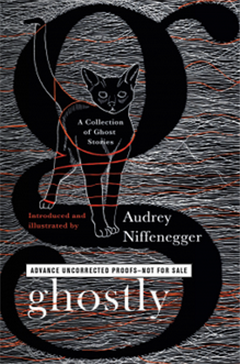
Cover for GhostlyIn honor of the season, I’m slipping in Ghostly, a new collection of ghost stories edited by Audrey Niffenegger. The stories are quite varied, some rather old, some new, some eerie, some funny. I have only read one of them before, “August 2026: There Will Come Soft Rains” by Ray Bradbury. This story, strictly speaking, is more science fiction but works well as a ghost story. It is certainly haunting.

My favorite story in this collection is a subtle one by Edith Wharton, “Pomegranate Seed.” Charlotte Ashby has married a widower who was understood to be under his previous wife’s thumb. Charlotte begins to notice that he regularly receives letters addressed in a faint handwriting. These letters distress him and give him headaches. She finally realizes they are from an unexpected source.

I also liked “The Beckoning Fair One” by Oliver Onions. In this story Paul Oleron leases the first floor of an old ruined house and finds it occupied. He becomes obsessed with this occupant, who is jealous of his friend Elsie. The result is murder.

“They” by Rudyard Kipling is a story inspired by the early death of Kipling’s daughter. While taking a random drive in the country, the narrator meets a blind lady with a house full of elusive children. The narrator can see them, but it turns out, not everyone can.

“The July Ghost” by A. S. Byatt, has a similar theme. A distressed young man tells a story at a party about his practical landlady. A silent young boy appears often while he is sitting in the garden. It takes him a while to realize that the boy is the landlady’s dead son, whom she yearns to see but cannot. This sad story was also inspired by the death of a child.

“The Specialist’s Hat” by Kelly Link is a newer story about two young girls who are left home with a babysitter by their neglectful father. Although very young, the babysitter lived in the house quite some time ago.

Several of the stories are humorous, the most successful of which is “Honeysuckle Cottage” by P. G. Wodehouse. James Rodman, author of noir crime stories, is bequeathed money and a house by his aunt, the author of sentimental love stories, provided he stay in the house for six months. Rodman discovers, to his horror, that the house is haunted, not by an individual but by a sickly sentimentality that affects everyone who enters it.

link to NetgalleyAnother funny story is “Laura” by Saki. A dying society woman with a sense of mischief says that she would like to come back as an otter and admits she has let out the chickens her husband is so obsessed with and trampled his favorite flowers. After the funeral, which everyone finds irksome because it interferes with important social engagements, an otter begins breaking into the chicken coop and dragging the chickens through the flower garden.

For the most part, I found these stories entertaining and unusual. Niffenegger has included one of her own as well as illustrations and a short introduction before each story. The stories will certainly add atmosphere to your Halloween.

Related Posts

The Oxford Book of Victorian Ghost Stories

A Christmas Carol

This House Is Haunted