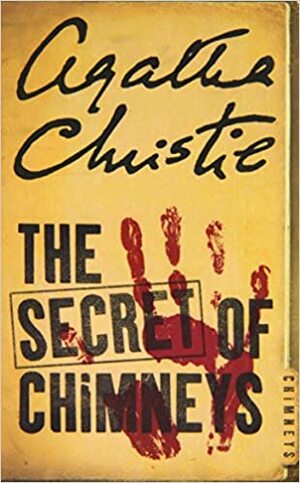
Review 2639: #1925Club! #RIPXX! #HYH25! The Secret of Chimneys

My second book for the 1925 Club is The Secret of Chimneys. I usually don’t enjoy Christie’s political mysteries as much, but this one is a romp. It’s got everything—a missing jewel, impersonations and secret identities, secret passages, an arch-criminal, Italian gangsters, kidnapping, and Balkan assassinations.

In Zimbabwe, Anthony Cade is leading a bunch of old ladies on a guided tour when he runs into Jimmy McGrath, an old friend. Jimmy is about to depart on a gold-mining expedition, so he asks Anthony to do two favors for him. Jimmy once saved the life of Count Stylptitch, prime minister of Herzoslavakia, and the Count had his memoirs shipped to Jimmy after his death with a promise of £1000 if he gets them to the publisher before a specific date. Jimmy offers Anthony a cut if he will take them to England for him. Jimmy also came by a collection of letters that someone has kept with the idea of blackmailing the writer. He wants to return them so that the writer, Virginia Revel, addressing the letter from Chimneys, will feel safe. Anthony takes on both tasks and returns to England, traveling under Jimmy’s name.

It turns out that lots of parties want the memoirs. England is about to help the heir to the throne of Herzoslavakia, Prince Michael, ascend to the throne after a period of anarchy. As a friend to the monarchy, England will get an important oil concession. But perhaps the memoirs say something embarrassing about Prince Michael. Anthony is approached by Baron Lolopretjzyl asking to buy them. Anthony refuses. Then he hands them on to a man who says he’s a representative of the publisher.

Next thing he knows, the Italian waiter at his hotel has stolen the packet of letters, along with the newspaper clipping he found about Virginia Revel. He goes to see her and gets to her house just after she discovers the body of the Italian waiter in her study. She explains that he had come the day before and even though she knew the letters weren’t hers, she gave him some money just to see what it would feel like and told him to come back the next day. She is due at Chimneys, so Anthony disposes of the body for her and follows her.

The reluctant Lord Caterham and his daughter Bundle, who also appear in The Seven Dials Mystery, are entertaining important political guests at Chimneys—Prince Michael and Count Lolopretjzyl; the millionaire Herman Isaacstein, who is involved in the oil deal; Mr. Fish, an American collector of books; and Virginia. Anthony arrives late at night and approaches the house only to hear a gun shot. The next morning, Prince Michael is found dead. Inspector Battle has been summoned, and Anthony recognizes the prince as the man he handed the manuscript to. Anthony’s boot prints have been found outside, so he has some explaining to do.

And in all this, I forgot about the jewel, the Koh-i-noor, which King Nicholas last had at Chimneys and hid somewhere before he returned to Herzoslavakia and was killed.

The novel has two engaging protagonists in Anthony and Virginia and is lots of fun. There are several characters in disguise, and although I guessed the identity of one of them as soon as I heard of that person, the others fooled me. I also didn’t guess at all who killed Prince Michael.

This is a ridiculously unlikely but entertaining early book by Christie. Note, though, that there are several anti-Semitic comments as unfortunately isn’t unusual for the time.

Related Posts

The Seven Dials Mystery

The Secret Adversary

Destination Unknown

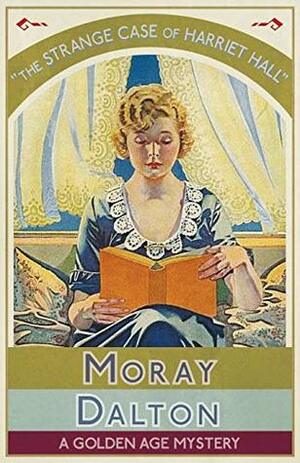
Review 2627: #RIPXX: The Strange Case of Harriet Hall

Since the beginning of September, I have looked for info about Readers Imbibing Peril, which I have participated in for years, since I couldn’t remember whether it started in September and went through October or started in October and went through November. Since I couldn’t find anything, I assumed it started in October. Well, it’s too bad that it actually started in September, because I missed marking three other mysteries for the challenge. It is usually advertised through Instagram, which I don’t use much.

So, despite this being my fourth book to qualify, it’s going to count as my first.

Well, there certainly are surprises in this book!

Amy Steer is a young woman looking for work, a necessity made worse by the empty state of her pockets and her landlady’s demands to raise her rent. She is looking through the want ads when she spots an ad looking for relatives of her father. She never knew her father, but she answers the ad and makes an appointment.

She meets a disturbing but seemingly kind woman who says she is Harriet Hall, Amy’s aunt. She says she is staying in a house in the country owned by friends and invites Amy to stay. She even gives Amy £100 to spend on nicer clothing.

On Monday, the day she is expected, nicely dressed Amy is on the train to her aunt’s. She meets a pleasant young man named Tony Dene who is getting off at the same station. They are getting along just fine until Amy tells him about Aunt Hall. Then he abruptly leaves the car. No one picks Amy up, so she is forced to walk five miles to Harriet Hall’s cottage, finding no one home. But the door is unlocked, so she stays.

The Denes lived with their uncle until he died the year before. Then Mary Dene, Tony’s mother, inherited everything and bought a property in the country. But soon Harriet Hall appeared. Mary has told her three children that Harriet is an old friend fallen on hard times. She lets Harriet live in the cottage rent-free, but Harriet comes over every day to sponge or take something. Tony and his sister Mollie hate her, but Lavvy, who is engaged to marry Sir Miles Lennor, only cares about her wedding.

Amy stays in the cottage Monday night, but Harriet never appears. Tony, who feels bad about abandoning her, drops by with his sister’s dog, and the dog’s barking at an old well in the back of the house causes Tony to remove the top. Inside the well is a body.

Tony calls the police, but once the body is identified as Harriet Hall and the police understand the relationship between her and the Denes, Tony is a suspect. He has no alibi because instead of driving home from the train station, he drove around aimlessly for hours.

Scotland Yard Inspector Collier is called in fairly quickly. Although more evidence comes out against Tony, Collier is reluctant to charge him. Then there is a shocking discovery followed by another death.

If Amy is supposed to be our heroine, we see remarkably little of her, spending more time with the Denes. However, she does get to be in peril.

There’s a little bit of a cheat here, as a person of interest doesn’t appear until page 150. But overall, we’re having so much fun we don’t care. Dalton’s books are well written and move along at a brisk pace. Some aspects of this one were obvious, but for 1936 the book seems fairly avant-garde.

I received this book from the publishers in exchange for a free and fair review.

Related Posts

One by One They Disappeared

The Night of Fear

The Body in the Road

Review 2623: #RIPXX: Knock, Murderer, Knock

The mostly elderly occupants of the Presteignton Hydro spa resort like nothing better than to gossip about the other guests. Lately, they’ve had fuel for their fire by the arrival of beautiful Miss Blake, who dares to wear makeup, shorts, and backless evening gowns (this is 1938). Their tongues are wagging even more with the advent of Sir Humphrey Chervil, assuming a connection because he is young and handsome, even if they hardly talk to one another.

All the men at the resort like Miss Blake, but none of the women do. Nurse Hawkins has her eye on Admiral Urwin, so she certainly doesn’t like Miss Blake seeking him out. Even Mrs. Napier, who spends a lot of time falling down on purpose to get attention, thinks Miss Blake is a floozy.

On the night of an entertainment, Sir Humphrey spends some time with Miss Blake, staying up late talking in the drawing room. The next day she is found dead in the same room, a knitting needle plunged through her skull.

Inspector Palk locks onto Sir Humphrey when he finds he went into Miss Blake’s room instead of escorting her to the door. His fate is sealed when her jewels are found in his closet.

However, a few days later, after young Winnie Marston was seen canoodling with her father’s chauffeur, she is also found dead of the same cause. Inspector Palk still thinks he has the right man for the first murder and wants to arrest the chauffeur for the second—until he finds out he has actually married Winnie.

Mr. Winkley appears on the scene after Winnie’s death. He says his hobby is murder and talks everyone into staging a re-enactment of the first crime—the one supposedly solved. But who is Mr. Winkley, anyway?

Although I found this novel entertaining enough, it doesn’t spend a lot of time on characterization (which is common for the time)—usually just giving the characters some defining trait—and it wasn’t enough for me. I kept getting the little old ladies mixed up and even confused the Admiral and the Colonel. Plus, in one instance Rutland only brings in a character right before killing him off, even though he’s been there all along. Still, the novel was fun, except the last chapter where everything is explained, which I felt was an anticlimax.

I received this book from the published in exchange for a free and fair review.

Related Posts

Someone from the Past

The Circular Staircase

The Iron Clew

Review 2621: #RIPXX: The Body in the Road

I saw this book labeled Hermann Glide #1, but he actually appeared in Moray Dalton’s previous novel. Both times, he came in at the end. Or maybe I read them out of order by mistake.

Linda Merle takes a job playing the piano in a tearoom, and performing with her is the beautiful but not very talented Violet Hunter on the violin. The girls become friendly right away, and when Linda learns that Violet hates living with the oppressive friend of her mother, she invites her to move in with her. Miss Coleman has already taken a dislike to Linda and hates her when Violet moves out.

When Linda inherits a small sum, she decides to purchase a cottage in the country and open a tearoom, but she only feels she can do it with Violet’s help.

She and Violet spend a weekend working at the cottage. But Violet doesn’t help much and finally tells her she can do better for herself by going to London. Linda is angry that she didn’t tell her earlier, so they argue. Then on a walk they find a dog that’s been hit by a car. Linda sends Violet up to the main road to get help while she goes the other way, to a large house. Outside the house she meets a small, furtive man who says she’ll get no help at the house, where he works, and another man, David Chant, who is the new Lord Haringdon. Chant goes back with her, but the dog is gone and so is Violet.

Linda assumes Violet got a ride into town, but when she returns to their room, Violet isn’t there and she has taken nothing. Linda wants to go to the police, but Chant advises her to wait while he looks into it. He suspects that Violet’s disappearance may have something to do with the large house Linda went to. It is occupied by a Dr. Saigon, who is rumored to be running a mental hospital there.

While he is looking into that, the police get involved, and they clearly have trouble with Linda’s story. Then they find Violet’s body, buried in back of Linda’s cottage.

I thought that part of this novel was going to go way off the rails, but it didn’t. It becomes suspenseful as things start to stack up against Linda. It also does a good job of misdirection.

I received this book from the publishers in exchange for a free and fair review.

Related Posts

One by One They Disappeared

The Night of Fear

The Warrielaw Jewel

Review 2615: The Widow of Bath

Hugh Everton is traveling around English seaside towns reviewing hotels and restaurants for a travel company when he meets an old flame, Lucy Bath, the glamorous wife of a judge. Hugh is immediately afraid, but we don’t understand why until later. Lucy is with an entourage, and when they all decide to return to her home, she invites Hugh, and he goes.

One of the men Hugh thinks he recognizes as a guy named Ronson, but Ronson is introduced as Atkinson. The judge, who has been looking for his missing dog, takes Hugh aside and seems to be intending to confide in him but changes his mind. He goes up early to bed.

The others are playing cards when they hear a shot, followed by a yelp from a dog. Lucy goes upstairs to investigate. When she doesn’t immediately return, Atkinson goes up, accompanied by Hugh. They find the judge dead with a hole in his head and no gun to be found.

When they try to call the police, the phone is dead, so Atkinson drives off to the police station. Hugh goes out to look for the dog and nearly catches a woman in the garden. He finds the dog with a broken leg. Soon Inspector Leigh arrives, but the body is gone.

Everton has found the entire evening to have a menacing undercurrent. However, he has had bad experiences with the police, so he is not as forthright as he could have been.

I hadn’t heard of Margot Bennett before reading Someone from the Past, but I think she has been seriously underrated to have almost disappeared from our knowledge. This novel has an interesting noirish plot with strong characterization and witty dialogue. Bennett moved away from crime fiction to writing for television after writing only a few books. I think that’s a shame.

Related Posts

Someone from the Past

Suddenly at His Residence

They Found Him Dead

Review 2590: The Night of Fear

At a Christmas house party with the staff dismissed to attend a party in the village, the guests play a game of hide and seek. The host, George Tunbridge, and Julian Haviland, a young guest, wait for 20 minutes after the lights have been turned off at the main and then are supposed to look for those in hiding. However, before they begin to do that, another guest, a blind man named Hugh Darrow, comes running out in a panic. He has discovered the bloody body of another guest, the famous writer Edgar Stallard.

Sergeant Lane has Inspector Collier of Scotland Yard staying with him as a guest, and he is happy to bring him along on the case. Suicide being ruled out because of the absence of a weapon, and no forced entry discovered, the police feel the murderer must be one of the guests.

Aside from George Tunbridge and his wife, who is so shaken she takes immediately to her bed, the guests are Sir Eustace Tunbridge, a pompous older man engaged to a beautiful young Diana Storey; Mrs. Storey, Diana’s grandmother, who went to bed early; Ruth Clare, a young woman who it becomes clear is in love with Hugh Darrow; and a bunch of young people, including Angela Haviland, who were hiding together and are so alibied. Even George and Julian are without an alibi, as they stood on either side of a screen as they waited.

Unfortunately, the Chief Constable is offended to find Collier on the scene, and he is asked to report back to London. That leaves Sergeant Lane to investigate by himself for a day. The next morning, he is found unconscious from a gas leak in his room. Collier is convinced that he was on to something, but his notes have been ripped from his notebook. Collier’s replacement, Inspector Purley, arrives and comes down heavily on everyone then concludes that the murderer was Hugh Darrow, who had a grudge against Stallard and didn’t tell anyone that his blindness was cured from the shock of discovering the body. In making this decision, Purley is ignoring some clues—that despite typing at all hours, Stallard appears to have left no notes or manuscript in his room and that Sergeant Lane is poisoned in the hospital after Darrow is arrested.

To help with the defense, Collier recommends a private investigator, Mr. Glide. When Sergeant Lane is poisoned, he is unable to speak but writes a clue on a piece of paper.

This novel wasn’t quite as zippy as Dalton’s first one and had a little too much recap of the evidence, but it was still fun to read and fairly baffling. It looks to me as though Mr. Glide might become a recurring character. I’m looking forward to the next one.

I received this book from the publisher in exchange for a free and fair review.

Related Posts

One by One They Disappeared

A Christmas Pary

The Christmas Card Crime and Other Stories

Review 2577: The Unfinished Clue

Georgette Heyer can write such likable characters, and I remember that for the first Heyer mystery I read, it was obvious who the murderer was because the person was the only character in the book, besides the victim, that I didn’t like. It didn’t matter, because it was fun to read anyway.

She isn’t so obvious about it in The Unfinished Clue, because there are several characters to dislike or feel neutral about. In fact, the title is more of a giveaway than the characters’ behavior, because it tells you what to focus on. If you can guess what it means, though, you get a gold star.

Dinah Fawcett arrives at her sister’s house to be met with an enraged brother-in-law. General Arthur Billington-Smith is often enraged, and he takes it out on his fragile second wife, Fay. This time, his son, Geoffrey, has become engaged and is bringing home his fiancée Lola de Silva, a cabaret dancer.

The house party consists of these people plus Arthur’s nephew, Captain Francis Billington-Smith, who wants a loan; Camilla Halliday, an attractive young woman who is letting Arthur take liberties in the hope of a generous gift; her jealous husband Basil; and Stephen Guest, a friend who is in love with Fay. Geoffrey turns out to be kind of a wimp and an idiot, and Lola completely self-absorbed.

Arthur rages throughout the weekend, which culminates in a stormy Monday morning. He tells Geoffrey he will cut him off if he marries Lola. Geoffrey goes to Lola vowing eternal love, and she tells him of course she can’t marry him if he doesn’t have any money. He storms off. Fay is lying down from a headache. There is a short visit by Mrs. Chudleigh, the vicar’s wife. Then Mrs. Twinings arrives, an old friend, to try to get Arthur to treat Geoffrey better, and she finds Arthur dead in his office, stabbed in the neck with a dagger from his desk. The crime boils down to where everyone was between 12:30 and 1. Only Dinah, who was on the terrace the whole time, has an alibi.

In most of Heyer’s mysteries, her detective team is Hannasyde and Hemingway, but in this novel the detective is Inspector Hardy. She hasn’t thought up Hannasyde and Heminway yet, I don’t think, but there’s another good reason why this book is different.

I was completely fooled by this mystery. I had some idea of the motive but was mistaken about the identity of the killer.

Georgette Heyer is just as gifted as Christie in creating vivid characters, and her mysteries tend to be a bit funny. In this case, Lola is a hoot. I had lots of fun reading this to take a break from A Century of Books.

Related Posts

Behold, Here’s Poison

A Christmas Party (Envious Casca)

They Found Him Dead

Review 2569: #1952Club! Mrs. McGinty’s Dead

It’s time for the 1952 Club, for which participants review books written in 1952 on the same week. What would a year club set between the 1930s and the 1960s be without an Agatha Christie? So, this book became one of my choices for the 1952 Club, especially good because I hadn’t read it before.

However, first, as usual, I have a list of the books I’ve reviewed previously that were written in 1952:

And now for my review.

Hercule Poirot is retired, and the days are passing slowly. So, he is happy to look into a case for an old acquaintance, Inspector Spence. An old cleaning lady was apparently murdered for her savings by her lodger. All the evidence points that way, and the lodger was found guilty. But Inspector Spence isn’t satisfied that he did it, and there is little time to investigate before he is hung.

So, Poirot journeys to a small village—only four houses and a post office. He meets a few people and seems to be getting nowhere when a chance remark gives him an idea. Mrs. McGinty had purchased ink at the post office, which meant she intended to write a letter, and she was so unaccustomed to writing letters that she had no ink. Who was she writing to?

Going back to look through some of her things, he finds a newspaper with an article ripped out. When he finds the paper at the archive, he sees the article is a “Where are they now?” piece about females connected with four infamous crimes, with old photos from 20 years before. He reckons that Mrs. McGinty, in her work as a cleaner, saw one of those photos at the home of a regular client. Someone in the village has a relationship with one of those women, but what kind of relationship? The field broadens as he considers. Is it the woman herself? A relative or spouse? With the range in age of the original females, the woman could now be anywhere from her 30s to her 50s.

And that was the problem. There are too many people in this book, many of them suspects, and Christie didn’t do her usual job of making them instantly specific. I couldn’t keep track of them by their names. The only distinctive villager at first is Maureen Summerhayes, Poirot’s incompetent hostess, who can’t cook and is completely disorganized, but I soon thought of her as Maureen, so that by the time there was a reference to Mr. Summerhayes, I had forgotten he was Maureen’s husband.

Fairly early on, Poirot meets his old friend the author, Ariadne Oliver. She is staying with the playwright Robin Upward while they try to adapt one of her books for the theater. Mrs. Upward is another of Mrs. McGinty’s clients, and thus a suspect.

I never thought of the murderer as a suspect, but I also felt I wasn’t given much of a reason to. I just didn’t think this was one of Christie’s best.

I was also struck by how little any of Mrs. McGinty’s clients cared that she was dead. There’s some real classism going on here (including the idea that she had to buy ink because she never wrote any letters; even if it happened to be true; anyone might have to buy ink).

Related Posts

The Mirror Crack’d from Side to Side

Sparkling Cyanide

Sad Cypress

Review 2563: One by One They Disappeared

Inspector Collier meets a wealthy American in the lobby of a hotel one evening and begins chatting with him. He is Mr. Pakenham, and he explains that he was a survivor during the war of the sinking of the Coptic. He and eight other men were afloat on a lifeboat for days, and he being ill, the others kept him alive. Ever since then, the men have met once a year to celebrate their survival, and last year, Mr. Pakenham announced that he was leaving his estate to whomever of the group survived him. This year, however, only a couple of men showed up.

In the meantime, Corinna Lacy returns from Europe where she has been working as a companion. She is not well off, but she has a few assets, so she writes her second cousin, who is also her trustee, to ask his advice about selling her property to pay for a secretarial course. She has never met Wilfred Stark, but he invites her to his place to talk about it and turns out to be a friendly, fatherly sort of person. While she is there, she meets his neighbor, Gilbert Freyne, who has a shadow on his past.

Investigating an apparent accident in which a blind man walked into an empty elevator shaft, Inspector Collier recognizes Henry Raymond, a man who was meeting Mr. Pakenham the night of the dinner as one of the prospective heirs. Inspector Collier begins looking into the other heirs. He can’t find some of them, but several of them have died recently, and one of the heirs is Gilbert Freyne, with whom Corinna is falling in love.

Yes, it’s a plot! We find out part of it as early as page 60, but the rest is not clear until the end. I had my suspicions pretty early, though, and they were right. But that didn’t make the book any less fun to read.

True to its 1929 origins, there isn’t a lot of characterization going on here, and Corinna is eventually so much the heroine in peril that she might as well be tied to a railroad track. But there is a bit more of an emphasis on character development than in most mysteries of this time, and at least it’s not a puzzle mystery. It’s more of a mystery/adventure story.

Will innocent lives by saved? Including Mr. Pakenham? Will the murderer or murderers be brought to justice? Has Corinna fallen in love with a villain or victim? And what about Mr. Pakenham’s cat?

I received this book from the publishers in exchange for a free and fair review.

Related Posts

Twice Round the Clock

Murder After Christmas

Weekend at Thrackley

Review 2529: Sparkling Cyanide

This novel begins in an unusual way for Christie, with sections on six people, each of whom had a motive to kill Rosemary Barton. There’s her younger sister, Iris Marie, who would inherit a fortune. There’s her husband George’s secretary, Ruth Lansing, who would like to take her place. There’s Anthony Browne, whose secret Rosemary has discovered, that he is really Tony Morelli. There’s Stephen Faraday, whose career as a policeman will be finished if his wife learns of his affair with Rosemary. There’s Sandra Faraday, who already knows about the affair. Finally, there’s her husband, George Barton, who also knows about the affair. Almost a year ago, these six were together at a party when Rosemary suddenly died from cyanide poisoning.

Rosemary’s death was ruled a suicide. Now, nearly a year later, someone has mailed George letters saying that Rosemary was murdered, so George decides to set a trap by reconvening the same people at the same table. But first, he asks in his friend, Colonel Race. Race things it’s a foolish idea, and it is—for George dies that night, also poisoned.

Colonel Race teams up with Inspector Kemp to try to figure out what happened. Was Rosemary poisoned? Who wrote the letters? How could anyone have poisoned George without touching his drink?

I don’t think the approach used in this novel was very successful. The writing seemed oddly static. It is only when we leave the character bios that the novel snaps back to life, with Christie’s usual clever dialogue and interesting action. Then, it’s quite good and makes you forget the first part.

Related Posts

The Mirror Crack’d from Side to Side

The Man in the Brown Suit

Death on the Nile