Day 885: The Last Summer of the Camperdowns

Cover for The Last Summer of the CamperdownsHi, all, I just wanted to tell you before I get started that I began a new project, attempting to read all of the Man Booker Prize shortlisted books since 2010. See my new Man Booker Prize Project page for more information, and join me if you want to.

* * *

The Last Summer of the Camperdowns is one of those books that I made a note I’d like to read some time ago, but by the time I got to it, could not remember what it was about. When that happens, I don’t read the cover. I just plunge in. I was surprised to find myself reading a sort of modern gothic novel.

Riddle Camperdown is a 12-year-old girl spending the summer at her family’s dune-side house on Cape Cod in 1972. Her name says a lot about the eccentricity of her family, for she is named after Jimmy Riddle Hoffa (yes, that one), and her father sometimes calls her Jimmy. “Camp” Camperdown is a labor organizer, composer, and politician, a noisy brash, boisterous, charismatic true believer. His wife, Greer, seems a mismatch for him. She is a cool, chic ex-movie star with an acid tongue. Riddle, who adores her father, thinks her mother only cares about money and status.

Another of the couple’s regular arguments starts up when they learn Michael Devlin is returning to the area. Michael is a rich, privileged man who used to be Camp’s best friend, but an incident during World War II drove them apart. Riddle is also fascinated to learn that Michael was engaged to Greer and stood her up at the altar.

Riddle and Greer are avid riders, so when that afternoon they go over to see Greer’s friend Gin, Riddle wanders off to the yellow barn to see a mare with a foal. When she is in the barn, something horrible happens, something she doesn’t see but only hears. She thinks she hears someone or something being chased through the barn and then dragged back to the tack room. She is terrified, but just as she is getting the nerve to open the tack room door, Gin’s employee Gula comes out.

Riddle is already terrified of Gula, so she pretends she hasn’t heard anything. Inexplicably, though, she is too terrified to tell her parents.

Soon, they learn that Michael Devlin’s youngest son Charlie has disappeared. It doesn’t take long for Riddle to guess it was Charlie she heard in the barn. That night, the barn burns down with several horses in it.

As Riddle is repeatedly terrorized by Gula, her parents’ marriage seems more and more fraught. Michael Devlin begins threatening Camp’s political campaign with a tell-all book, and Camp fears what he sees as his wife’s attachment to Devlin. In the meantime, Riddle falls in love with Michael Devlin’s oldest son, Harry.

This novel is quite suspenseful, with a plot that is far more complex than it first seems. If there were two small things I didn’t quite buy, one was the extremeness of the Camperdowns’ arguments at first. The other was how long it took Riddle to tell the truth, considering how Gula was threatening her, even going into her room and leaving things. Although ultimately Riddle was also hiding the fact that she hadn’t told the truth right away, I would think she would be too scared not to tell.

Related Posts

The Little Friend

Once Upon a River

Swamplandia!

Day 882: Rebecca

logo for the 1938 clubBest Book of the Week!
Since Rebecca is a book that qualifies for The 1938 Club and is also on my Classics Club list, I thought this was a good time to reread it. I must say that during this reread, I noticed things I’d never noticed before.

Some years after the time of the novel’s action, the narrator recollects the events at Manderley from a life of exile. As a young, naive woman working as a companion for the vulgar Mrs. Van Hopper, the narrator meets the older, sophisticated Maxim de Winter one spring on the Riviera. When Mrs. Van Hopper becomes ill, the narrator spends some time each day with him, driving through the countryside. Mrs. Van Hopper recovers and decides abruptly to return to the States. When the narrator tells Maxim, he proposes.

Cover for RebeccaThe narrator, whose first name we never learn, is an immature girl who is prone to imagining what people are saying about her or what may happen, usually in exaggerated terms. The wedding is not the romantic event that she imagined, but she goes along with whatever Maxim suggests.

Finally, they come home to Maxim’s family home of Manderley, and that’s where the novel really gets going. For the narrator is already haunted by the thought of Rebecca, Maxim’s first wife. Rebecca was beautiful, assured, accomplished—everything the narrator believes she is not. Everyone assures her that Maxim adored Rebecca and was shattered when she died in a sailing accident. Everyone tells her she isn’t at all like Rebecca. The decor of the house reflects Rebecca’s taste, her name is scrawled inside books, her monogrammed handkerchiefs are in the pockets of coats, and the servants tell her, when she timidly makes a request, “Mrs. de Winter used this vase,” or “Mrs. de Winter sat in this room in the morning.”

Further, there is the terrifying Mrs. Danvers, the housekeeper, from whom the new Mrs. de Winter senses actual hostility. Mrs. Danvers was devoted to Rebecca and resents a new wife taking her place, especially one so much Rebecca’s inferior.

The narrator was not brought up to a life with servants, running a big house, and she has no idea how to behave. Maxim gives her little help in this regard, just expecting her to adapt. She makes mistakes, and his moods become more erratic until she thinks he regrets their marriage. As she becomes more unhappy, events build to a climax on the night of a big costume ball.

This is an extremely powerful novel that, I think, hits you differently depending upon the age you are when you read it. When I was young, I thought it was romantic and scary. Now, I think it’s more of a study of some very maladjusted characters. But this is the first reading where it made me think of Mr. Rochester.

Even though I love Jane Eyre, I’ve never been much of a fan of Mr. Rochester. But what does he do? He yearns for a young, innocent girl and is prepared to commit a crime to get her. We can say this for Jane, though, she has a strong sense of herself.

I don’t want to say much more about Rebecca in case you haven’t read it. But let’s keep it at this. Maxim de Winter also yearns for a young innocent girl, but his choice has such a weak sense of self that we don’t even learn her name. He takes her to a life for which she is completely unsuited and untrained, with a servant he might predict would be hostile, and just leaves her to make the best of things. And this comment doesn’t even touch on the darker secrets of the novel.

Do these observations make me love the novel less? No, this is a great novel. Rebecca is one of Daphne du Maurier’s most atmospheric novels, in a career with many atmospheric novels. I believe she modeled Manderley after the house where she lived in Cornwall, and its description is detailed and loving. Du Maurier was interested in aberrant personalities, in which she probably counted her own. This is a dark novel that fully draws you in. It is very well written, an excellent character study and a masterful suspense novel.

Related Posts

Castle Dor

The Poison Tree

Daphne du Maurier: The Secret Life of a Renowned Storyteller

Day 864: The Necromancer

Cover for The NecromancerIt’s been more than six months since I reported on my progress in reading the “horrid novels” mentioned in Northanger Abbey, but I have finally read another. This one is The Necromancer, published in 1794 by Carl Friedrich Kahleut under the pen name Ludwig Flammenberg. Its publication date makes it one of the earliest novels in this genre.

However, it is not a novel as we understand it. The Editor’s Note explains that it was originally a collection of tales, the equivalent of contemporary urban legends. Its translator, Peter Teuthold, actually “novelized” the tales by presenting them as a fairly incoherent story.

The novel starts with the story of boyhood friends Herman and Elfrid, who are separated after school for many years by life’s events. Eventually, Elfrid seeks out his friend Herman. During this visit, Elfrid tells Herman about an incident in Germany. When staying at an inn, he was robbed repeatedly of his possessions, but they were mysteriously returned. When he wants to find out what happened, he agrees to meet his neighbor at the inn for an explanation. At the meeting place, he experiences a confusing event that ends with his being rushed off in a coach and breaking his leg.

After Elfrid tells his story, Herman has one of his own. But Herman begins a nested series of tales that end up being linked by a single person, an army sergeant with a knowledge of necromancy named Volkert.

I hope I’m not giving too much away when I say that the apparent supernatural occurrences turn out to be cheats. In a sense, I’m not sure if that makes this piece a gothic novel or not. Once we hear Volkert’s lengthy confession and an explanation of all his tricks, you might think the novel would close. But it does not. We still have to be subjected to a tedious confession by the chief of a gang of thieves.

Perhaps I’m just not getting into the spirit of these novels. But so far, I have really only mildly enjoyed The Castle of Wolfenbach, which has a relatively straightforward plot. The others I’ve found full of digressions, with meandering plots. A sense of characterization doesn’t seem to exist yet in these early novels. When I reflect that Jane Austen, with her rich characterizations, begins publishing books in less than 20 years, it seems truly amazing.

Related Posts

The Castle of Wolfenbach

The Mysteries of Udolpho

Dracula


Day 858: Fates and Furies

Cover for Fates and FuriesFates and Furies is about a marriage. Lotto and Mathilde marry shortly before graduating from college, after knowing each other only two weeks. They are both very tall and blonde, considered by many to be a golden couple. Lotto is charismatic and loud, always the center of attention, with many faithful friends. Mathilde is quiet and aloof.

Although Lotto has had a bit of a Southern Gothic upbringing, he is the son of wealth and privilege. However, his mother cuts him off when she hears of his marriage. Mathilde appears to have no family or money. So, the couple’s first years are tough, as Lotto tries to make it as an actor in New York while Mathilde supports them. But one night Lotto stays up drunk and writes a play. When Mathilde reads it, she knows he has found his vocation.

The first half of the novel is from Lotto’s point of view. Success seems to come easily to him after he writes his first play. Even though he is prone to depression if things don’t go well, he has hit after hit. Mathilde quits her job to take care of the business side, and he becomes a little self-satisfied. Still, all in all they are remarkably happy. He considers his wife a saint.

It is not until the second half of the novel, when we see the marriage and past from Mathilde’s point of view, that we learn a different truth about their lives. Mathilde, who has been alone for much of her life, is fiercely loyal to Lotto. But she is no saint.

Lauren Groff seems to write completely different novels each time out. This one shows the complexities of human relationships. That this relationship is almost operatic in scope gives the novel a slightly gothic trend.

I have mixed feelings about this novel. I think we are supposed to like Lotto more than I did, but I distrust charismatic people. I think Lotto may be a little stereotypical, however, while Mathilde is mostly a cypher until her half of the book, when many secrets come out. It is not until we learn Mathilde’s side of things that the novel really begins to unfold. It is certainly an interesting novel and one that could provoke discussion.

Related Posts

Arcadia

Everything I Never Told You

All the Birds, Singing

Day 819: The Winter People

Cover for The Winter PeopleReading two books by Jennifer McMahon doesn’t make me an expert on her, but they do have something in common. They both show a fascination with the supernatural and the grotesque.

Like her more recent book The Night Sister, The Winter People is set in Vermont. It takes place in two time periods, the present and 1908.

In 1908, Sara Harrison Shea lives with her husband and daughter on a barren farm near a landmark called the Devil’s Hand. Sara was raised by a Native American woman she calls “Auntie,” whom the nearby villagers visit for potions and spells. We know from the beginning of the novel that she died a terrible death and that parts of her story are recorded in her diary, which has pages missing. In the village of West Hall there have long been legends of “Sleepers,” people who are brought back from the dead.

In the present time, teen Ruthie returns late from a date to find her mother, Alice, gone. When Alice hasn’t returned by the next day, Ruthie and her little sister Fawn begin looking through the house for clues to where she has gone. In a series of hidey holes, they find some strange things, a gun and the wallets of two people from Connecticut. Since the countryside around West Hall is known for people’s disappearances and the Devil’s Hand at the edge of the farm is supposedly haunted, Ruthie begins wondering what her mother could be involved in and doesn’t call the police.

Katherine is grieving the death of her husband, Gary. He had been distraught since the death of their son, but recently things seemed to be better. Then he told her he was going to Cambridge to photograph a wedding but died in a car accident in Vermont. What was he doing there? When Katherine gets back his charge receipts, she finds he ate lunch in West Hall, so she decides to move there to try to find out what Gary was up to.

McMahon builds up quite a bit of suspense in this novel, often from small things like the tapping on a closet door. The novel centers around a series of grief-stricken people and the belief that people can come back from the dead. Can they? And if so, in what form?

Related Posts

The Night Sister

The Night Strangers

Wylding Hall

Day 787: The Hunchback of Notre Dame

Cover for The Hunchback of Notre DameWhen I was making my list for Classics Club, I thought I should finally read something by Victor Hugo. The obvious choices were Les Miserables or The Hunchback of Notre Dame, but I had tried Les Mis some years ago only to put it down in disgust when Jean Valjean hits the priest who has tried to help him over the head with the candlesticks he wants to steal. So, it was Hunchback for me.

I was interested to read in the Introduction that the French title of this novel was Notre-Dame de Paris and that Hugo hated the English title. And truly, the focus of the novel is more on Notre Dame and 15th century Paris than it is on the story we’re familiar with. In fact, one entire chapter just describes Paris as it looks from the tower of the cathedral in 1482, street by street. I have to say, though, that the chapter was almost meaningless to me, since I found myself unable to visualize what he describes, at least not in that detail.

The novel has many characters, not just the three emphasized in all the movies. It begins with Pierre Gringoire, a hapless poet who is attempting to put on a play he wrote in celebration of Epiphany and the Festival of Fools. This great (and long) production is supposed to pay tribute to the betrothal of the Dauphin with Margaret of Flanders. The problem is that the people have been waiting since dawn to see it. It is past noon, when the play is supposed to have started, but the Cardinal and the Flemish ambassadors haven’t arrived yet. The crowd, egged on by the student Jehan Frollo du Moilin and his buddies, is getting disruptive.

Gringoire decides to start the play, and the crowd settles down, but the actors are still reciting the prologue when the Cardinal and the Flemish arrive, making a lot of noise. The students turn their attention to making rude remarks. Soon the crowd begins trying to select the Pope of Fools instead of watching the play. They choose the hideously deformed hunchback Quasimodo, the bellringer at Notre Dame, and everyone leaves. Poor Gringoire will not be paid, so will not be able to pay his lodging, and he goes off homeless to wander the street.

So, we meet Quasimodo, who was taken in as a child by Claude Frollo, the severe Archdeacon of Josas and older brother of Jehan Frollo. Claude Frollo is obsessed by his studies of alchemy until his eye lights on Esmeralda, a young gypsy dancer and street performer. He becomes infatuated and lustful and so (with the typical logic of zealotry) decides she must be a witch who has enchanted him. On the other hand, when Quasimodo is sentenced to the stocks simply because he is too deaf to hear the judge, the only person who is kind to him is the gypsy dancer. So are sewn the seeds of tragedy.

And make no mistake, there is tragedy in store for most of the characters in this novel. Justice is solely dependent upon the whims of powerful men, and the more powerful they are, the more scathingly Hugo treats them. We even spend some time with the king, Louis XI, who is depicted as grasping, arbitrary, and vicious. Hugo pretty much skewers everyone except Quasimodo and the gypsy girl, who are basically cardboard figures.

Hugo is interested in many things in this novel—the cathedral itself, its own architecture, and the architecture of Paris are strong presences. The transmission of culture from century to century is a preoccupation, as are the themes of the nature of love, loyalty, and not judging by appearances. As a son of the revolution, he also has an axe to grind about the aristocracy and the corruption in the church.

I have to confess, though, that I only mildly enjoyed this gothic novel. The only highly developed character is Claude Frollo, and he is a sickening person.

Related Posts

La Reine Margot

The Lily and the Lion

The Rhetoric of Death


Day 754: The Night Sister

Cover for The Night SisterI have never read anything by Jennifer McMahon before, so I have no way of knowing whether The Night Sister is characteristic of her or not. Certainly I was captured by this creepy and original tale.

The novel is set in three different time periods and features two related sets of characters, but it begins chillingly in the present when Amy takes a shotgun up the stairs of her house in Vermont. Jason, her friend from childhood who just talked to her a week before, is shocked to be called as a policeman to her house, only to find Amy and her family dead. Only her 10-year-old daughter Lou is outside on the roof.

In California, Piper receives a call from her sister Margot. She is shocked to learn that her ex-best friend Amy and her family are dead. Even more shocking is that it appears Amy killed her family and shot herself. Piper leaves immediately for Vermont, but she is preoccupied with memories of the summer she and Amy were 11, the last summer they were friends.

Occasionally, the novel returns to the 1950’s and the story of sisters Rose and Sylvia. Sylvia is the beautiful, favored child, and Rose feels she is treated unfairly. She believes something is wrong with Sylvia and starts wondering about her grandmother’s stories about monsters. She catches Sylvia sneaking out at night to go to the tower near the family motel.

link to NetgalleyBack in the present, Piper rifles her memory about the discoveries the girls made when they were 11. By then, Amy’s mother Rose is seldom around, rumored to be in a mental hospital. Sylvia disappeared years ago, presumed to have left for Hollywood and never heard from again.

This novel is not only truly suspenseful, but it is hard to predict. Several times I was convinced I knew what was going on, but I never did. It’s a truly gothic thriller.

Related Posts

Wylding Hall

The Lace Reader

Broken Monsters

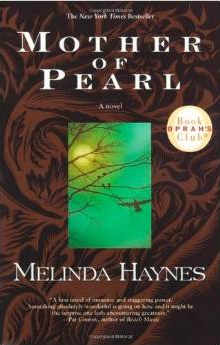
Day 711: Mother of Pearl

Cover for Mother of PearlSet in the 1960’s but seeming more appropriate to decades before that, Mother of Pearl is a sort of Southern Gothic mashup. It features a love affair between near relations, a half-Indian seeress, the town slut, a self-educated African-American man, and some other stereotypes. It is energetically written but sometimes so floridly that I wanted to put it down. Still, it captured my attention enough to give it a mild recommendation. For a novel that starts out dark and unusual, it ends up being surprisingly sentimental and unlikely.

Even Grade is an African-American factory worker. He recently helped his older neighbor Canaan after a teenage white boy hit him in the head with a bottle. His deepest sadness comes from the knowledge that his mother abandoned him as a baby and he was raised in an orphanage.

Valuable Korner, a white teenager, was also left by her mother, the town slut. Her mother disappeared after her birth and left her to be raised by her grandmother Luvenia, returning just before Luvenia died. Since then, Valuable has shared the house with her mother and whichever man she is with.

Barely in puberty, Valuable is about to turn her life-long friendship with neighbor Jackson into a full-blown love affair. What neither of them knows is that they are half brother and sister. The adults who are aware of this seem criminally oblivious, except one.

That one is Joody Two Sun, a half-Indian healer and seeress who lives in a hut by the creek. She and Even are lovers. When Valuable and Jackson come to consult her, she can immediately see their relationship and fate but chooses to say nothing.

Joleb, a friend of Jackson, lives with his father, who is as dumb as a post, and his older brother Burris, who tries to see God by standing on a railway trestle as the train approaches. Their mother also lives with them, but she has been in a vegetative state since Joleb was born. He feels closer to Grace, an African-American woman who cares for his mother and nursed him when he was a baby, than he does to his own family.

I had some problems with this novel, mostly involving the unlikelihood that Valuable, with her attitude toward her mother’s affairs, would plunge into her own love affair as soon as she hits puberty, especially as naive as she is. But then again, if she didn’t, there would be no novel. In addition, I can say no more, but the ending of the novel is very unlikely, ignoring legalities, for one.

Still, I enjoyed this book, especially liking the African-American characters, who seem better defined than the white ones. Valuable’s Aunt Bea, who with her lesbian lover Neva takes her in when her mother finally leaves town, seems to have no personality at all. Neva definitely has one but it is mostly destructive. Joleb, although he gets more interesting, seems like a cartoon character at times. And frankly, the two star-crossed lovers are pretty much cardboard figures.

I was interested particularly in Even and Grace. Joody is too much over the top at times, and Canaan only seems to be there to anchor Grace.

Readers commented that they were not taken with the book until about 100 pages in. That was my experience as well. In fact, if I hadn’t read those comments, I may not have kept reading the book.

Related Posts

This Side of the Sky

Queen Sugar

A Good Hard Look

Day 699: Rustication

Cover for RusticationBest Book of the Week!
I was captured by this dark, twisty novel from the moment I started reading it. I only feared it may eventually disappoint, but it does not.

In winter 1863, Richard Shenstone, 17, appears without warning at his mother’s new home, a large dilapidated house on the southern coast of England. He has been rusticated, sent down from Cambridge for reasons not immediately explained.

Having received word of his father’s death too late for the funeral, he is surprised to find his mother and sister living in apparent poverty. Furthermore, although he doesn’t at first tell them he’s been sent down, his arrival is met by a surprising lack of welcome, indeed hostility on the part of his sister Effie.

There is some mystery about his father’s death, that is clear. His father’s pension has been denied to the family, and Richard’s mother is suing for her father’s estate as well. Effie is also up to something, for he twice sees her out accompanied only by a tall man, not proper behavior for a lady.

Richard is not a pleasant person, obsessed as he is by desire for every girl or young woman he meets and also addicted to opium. The novel is told as excerpts from his journal, interrupted by copies of a series of hateful letters that soon begin arriving at the homes of various people in the district. It is also clear from the beginning that some crime has been committed and the journal is a look back into the past. It is not clear to readers, however, how reliable a narrator Richard is or what’s going on when he roams the countryside at night in his opiated state. Soon the letter writer begins leaving corpses of mutilated sheep behind him.

This novel is atmospheric in the extreme and completely absorbing. As Richard begins trying to figure out who the letter writer is, he finds the finger pointed toward himself. He takes unwarranted leaps of logic that cause him to make many mistakes and ignores some clues that he has. Still, exasperating and unlikable as the main character is, you are urged along to the end of the novel.

Related Posts

Stone’s Fall

The Séance

The Darkest Room

Day 690: Wylding Hall

Cover for Wylding HallElizabeth Hand’s earlier novel Mortal Love showed she was interested in a connection between inspiration and folklore. Wylding Hall is also an unusual exploration of this theme.

The novel is told as a series of possible interviews, maybe for a documentary, about a 70’s folk group called Windhollow Faire. The group released two albums, but a mystery surrounds the second one, which 20 years later has been re-released as a smashing success.

The novel is narrated by the band members, their manager, and a couple of other people who visited the band during the fateful summer the album was recorded. The band’s manager Tom Haring sets off the action of the novel by renting an old Tudor mansion in a remote rural area for the band to live and work in during the summer. Part of the house has been restored but the rest of it is a rambling wreck. The band works but in a party atmosphere of drugs and booze.

The novel builds up some suspense with the hints of something unusual happening that summer involving Julian Blake, the band’s lead singer and songwriter. He is the only member of the band who is not heard from in the novel. The house is described in a way that is both beautiful and creepy, featuring an old library that cannot always be located and is full of feathers. The local inn also features some folklore and is named after an old song about killing wrens on St. Stephen’s Day.

link to NetgalleyThe locals warn the band members away from the woods around the house, and their superstitious comments add to the hints of darkness in the book. For a short novel in which little actually happens, it creates quite a mood of creepiness.

My only criticism is that most of the band members blurred together for me, because I couldn’t keep them straight. A couple stand out, but most of them are too undefined to be successful characters.

Related Posts

Mortal Love

The Lace Reader

The Night Strangers