Review 2133: The Secret River

Kate Grenville started out writing a nonfiction account of her great-great-great grandfather’s family, but she ended up with too many questions. So, she fictionalized their story and combined it with what she had read about other Australian pioneers.

William Thornhill grows up in poverty in early 19th century London, but he sees a future for himself when Mr. Middleton, a waterman on the Thames, takes him on as an apprentice. William has grown up with Sal Middleton, his boss’s daughter, and he marries her shortly after he reaches journeyman status. However, things go wrong for Middleton, and William finds his livelihood is much more difficult to earn. Finally, he is caught stealing part of a cargo to support his family.

Although he is sentenced to death for theft, William manages to get his sentence reduced to transportation, and his family is allowed to accompany him. In Australia, although life is primitive, it doesn’t take him long to realize he can make money there and maybe return to England in style. However, when he takes a job ferrying goods from a river where settlers have begun farming, he sees a piece of land he can own by settling on it.

Now begins a conflict, with William realizing he will never return to England and Sal only wanting to return. The conflict is heightened when some of the settlers have clashes with the aboriginal people.

I was certainly engaged by this novel, and I felt that Grenville did a good job of portraying the conflicts with the aborigines. Grenville’s characters are flawed but totally believable. She looks unflinchingly at Australia’s brutal origin story, which is very similar to our own.

Related Posts

A Room Made of Leaves

Salt Creek

Rush Oh!

Review 2126: The Flight Portfolio

As soon as I finished reading Julie Orringer’s The Invisible Bridge, I looked to see what else she had written, and that’s how I found The Flight Portfolio. This novel is based on true events with real historical characters except for Elliott Grant and some main invented characters.

It’s 1940, and American journalist Varian Fry is working in Marseille as the head of a charitable organization. Its mission is to help as many European artists, writers, and other intellectuals as it can to leave Europe and escape the Nazis. This mission is supposed to be legal but of course Fry has to use illegal means to evacuate people sought by the Nazis or by the Vichy government. The book begins with him trying to persuade the Chagalls to leave, but they think they are unassailable.

Into the chaos of the office work, including the eviction of the charity, comes a request for a meeting. It is from Varian’s old schoolmate at Harvard, in fact his ex-lover, Elliott Grant, who disappeared when Varian decided to pursue marriage and a normal life. Grant has come to ask Varian’s help in finding the son of his own lover, Professor Gregor Katznelson, a brilliant nuclear physicist who is somewhere in Europe trying to evade the Nazis.

While Varian works hard trying to get exit papers and arrange routes of escape, his relationship with Grant rekindles. He is forced to face his old decision and determine whether he wants to continue hiding his real self. His office faces searches and arrests, closures of escape routes, arrangements made only for clients to refuse to leave, blockages by government officials, and other obstacles.

The novel is riveting. Orringer is not only an excellent writer but a great story teller. I love it when I discover someone who is this good.

Related Posts

The Invisible Bridge

Down Below

Dark Palace

Review 2119: The House of Footsteps

Simon Christie, in his brand new role as an art cataloger, takes his first job for a well-known auction house. He is supposed to evaluate the famous Mortlake collection, rumored to perhaps have even a Da Vinci.

When he arrives at the small village near the Mortlake house, Thistlecrook, he hears rumors about the unpredictable owner, Victor Mortlake, and about a history of violence on the property and deaths in the lake.

Victor Mortlake is unpredictable and the famous art collection is horrifying—images of ghastly acts of violence. Still, because of Simon’s ingratiating behavior, Mortlake seems to believe Simon understands something that he doesn’t.

Then Simon meets Amy in the library, an unexplained and unacknowledged presence in the house. Who is she? And of course he hears footsteps in the house at night.

This novel, set in the mid-1920s, seemed much like a Victorian gothic. I thought it would be the perfect book for me, but it was slow moving and hard to stick with. It is written mostly with description rather than dialogue, much like a Victorian novel. Further, by the end of the novel I still wasn’t quite sure what was going on.

Related Posts

Wylding Hall

The House of Whispers

The Uninvited

Review 2118: Afterlives

An interview I heard with Nobel Prize winner Abdulrazak Gurnah made me interested in reading his latest novel, Afterlives. This novel is set in what once was German East Africa, from the early 1900s to the 1950s.

At first, the novel seems rambling, beginning with one character then moving to another, reminding me a bit of Indian writer Amitav Ghosh, but Gurnah eventually returns to the characters he started with. This novel begins with Khalifa. In Gurnah’s fashion, we first hear all about Khalifa’s family and education before getting down to the story of how he goes to work for the merchant Amur Bi-ashara. They become close, and Khalifa marries Amur’s niece, Asha. Asha’s father was ruined before he died, and Amur bought the house they live in, but he promised the house to Asha. However, he dies before giving it to them, and his son, Nassor Bi-ashara, keeps it. Although Khalifa continues to work for Nassor, resentment is there.

The story moves to Ilyas, who arrives in town for work and befriends Khalifa. Ilyas was stolen away from his family as a child, and so after he is settled, he returns to his village to look for his family. His family is gone except for a much younger sister he didn’t know he had, Afujah, who is living with her uncle and being treated like a slave. Ilyas brings Afujah back to town to live with him for a year, but then he decides to join the askaris in the German army, so he takes her back to her uncle. There she is mistreated until she sends a message to Khalifa, who comes and takes her back to town.

We meet Hamza when he is serving as an askari just before and during World War I. This is the story in which the theme of colonialism really gets going. Hamza eventually meets Khalifa, but much else happens first.

Gurnah employs a detached tale-telling style, which I noticed bothered some Goodreads readers, but he is a true storyteller. The ending seemed a bit of an anticlimax but wrapped up all the story threads.

Related Posts

Sea of Poppies

In the Shadow of 10,000 Hills

A Sin of Omission

Review 2116: The Unseen

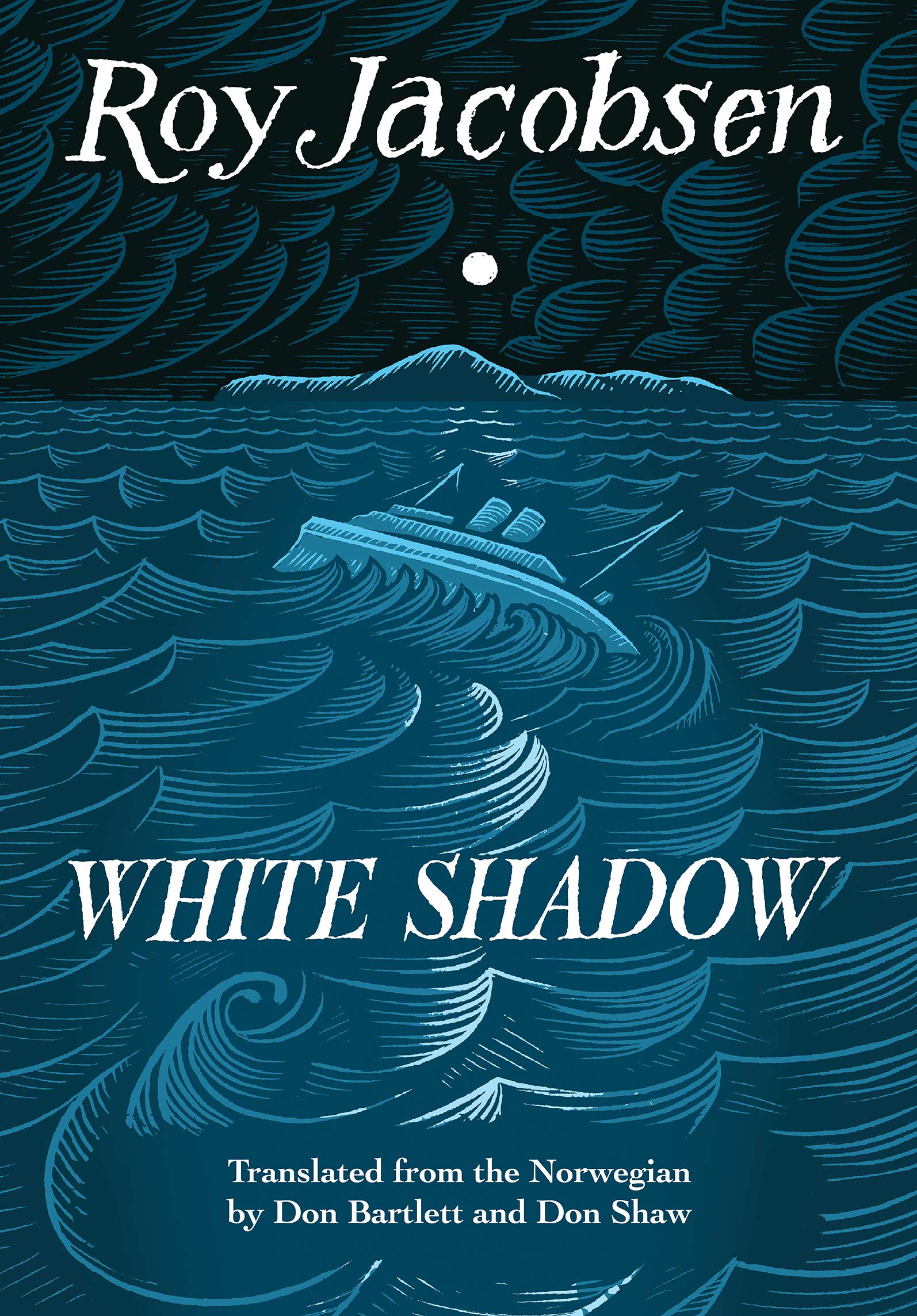
I have to admit to buying The Unseen because of its cover. I’m glad I did, because before I was halfway through, I was ordering the second book in the Barrøy trilogy. Although I’m not reading the shortlist for the Booker International prize, this novel was shortlisted for it.

After reading much of Halldor Laxson’s Independent People under the belief that it was describing Icelandic life in Medieval times, only to find out it was set in the 20th century, I don’t make assumptions about the times in which novels are set anymore. The Unseen describes a similarly primitive existence, with not many hints to its timeframe, but I finally figured out it begins a few years before World War I.

Ingrid’s family lives on Barrøy, one in an archipelago of many small islands in northern Norway. Each island is occupied by one family, and although the islands are in sight of each other, visits are rare, so the family has to be fairly self-sufficient.

Ingrid’s father, Hans, works hard and dreams of a different life for his family. His immediate dream is for a quay to make it easier for boats to land, so that when Uncle Erling arrives with his large fishing boat each January to pick up Hans for the yearly fishing, he can get off the boat. The novel relates the everyday events of the family’s life—the four-month fishing trips, the haying and fish drying in summer, milking cows, moving livestock from one small island to another for grazing, collecting and cleaning down from the eider ducks. And the big events—births, deaths, expansions and contractions of the residents of the islands.

Written in spare, crystalline prose with an occasionally very dry humor, The Unseen is fascinating. I loved this novel. And here I am reading about islands again.

Related Posts

Independent People

A Place Called Winter

The Rathbones

Review 2113: The Clockwork Girl

I liked Mazzola’s The Story Keeper well enough to try another book by her. This one looked interesting.

In 18th century Paris, Madeleine was forced into prostitution at a young age by her mother and so badly scarred by a customer that she now works in the brothel as a maid. She is determined to escape with her nephew, which is one reason she reluctantly agrees to spy for the police on the household of Dr. Reinhart. She is supposed to find out what he is working on, but once installed there, she finds it difficult to learn anything. Something about Reinhart seems off, but he locks up his secrets. However, his interest is in anatomy and he makes elaborate wind-up animals.

A second narrator, Véronique, is Reinhart’s daughter, newly returned from being raised in a convent. Her father has promised to train her in his work, but time passes and he works only with Doctor LeFevre on some project for the King.

Madeleine hears rumors that children are disappearing off the streets and worries about her nephew.

A third narrator is Madame de Pompadour, who is afraid she is losing the King’s affection and worried about what he is up to.

This novel is fast-paced and eventually gets very creepy, but there are some unlikely aspects about it, especially how neatly everything is resolved. Still, it certainly kept my attention.

Related Posts

The Story Keeper

Little

Pure

Review 2109: Orphans of the Carnival

After reading Carol Birch’s Jamrach’s Menagerie, I had high expectations for Orphans of the Carnival, especially as it had in common the carnival setting. However, my reactions to this novel were much more mixed.

The subject of the novel is a woman who really existed, Julia Pastrana, a 19th century performer. Julia was more than a performer, though. She was a famous “freak” at a time when such shows were popular. She is described only here and there and in pieces so that we slowly get an idea of what she looked like, but she was labeled an ape-woman, among other names.

The novel opens as Julia has decided to take up a showman’s offer and leave her home in Mexico, where she works as a servant, to travel to New Orleans to work in a sideshow. But her hunger for travel and adventure is stifled, because her boss wants her to stay out of view except when she’s on exhibit, discouraging her from even walking around heavily veiled, as she usually does.

Julia eventually changes agents and quickly becomes world famous, being an accomplished performer and speaking several languages. But she yearns for a fulfilling private life.

The trouble is, Birch didn’t succeed in making Julia an interesting personality. This problem may be because she was a real person and Birch didn’t want to take too many liberties, but sometimes I want to say to authors, “Your characters aren’t inherently interesting even if you put them in interesting situations. You have to make them interesting.” Further, she doesn’t do much with the carnival setting.

Birch also uses at least one anachronism when she puts Julia in pantyhose. Pantyhose wasn’t actually invented until 1959 and was called “panty legs” at first. The term “pantyhose” didn’t become common until the mid-1960’s.

There is also a present-time story about a woman who fills her apartment with lots of odd objects she’s picked up. There seems to be no connection between the two story lines until the very end of the book. However, when they do link up, the connecting is haunting.

The end of the novel is very much the best part of the book, but otherwise I had trouble staying with it and read two other books in between starting and finishing it. This for me means I am having trouble concentrating on the one I’m reading.

Related Posts

Jamrach’s Menagerie

The Mermaid’s Child

The Wonder

Review 2105: The Royal Secret

When James Marwood and Cat Lovett, now the widowed Mrs. Hakesby, meet Mr. Van Riebeeck at the theater, Marwood has no idea that his investigation of someone selling state secrets will involve him. Cat, who has carried on her husband’s architectural business since his death two years before, has thought she would never be drawn to a man, but she is to Van Riebeeck.

When Marwood’s investigation begins to focus on Van Riebeeck, he tries to warn Cat, but she just thinks he is jealous, which he is. In the meantime, Cat is working on plans for a chicken house for the King’s sister, Madame, and is asked to take them and a model to France.

Van Riebeeck has already killed three people and proposed marriage to Cat before he disappears. But since one of the murdered is Marwood’s own footboy, he is determined to find him.

This is another excellent entry in the Marwood/Lovett series. The main characters remain interesting, and Taylor involves them in some intriguing plots. I am enjoying them.

Related Posts

The Fire Court

The King’s Evil

The Last Protector

Review 2104: The Other Side of the Bridge

Mary Lawson’s milieu is the tough life in remote northern Ontario. In The Other Side of the Bridge, she examines the relationships between parents and children and between brothers.

In the late 1930s, Arthur and Jake Dunn are a farmer’s sons. Jake was born after their mother had several miscarriages, and she has been so worried about him that he has not been made to work the farm, while Arthur works hard to help his father. Jake gets by on charm and recklessness, while Arthur tries to protect his mother by lying about the various fixes Jakes gets himself into. Arthur, who is quiet, solid, and dutiful, realizes at one point that Jake is purposefully making trouble for him.

Although his mother loves only Jake, Arthur has the moral high ground until a fateful accident on a bridge.

In the 1950s, Ian Christopherson is a high school student whose mother has left him and his father. He is harboring hatred for his mother for leaving and a disinclination to become a doctor like his father just because it’s expected. He also has a crush on Laura Dunn, Arthur Dunn’s wife, and asks for a summer job on the farm just so he can sometimes be around her. The couple seems content, but their relationship is more complex than he realizes until brother Jake comes home after having been gone for 15 years.

This novel is deeply affecting, dealing with long-suppressed emotions and intricate relationships. It is written in beautifully spare prose. Another great book from Lawson, who deserves a lot more attention than she seems to be getting.

Related Posts

Crow Lake

A Town Called Solace

Family Furnishings

Review 2096: The Raven’s Children

I thought Yulia Yakovleva’s Punishment of a Hunter was an excellent 1930’s-era Russian mystery, so I looked for more. But all I could find was The Raven’s Children, a children’s book.

In Stalinist Soviet Union, seven-year-old Shura lives with his older sister Tanya, his baby brother Bobka, and his parents. All of them are patriots, but one night his father disappears. The next day, their mother behaves oddly, packing a suitcase, saying she quit her job, but she doesn’t tell them anything. The family unusually has a two-room apartment with Shura and Tanya’s bedroom accessed by a wardrobe so the second room is not obvious. That night Shura is awakened to see someone being taken away in a black car. The next morning, their mother and Bobka are gone, and Shura overhears a neighbor saying that they were taken away by the Black Raven. Their neighbors won’t speak to them except the timid old lady down the hall, who gives them a purse of money from their mother with instructions to go to their aunt.

Neither child wants to go to the aunt, so they spend the day wandering around talking to the birds (who talk back), trying to find the Black Raven. Gradually, they understand that their parents are thought to be spies and traitors. They think there must be some mistake and if they find the Black Raven they can tell him so. Then when they arrive home at their apartment that night, they find their neighbor living in it.

I always go under an assumption that the age of the protagonist in a children’s book is roughly the age of its intended audience. That being said, I think that children that age would understand very little of this book and be terrified by some of it. And I’m not a person who thinks children shouldn’t be scared by books.

For one thing, Yakovleva slowly brings in an element of magical realism. The talking animals and even Shura becoming invisible and having people walk through him was okay. But Yakovleva makes metaphors become real, so ears and eyes appearing in the walls are really creepy. But the worms are the worst. And I don’t want to spoil anything, but some characters, once disappeared, stay disappeared.

Yakovleva wrote this novel because her grandfather had similar experiences as a child during Stalin’s Reign of Terror. This novel might work as a teaching tool, but I would advise it to be with discussions with an adult who has read up on the period. Otherwise, I don’t think children are going to understand this novel.

By the way, several adult Goodreads readers complained that they didn’t understand what was going on, and at least one of them said she was from a former Soviet country.

Related Posts

Punishment of a Hunter

Sofia Petrovna

Mastering the Art of Soviet Cooking