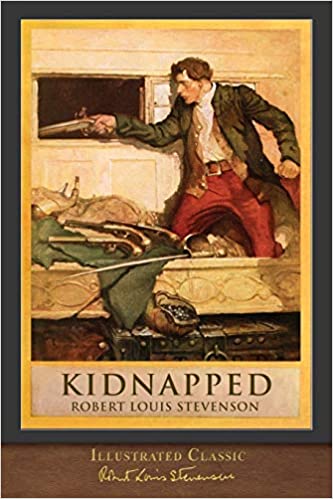
Review 1835: Kidnapped

His mother long dead and his father recently having passed away, young David Balfour is ready to set out to seek his fortune. But family friend Reverend Campbell gives him a letter from his father to take to an Ebenezer Balfour of Shaws near Edinburgh. David hopes that if he has a wealthy relative, the man will help him to a career.

When David arrives at Shaws, he finds it incomplete, almost a ruin, and Ebenezer Balfour to be unwelcoming. He is David’s uncle, but right away he sends David up a ruined staircase almost to his death. Then, once his uncle has agreed to go with David to a lawyer, Mr. Rankiller, to discuss David’s inheritance, he has David kidnapped by an unscrupulous sea captain, who is supposed to take him to work as a white slave on a plantation.

North of Scotland, the ship David is on runs over a small boat in a storm, and the only survivor of the boat is Alan Breck Stewart, a Highland Jacobite who has been collecting money for his exiled chief. He has saved his belt full of gold, but David overhears the ship’s officers planning to kill the man for his money. David alerts Stewart, and the two hold off the crew in the roundhouse, ending with a much-depleted crew. Ultimately, this results in a shipwreck.

Beached in the far northwestern Highlands, David and Alan must avoid capture by the English army while they journey to Edinburgh to reclaim David’s inheritance and find Alan another ship for France.

This novel was my favorite Stevenson book as a child, so I was curious how I would view it now. I enjoyed it very much. David and Alan are interesting contrasting characters, and the novel gives a good idea of living in the Highlands in 1751. It’s full of adventure, too, a fun read.

Related Posts

Treasure Island

The Black Arrow

Travels with a Donkey in the Cévennes

Review 1831: The Tolstoy Estate

Paul Bauer, an army surgeon during the World War II German invasion of Russia, finds himself stationed at Yasnaya Polyana, the ancestral estate of Leo Tolstoy. It is set up as a field hospital.

The men are startled to find a woman on the estate—Katerina Trubetzkaya, the Head Custodian. She and the estate workers refuse to leave. Bauer, who speaks a little Russian and is an admirer of Tolstoy, finds himself almost immediately falling in love with her.

This novel details the six weeks of the German army’s occupation of Yasnaya Polyana. Toward the middle, the book jumps ahead in the form of letters to tell what happened to the characters.

I enjoyed this novel. I thought that the descriptions of the field hospital and the characters’ activities seemed convincing. Particularly convincing seemed the descriptions of the cold. Conte does a good job of humanizing the German soldiers while still including some inflexible and dogmatic soldiers and some true Fascists. For example, the commander, Julius Metz, is slowly becoming unhinged from treatments of amphetimines.

Despite the novel being described in grandiose terms on the cover, I felt there was something slight about it. The love affair it was centered on wasn’t very convincing, for one thing, and I didn’t like how the letters broke the forward action of the plot and somehow seemed to trivialize the story. They certainly destroyed any suspense about whether the main characters would survive.

Since Tolstoy seems to be important to Conte, perhaps he could have found some way to sustain this importance. He says in the acknowledgements that both the Soviet and German soldiers were “acutely conscious of the site’s cultural, ideological, and even metaphysical significance,” but in the novel, of the Germans only Bauer and Metz, in his weird way, seem to be. I read this for my Walter Scott prize project.

Related Posts

The Girl from the Channel Islands

Abigail

The Zone of Interest

Review 1827: The House Between Tides

A house on an island separated from the main island by a causeway only open at low tide is the focus of this novel set in the Outer Hebrides. It’s a dual timeframe novel, which format I have to admit I am tiring of.

In 1910, Beatrice Blake arrives with her new husband, the famous artist Theo Blake, to his home on the island for the summer. In 2010, Hetty Devereaux has inherited the house and is considering turning it into a hotel.

Neither woman has made a good choice of partner. Theo thought Beatrice would drive away his thoughts of his first love Mailí but realizes very soon that she cannot compete and begins to neglect her. Hetty’s fiancé Simon has forced his way into her plans and has hired people to do surveys and look into such issues as financing before Hetty has even seen the property.

Both of these stories deal with how the property should be handled and how much claim the crofters have to the island, but in 2010, bones have been discovered under the foundation of the house. The 1910 story eventually reveals whose bones they are.

I found this novel interesting, and the descriptions of the island are lovely. However, even though I saw complaints about Hetty’s lack of backbone, I was more interested in the modern story than the older one. Possibly it’s because it was obvious to me why Theo is so interested in his factor’s son, Cameron, and also because I wasn’t interested in Beatrice’s romance. The final twist was obvious to me, although I didn’t figure out who the bones belonged to.

This novel is atmospheric but a little hackneyed, I think.

Related Posts

The Forgotten Garden

The Sea House

When They Lay Bare

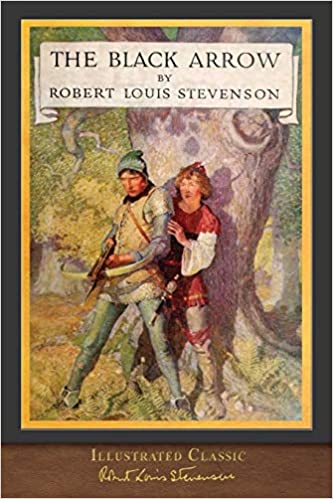
Review 1815: The Black Arrow

I occasionally collect children’s books, mostly those with good illustrations, and a few months ago I started thinking about the books that used to be readily available, all adventure stories by various authors but illustrated by N. C. Wyeth. I decided to look for some of those, and the ones I bought were both by Robert Louis Stevenson, Kidnapped (my personal favorite) and one I’d never read, The Black Arrow.

Young Dick Shelton has lived under the wardship of Sir Daniel Brackley for most of his life and is loyal to him even though he seems to switch sides in the Wars of the Roses rather frequently. But mysterious attacks against his men by a group calling themselves the Black Arrow begin to awaken Dick to feelings of just resentment against Sir Daniel. For he has used the war and his position to cheat people out of their property.

Dick is on his way from Sir Daniel’s encampment when he encounters a boy named Jack Matcham whom he met in the camp. The boy (who everyone but Dick can see is really a girl) asks Dick for his help to get to Holywood. Dick helps Jack, but they fall back into Sir Daniel’s hands. Once there, Dick begins asking about the death of his father, for he has heard rumors that Sir Daniel was responsible.

This is an entertaining adventure story, and I’m not sure why it isn’t as highly regarded as Treasure Island (which has never been one of my favorites). The only thing I can think of to make it not as popular is the archaic speech Stevenson uses, which, while probably not that authentic, did not strike me as inauthentic, if that makes any sense. The novel features plenty of action, some appealing characters and some villains, and Richard of Gloucester (eventually to become Richard III) even makes an appearance as a young man.

Treasure Island

Witch of the Glens

Richard III, England’s Black Legend

Review 1805: The Mercies

A freakish storm kicks up one day in 1617 and drowns all the men on the island of Vardø who are out fishing. Only young boys and old men are left. There is no one to help the women, so they have to learn to fend for themselves, including fishing, which is considered unwomanly. Maren’s fiancé and her father and brother are all gone, so she must try to take care of her mother, her brother’s Sámi wife Diina, and her little baby nephew.

In Bergen, Ursa’s father has made one poor decision after another since her mother died, leaving the family relatively poor. She is happy taking care of her invalid sister, but soon she learns her father has betrothed her to Absolom Cornet, a Scot he hardly knows, who has been appointed the Commissioner of Vardøhus, the rarely occupied fort on Vardø. Her father thinks he has done well for her, but they have no idea that Cornet is being sent to root out witchcraft.

Ursa is taken aback at the primitive conditions she finds in Vardø, in remote Finnmark, and she knows nothing about keeping house. When Maren brings her some skins the villagers have prepared to keep the cold from coming up from the floor, Ursa asks her to teach her how to take care of the house and cook. Thus begins a deep friendship.

But Ursa’s husband has already begun looking for witches. The first names that come up from a vicious bunch of pious women are Maren’s Sámi sister-in-law, an older woman whose large house is a target of envy, and Maren’s bold and unconventional friend Kirsten.

The Mercies is a deeply involving fictionalization of true events in early 17th century Norway. Seldom have I felt such a growing feeling of dread as when I read this novel. It is truly gripping. It seems well researched and has believable characters.

Widdershins

Corrag

The Witches: Salem, 1692

Review 1804: Beheld

In the Afterword to Beheld, TaraShea Nesbit says she wrote it because she wanted to hear the women’s voices she missed in reading about Plymouth Colony. Certainly, the voices we hear in the novel are mostly those of the women or the dispossessed.

Beheld focuses on some of the stories we never heard about Plymouth, particularly the divide between the Puritans and the other residents—indentured servants, farmers, carpenters, and the other people meant to do the work and who do not share the Puritans’ beliefs.

Alice Bradford is the second wife of the governor, William Bradford. His first wife was her beloved friend Dorothy. But Dorothy died upon her arrival in Plymouth under circumstances Alice doesn’t understand, and shortly after Alice’s own first husband died, William sent for her to be his wife.

John and Eleanor Billington signed contracts to work for seven years as indentured servants in exchange for a parcel of land for each male in their family in the proposed colony in Virginia. But first the Puritans’ boat The Speedwell sprung a leak and the Puritans forced themselves onto The Mayflower. Then the boat went north to Massachusetts instead of Virginia. The Puritans took charge of the colony, not allowing the same rights to other men, not allowing anyone but themselves to trade with the natives, giving themselves the best parcels of land, and finally cheating John out of his son’s parcel.

This is an interesting novel that depicts the Puritans as self-righteous and self-serving. Of course, most of us who have studied this period and place since grade school know this, but perhaps not how much. Miles Standish is shown as greedy and violent. I felt this novel was quite eye-opening.

Mayflower: A Story of Courage, Community, and War

The Witches: Salem: 1692

Caleb’s Crossing

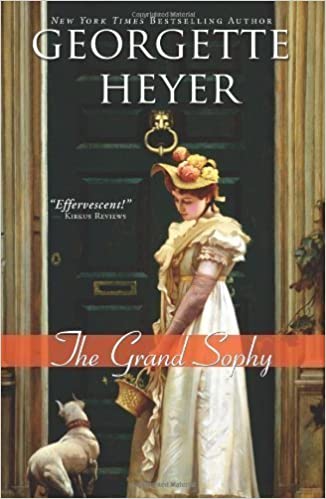
Review 1801: Classics Club Dare! The Grand Sophy

The latest Classics Club Dare is to read something romantic for February, so I have chosen The Grand Sophy from my list.

When Sir Horace Stanton-Lacey unexpectedly arrives at Lord Ombersley’s home to ask his sister to take charge of his daughter Sophy for a while, he discovers a depressed household. Lord Ombersley’s gambling debts had almost overrun the establishment until his son and heir, Charles Rivenhall, inherited a fortune from a distant relative. Charles “did something with the mortgages” and paid off the debts, and now he is trying to get the household to economize.

Charles is also engaged to Eugenia Wraxton, whose outward sweetness hides a self-righteous and meddling disposition. Her plans to occupy the family home after the wedding depress everyone except Charles.

By the time Sophy arrives, the announcement of her cousin Cecilia’s engagement to Lord Charlbury has been delayed by his having contracted mumps. Cecilia now thinks herself in love with Augustus Fawnhope, a devastatingly handsome but vague young man who fancies himself a poet.

Sophy arrives like a breath of fresh air. She brings a monkey and a parrot to entertain the children, a shy greyhound, and a fabulous black steed to ride. She immediately realizes that the family needs her help. And she never shirks her obligations.

Sophy is a firecracker of a heroine, and The Grand Sophy is one of Heyer’s most beloved novels. There is lots of fun to be had as Sophy’s stratagems twist and turn the plot. The novel is a re-read for me for the Classics Club, but I loved it this time just as much as I did the first time I read it.

Frederica

Venetia

Faro’s Daughter

Review 1799: Summer Will Show

I have enjoyed the two other books I read by Sylvia Townsend Warner, but I am not as sure how I feel about Summer Will Show. According to the Introduction by Claire Harman, the two main characters bear a strong resemblance to Warner’s real-life companion, Valentine Ackland (Sophia) and herself (Minna). This may be the problem I have with this novel, because, as with Vita Sackville-West’s Challenge, depicting a semblance of her own true-life relationship, I think perhaps the closeness of the relationship inhibits the writing. In this case, I didn’t really get the attraction between the two women. It didn’t seem convincing.

in 1848, Sophia Willoughby has been running her estate and raising her children on her own for some time. She has long tolerated her husband’s affairs, but when she hears of one with Minna Lemuel, she is enraged. Minna is famous as a sort of actress/prostitute/mountebank, and she is not only unattractive but older than Sophia. Sophia tells her husband Frederick he can stay in Paris.

Although Sophia is an extremely competent manager, she is impatient in many ways with her woman’s role. She wants to live a free life. She is not happy in society and has no friends. Although an attentive mother, she thinks her children are too soft and doesn’t coddle them. Then a mistaken attempt to toughen them up ends in their deaths.

With no one to care for, Sophia decides to go Paris and talk her husband into having another child with her. She arrives there as the Parisians are preparing for another revolution.

In searching for Frederick, Sophia meets Minna and is immediately captivated. In a short time, she is caring for her instead of a new child. Minna is a revolutionary, however, and although Sophia is skeptical of the movement, whose advocates seem to hang around Minna’s flat and do little, she is slowly drawn to Communism. In the meantime, Paris is starving.

Aside from what I felt was an unconvincing love affair, I wasn’t really interested in the revolutionary setting or the turn to Communism, which wasn’t very coherently explained. I was also appalled by Sophia’s treatment of Caspar, her husband’s illegitimate half-caste son. So, not so excited about this one.

Lolly Willowes

The True Heart

Challenge

Review 1797: The Historians

Like her previous two novels, Cecilia Ekbäck has set The Historians partially on the fictional Blackåsen Mountain, a stand-in for the Kirina Mine in far northern Sweden. This novel is set during World War II.

In Lapland, a Sami girl goes missing. She is not the only one. Near Blackåsen, a miner decides to find out what is going on in the secret mine, the one that is supposedly out of bounds. He hopes to find members of the Norwegian resistance there, so that he can help them against the Germans, Sweden being neutral. Later, he is found dead.

In Stockholm, Laura Dahlgren is approached by her best friend Britta’s Sami friend Andreas. He tells her Britta has disappeared, and he is worried. Britta and Laura were part of a group of special history students studying with Professor Lindahl at Uppsala University. After the others took up careers, Britta remained, working on her thesis. Laura thought Britta wanted to tell her something the last time she saw her, but she did not. Now not only is Britta missing, but so is her thesis.

Jens Regnell, the secretary of a government minister, is perplexed when the ministry archivist, Daniel Jonsson, asks about some phone calls to the Danish and Norwegian foreign ministers that were not logged. In fact, he doesn’t know how one could circumvent the logging. When he tries to find out about the calls, he is shut down and then Daniel is replaced, reported to be ill. Next thing he knows, Daniel is dead, a supposed suicide. Oh, and Jens receives in the mail a thesis by a student named Britta Hallberg.

This novel is genuinely thrilling, as Laura reconvenes the friends in her study group to find out what happened to Britta and what was in her thesis. I started out reading this novel when I had to take a break from reading another novel on my iPad because it needed a charge, but I ended up putting that one aside completely, even after my iPad charged, until I finished this one.

In the Month of the Midnight Sun

Wolf Winter

Warlight

Review 1793: Dare Not Tell

Full disclosure: Elaine Schroller is a friend of mine, and I received a copy of her novel in exchange for a free and fair review.

In 1939, Sophie and Joe Parker are about to make a sort of pilgrimage to Villers-Bretonneaux, France, the site of the most vicious battle Joe fought in during World War I, the one that gives him nightmares.

In 1916, Sophie Holt is a young American nurse volunteering in a hospital in Paris when she meets Second Lieutenant Joe Parker on leave from the Australian army. Joe is married, but they begin a friendship through letters that lasts the duration of the war. Joe’s wife Annie dies in the flu epidemic, but when Joe goes to look for Sophie at the end of the war, he finds that she’s married a British surgeon and moved to England.

The first third of the novel covers this relationship and follows the two until they get together after Sophie is widowed. Then it shifts in tone and purpose as Joe’s PTSD comes to the surface with the trip to France and the couple notice odd things going on in the valley around Chamonix.

It may be that this strong focus on their relationship creates some issues for me—in particular, that of characterization. Although both Sophie and Joe are likable characters, there is no sense of the personality of any of the other characters. For example, Sophie’s best friend only appears in one scene and later is reported killed. Sophie adopts her son, who is only mentioned in the novel and maybe speaks once, and Joe’s son hardly appears. And so on until it gets to Chamonix, so that I missed from this novel a real sense of what its other characters are like.

Until the trip to France in 1939, there is also little sense of the characters’ surroundings. That changes with descriptions of the landscape, and the novel, which seems to lag a little in the transition, picks up quite a bit.

Schroller has done a lot of research about the role of Australian soldiers in World War I France, that is clear. In her next book, I hope she works more at filling out the secondary characters and the sense of the world around them, both in setting and in the life of others.

The World My Wilderness

No More Parades

Goodbye To All That