Review 1587: Captain Paul

Quite a few years ago now, I bought the collected works of several 19th century writers in ebook form from Delphi Classics and resolved to read them all, starting from the earliest works. I didn’t get very far—read one or two novels by each—before life got in the way of my project and I forgot it. But recently, I thought I would occasionally interject one of those novels into my regular reading, and the first one is Captain Paul by Alexandre Dumas, his second novel.

Now, this novel is quiet peculiar, for Dumas was inspired for it by James Fennimore Cooper’s The Pilot, which is about John Paul Jones. I haven’t read The Pilot, but it seems that Dumas has taken some liberties with Jones’s life if not with Cooper’s book. In particular, while naming his character Paul Jones, as Cooper apparently does in his book, and using some actual episodes from John Paul Jones’s life, he makes him a Frenchman (he was, of course, Scottish-American), and he gives him an entirely fictional but romantic lineage as the illegitimate son of a French count (although JPJ was born on an estate, the son of a gardener, so maybe Dumas was making some sort of assertion about his birth).

In the novel, Captain Paul, unaccountably donning two disguises in the first few pages, takes onboard his ship a prisoner of France that he is supposed to deliver to the prison island of Cayenne. The crew is not supposed to speak to the prisoner, but his conduct during a battle with an English ship leads Captain Paul to ask for the story of the prisoner, Hector de Lusignan.

Six months later, Captain Paul visits Count Emmanuel d’Auray, who originally delivered Lusignan to the ship, to tell him he knows he imprisoned Lusignan unlawfully. Lusignan’s crime was to fall in love, without fortune, with d’Auray’s sister, Marguerite, and have a child with her. While d’Auray got rid of Lusignan, his mother, the Marchioness, removed Marguerite’s child. Now, they are trying to force her to marry a fop who has promised d’Auray a commission. Captain Paul announces his intention to get Lusignan a pardon and remove Marguerite’s child from wherever it is hidden. But when he learns Marguerite still loves Lusignan, he decides to help the lovers.

There are more secrets to come, including Captain Paul’s own identity.

This is a short, fast-moving novel once you get over your bemusement about poor John Paul Jones. It is entertaining, but after all the action is over, Dumas couldn’t resist adding an Epilogue, which tells us how everyone ended up and also contains more of Jones’s real (maybe) exploits. The Epilogue, therefore, is about as long as two or three of the chapters, and everything bogs down tremendously. This is the addition of an inexperienced writer, and we all know he improved.

By the way, I believe that the figure depicted on the cover above (which is not the edition I read) is actually supposed to be Alexandre Dumas’s father, who was a famous general.

Related Posts

La Reine Margot

The Black Tulip

Acté

Review 1582: The Mirror and the Light

Best of Ten!
At last, Hilary Mantel has produced this long-awaited third volume of her Thomas Cromwell trilogy, begun with Wolf Hall. One of the remarkable traits of this trilogy is that it lives fully within the thoughts of its main character, and never has a character been so thoroughly drawn.

The Mirror and the Light begins with the beheading of Anne Boleyn, which Cromwell has largely brought about at the urging of Henry VIII. Indeed, he has been avenged against most of the people who ruined his first and beloved master, Cardinal Wolsey, and Anne Boleyn was one of them.

However, his service is now devoted to that of his current master, Henry VIII. He sees that service to bring down Henry’s enemies but also to save Henry from the worst of his excesses. One of his first acts is to save Mary Tudor’s life by bringing her to obedience to her father. He also works to keep the realm within the Protestant religion. So, after the death of Henry’s third queen, Jane, following childbirth, he tries to find Henry a wife who will bring him allies from the Protestant German states. For England is alone and open to attacks from all Catholic countries.

I know my Tudor history, so I knew all along how this would end. The novels show a man who can be ruthless but who is also charitable, kind, and loyal. Not all of his cheerful, unruly household of semi-adopted sons turn out to be as loyal to him.

The last thirty pages or so of this novel had me in tears. For me, there can be no better compliment to a book.

Related Posts

Wolf Hall

Bring Up the Bodies

Queen’s Play

Review 1578: After the Party

In 1938, Phyllis Forrester and her family return to England from a long period of living abroad. Phyllis has been yearning to be near her two sisters, so they settle down on the Sussex coast.

Through her sisters, Phyllis gets involved with two different sets of people, with some overlap. Her socialite and snobbish sister Patricia introduces her to an upperclass group interested in social events. Her activist sister Nina is involved in the new Peace Party that runs educational classes and camps for youngsters. It’s not too difficult to figure out that their revered leader is Oswald Mosley.

It’s difficult to decide whether Phyllis is an unreliable narrator through innocence, obliviousness, or lying. I think most likely both of the first two. Certainly, this novel downplays the most negative aspects of Mosley’s party. Anti-semitism is mentioned but is not emphasized, and Phyllis denies the group is Fascist, which of course is what Mosley thought would be best for England. No mention at all is made of the blackshirts or links to Germany. But perhaps Connolly trapped herself into this point of view by using Phyllis as the narrator. In any case, for me the effect was a sort of whitewashing of this movement.

The novel starts slowly and takes a long time to get to its meat, which is the imprisonment of Phyllis and her husband without any due process. If Phyllis can be believed, her activities were fairly benign and this imprisonment was uncalled for. It also involves a betrayal.

I didn’t have much sympathy for Phyllis or really anyone in her circle. The socialites early on are involved in an incident of throwing a terrified pig off a balcony, which some of them seem to think is funny. Although Phyllis doesn’t seem to think it was funny, she also doesn’t seem horrified by it, either. It’s not clear to me what the author’s intent is toward any of her characters unless she is criticizing the class as a whole, both in their leisure and political activities. If so, the criticism is muted.

Periodically, we hear from Phyllis in 1979 when she is being interviewed by someone. If anything, her views have become more right wing. I found this novel rather unsatisfying. Is it a sympathetic one for someone unfairly imprisoned or does it chillingly depict these upperclass people? The novel is one I read for my Walter Scott project.

Related Posts

The Remains of the Day

Hons and Rebels

The House of Mitford

Review 1576: Smile of the Wolf

Best of Ten!
During a long winter night, Kjaran, a skjald, or poet, tells his host, Gunnar, about stories of a ghost on the farm of the recently deceased Hrapp Osmundsson. Gunnar, a Viking who retired to a farm and family, decides they should go kill the ghost.

At Hrapp Osmundsson’s farm, they find a ghost and challenge him to a battle. Gunnar kills him, and only then do they realize he is a neighbor, Erik Haraldsson, dressed as a ghost. He had been conspiring with Vigdis, the widow, to scare the neighbors off their lands so they could take them.

According to Icelandic law, the death would call for blood money paid to the man’s relatives, perhaps followed by a feud. But Vigdis urges the men not to report the death because of the shame to Erik of his deception. To not report the death is a worse crime than the killing, but Kjaran and Gunnar agree.

They soon learn what a mistake they’ve made, because Vigdis comes to Gunnar’s house and demands he put aside his wife and children and marry her. Gunnar refuses, and Vigdis begins making trouble that results in a feud and outlawry for Kjaran.

This gripping tale set in 10th century Iceland is modeled after the Icelandic sagas. Kjaran tells his story to someone who remains unidentified until the end. It is beautifully written, a memorable novel that is heart-breaking and powerful.

Related Posts

The Long Ships

Iceland’s Bell

The Greenlanders

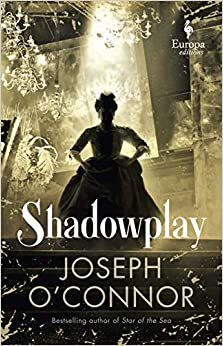
Review 1572: Shadowplay

Joseph O’Connor’s Ghost Light dealt with a relationship in the life of the playwright John Millington Synge. Shadowplay deals with a period in the life of another Irish literary figure, Bram Stoker.

In a novel that shifts back and forth over a 30-year time period, Stoker goes to work as general manager for the Lyceum Theater in London, having been hired by Henry Irving, the greatest Shakespearean actor of his time. Stoker has taken what he believes is a part-time job that will allow him to work on his fiction, but he finds himself assuming responsibility for everything in the theater, an overwhelming position. Further, he has to cope with his employer’s extravagance and his occasional wild rages. Worse, Irving is dismissive of Stoker’s literary efforts. Nevertheless, they form a lasting friendship.

Also involved in the theater is the famous actress Ellen Terry. Shadowplay is primarily about the enduring relationship between these three. However, it reflects other events of its time, particularly Jack the Ripper and the trial of Oscar Wilde. It deals with Stoker’s struggles to earn a living as a writer, a feat he never accomplished. And it has a ghost.

Shadowplay, which I read for my Walter Scott project, was involving and interesting.

Related Posts

Ghost Light

Dracula

The Children’s Book

Review 1568: The Cross

The Cross, the final book of Kristin Lavransdatter, begins after Kristin’s husband Erlend Nikulaussön’s political intrigue has resulted in the loss of all his property to the crown. Kristin and her family have resettled on her farm, Jörundgaard, which she inherited from her father. Erlend is no farmer, however, so Kristin and Ulf Haldorssön must see to everything. Kristin despairs because her sons are not learning how to keep the estate. Instead, they go running off with Erlend to hunt and occupy themselves as knights do. The likelihood of their being able to lead a knightly life is little, though, because of Erlend’s disgrace.

Although Kristin believes that her relationship with her sister, Ramborg, and brother-in-law Simon Andressön is good—in fact, she turns to Simon when she needs help—she finds that Ramborg is jealous of her.

This novel is the last volume of the series, and I found it more touching in several places than I did the other two. Kristin has found that her headstrong insistence on marrying Erlend has brought her to a life of unending care, and she must somehow resolve this.

This is a really interesting series which endeavors to show the  whole of this medieval woman’s life.

Related Posts

The Bridal Wreath

The Mistress of Husaby

The Greenlanders

Review 1561: #1956 Club! Sprig Muslin

Seven years ago, Sir Gareth Ludlow’s fiancée died tragically. Since then, he hasn’t met any woman who would make him forget her. He knows it’s his duty to marry, though, so he decides to propose to his shy friend Lady Hester Theale.

On his way to Lady Hester, he meets a beautiful young lady in some difficulty. He learns that in trying to force her grandfather to let her marry, she has run off with the aim of becoming a governess. When her supposed employer turned her away, she presented herself at the inn where he meets her proposing herself as a chambermaid.

Gareth is afraid that Amanda is too inexperienced to know what dangers she may encounter, but she will not tell him her grandfather’s name, so he takes her to Hester. Hester’s family assumes he has brought along his mistress, and her roué uncle spirits Amanda away the next morning.

Sprig Muslin is Heyer at her most ridiculous and fun, as Amanda’s fibs land her and Sir Gareth into serious trouble, requiring, of course, more and more fibs. As usual, her characters are lovable and her wit engaging. I always love reading Heyer, This one, I reread for the 1956 Club.

Related Posts

The Talisman Ring

Cotillion

Cousin Kate

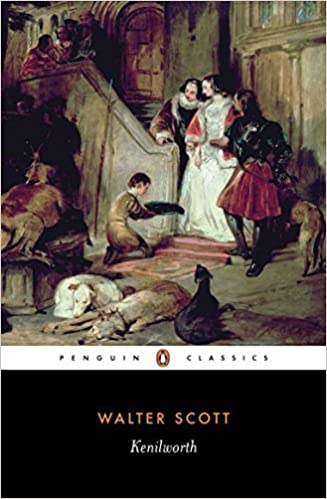
Review 1558: Classics Club Spin Result! Kennilworth

Here’s another book for RIPXV!

Reading Kenilworth for the Classics Club Spin made me contemplate the question of how important it is in a historical novel to stick to the historical facts. Of course, historical novels are fiction, so by definition something is invented. And there have been really interesting historical novels where the author purposefully changed some facts to speculate on other outcomes. But do historical novels have the license, just for a more dramatic story, to change what actually happened?

Kenilworth is the novel that famously reawakened interest in the story of Amy Robsart’s death. Amy Robsart was the wife of Robert Dudley, the Earl of Leicester, during the reign of Elizabeth I. Amy’s death is the classic mystery of did she fall or was she pushed? At the time of her death, the rumor in court was that Leicester colluded in her death because he believed he could then marry Elizabeth.

In the novel, Amy is a young bride who has run away from home for a marriage with Leicester that is secret because he is afraid for his position in court, having married without royal permission. Amy’s jilted fiancé, Tressalian, comes looking for her on behalf of her father, believing that Amy was seduced away from her home by Varney, Leicester’s master of horse.

Varney is the villain of this piece. He has Amy kept as a virtual prisoner, and eventually Amy has reason to fear for her life. So, she flees to Kenilworth, Leicester’s estate, where he is preparing to entertain Elizabeth and the court.

I fear that Scott has woven a romance with very little basis in fact, as he did with a Crusader-based novel I’ll be reviewing in a few months. First, in Kenilworth, Amy and Leicester are newly married when in fact they were married about 10 years. Next, their marriage was no secret; in fact, she was allowed to visit him in the Tower of London when he was imprisoned by Queen Mary as a relative of Lady Jane Grey. Did Leicester have a hand in her death? I read a novel a while back that posited that (it may have been Alison Weir’s The Marriage Game, but I’m not sure), but we’ll never know. More recently, historians are inclined to believe that she simply fell down the stairs. By the way, she was not being kept captive in a moldy old house but visiting friends.

So, that is a strongish negative for me, at least. I could accept a premise that Leicester ordered his wife’s death because we don’t know, but playing with the chronology of the marriage for drama’s sake (and to have a younger, dewier heroine) and making it a secret (as it was also in a movie I saw several years ago) is throwing in a bit too much fiction.

On the positive side, Scott’s descriptions of the Elizabethan court are vibrant and his attempts at Elizabethan dialogue are convincing. Also, if he was not distorting history I’d say that his plot is quite suspenseful. At the time of its publication, historians slammed The Talisman just because Scott created a fictional Plantagenet, even though he did much worse things historically in that book and in this one.

Related Posts

Guy Mannering

Waverly

The Marriage Game

Review 1554: The Vanishing Futurist

Right before the start of World War I, Gerty Freely goes to Moscow to be a governess for the Kobelev family. There she falls in love with one of Pasha Kobelev’s friends, Nikita Slavkin, a brilliant, idealistic scientist and revolutionary. Although Gerty is not political, she eagerly embraces the life of a communard in a commune Slavkin founds in the Kobelev’s house after the revolution. With them are Pasha and his sister Sonya and a few other young people.

Slavkin’s mission becomes to invent a machine that will change people’s cellular structure making them perfect Communists. Eventually, he comes to believe that he can make a machine that will transport a person into another dimension where perfect Communism is possible. Certainly, it doesn’t seem possible in the present one.

Hobson’s novel skillfully depicts the idealist euphoria and immense creativity of the early days of the Russian revolution as well as the hardships, the inevitable disintegration of communal life, and the craziness of those days as the revolution begins to turn in on itself. It makes really interesting reading and seems to much more authentically depict the time than any of the recent novels I’ve read about it.

I read this book for my Walter Scott Prize project and really enjoyed it.

Related Posts

The Revolution of Marina M.

A Gentleman in Moscow

Memories: From Moscow to the Black Sea

Review 1551: The Grey Woman

Here’s another book for RIPXV.

This novel opens with an unnamed narrator, a traveler in Germany, who meets a pale woman known as The Grey Woman. When he asks for her story, she gives him a letter she wrote to her daughter. This letter contains her story.

As a young girl in 1778, Anna Scherer is very beautiful. A miller’s daughter, she is invited to visit a school friend in Karlsruhe, where she stays with the Rupprechts. She is a shy girl, but she makes a conquest of her social better, a Frenchman named Monsieur de la Tourelle. She is pushed by Frau Rupprecht into receiving him and accepting his gifts, and the next thing she knows, she is engaged to marry him even though he makes her feel uncomfortable.

After their marriage, de la Tourelle takes her to his castle in the Vosges Mountains, where she feels that the servants spy on her. He makes her cut all ties to her family and tries to control her every movement, not allowing her even to go for a walk. The saving grace is Amante, the servant he hired to be her lady’s maid.

Aside from being a stern and controlling husband, de la Tourelle has a fearsome secret, which Anna and her maid discover by accident.

This novel is typical of the gothic genre that was popular in its time, except that it is much more believable than most that I have read, not including any supernatural elements. I took it to be one of Gaskell’s earlier works, and it may have been, because it was published the year of her death, in 1865. It is very short, easy reading, although the antique-sounding dialogue is a bit cumbersome. Luckily, there’s not much of it.

Related Posts

Tales of Mystery and the Macabre

The Castle of Wolfenbach

The Mysteries of Udolpho