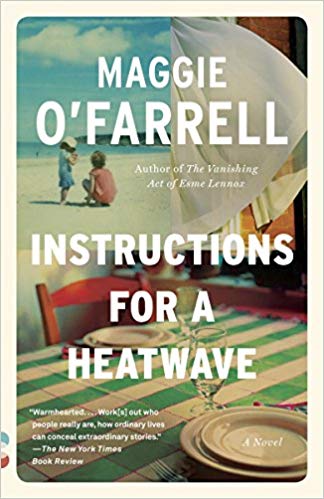
Review 1492: Instructions for a Heatwave

I’m really liking Maggie O’Farrell. I don’t know why it took me so long to try her.

In 1976 London, the country is experiencing a record-breaking heatwave. (Of course, those of us who have lived in Texas don’t think 90° F is that hot.) One morning, Gretta Riordan’s newly retired husband doesn’t return from his trip to the store. When her grown children go to the police, they find out he’s taken money from the bank account and say he is not, therefore, a missing person.

This event brings the rest of the family together for the first time in three years, which was when Aoife, the youngest sibling, left for New York after her sister, Monica, broke with her. Aoife still doesn’t understand the reason for the break.

Monica herself is not happy. After her first marriage, to Joe, broke up, she married Peter. Peter has two daughters who hate her. She hates the old house in Gloucester where she lives, in which Peter will allow her to change nothing.

Michael Francis loves his wife and children but feels his wife is becoming distant. It takes a while to find out why.

All, even Gretta, have secrets, which must come out before relationships can be healed.

O’Farrell writes luminous prose and understands the complexities of people. This is a lovely book.

Related Posts

After You’d Gone

This Must Be the Place

Dear Thief

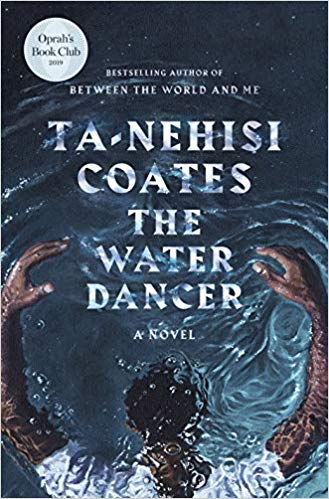
Review 1489: The Water Dancer

Hiram Walker is a slave on a Virginia plantation with a photographic memory and a talent for mimicry. As a boy, he attracts the attention of the master, who is also his father. His father has Hiram educated for a year, and the naïve boy imagines he might take an important place on the plantation, but the master’s intention is simply to have Hiram keep his heir, Maynard, out of trouble.

One day on the way back from town, the carriage, being driven recklessly by Maynard, goes into the river. Maynard is drowned, and Hiram wakes up in a field far away from the river. Hiram begins to fear he’ll be sold off to Maynard’s fiancée, Corinne. So, he plots an escape for himself and his master’s brother’s concubine, Sophia.

The Water Dancer has aspirations to literature, and that was one of my problems with it. Occasionally high-flown prose runs from the lyrical to the clichéd. Some of the conversations are absurdly unlikely. One of Coates’s affectations was for the slaves to call themselves the Tasked, which seems to be hardly authentic; in any case, I could find no other such use of the word.

Sometimes, the action slows almost to a halt. For example, Hiram falls into the water on page one and doesn’t come out until about page 100, during which Coates provides background. I’ve run into approaches like this before lately, and all I can say is that something like this that works in a movie doesn’t translate well to fiction, where you are reading for hours over a time that is supposed to be a few minutes.

Coates’s goal here isn’t to tell about the cruelties of slavery so much as to put his tale on a higher plane. He also introduces an element of speculative fiction.

I struggled with this book for about a week and decided to quit halfway through. At that point it was becoming clear that Sophia would have a bigger role, but her character was so little defined that I felt she was almost a MacGuffin. I just couldn’t get on the same wavelength with Coates.

Related Posts

A Most Extraordinary Pursuit

Homegoing

Washington Black

Review 1485: Bitter Orange

Best of Ten!
Frances, on her deathbed in some sort of institution, remembers the events of a summer 20 years before, in 1969, when she came to know her only friends. Frances’s mother has recently died when she takes a job at a crumbling mansion called Lyntons where she is to report on any interesting architectural features on the grounds to its new owner. There she meets Peter, who has been similarly employed to evaluate the house and its contents, and Cara, his wife.

Cara and Peter befriend Frances during a heady summer of near camping out in the destroyed house. The three soon begin picnicking and enjoying themselves while Cara tells Frances fascinating stories about their previous  lives.

There is clearly something a little overstrung and off about Cara, but Frances is entranced by the friendship she has never had before and also falling in love with Peter. Even when the two show they are not particularly honest, she is not dissuaded, despite hints from her other friend, Victor, the vicar.

This novel is wildly atmospheric while somehow remaining quiet. There are odd, unexplained touches—a telescope inserted into the floor of Frances’s attic bedroom, so that she can see what happens in the bathroom below, imagined smells, noises, and glimpses of faces in the attic, suggesting a haunting. Slowly, we realize that Frances has her own problems.

This is a haunting novel, evocatively written, about loneliness and longing, about the fathomless qualities of guilt. I was riveted by it.

Related Posts

Rebecca

Days of Awe

The Poison Tree

Review 1482: Grace

In the midst of the Irish famine, Grace’s mother awakens her in the middle of the night and hacks off her hair. She tells her she must go out as a boy to get money for the family. Besides, Boggs, who lets the family stay in their house in exchange for sex with her mother, has been eyeing Grace lately. So, Grace is cast out to fend for herself, wandering through a country thronged with starving people, a country that’s becoming more and more desolate.

From the first words of this novel, you know you are reading something different. The prose is beautiful, mesmerizing, occasionally hallucinogenic, as Grace goes through one experience after another, haunted by the people she loses along the way.

What an experience it was to read this book. I read it for my Walter Scott project. It’s a book I probably wouldn’t have come across except for that, and I’m grateful to have read it.

Related Posts

The Mermaid’s Child

Neverhome

The Wonder

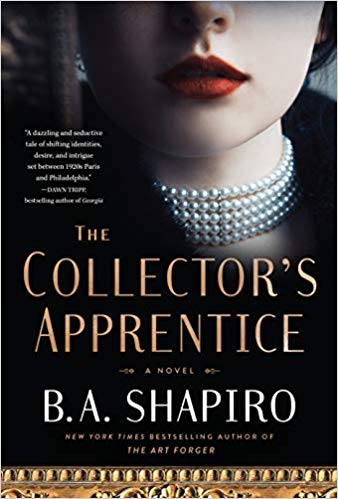
Review 1477: The Collector’s Apprentice

I find that as I read more, I have a lot less patience with mediocre fiction. Either a novel has to grab me immediately or I have to feel that I am reading good fiction. So, I had only about 50 pages of patience for The Collector’s Apprentice.

Vivienne has taken on an alias after her fiancé, George, scammed her father and other investors of their money. Even though she doesn’t believe George was guilty (he told her a Swiss banker cheated everyone), she has been blamed for it and ostracized from her family. She finds herself with no means of support in 1922 Paris.

She has to put up with about five pages of hardship before being hired as a translator for Edwin, a collector of fine art from the United States. As her ambition was to curate her father’s collection, this job is perfect for her.

I was willing to put up with the chick-lit-like features of this novel because of my interest in the art world it seemed to be approaching. However, soon it became clear that we were going to get entangled with George again, and I found that not at all interesting. So, I quit reading.

Related Posts

The Paris Architect

The Light of Paris

At the Water’s Edge

Review 1476: Immortal Wife

Irving Stone was extremely popular in the mid-20th century for mostly biographical fiction. His most famous novels are The Agony and the Ecstacy about Michelangelo and Lust for Life about Vincent Van Gogh. Immortal Wife is his second book, about the life of Jessie Benton Fremont, the wife of explorer John C. Fremont.

Jessie Fremont certainly had an exciting life, even though a lot of her time was spent waiting. She was actively involved in her husband’s professional life. The work she did of helping her father write his reports when she was unmarried, she continued with the reports Fremont submitted after his explorations. She lived on an Indian reservation during his second expedition. She was one of the first white women to travel to San Francisco via a trek across Panama. She lived in untamed San Francisco and later Mariposa during the lawless days of the Gold Rush. When Fremont lost a fortune through unwise partnerships, she supported the family by writing stories.

Fremont was a controversial figure, and Jessie was partly to blame for a lot of the controversy. Upon his first command, she prevented him from receiving orders that would have made him turn back, and he was courtmartialed later partially because of this incident. Her advice resulted in more than one incident like this. Partially because of an attitude that the couple knew best, their fortunes underwent many ups and downs. Jessie was quite interfering in her attempts to help her husband, and they made many enemies.

I wanted to like this book a lot more than I did. Part of my problem with it wasn’t fair, because I don’t believe in judging a book out of its time. But it was so accepting of Manifest Destiny, the right of the United States to the lands of the west. Fremont essentially starts a war as an excuse to steal California from Mexico, stating that Mexico wasn’t doing anything with it. Comments after an expedition that he had stood on top of a mountain in the Wind River region where no one stood before obviously meant no white men. This kind of thing grated on me for the first quarter of the novel.

On the positive side, the novel is interesting and well researched. On the negative side, at 400 dense pages, it is a bit longer than it needs to be through many episodes of Jessie’s heart-rendings about her marriage. Finally, although Stone clearly meant Jessie to be a sympathetic character, I didn’t like her much.

Related Posts

The 19th Wife

One Thousand White Women

Red Water


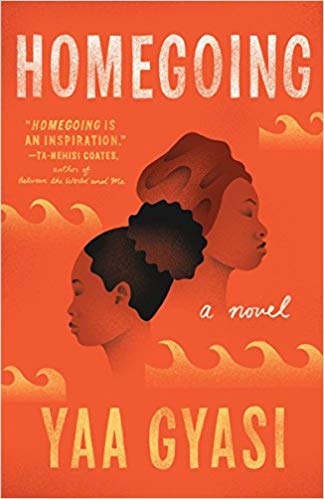
Review 1471: Homegoing

Writers seem to be experimenting with the form of the novel these days, not always successfully. Yaa Gyasi uses the form of linked short stories to good effect, however.

In paired stories, the novel follows two half sisters and their descendants through 300 years of history. In 18th century Gold Coast, Effia is being courted by the son of a king, but her mother, Baaba, tells her to hide the fact that she has reached womanhood. Her suitor eventually marries someone else, and Effia is married to a white man, James Collins, the governor of Cape Coast Castle. The Castle is where slaves are kept before being shipped to the colonies.

Esi is the daughter of Big Man and Maame, a former slave to Effia’s family. In her attempts to befriend Abronoma, her family’s slave, she sends a message to Abronoma’s family to tell them where she is. Thus, she herself becomes a slave when her slave’s family attacks and captures her village.

The novel checks in with each of eight characters of the girls’ descendants, sometimes telling the entire stories of characters’ lives, other times dealing with significant moments. Both families are affected by this great evil in their lives, slavery and its aftereffects. This structure allows Gyasi to explore some of the key events in the histories of Ghana and the United States.

At first, I thought I might get frustrated with the format, because I often want more from short stories. But because the stories are about two families, some of the characters are present in more than one, and you can at least find out what happened to them. Many of the stories are grim, but the novel ends hopefully. Gyasi’s voice is a fresh one, and I found this novel captivating.

Related Posts

Sugar Money

Washington Black

Beloved

Review 1465: Sugar Money

Best of Ten!
In 1765 Martinique, Father Cléophas sends two of the monks’ slaves, Emile and Lucien, on an astoundingly ill-advised mission to Grenada. The two brothers are to gather the monks’ hospital and field slaves from the island, which has been taken by the British, and bring them to Martinique. Cléophas presents them with a notarized document and tries to convince them that the British have agreed to this, but in the next breath, he tells them to do it secretly, on Christmas Day, when the British will be drunk.

Emile, who is 28, tries to convince Cléophas to leave Lucien, who is 13, home, but Cléophas insists that Lucien go, because he can speak English. Then he gives them a package of medicinal herbs to convey to a doctor, their excuse for going to the island.

The slaves have no choice but to do as they are bidden. Lucien relates this story in his quirky mix of English, French, and patois. In the guise of an adventure, with humor and a likable, inimitable narrator, Jane Harris tells us the horrifying details of life in the 18th century Caribbean.

This is an excellent novel that I read for my Walter Scott Prize project. I have recently read more than one novel set on a Caribbean sugar plantation, but this one seems the most authentic.

Related Posts

Washington Black

The Quality of Mercy

The Long Song

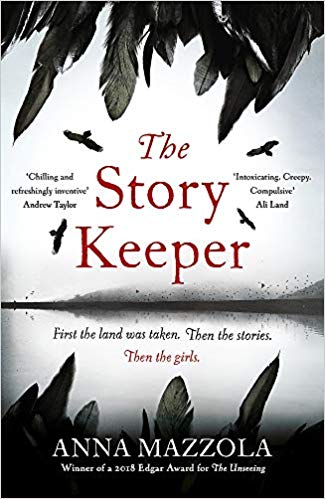
Review 1460: The Story Keeper

Audrey Hart arrives on the Isle of Skye to take up a position as an assistant to a folklorist in 1857. She has fled her family because of a situation that occurred during her volunteer work and because her father doesn’t believe a girl of her upbringing should work. She has taken a job on Skye because her mother, who died when she was a child, loved it there.

Upon her arrival in Skye, Audrey notices a croft girl who appears to be ill. The local people believe she was taken by fairies. The Buchanans, her employers, aren’t interested in what happens to a girl of her class. The minister thinks even Miss Buchanan’s story-collecting activities encourage superstition.

Audrey is worried, because she hasn’t been able to get the locals to tell her any stories so can’t do her job. But then she begins hearing about other young girls who have disappeared. No one seems to want to listen to her ideas that the disappearances may be related, not even the kind nephew of Miss Buchanan, Alec. While all this is going on, Alec’s father is enclosing his land and evicting tenants.

This is an atmospheric novel that nicely blends the folklore of the area with more sinister themes. Although I almost immediately figured out what was going on, if not the motive, I enjoyed the journey. This is an entertaining historical suspense novel.

Related Posts

The Good People

The Sea House

At the Water’s Edge

Review 1457: The Alice Network

I would estimate that 90% of the recent historical novels I’ve read in the last two years—and I’ve read a lot of them—are dual timeframe novels. Although I have read some excellent ones (The Weight of Ink comes to mind), I’m beginning to feel that they often indicate laziness on the author’s part. Why write a carefully researched novel about one period when you can write two hastily researched ones?

In post-World War II England, Charlie is on her way to Switzerland to a clinic for unmarried pregnant women when she ditches her mother to try to search out what became of her cousin Rose during the war. This all sounds very well, but the flippant first-person narrative style undermines everything serious about this section, turning it into, well, a historical romance.

She finds Eve, whose name as a preparer was on the reports her father received about Rose. And what are the odds that Eve is going to handle a report that mentions a name important to both her and Rose’s fates? Not too likely, I’m guessing, but that’s what happens.

In any case, then we plunge into the story of Eve, a spy during World War I, and back and forth we go for a book that is about 100 pages longer than it should be and very repetitive.

Worse, some of the detail and conversations, especially in the spy section, seem unlikely. I felt as if the characters were being put through their paces in benefit of the plot rather than evolving more organically. Characters are given traits to round them out, but these traits are just sort of thrown into the mix. For example, Charlie is supposedly a math whiz, but the most complicated thing she does is figure a tip or quote the Pythagorean Theorum (which I learned in 7th grade, and I think kids learn even earlier now). Neither is exactly high mathematics.

I know this book was very popular, and I think the subject matter is interesting, but I am not a fan of the execution of this novel. I wasn’t that drawn in by Manhattan Beach, but compared to this and some of the other World War II-based novels I’ve read lately, it was a masterpiece.

Related Posts

Lilac Girls

Salt to the Sea

Manhattan Beach