Review 1333: Literary Wives! Wait for Me, Jack

Cover for Wait for Me, JackToday is another review for the Literary Wives blogging club, in which we discuss the depiction of wives in fiction. If you have read the book, please participate by leaving comments on any of our blogs. Be sure to read the reviews and comments of the other wives!

Emily of The Bookshelf of Emily J.
Eva of Paperback Princess
Lynn of Smoke and Mirrors
Naomi of Consumed By Ink

* * *

Wait for Me, Jack is the story of a marriage, told backwards. I remember this technique being used for the movie Betrayal, giving the final scenes of the enraptured beginning to an affair a certain poignancy. That’s not really the effect of this novel, however.

The novel begins with a few scenes before the death of 80-something Jack. His wife Milly can hardly walk, increasingly more debilitated since her injury in a car accident in her 40’s. Jack has had a couple of heart attacks. Both have been suffering from the indignities of old age.

The novel works its way backwards, showing them at two- or three-year intervals, until they meet at work in their 20’s in 1950. This backwards approach may have worked better if it was not so regular, if we saw them at less frequent but more significant times of their lives. Instead, it visits them at purposefully mundane times—not when they split up but when they are separated, not when their son dies but before and after.

A more significant issue, though, is that their problems are trite and not very interesting. Jack is a philanderer. Milly is dreamy and a  neglectful housewife. Their personalities are ill-defined. Sure, we see their thoughts over a period, but we still don’t have much of a sense of them as people. I started out mildly interested in them but eventually bored, especially when I found that the last four or five pages echo the first four or five almost verbatim. Really? Why not end with their first sight of one another? Wouldn’t that have been more poignant?

And by the way, what did they see in one another? We’re told that Jack first thinks he’s meeting a classier lady than Milly proves to be. He has upward ambitions. But he must find out that is not so fairly early on. In any case, their reasons for staying together are not clear. I disliked Jack and found Milly to be silly, and the other characters are just ciphers, there for the plot to continue.

I have commented on this before for other novels, but I also disliked Jones’s technique of having her characters think words  like “Gee” and “Jiminy.” These might be words that people say, and she obviously thinks these expressions are cute, but we don’t ever think these sort of interjections.

What does this book say about wives or about the experience of being a wife?

Despite her occasional insights, I found Milly to be much more enigmatic than Jack. For a girl who at the beginning of the book seems to want adventure and a change from her lower-class roots, she settles pretty quickly into a standard 50’s housewife at first not much better off then her parents were.

She actually reminded me of my mom, a dreamy person not really suited to her role, at one point imitating Jackie Kennedy. She accepts her role better than my mother did, though, and stays devoted to her husband even when he strays. Why is that? Is that just because it is what you did in her generation? But that’s clearly not true, as it is just at this time that divorce increased so much in the U. S.

Jack has the typical 50’s view of his wife and never really advances out of it. He considers their money his and discounts the effort she spends caring for the kids or keeping the house. “What do you do all day?” he asks, even though anyone who has done both roles knows that keeping a house and caring for children is a lot harder than working in an office. These were accepted views of the time, though. Still, Jones herself seems to have the same view, having Milly watch soap operas and read magazines and daydream more than showing her engaged in her daily tasks.

So, how to answer this question? I see Milly as a woman who accepts her traditional role as defined in the 50’s and doesn’t really advance much with the times. Jones shows her, for example, puzzled about feminism in the 60’s and 70’s but not really getting it. She inexplicably puts up with Jack’s dalliances and accepts his illegitimate son into her family. Most of the time, she doesn’t really seem to love Jack (although I think she loves him more than he loves her), just as he doesn’t seem to love her but criticizes her all the time. However, she stays devoted to him in other ways.

Maybe this describes most marriages. I don’t know. But I think the biggest problem with this book is that it takes a surfacy look at marriage.
Related Posts

The Headmaster’s Wife

American Housewife

The World’s Wife

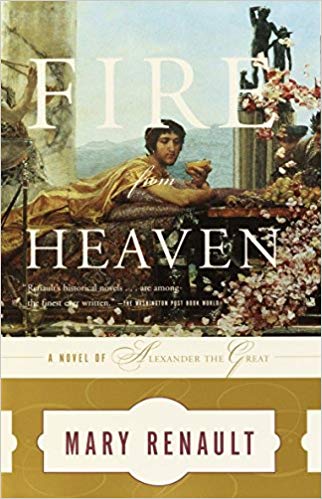
Review 1332: Fire from Heaven

Cover for Fire from HeavenIt seems like I’m in the middle of a lot of trilogies lately. I just wrote up my review of the last of Gerald Durrell’s Corfu Trilogy (coming soon) and in two weeks the review of the first book in Olivia Manning’s Balkan Trilogy will appear. I actually just finished reading the second book in that trilogy (review coming in a few months) and liked it enough to purchase her Levant Trilogy. Now, here’s the beginning of another trilogy. Fire from Heaven is the first book in the great Mary Renault’s trilogy about the life of Alexander the Great. Renault, of course, is known for the historical accuracy, admired by authors and classicists, of her novels set in Ancient Greece.

Fire from Heaven follows the life of Alexander from the age of four to nineteen, when he became king of Macedon. His life is plagued by the battles between his mother, Olympia, allegedly a sorceress, and his father, King Philip. Philip’s crime is to have taken additional wives, even though Olympia is at total enmity with him. She sees this as a mortal affront and teaches her children to hate him. She is also cagey about whether Philip is actually Alexander’s father, hinting that he is not.

As Alexander gets older and begins learning about fighting and diplomacy from his father, they begin to understand each other. Olympia’s machinations and Philip’s womanizing continually create problems and misunderstandings, however.

An important person to Alexander is his friend Hephaistion, who becomes his lover. The two are inseparable, and Alexander is fascinated by the Sacred Band of Thebes, a group of soldiers composed of pairs of lovers, said to fight the more doggedly because of it.

This novel is rich in the intrigues among the city-states of the area, the myths surrounding Alexander’s life, and the depth of characterization. I read it long ago but found I didn’t remember it well and am pleased to have begun rereading this trilogy.

Related Posts

The Silence of the Girls

The Secret Chord

Dictator

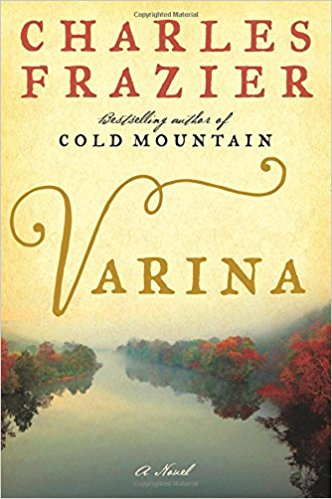
Review 1329: Varina

Cover for VarinaVarina is one of those books that makes me wish Goodreads allowed half stars, because it is better than the books I’ve given three stars (my okay or ho-hum rating) but it’s not quite as good as many books I’ve rated four stars. It is interesting, though, the story of Varina Davis, Jeff Davis’s young wife.

The novel begins when Varina, or V as she is called, as an old woman meets James, a young African-American boy she raised with her own children. At the time of the fall of the Confederacy, Jimmy was taken from her after she was captured.

James comes to see V because he remembers very little of that time and has read some things in a book he wants to ask her about. She is happy to see him, because all of her children have died. He is the last one left. The novel skips backward and forward through incidents in her life as she and James hold a series of conversations.

I found this novel both interesting and touching. I know very little about Jeff Davis and knew nothing of his wife. V seems to have been an unconventional and spirited woman. She led a difficult and sad life.

Related Posts

Nightwoods

Neverhome

The Good Lord Bird

Review 1322: Golden Hill

Cover for Golden HillBest of Ten!
It is 1746 when a mysterious young man arrives in New York and immediately goes to Lovell & Company on Golden Hill. He presents a bill for a thousand pounds, an enormous amount of money, from a trading partner of Lovell. Although the bill looks legitimate, Lovell insists on sending back to London for confirmation of the bill’s legitimacy before paying out.

Perhaps Lovell would have felt more comfortable if Richard Smith was more forthcoming, but Smith has nothing to say about who he is or what he plans to do with the money. He is, in fact, dissembling in some way, but we don’t learn how for some time.

These are uneasy days in the colonies. The governor is not popular, and he is constantly undercut by Mr. De Lancey, who has better connections. Most of the New Yorkers are very touchy about anything that seems to threaten their liberty. Smith himself is the type of person who rubs others in the wrong way. He is also hapless. Within no time, he has been robbed of almost all his money and has to subsist on a few guineas until the bill clears. At the same time, he must present a facade of wealth to all the curious New Yorkers.

On Guy Fawkes Day, he accidentally offends a gang of laborers and is rescued by the governor’s secretary, Septimus Oakeshott. They begin an uncomfortable friendship.

Finally, Smith has the misfortune to fall in love with Tabitha Lovell, a quick-witted, quick-tempered girl who seems to hate him.

The novel is written in a humorous, sprightly style, and we don’t find out who the narrator is until the last chapter. We end up with a picaresque adventure story that has a hidden purpose, and hints of more important issues.

Golden Hill is an excellent historical novel that I read for my Walter Scott prize project. It depicts the beginnings of English New York with its solid Dutch background, hints of the coming revolution, and looks at the issue of slavery. It is entirely unpredictable and highly enjoyable.

Related Posts

Seven Locks

Parrot and Olivier in America

The Known World

Review 1314: The Paris Architect

Cover for The Paris ArchitectLucien Bernard is an architect in 1942 Paris who is eager to prove his abilities as a modernist designer. He has an opportunity to design a factory for Auguste Manet, a wealthy businessman, and is undeterred by the knowledge that it will be used to manufacture arms for the Germans. All he wants is the opportunity to advance his career.

But first, Manet wants his help in designing an undetectable place to hide a person. He has been helping Jews hide from the Gestapo until they can leave the country. Lucien has no love for Jews and is terrified he’ll be caught. But he takes on the challenge.

This is an interesting premise for a novel, but Belfoure’s writing ability isn’t up to the task. The writing, especially the dialogue, is crude and obvious. Most of the Germans are cartoonish as villains, and other characters are flat as pancakes. Lucien’s secret is threatened from several directions, which is supposed to heighten the tension but almost makes it ridiculous. Lucien’s assistant hates him and is involved in helping his own uncle finds Jews, while Lucien’s mistress is two-timing him with a Gestapo officer.

Most problematically, Lucien is a jerk. He is supposed to evolve into a good guy during the novel, but there is a fairly late scene where his reaction to thinking his girlfriend is cheating on him is brutal. Of course, he is rewarded by falling in love with a beautiful model in Paris.

As you can probably tell, I disliked this novel.

Related Posts

Half-Blood Blues

A Country Road, A Tree

The Zookeeper’s Wife: A War Story

Review 1307: The Revolution of Marina M.

Cover for The Revolution of Marina M.The first thing readers should know before plunging into this 800-page novel is that it is the first of at least two books. There was no hint of this in any of the reviews I read of the book. Still, I was such a fan of Janet Fitch’s first novel, White Oleander, that I probably would have read it anyway.

Marina Makarova is at sixteen a child of privilege, the daughter of a member of the Russian Duma. She has a rebellious streak, though, which she exercises with her friend Varvara, who is working toward the revolution. She also begins an affair with Kolya, a dashing young officer.

Marina is sympathetic towards the plight of the working people, especially the starving families of soldiers at the front. So, she gets involved in revolutionary work without regard to what will happen to the bourgeousie, including her family. Soon, she is excited to be witnessing historic events.

In truth, Marina is not very likable. She is a lousy friend and family member. She throws herself into one situation after another, making one bad decision after another, usually swayed by whoever her lover or closest friend is. She marries a proletariat poet, Genya, only to throw him over as soon as Kolya reappears. She snatches Kolya back out of the arms of her friend Mina. Under Varvara’s influence, she betrays her father to the Bolsheviks.

And that’s part of the problem with this novel. Marina is supposed to be a modern, liberated woman, but she is tossed from one situation to another without much control of her own. She goes from schoolgirl to factory worker to sex slave of a criminal, and takes on the disguise of a boy, a photographer’s assistant, lives with a group of elderly astronomers, pretends to be a peasant wife, and then lives in a commune of a cult. The reviewer from the Chicago Tribune questioned the point of all this. I’m not sure if Fitch is presenting us with an adventure odyssey with a female protagonist or maybe trying to show the effect of the revolution on every strata society (or what?). In any case, all of this happens before Marina’s 20th birthday.

The book has some more problems. Sex is extremely important to Marina, and we get to hear about it in excruciating detail, particularly excruciating when she is imprisoned by a sadistic criminal (a situation that she walked right into). The writing is also over-burdened with metaphors—Fitch never uses one when three will do. Then there is the poetry (ala Doctor Zhivago?). There is lots of it. I am no judge, but it doesn’t seem to be very good.

Strangely, however, despite these flaws, the novel kept me interested, even the part about the cult, although I found parts of that boring. Whether it was interesting enough for me to read part two, though, I doubt. Maybe that will depend upon whether its last words are “End of Part 2.”

Related Posts

White Oleander

The House of Special Purpose

A Gentleman in Moscow

Day 1300: Munich

Cover for MunichRobert Harris’s newest book, Munich, takes place during four days in September 1938, during which England’s Prime Minister, Neville Chamberlain, met with Hitler, Mussolini, and the President of France to try to avoid war over Czechoslavakia. Or at least Chamberlain was trying to prevent war. As he has done before, Harris manages to create suspense around an event the outcome of which we already know.

He does this by introducing two characters, friends from Oxford who are now diplomats. Hugh Legat is a junior secretary for the Prime Minister. Paul von Hartmann is in the German foreign ministry, but he is also a member of a group who would like to bring down Hitler. The group asks him to attempt to encourage a strong response from England on the Sudetenland issue by leaking secret German aspirations in Europe to England through his friendship with Hugh. The group believes that if war is declared, the German army will stop Hitler.

This mission is a dangerous one for Hartmann, who already has one SS officer on his tail. Meanwhile, Hugh in trying to be a liaison is continually stymied by orders from his jealous boss.

I felt a little more detached from this one than I usually do for Harris’s work. It depicts Chamberlain, though, as a much more determined and politically savvy man than he is believed to be now. I get the feeling that Harris, who states in the afterword that he has been fascinated by this meeting for years, wants to show Chamberlain in a more positive light than history generally affords him.

Related Posts

An Officer and a Spy

Conclave

Conspirata

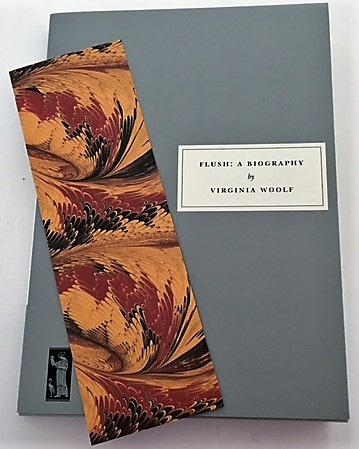
Day 1299: Flush: A Biography

Cover for FlushI admit to feeling rather perplexed by Flush, which seems to be a light-hearted biography of Elizabeth Barrett’s pet dog. It was clear to me that a lot more was going on than a story about a dog. The introduction to my Persephone edition by Sally Beauman draws parallels between Flush’s life and Barrett’s—and Virginia Woolf’s own life.

Flush is a cocker spaniel, a hunting dog, given to Elizabeth Barrett as a gift. Woolf is clear about how Flush’s life on Wimpole Street becomes one of constraint and even neuroticism as the lap dog of a constrained, restricted, and hypochondriacal Elizabeth Barrett.

The slant the novel puts on the famous romance between Barrett and Robert Browning is also very interesting. Flush is immediately jealous of Browning and tries to bite him twice. From being loved and terrifically spoiled by Barrett, he learns he has to take second place.

Now to get to the source of my perplexity. Just in terms of mistreatment of dogs, this novel was not, to me, the one fondly referred to by others over the years. Woolf’s doggy hero is restricted by Elizabeth just as she was by her father. To add interest, though, there are sly digs at social strata and Victorian life throughout.

Related Posts

Mrs. Dalloway

The Invisible Woman

The Call of the Wild

Day 1297: The Weight of Ink

Cover for The Weight of InkThe Weight of Ink is a dual time-frame novel set in the current time and the 17th century. At first, I wasn’t as captured by the present-day sections as I was by the past, but eventually the entire novel absorbed me. There is a big revelation at the end that I anticipated, but that did not lessen the power of the novel.

In the present day, Helen Watt is an English university professor of Jewish history who is elderly and ill. Requested by a previous student to examine a cache of papers he found in a wall of his 17th century house, Helen does not expect any great finds. What she discovers is a genutza, the hidden papers of a 17th century rabbi, and on one page, a mention of Spinoza. Understanding that this could be a major discovery, she requests help and gets that of Aaron Levy, an American graduate student.

One of their first, startling discoveries is that Rabbi HaCoen Mendes’s scribe, identified only by the Hebrew letter aleph, is a woman. Having reported her initial findings to Jonathan Martin, the head of the History Department, so that he could buy the papers from the owners, Helen is dismayed to find her place on the investigation usurped. She can continue working with the papers, but Martin has also given Brian Wilton access. He arrives with four graduate students to beat Helen and Aaron to any discoveries and immediately publishes an article about one of the topics in the letters.

In 1657, Ester Velasquez is a young Jewish woman who has been allowed an unusual education. In these dangerous days of the Inquisition, her family fled Portugal for Amsterdam, where her parents were killed in a fire. She and her brother Isaac are part of the household of Rabbi HaCoen Mendes, who travels to England to educate the British Jews in their heritage, these people having been hiding there pretending to be Protestants during hundreds of years when Jews were not allowed in England. Rabbi Mendes’s difficult job is made harder when Isaac, his scribe, leaves. But the rabbi lets Ester take his place.

Offered an opportunity of knowledge, Ester comes to know that she does not want to return to a woman’s life. So, she sets about a daring deception.

Aside from covering some key events of its time—the Inquisition, the return of Jews to England, the plague, and the Great Fire—The Weight of Ink offers us an intrepid, determined heroine in Ester as well as an interesting modern story. I was really touched by this novel. It’s terrific—the kind of novel I look for in historical fiction.

Related Posts

The People of the Book

The Bookman’s Tale

The Last Painting of Sarah de Vos

Day 1292: The Silence of the Girls

Cover for The Silence of the GirlsFictionalizing ancient stories and myths seems to be popular now. I have read a few of these novels, including The Song of Achilles, Madeline Miller’s novel about the Trojan War. That novel focused on the relationship between Achilles and Patroclus. Although The Silence of the Girls is also partially about them, it is from a point of view heretofore unexamined, that of the Trojan women taken as slaves by the Greeks during the war. It is narrated mostly by Briseis.

Depending upon how well you know your Iliad, you may remember that Briseis is the woman awarded to Achilles who is later taken away by Agamemnon when he is forced to give up Chryseis. It is Achilles’s forced forfeiture of Briseis that leads him to sulk in his tent while the other Greeks are being slaughtered.

The novel begins with the fall of the Trojan city Lyrnessus, of which Briseis is the young queen. Achilles is called “the butcher” by the Trojans, and the women wait in fear when the citadel falls, knowing their boys will be murdered along with the pregnant women, and girls as young as nine will be raped and enslaved. Briseis is awarded to Achilles, whom she hates and fears.

link to NetgalleyAs the story of the war progresses, Barker builds a nuanced portrait of Achilles, his anger at Agamemnon, his Oedipal relationship with his goddess mother Thetis, his friendship with Patroclus. Although Achilles is not a sympathetic character, Briseis eventually becomes conflicted about him.

This is an interesting and affecting novel. It is completely unlike the only other novel I have read by Barker, but it makes me want to continue seeking out her books.

Related Posts

Toby’s Room

The Song of Achilles

House of Names