Day 953: The Glass Room

Cover for The Glass RoomThe Glass Room is one of the books I’m reading for my Walter Scott Prize project. The novel is inspired by a real house in the Czech Republic designed by Mies van der Rohe. Most of the reviews of the novel, as well as the novel itself, have spent some time describing this house, and although architectural elevations appear before each section of the book, it helps to look at the pictures online when you’re trying to visualize the house.

Liesel and Viktor Landauer are recently married and have decided to build a modern home on a piece of property given to them by Liesel’s parents in the newly formed country of Czechoslovakia. Viktor wants a house that is open and will have no secrets, one of the ironies of a plot with many that I started to think of as mirrors. Viktor is excited at the beginning of what he sees as modern, changing times in the formation of the new country. But of course Czechoslovakia will not be in charge of itself for long, and in fact now no longer exists. Then we have the irony of the house itself, built for no secrets, that harbors many.

Viktor and Liesel’s marriage and day-to-day life are hardly at all the focus of this novel. We see Viktor getting a little annoyed at the depth of Liesel’s involvement with building and decorating the house, but otherwise Mawer actually spends very little time on them together. Instead, he focuses on their relationships with other people, Viktor’s with his mistress Kata and Liesel with her friend Hana. But World War II looms ever closer and eventually the family must leave the country, as Viktor is Jewish.

The book is divided almost exactly in half, the first half devoted to the building of the house and its existence as a family home. The second half explores its use by the different political entities that take it over, when it is never a family home, another mirror. First, it is a Nazi laboratory for attempting to identify physical characteristics of Jews and Slavs. During this time, Hana gets involved in a dangerous affair with one of the scientists. Next, it is a horse stable for Russian cavalry, then a physiotherapy lab for polio victims, and finally a museum.

The huge windowed glass room that makes up the living room, dining area, sitting area, and music room has at its heart a stone wall made of onyx. In the evening sunshine this wall glows and colors the room bright red. I think this is a metaphor—the clean, modern, uncluttered structure, one that may seem cold, is taken over by the unanticipated heart of the house, this red, for passion. I’m saying this clumsily, but one of Mawer’s focuses is the eroticism that is repeatedly evoked in these surroundings, not between Viktor and Liesel, but between other couples. At first, I was confused by why we know almost nothing about Viktor and Liesel together but dwell repeatedly on Viktor’s sexual relationship with Kata. But sex is one of the focuses of this novel, one of its mirrors. For example, in the icy surroundings of the lab designed for the most evil of purposes, Hana makes passionate love with Stahl, who later coldly discards her and even betrays her. Also, there is a tension between the openness of the house and a sense of voyeurism.

This novel was definitely not my favorite of the books I’ve read so far for this project. It is called a novel of ideas, but really it is so detached as to be almost cerebral. Yet, we are repeatedly entertained by descriptions of pubic hair or of how Hana’s labia just show beneath it. I found it unsettling and could understand a bit why the original owners of the house refer to the book as “probably pornography.” It is not pornography, of course, but the family is not buying Mawer’s stance that it’s a fictional story about a real house. They think it’s about them. Or perhaps they are afraid people will think it’s about them.

Despite this detachment from the characters, I still found some scenes toward the end of the novel touching. As for the rest, perhaps Mawer wanted to make readers feel like they were voyeurs. (See? Another mirror—the openness of the house versus voyeurism.) I am not sure, but I could have forgone some of the intense sexuality of this novel. There is another book by Mawer on my list, and I can’t say I’m looking forward to it. (Oh, dear, it just won the Man Booker prize.)

Related Posts

A God in Ruins

Snow Country

Death in Venice

Day 948: Sacred Hearts

Cover for Sacred HeartsBest Book of the Week!
Sacred Hearts is another book I read for my Walter Scott Prize project. Although Sarah Dunant is an author I’ve read in the past with moderate enjoyment, I very much enjoyed her novel about the Borgias, Blood & Beauty.

This novel is also set in Renaissance Italy, in 1570 Ferrara. Dunant begins the book by telling us that in the second half of the 16th century, dowries had become so expensive that roughly half the daughters of noble families were consigned to convents, whether willingly or unwillingly.

Suora Zuana is one of that number. When her professor father died years before, she had nowhere to go and her dowry was small. Yes, dowries had to be paid to convents as well, but they were much smaller than those paid with brides.

Her small dowry has not earned Zuana very many comforts in the convent of Santa Caterina, but she has created a valuable role for herself as a healer and dispenser of remedies. She has managed to bring along many of her father’s books, although some of the most valuable were stolen at his death by his students and peers, and she has greatly expanded the convent’s herb garden. Aside from caring for the convent’s ill, she makes medicines for the bishop and others.

At the opening of the novel, she is on her way to drug Serafina, a novice who has been screaming for days, ever since she was forcibly ensconced in the convent by her family. She is a girl from Milan, so no one in the convent is familiar with her family. Suora Zuana is able to calm her, and later they find she has an angelic voice, which delights the convent choir director.

For the sake of everyone’s peace, the abbess, Madonna Chiara, asks Suora Zuana to take Serafina under her wing rather than handing her over to the novice mistress, Suora Umiliana. So, Zuana begins teach Serafina how to prepare medications. None of the sisters know that Serafina has hatched a plot to escape from the convent with her lover, the musician Jacopo.

What Serafina doesn’t understand, although she probably wouldn’t care, is that this is a politically delicate time for Santa Caterina and for all convents in general. Reforms on the heels of the Counter-Reformation have resulted in a cracking down on convents in some cities. Madonna Chiara fears that the convent’s few liberties will be lost, especially if they have a scandal. Their means of making a living will be removed, their orchestras disbanded and performances disallowed, their books will be confiscated, and they will no longer be allowed outside in the garden. Visitors will only be able to see them behind a grating. This is what has been happening throughout Italy.

On the local front, some of the sisters, led by Suora Umiliana, would like the convent to become stricter in its observances, even though it is already strict. Suora Umiliana is a religious zealot who is fascinated by Suora Magdalena, the convent’s “living saint.” Although Suora Magdalena has long been close to death, when she was younger she had fits of ecstasy and suffered from stigmata. Shortly after Serafina arrives at the convent, Magdalena has the first of her fits in years and speaks to Serafina. Later, when Serafina becomes ill, Umiliana thinks she can use her condition to take over control of the convent from Chiara.

Although I was interested in this novel, it took me some time to become really involved in it. I am revealing more about the plot than I usually would, because the description of the book from the blurb about how Suora Zuana comes to care for Serafina does little to convey the depths and power of this novel. For quite a while I had no idea where it was going and wondered how interested I was, but the novel turned out to be very much worth reading. This is one that really sneaks up on you.

Related Posts

Blood & Beauty

The Malice of Fortune

The Chalice


Day 947: Owl Song at Dawn

Cover for Owl Song at DawnWhen I first started reading Owl Song at Dawn, I was afraid it was going to be one of those quirky, feel-good novels that I’m coming to dislike. Fortunately, it turned out to have more depth than that.

Maeve is a woman in her eighties who owns the Sea View Lodge, a lodging house in a small seaside town in the south of England. Her policy has been to welcome guests with disabilities, and she provides a full-time residence for Stephanie, a young woman with Down Syndrome. Dot, the mother of Steph’s best friend Len, who also has Down Syndrome, is working with a social worker to arrange a home there for Len, because Dot is dying. A potential problem, at least for the authorities, is caused because Steph and Len consider themselves boyfriend and girlfriend.

Maeve’s memories are sent back to her adolescence and young adulthood by the arrival of Vince Roper, who has come to patch up their differences. Vince was her good friend when she was young. With her twin sister, Edie, who had severe disabilities, they made a threesome until Maeve began dating Frank. Then a series of tragedies culminated in Frank leaving Maeve at the altar. Maeve has always blamed this on Vince and has never understood why Frank left her.

This story is told nonsequentially with interjections by Edie, who is always with Maeve in spirit.

link to NetgalleyAlthough I felt there were some points where Maeve was inordinately obtuse and on the other hand where problems were cleared up too easily, I ultimately found this novel touching. The reasons that Maeve was angry with Vince for so long are flimsy, though, and she has brooded over them for so long that you’d think she would have figured out the truth, which is obvious, long ago. Her own perception that she has been shutting herself off from others for years is laughable, given her living situation.

These are small, niggling faults, though. Overall, I enjoyed this novel. It is touching without going too far, and it does a great job of showing us the loving personalities of its disabled characters. On the other hand, I see that it is on the long list for the Not the Booker Prize (for which you can vote this week from this link). I’m not sure how books get on this list, but I don’t really think this is a prize-winning novel. My favorite book on that list (although I have not read many of them) is Rush, Oh! by Shirley Barrett, which I will be reviewing in the next couple of weeks.

Related Posts

Relativity

The House We Grew Up In

We Are Not Ourselves

Day 944: Checkmate

Cover for CheckmateBest Book of the Week!
I thought I finished reviewing Dorothy Dunnett’s Lymond Chronicles series ages ago, so it was with some surprise that I discovered I never reviewed the last book. Here it is!

* * *

In this last book of the Lymond Chronicles, Francis Crawford of Lymond has returned from Russia to France. Although I have concentrated in my previous reviews on the swashbuckling and intrigue of the novels, I have not mentioned the shadows that haunt Lymond, particularly the question of his parentage. This question was brought forward in an earlier book by the appearance of the mysterious Marthé, who looks exactly like him. These shadows have put him under tremendous pressure in the last couple of novels, culminating in horrendous migraines and even temporary blindness.

Another problem is his marriage to Philippa Somerville in a previous novel. He married her to save her reputation when they were travelling together, but both of them have since found that they are in love with the other. However, he considers his reputation and lineage to be too besmirched to keep her as his wife, so he has not told her of his feelings, and they have been trying to get an annulment. Their marriage has been in name only.

In any case, Lymond is now fighting the English for France in the Hapsburg-Valois war, a position he has taken on to hurry along his annulment from Philippa. As the wife of a Scottish nobleman, Philippa has been ordered to attend Mary Queen of Scots in France as Mary prepares for her marriage to the French Dauphin.

In trying to help Lymond find out the truth about his past, Philippa places herself in horrible danger and subsequently has a breakdown. Lymond leaves his post to care for her, and they discover their feelings for each other. But the result of her trauma is that Philippa feels unable to be more intimate with him, so Lymond eventually asks leave to go back to battle and preferably his own death.

It is much more difficult to review this final book without giving away spoilers. Suffice it to say that Lymond’s questions about the Dame of Doubtance prophecies and his own heritage are answered, there is plenty of action, and a satisfying conclusion. All the tangled knots that appeared in the previous books are untied. In any case, if you’ve been reading the series, you are already hooked, and will be unhappy, like me, to see the series end.

Related Posts

The Disorderly Knights

Pawn in Frankincense

The Ringed Castle

Day 943: The True Heart

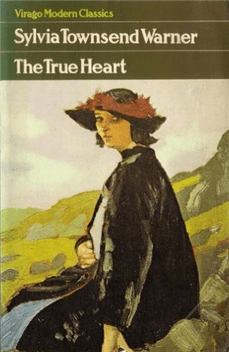
Cover for The True HeartThe True Heart is the book chosen for my Classics Club spin on Monday. I’m reviewing it this week because I have Literary Wives on the same day. It is the first book I’ve read by Sylvia Townsend Warner, and it is an interesting mix.

On the surface, it is a simple tale about the efforts of a naive young woman to win her love. But it has allegorical overtones and Warner admitted that it is her retelling of the myth of Cupid and Psyche. Let me just say that stories of women who labor long and hard to prove their love for men (and, actually, the other way around) have never been my favorite.

Sukey Bond, straight out of an orphanage school, is sent to work on a farm as a servant girl. Her escort part of the way is Mrs. Seabourn, a clergyman’s wife, and even though Sukey is afraid of the unknown, she is sure that Mrs. Seabourn would not take her anywhere bad.

On the Noman’s farm, she meets Eric, who appears to be another farm worker, but no one seems to mind if he doesn’t work. Sukey is very naive and inexperienced, and she is surprised when Eric seems to like her. She doesn’t notice how he is different than the other workers. They begin meeting each other away from the farm and decide they are in love.

But one day Eric has an epileptic fit after he sees Sukey kill a chicken. It is not until then that Sukey learns Eric is considered an “idiot.” (He is odd, certainly, but doesn’t really seem mentally lacking so much as on another plane of existence.) It is also not until then that Sukey learns Eric is Mrs. Seabourn’s son. This puts him well above her in social station, but she thinks Mrs. Seabourn would be happy that Eric has her to take care of him. So, when Mrs. Seabourn comes to take Eric away, Sukey quits her job and follows.

But Mrs. Seabourn is not the person Sukey thinks she is. She is ashamed of Eric and horrified and angry when Sukey presents herself. She sends Sukey away, and the girl is penniless and friendless until she finds work at another farm.

At the home of her new employer, she hears a garbled account of Mrs. Seabourn being snubbed by a “princess” at some event. She decides that if she were to go to Queen Victoria and get Mrs. Seabourn a bible from her, Mrs. Seabourn might be grateful and relent. So, she quits her job again and is off to London.

I hardly know what to think about this novel. On the one hand, it seems unlikely that events, which could go so horribly for Sukey, depend on her constantly receiving help from unexpected people. Too, it was difficult for me to imagine a person could be so simple-minded and naive. (Of course, I assumed she was a little older than she actually was until they told her age at the end.) On the other hand, I don’t think we’re supposed to take this apparently simple tale at face value.

Related Posts

The Vet’s Daughter

Rebecca

Tess of the D’Urbervilles

Day 941: Let Me Tell You about a Man I Knew

Cover for Let Me Tell You About a Man I KnewLet me first get this over with. I have rarely encountered a book title that seems so inappropriate to the actual book. This title, which seems so similar to the opening of a 60’s Ray Charles song, is for a historical novel about a fictional relationship between an ordinary woman and Vincent Van Gogh.

That over with, the book itself is another matter. Susan Fletcher’s Corrag was one of my favorite books a few years ago. Even though I have missed some of her others, I was excited to hear about this one. It did not disappoint.

Jeanne Trabuc is the wife of Charles, who runs the mental asylum in Saint-Rémy. She finds herself in a lonely time of life. Her best friend has left town, and her boys have gone off to lead their own lives. She and her husband sleep separately, and she feels unloved. He has many rules about how the house should be run. She feels separate from the other women in the village, whom she feels gossip too much.

link to NetgalleyThere have been no arrivals at the asylum in years, so Jeanne’s interest is piqued when she hears a Dutch painter is coming. Charles does not allow her near the asylum, but she sees the man in the olive orchard painting and begins talking to him. Slowly, she finds herself wondering how she became what she is, instead of the adventurous girl she was.

This novel is more about Jeanne than Van Gogh, but it is touching and compelling. Jeanne Trabuc and her husband were actual people that Van Gogh painted, but Fletcher tells us that the lives she has created for them within the novel are entirely fictional. This novel is about the silences that can grow between people.

Related Posts

Corrag

Clara and Mr. Tiffany

Burning Bright

Day 935: Acté

acteActé was Alexandre Dumas’ first novel and a partial inspiration for Henryk Sienkiewicz’s Quo Vadis. As with most of Dumas’ work, it is based on actual historical characters. That being said, my research tells me that it is unlikely that Acté was a Christian convert.

This novel begins in Corinth in the year 57 A.D. Corinth is preparing to hold a competition of wrestling, chariot racing, and singing. Acté, a beautiful Greek girl, is on shore when a bireme arrives containing one of the competitors. Acté falls in love with this man, Lucius, at first sight, and he appears to fall in love with her.

Lucius wins all three competitions but in a manner that seems to fill the audience with dread. He also behaves in an oddly commanding way. To the reader, things don’t look good for Acté, but she heedlessly runs off with Lucius, leaving her home and father behind.

It is not until their arrival in Naples that Acté learns with horror her lover’s true identity. He is the Emperor Nero. Acté is further horrified at the behavior of his court, especially the dissoluteness shown during feasts.

Nero’s formidable mother, Agrippina, actually approves of Acté and hopes that by her innocence, she will discourage Nero from his excesses. But in shock one night at the behavior during a feast, Acté runs to Agrippina for shelter. Unfortunately, that is the same night that Nero has decided to have his mother murdered by sinking her ship with her on it. Agrippina and Acté are almost drowned, but they get away, and Acté is rescued on the shore by the Apostle Paul. Agrippina, although briefly rescued by Acté, ends up dying.

There are lots of descriptions of races and fights and battles in this novel, but its focus is on the fall of Nero and the role Acté played. Acté herself is just a cardboard figure prone to fainting, which is interesting since she is strong enough to swim to shore from the middle of the Bay of Naples, supporting Agrippina, and is described in terms of an athlete and Diana the huntress.

Delphi Press editionIn addition, the many pages wherein St. Paul describes his conversion and in doing so recounts most of the life of Christ, are deadly dull and unnecessary. If his words are meant as the inspiration to convert Acté, I believe they would be more likely to put her to sleep.

All in all, this novel is interesting as the start of Dumas’ career but is not in itself the most compelling of historical novels. It is based on the most damaging of the accounts of the life of Nero, who has been rehabilitated to some extent in more recent scholarship.

Note that the cover at the top is for a French-language version. The only English-language version I could find had just a black cover. My own version is a Kindle collection of complete Dumas works, published by Delphi Classics, shown just above.

Related Posts

La Reine Margot

Quo Vadis

The Testament of Mary


Day 933: The Night Stages

Cover for The Night StagesWhile reading The Night Stages, I kept wondering when, if ever, the stories of the characters would link up. The answer is, one character’s story does not, except metaphorically. Still, I thought the novel was at times poetic, and engrossing and affecting enough to recommend it.

It is post-World War II, and Tam is fleeing her married lover. Upset by a confrontation she had with him, she drove from her cottage in Kerry to Shannon Airport and took a flight to Gander in Newfoundland. There, she has been stranded by fog for several days. While she waits in the lounge, she examines a cryptic mural, Flight and Its Allegories by Kenneth Lochhead. Tam’s relationship with Niall has been poisoned, not by his thoughts of his wife Susan but by his memories of his lost brother Kieran.

Kieran as a boy suffers from rages that overpower him. When he was young, his mother and her chemist, both addicted to pain killers, committed suicide. His father finds it impossible to handle Kieran, who hears his mother’s voice inside the house, but Kieran likes the housekeeper, Gerry-Annie. When Gerry-Annie announces she is taking Kieran home with her to live, no one objects.

Kieran develops a deep love of the Kerry countryside and travels all over it on his bicycle. While Niall is studying in college to be a meteorologist like his father, Kieran is an unskilled laborer who loves the stories and songs of the country people. Then Kieran falls in love with Susan, Niall’s fiancée. The story climaxes around the Rás, a bicycle race through the Irish countryside.

Making the novel seem more diffuse is the introduction of Kenneth Lochhead as a character. We see how episodes from his life have inspired characters in his mural. But the description of the mural is a difficult thing to grasp just through text, and the small pictures that come up in Googling it convey very little, although I would love to see it sometime. It seems to me as though the emphasis on the mural and this character take away some of the power of the novel.

Flight is a recurring theme of the novel. Tam used to be a pilot during World War II, flying planes from one location in the U.K. to another. She is on a flight from her earthbound life in Ireland, and of course Kieran has flown Ireland. Then there are the descriptions of biking down the steep mountains and through the valleys of Kerry.

Although I think the novel would have been more cohesive without Kenneth, and in retrospect, Tam’s past as a flyer seems irrelevant (although making me wonder why the person she was before would put up with the situation with Niall), I was deeply involved in the story of Kieran, Susan, and Niall. I think this is an ambitious novel that doesn’t quite accomplish its goals but is beautiful and definitely worth reading.

Related Posts

The Remains of the Day

A Wreath of Roses

The Sea


Day 931: Horses of the Night

Cover for Horses of the NightHorses of the Night seemed like a good choice for me, because it’s about Christopher Marlowe, and I do enjoy novels about literary figures. I just never developed much interest in this novel, however, and gave it up after 100 pages or so.

The novel concentrates on Marlowe’s spying career, involving him right away in the Babington Plot. Although Marlowe is alleged to have been a spy, nothing is known of his activities. At least as Aggeler depicts it, Marlowe seems to have little role in the case, sent in at the end of the plot with only a few lessons in how to be a Catholic. He is involved long enough, however, to become sympathetic with one of the alleged plotters, Margaret Copley.

link to NetgalleyAggeler appears to be previously an academic writer. For this novel, he has adopted a pseudo-Elizabethan writing style throughout, even for descriptive passages. This is an interesting approach, and it is not inherently irritating, but I found the writing overblown at times.

I also felt as if I was seeing a Marlowe who was not the actual person I would expect from my admittedly limited reading, a man more conventionally likable than Marlowe probably was.

Related Posts

The Secret Life of William Shakespeare

The Marriage Game

The Tudor Secret

Day 928: The View from Castle Rock

Cover for The View from Castle RockThe View from Castle Rock is an earlier Munro collection of short stories than Family Furnishings, which I previously reviewed. Since Family Furnishings is an anthology of Munro’s stories over the course of her career, I had already read several of the stories in The View from Castle Rock.

All of these stories have to do with the history of Munro’s family. In “No Advantages,” she has traveled to the area of Scotland where the Laidlaws came from. This story incorporates excerpts from other writings and quotes the epitaphs of some of her ancestors. It explains their hard life and the kinds of people her 18th century ancestors were.

In “The View from Castle Rock” Munro relates a family legend about how their drunken great-great-great grandfather James Laidlaw took his son Andrew up onto Castle Rock in Edinburgh to view America, probably as a joke, since they were looking at Fife. Although he talks of emigration throughout his life, he is unhappy when some of his sons finally take him and their families to America. This story is about their voyage and the fates of some of the family on board.

Other stories are more recent. “Hired Girl” is about a summer when Munro worked as a hired girl at a beach house on an island. For that summer, she had to learn that her employers did not consider her an equal. This was a tough lesson, as her mother especially had always had some pretensions of superiority even though they were poor.

In “Home” she revisits home after living away for some years. Her father has remarried after her mother’s death, and her old house has changed almost completely.

Cover for The View from Castle RockThe stories in this collection are powerful, relating the hard life of her family farming and raising fur, their close-mouthed quality, pride, and stubbornness. She is courageous in her ability to look at everything with honesty, even her own foibles.

One comment I have to make is on the cover of my Vintage International edition, shown here. It has absolutely nothing to do with the contents of the book and gives an entirely misleading idea of the stories. The only story that even faintly is about a beach is “Hired Girl,” and the girl is not exactly lying around in the sand. Sometimes I wonder what publishers are thinking. The cover that I used at top is much better.

Related Posts

Family Furnishings

Olive Kitteridge

The Empty Family