Day 852: The Lake House

Cover for The Lake HouseThe Lake House is another of Kate Morton’s enthralling novels about family secrets. It is set in two time periods, 1933 and 2003.

In 1933 Cornwall, Alice Edevane is 16. She loves her life in the woods and gardens of the family estate, Loeanneth, and she spends her time writing stories of romance and mystery. She reads her stories to Ben Munro, an itinerant gardener whom she loves. Her newest one is about a kidnapping, set in her own home.

In 2003, Sadie Sparrow is a police officer on an enforced holiday. She got over-involved in a case, in her partner’s opinion, and went to the media when she thought it was mishandled. Her partner is trying to keep her name out of the subsequent investigation, but he wants her on vacation for a month.

Sadie chooses to visit her grandfather Bertie in Cornwall, where he recently moved after her grandmother’s death. In traipsing around the woods with the dogs, she comes upon the abandoned house at Loeanneth. When she tries to find out about the house, she learns that it was deserted after the disappearance of a little boy, Theo Edevane, who was never found.

Sadie decides she would like to look into the cold case with the help of retired officer Clive Robinson. She tracks down Alice Edevane, now a famous novelist, and writes asking for permission to enter the house. But she hears nothing back.

Alice has always believed she knew what happened to Theo and thinks it is her fault. She has no desire to reopen the investigation, however unofficial. But a frank conversation with her sister Deborah reveals something she didn’t know, which leads her to re-evaluate her belief in what happened long ago. When the persistent Sadie writes again, she agrees to see her.

The story alternates between the investigation in the present and the events leading up to Theo’s disappearance. We see the past events from the points of view of several different characters but mostly from that of Eleanor, Alice’s mother.

I absolutely loved this novel, with one caveat. It is intricately plotted and beautifully written, as are Morton’s other novels. I also found it completely absorbing.

However, the coincidence of what happened to Theo I found a bit much. I can’t explain more, but read it yourself and tell me what you think.

Related Posts

The Distant Hours

The Forgotten Garden

The Secret Keeper

Day 845: The Brief Wondrous Life of Oscar Wao

Cover for The Brief Wondrous Life of Oscar WaoEven after thinking about the novel for some time, I can’t decide whether I liked The Brief Wondrous Life of Oscar Wao. On the one hand, there’s the energy with which it is written and its inventiveness, wedging a portion of the narrative into footnotes that convey some of the most interesting information (a technique used also in The Sunken Cathedral and by such writers as David Foster Wallace). On the other hand, there’s the unrelenting sexism and objectification of women expressed by the principal narrator as well as by other characters. Okay, that’s an important part of the character’s personality rather than an attitude of the author, but I found it disturbing.

Oscar is a misfit. He is a fat, nerdy boy from the Dominican Republic, highly intelligent and well read but unable to interact normally with people, especially girls. He is interested in Star Trek and Tolkien, but even his other geeky friends eventually get girlfriends while he remains alone and still preoccupied with his obsessions. He dreams of being a science fiction writer.

In college at Rutgers he has one reluctant friend. Because Yunior (Díaz’s persona for much of his fiction) is in love with Oscar’s sister Lola, he agrees to be Oscar’s roommate. He tries to get Oscar to exercise and invites him out with friends. But his efforts aren’t sincere, or perhaps it’s more accurate to say that his intentions are mixed, so he eventually gives up on trying to make Oscar more normal.

Of course, Yunior’s perceptions are all colored by his own preoccupation, sex. Although he loves Lola, they break up several times because of his unfaithfulness. Yunior sees Oscar as a young man wanting to get laid. Well, of course he does, but what he really wants is love.

Oscar has grown up with the romance of his sci-fi and fantasy epics. Yes, they are also full of action, but they are in a sense the continuation of the chivalric romances that obsessed another famous character, Don Quixote, and that’s the book this novel reminds me of. Of course, we know from the title that Oscar will die, and we can guess he will die for love. Also like Don Quixote, although the story is ultimately tragic, its tone is comic.

What I found most interesting in this novel was the story of Oscar’s family, for this is an inter-generational saga about the fortunes of his family in the Dominican Republic. In a combination of narrative and footnotes, the novel tells the recent history of the Dominican Republic and especially of the Trujillo regime, where Oscar’s family ran aground.

This time period was also the focus of another book I’ve reviewed, In the Time of Butterflies, which this novel references, along with a lot of other pop culture. I complained of that book that it assumed its readers already understood all about the Trujillo dictatorship. The Brief Wondrous Life of Oscar Wao does a much better job of explaining Dominican history and exposing us to its culture.

Related Posts

In the Time of the Butterflies

Don Quixote

The Sunken Cathedral

Day 837: Highwayman: Winter Swarm

Cover for Highwayman: Winter SwarmHighwayman: Winter Swarm is a novella-length story that appears to be an episode of a larger novel. This confused me a little until I read that the publisher, Endeavor Press, was publishing electronic novels in installments.

Samson Lyle is a former Roundhead major who is now a highwayman, doing his best to sabotage the efforts of Oliver Cromwell and particularly General Goffe. Lyle’s disaffection came about because of his refusal to participate in Goffe’s massacres of Catholics in Ireland. Lyle’s goodwife was killed in battle after this incident, and Lyle believes the death was no accident. Since then, he has been a bandit, seeking revenge.

Lyle, known as the Ironside Highwayman, is assisted by a teenage girl, Bella, whom he rescued as a young girl from prostitution, and a tavern owner, Eustace, whose live he saved. He also has various informants around the countryside.

The novella opens with a daring theft of the strongbox containing the back pay for the Middlehurst garrison. Later, Lyle attacks the salt detail, knowing Goffe cannot get through the winter without salt to preserve the meat.

This novella is mildly enjoyable as an old-fashioned swashbuckling adventure. If I understand what the publishers are doing correctly, I’m not sure how well it will work. As the first installment, the novella spent time on exposition that may have to be repeated, but it spent little time on characterization. In the tricks Lyle plays on the soldiers, it reminds me just a bit of the first book in Dorothy Dunnett’s Lymond Chronicles, but there is no way to judge whether the series will develop any depth. In general, I felt the approach to be unsatisfying, even though I like the idea of reading a novel in serial form, like the Victorians did. But this episodic approach, which probably doesn’t assume people will read the episodes in order, is not the same thing. It reminds me more of episodic graphic novels, without the pictures.

Related Posts

Viper Wine

The Candlemass Road

Captain in Calico

Day 835: Ross Poldark

Cover for Ross PoldarkYears ago I used to enjoy the odd Winston Graham novel, but it was his crime novels rather than his historical novels I read, Marnie and The Walking Stick. I didn’t get interested in the Poldarks until the recent Masterpiece rework of the series.

Ross Poldark returns to his home in Cornwall from the war in America to find nothing as he expected. His father has died, and his slovenly servants have not kept up the house or the farm. Someone has set about a rumor that he died, and the girl he loves, Elizabeth Chynoweth, is engaged to his cousin Francis.

Ross sets about trying to put his property in order and to deal with his feelings about Elizabeth. He investigates whether he can get one of the mines on his property back into order. He also involves himself in the problems of his tenants.

While he is at a fair to buy livestock, he plucks an urchin out of a fight about a dog. Although the child is dressed as a boy, she is a girl, Demelza. When Ross finds her father has abused her, he agrees not to return her to her family and takes her as a kitchen maid.

Ross Poldark is an interesting historical novel dealing with the problems of the time in Cornwall. I don’t know much about Cornwall, which is associated in my mind with many of the novels of Daphne du Maurier. Although this novel certainly involved me, I found myself unable to separate it from the Masterpiece series. For example, although Demelza is described as dark, I still kept picturing her as a redhead. Since the Masterpiece series is based on the first two books, I’ll have to wait until the third book before I can begin to separate it in my mind. Certainly, the first novel seems just as effective as the series, which has so far followed the novel closely.

Related Posts

Castle Dor

Daphne du Maurier: The Secret Life of the Renowned Storyteller

Treasure Island

Day 827: Flood of Fire

Cover for Flood of FireBest book of the week!
In the third book of his Ibis trilogy, Flood of Fire, Amitav Ghosh slowly draws most of his characters to China during a momentous period in history. The only major character missing from the first book is Deeti, making a home on Mauritius. And of course Bahram Modi, who died at the end of River of Smoke.

It is with the absent characters that we start, in a way, for at the beginning of the novel, Kesri Singh, Deeti’s brother, is unaware of what has happened to her. It is through Kesri that Deeti’s family met her husband, for he was brother to Subedar Nirbhay Singh, the highest-ranking sepoy in the battalion to which Kesri belongs. Kesri is a new character, and we go back in time to learn how Deeti helped him join the battalion and how Kesri, although wary of the character of Deeti’s proposed husband, encouraged the match to further his own ambitions. As those who have been following the series know, that did not turn out well.

Shireem Modi, Bahram’s wife, is finding her life uncomfortable since her husband died. Because his opium was confiscated by the Chinese government, she is left with nothing, dependent upon her own family. But soon her husband’s friend Jadig Karabedian arrives and tries to talk her into traveling to China to represent herself in the opium sellers’ claims against the Chinese government; otherwise, her claim may be disregarded. He also finds it necessary to tell her about Ah Fat, her husband’s illegitimate son.

Zachary Reid has finally been acquitted of blame for the incident on the Ibis but finds himself assessed fees that he cannot pay because his mate’s license has been suspended. He goes to work for the mysterious Mr. Burnham (who, although barely present, seems to affect all the events in the series) restoring a boat. There he is led into a dangerous relationship with Mrs. Burnham.

Neel, the rajah who ended up in prison for his father’s debts because of Mr. Burnham’s desire for his property, is still in China working at an English-language press. As the British Empire draws together a force to invade China, bringing most of the other characters there, Neel begins working for the Chinese government as a translator.

This trilogy clearly depicts Britain, driven by the greed of the opium growers and sellers, as the bully of Asia. Sea of Poppies shows how the Indian farmers were forced to abandon food crops to grow opium poppies, and how then the price of opium was manipulated to make them subsistence farmers. River of Smoke shows British efforts to force the Chinese to import opium, including the lies conveyed back to the British public about the behavior of the emperor. Flood of Fire draws all of our friends back to China to culminate in the First Opium War, when the British stuff opium down the throats of the Chinese.

Overall, I was very satisfied with this series. Ghosh is able to get you completely involved with his characters and is playful and inventive with language. Although I was not happy with the evolution of the character of Zachary Reid from a naive young man to the person he becomes, this is a great series.

Related Posts

Sea of Poppies

River of Smoke

The Siege of Krishnapur

Day 817: The Hornet’s Nest

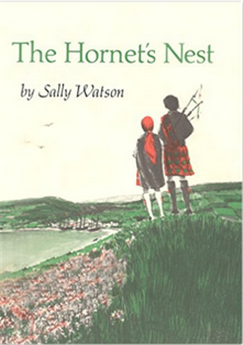
Cover for The Hornet's NestIt is 30 years after the Battle of Culloden, but Highland Scots are still forbidden by their English overlords to wear the plaid, play bagpipes, or honor their heritage in other ways. Rebellious Lauchlin MacLeod and her brother Ronald, teenage children of Laird Kildornie, are always finding themselves in trouble.

So it is on the day they meet their cousin Matthew Lennox, a gentleman from Virginia journeying to visit his English and Scottish relatives. Lauchlin is marveling that this Sassenach is related to her family and doesn’t realize he has been escorted there by a troop of redcoats. She just barely avoids being caught wearing a kilt while her brother hides in the bushes with his bagpipe.

In town showing Cousin Matthew the sights, Ronald and Lauchlin attack some boys who are torturing a kitten. Later Sergeant Tucker arrives at their home to tell them that the boys are the children of Captain Green, the new area commander. The boys have lied about the cause of the attack, and Captain Green isn’t as likely as the previous commander to overlook their behavior. The next incident could be serious.

Cousin Matthew has a solution. Lauchlin and Ronald can travel to Virginia and live with his sister Lavinia until things calm down. Secretly, he enlists them to send news and drawings, for Lauchlin is a gifted caricaturist, about doings in the colonies for a paper he is founding in London called The Gadfly.

So, Lauchlin and Ronald set out for the colonies accompanied by their kitten Haggis. They arrive in Williamsburg in 1773, just in time to witness the lead-up to the American Revolution. It’s not too difficult to imagine where their sympathies lie.

This novel effortlessly mixes the viewpoints from both sides of the revolution, for their Lennox relatives are Loyalists, and some are charming characters. Lauchlin is an ebullient scamp, Ronald a boy who must learn that all Sassenachs are not the same. Their many Virginian cousins dislike them at first but then most of them learn to love them. And Haggis has his own distinctive personality.

This novel is one of my favorites so far of the Watson books I’ve newly discovered, because it is less unlikely than some of them and has really enjoyable characters. Plus, it provides an unusual viewpoint of the American Revolution. Young teens and tweens should love this book.

Related Posts

Witch of the Glens

Lark

Mistress Malapert


Day 816: Literary Wives! The Kitchen God’s Wife

Literary Wives logoToday is another review for the Literary Wives blogging club in which we discuss the depiction of wives in modern fiction. Be sure to read the reviews and comments of the other wives! If you have read the book, please participate by leaving comments on any of our blogs.

Emily of The Bookshelf of Emily J.
Lynn of Smoke and Mirrors
Naomi of Consumed By Ink

My Review

Cover for The Kitchen God's WifePearl has been keeping a secret from her mother, Winnie. She was diagnosed with muscular dystrophy and is trying to avoid the fuss she is sure her mother will make by not telling her as long as she is mobile. She is dismayed, then, to learn that her cousin Mary has told her own mother, Helen, Winnie’s best friend.

At a family engagement party, Helen tells Pearl that she has a brain tumor. She says she’s sure she is going to die and doesn’t want to go keeping secrets, so she will tell Winnie Pearl’s secret unless Pearl does.

When the two women sit down to talk, it turns out Winnie has secrets, too—a whole life before she came to San Francisco from China and another marriage before her marriage to Jimmie Louie. Winnie’s story makes up the bulk of the novel.

Winnie’s unhappy life begins when she is six and her mother leaves. She never finds out what became of her mother, but Winnie herself is banished from her wealthy father’s house to be raised by aunts. In her aunts’ home, she is given a lower status than her cousins. This even applies to her marriage. She acts as a go-between for her cousin Peanut and Peanut’s suitor, Wen Fu, and then is surprised when Wen Fu asks for her own hand. But she learns later that her aunts have deemed Wen Fu’s family not good enough for Peanut.

And they are not good. They strip Winnie of all her possessions and sell them. Once she sees what they are, she manages to hide away a dozen sets of silver chopsticks. Those are the only things she is able to keep. Worse, Wen Fu is physically and sexually brutal. Along with these difficulties and Winnie’s lack of rights are the hardships imposed by the Second Sino-Japanese War and World War II.

The difficulties between Winnie and Pearl and those between Winnie and Helen serve as the framing of the story set in the past. It is this story that is most interesting, even though I never really warmed up to Winnie. What I found most interesting in this novel were the ways of thinking and the customs of pre-revolutionary China.

What does this book say about wives or the experience of being a wife?

Three marriages are described in this novel, but the most time is that spent on Winnie and Wen Fu. This is a classic abusive relationship, where Wen Fu rapes and terrorizes Winnie, including putting a gun to her head, and Winnie thinks it is her fault. The novel focuses on Winnie’s growth of understanding—that her marriage is different than others’ marriages, that she can stand up for herself by leaving. (Her other attempts to stand up for herself are disastrous.)

There is much less focus on the marriage of Pearl and Phil. We learn that they have tacitly taken the easy way on things, that is, not much confrontation or arguing, partially because of Pearl’s disease. Pearl knows, for example, that Phil disapproves of how easy she is on her girls, but it is important for her to avoid stress. All-in-all, they seem to have a good marriage with the usual minor disagreements, like whether they have to attend her cousin’s engagement party.

The marriage between Winnie and Jimmie is the least explored, as Jimmie is long dead in the present-day story, but it seems to have been a happy one. At the beginning of the novel, Winnie is hurt that Pearl has never seemed to grieve for Jimmy. She doesn’t realize that Pearl’s teenage anger was an expression of her grief. Winnie seems to nearly hero-worship Jimmie, but of course compared to Wen Fu he was an angel.

In what way does this woman define “wife”—or in what way is she defined by “wife”?

This is always the hardest question for me, because unless an author is writing an allegory, nothing about a character should define a whole category of people. Maybe we can say here that as a young girl and according to her culture, Winnie believes that a wife is ruled by her husband. She is naive enough about sex to not realize that some of the things Wen Fu wants to do are not normal practices. So, Winnie suffers, I think, because of a lack of rights for women in China at the time but also because of what her culture and upbringing have taught her—and have not taught her.

The title of the novel speaks to this question. The Kitchen God was a man who left his wife for another woman and then lost everything. When he was a poor, sick man, his wife took him in. After his death, he was rewarded for repenting by being made a minor god. Winnie expresses her disgust for the notion that the husband was rewarded for his bad behavior while the wife’s name was not even passed down in the legend. This is a notion she has had to develop as her notions of marriage change and she develops her own ideas of how women should live.

Related Posts

Shanghai Girls

Snow Flower and the Secret Fan

The Ten Thousand Things


Day 814: Passion

Cover for PassionPassion tells the stories of the Romantic poets from the points of view of their women. It begins with each as a young girl, starting before Romanticism with the broad strokes of the life of Mary Wollstonecraft, Mary Godwin Shelley’s mother, a famous early feminist, writer, and philosopher.

Mary Wollstonecraft dies shortly after childbirth. Her daughter, Mary Godwin, grows up worshipping her mother and taking seriously the ideals of her father, William Godwin. However, he compromises his principles (he doesn’t believe in marriage) by marrying Mrs. Clairmont, a woman Mary detests. Her ideals and the poisonous atmosphere at home make her open to the advances of Percy Byssche Shelley, even though he is already married. She runs off with him at the age of sixteen, unfortunately accompanied by her stepsister Jane (who later calls herself Claire).

Lady Caroline Lamb loves her husband, but she is prone to a certain instability that her husband’s family deplores. When she sets eyes upon the famous Lord Byron, she is entranced and is soon engaged in a flagrant affair. When he breaks with her, she stalks him, sneaking into his rooms, following him around dressed as a boy. Her behavior is a scandal.

The only woman George Byron really loves is his half-sister Augusta. Even she succumbs to his charms. After he makes the mistake of marrying a self-righteous and vengeful woman, his worst secrets come out and he must leave the country.

Fanny Brawne comes late to the novel. She falls in love with a neighbor, John Keats, but he is a victim to a family weakness, consumption.

This material could be sensationally or romantically told, but it remains at a distance from us, more like biographical writing. We do feel sympathy for some of these women, especially for Mary Shelley, but I was not drawn right in. Although the book is named Passion and we know that this emotion was an important force for the Romantics, we don’t really see much of it in the novel, nor truly understand just what the attraction is to this group of neurotic young men. Sometimes I could catch a glimmer of the attractions of Byron, the only one who did not seem permanently deluded about the virtues of humanity. Still, for firmly setting a background for bits and pieces of information I picked up over time, I mildly enjoyed this novel. Although I admire the intent of Morgan’s more serious depictions of figures from literature, I have so far enjoyed most his romance novel, Indiscretion.

Related Posts

Indiscretion

The Secret Life of William Shakespeare

Miss Emily

Day 812: Shirley

Cover for ShirleyBest Book of the Week!
Shirley is both an homage to Shirley Jackson, dealing with some of her own themes and preoccupations, and a novel about her. It works well on both counts. Don’t be mislead by how it is being marketed, though. It is not a thriller, even though its main character becomes obsessed with a disappearance that may be a crime.

Young, pregnant Rose Nemser and her husband Fred travel to Bennington, Vermont, in the fall of 1964. Fred is a graduate student working on his dissertation who has taken a position as teaching assistant with Shirley Jackson’s husband, Stanley Edgar Hyman. The Hymans welcome the  young couple and offer them a place to stay in their spare bedroom.

Rose is a shy and unconfident 19. Because of her poverty-stricken upbringing and meager education, she feels inferior to her husband and his family. Surprised at this invitation, she is delighted to stay. She is a fan of Jackson’s work and hopes to become her friend.

Soon Rose believes she has made a friend of Shirley, but Rose is naive and can’t begin to understand the demons that haunt her hostess. Shirley’s husband is a professor at Bennington who is known for having affairs with his students. Shirley, too, is jealous of male colleagues whose work has received more recognition than hers.

Rose begins delving into Shirley’s books on witchcraft and also becomes fascinated by stories of Paula Welden, a Bennington student who disappeared years ago while on a hike in the mountains. She begins having fancies about the house, similar to the ones held by Eleanor in The Haunting of Hill House.

So, the novel develops that mixture of the mundane and the off-kilter that characterizes much of Jackson’s fiction. Shirley is a deeply interesting and atmospheric novel that causes you to sympathize with the fictional Rose while feeling that you learn something about the actual Shirley Jackson. Like some other recent fiction I have read (Miss Emily comes to mind), it combines a completely made-up plot, aggravated by Rose’s fantasies, with biographical details of Shirley’s life.

Related Posts

Let Me Tell You

A Good Hard Look

Miss Emily

Day 811: Linnet

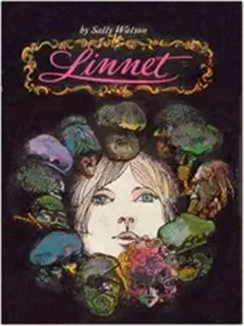
Cover for LinnetLinnet is another sprightly Sally Watson novel for tweens and younger teens set in the Elizabethan era. We first meet Linnet Seymour on the road to London. She has run away from her aunt’s house because she never has any adventure, planning to visit some cousins in London whom she doesn’t really know.

Unfortunately, she meets a rascal on the road, calling himself Sir Colin Collyngewood. He offers her a ride to her cousin’s house. A naive girl, she accepts. Instead of taking her to the Seymours, though, he delivers her to a filthy thieving ken to live with a bunch of child pickpockets and cutpurses.

Linnet has a tendency not to learn from experience, so when Colley tells her he wants to use her to trap some Papists in a plot against the Queen, she believes him. In the meantime, Linnet’s cousin Giles is the only person who believes she is missing. His parents think she returned home. Giles goes to London to look for her.

Like some other of Watson’s books, this one is a bit far-fetched and also has some lessons for Linnet about treatment of the poor. Still, it is an enjoyable romp.

Related Posts

Mistress Malapert

Lark

Witch of the Glens