Day 787: The Hunchback of Notre Dame

Cover for The Hunchback of Notre DameWhen I was making my list for Classics Club, I thought I should finally read something by Victor Hugo. The obvious choices were Les Miserables or The Hunchback of Notre Dame, but I had tried Les Mis some years ago only to put it down in disgust when Jean Valjean hits the priest who has tried to help him over the head with the candlesticks he wants to steal. So, it was Hunchback for me.

I was interested to read in the Introduction that the French title of this novel was Notre-Dame de Paris and that Hugo hated the English title. And truly, the focus of the novel is more on Notre Dame and 15th century Paris than it is on the story we’re familiar with. In fact, one entire chapter just describes Paris as it looks from the tower of the cathedral in 1482, street by street. I have to say, though, that the chapter was almost meaningless to me, since I found myself unable to visualize what he describes, at least not in that detail.

The novel has many characters, not just the three emphasized in all the movies. It begins with Pierre Gringoire, a hapless poet who is attempting to put on a play he wrote in celebration of Epiphany and the Festival of Fools. This great (and long) production is supposed to pay tribute to the betrothal of the Dauphin with Margaret of Flanders. The problem is that the people have been waiting since dawn to see it. It is past noon, when the play is supposed to have started, but the Cardinal and the Flemish ambassadors haven’t arrived yet. The crowd, egged on by the student Jehan Frollo du Moilin and his buddies, is getting disruptive.

Gringoire decides to start the play, and the crowd settles down, but the actors are still reciting the prologue when the Cardinal and the Flemish arrive, making a lot of noise. The students turn their attention to making rude remarks. Soon the crowd begins trying to select the Pope of Fools instead of watching the play. They choose the hideously deformed hunchback Quasimodo, the bellringer at Notre Dame, and everyone leaves. Poor Gringoire will not be paid, so will not be able to pay his lodging, and he goes off homeless to wander the street.

So, we meet Quasimodo, who was taken in as a child by Claude Frollo, the severe Archdeacon of Josas and older brother of Jehan Frollo. Claude Frollo is obsessed by his studies of alchemy until his eye lights on Esmeralda, a young gypsy dancer and street performer. He becomes infatuated and lustful and so (with the typical logic of zealotry) decides she must be a witch who has enchanted him. On the other hand, when Quasimodo is sentenced to the stocks simply because he is too deaf to hear the judge, the only person who is kind to him is the gypsy dancer. So are sewn the seeds of tragedy.

And make no mistake, there is tragedy in store for most of the characters in this novel. Justice is solely dependent upon the whims of powerful men, and the more powerful they are, the more scathingly Hugo treats them. We even spend some time with the king, Louis XI, who is depicted as grasping, arbitrary, and vicious. Hugo pretty much skewers everyone except Quasimodo and the gypsy girl, who are basically cardboard figures.

Hugo is interested in many things in this novel—the cathedral itself, its own architecture, and the architecture of Paris are strong presences. The transmission of culture from century to century is a preoccupation, as are the themes of the nature of love, loyalty, and not judging by appearances. As a son of the revolution, he also has an axe to grind about the aristocracy and the corruption in the church.

I have to confess, though, that I only mildly enjoyed this gothic novel. The only highly developed character is Claude Frollo, and he is a sickening person.

Related Posts

La Reine Margot

The Lily and the Lion

The Rhetoric of Death


Day 785: All Aunt Hagar’s Children

Cover for All Aunt Hagar's ChildrenAs in his wonderful novel, The Known World, Edward P. Jones attempts to depict an entire community in the short stories included in All Aunt Hagar’s Children. This goal is more difficult to accomplish, because the community is a much larger one—the African-American citizens of Washington, D.C.—and the stories take place over much of the 20th century.

Several of the stories have to do with the migration of the characters from the rural South to the city. In “In the Blink of God’s Eye,” Ruth and Aubrey Patterson are a hopeful young couple from across the river in Virginia at the turn of the 20th century. Ruth, though, is homesick, and when she finds a baby boy in a tree one night, Aubrey becomes jealous. This story is first in the collection, but the last story echoes it. Anne Perry, of rural Mississippi, meets George Carter, a sleeping car porter, and moves with him to Washington. In the story “Tapestry,” Jones uses a technique he also employed in The Known World where he breaks off to tell Anne’s entire life. But he twice tells what her life might have been had she married a different man.

The emphasis on rural roots is also important in “Root Worker.” Dr. Glynnis Holloway’s mother has been treated for mental illness for years until her care worker, Maddie Williams, talks the reluctant doctor into consulting a root worker, a wise woman. In the rural North Carolina setting under the care of Dr. Imogene, her mother improves, and Dr. Holloway surprises herself by apprenticing herself to Dr. Imogene.

Another strong theme is that of moving into the middle class. It pervades many of the stories but particularly “Bad Neighbors.” When Sharon is in high school, her family has made it to the middle class, but they are disturbed when the Staggs move in across the street, for they are not considered respectable enough. Sharon’s father is responsible for encouraging the neighbors to club together to buy the Staggs’ house so they can evict the family. Years later, Sharon realizes some truths when she is saved by Terrance Stagg.

Perhaps the thread I least identified with was the presence of folk lore as if it were real, a sort of magical realism. For example, in “The Devil Swims Across the Anacostia River,” Laverne spends a lively afternoon at the grocery store fending off the devil. Years ago, her grandmother got away from him by wading into the Atlantic Ocean to go to heaven.

Although overall, the stories are not as effective as the novel The Known World, they are compassionate to even the lowest of their characters. I particularly found touching “Adam Robinson Acquires Grandparents and a Little Sister,” about Noah Robinson, whose grandson Adam was lost after his drug addict parents abandoned him. The little boy is found, illiterate and frightened, and Noah faces a future of raising his grandchildren instead of the carefree retirement he envisioned.

Related Posts

The Known World

Family Furnishings

Unaccustomed Earth

Day 779: The Quickening Maze

Cover for The Quickening MazeThe Quickening Maze is the first book I read purposefully because it’s one of the finalists for the Walter Scott Prize for Historical Fiction. By coincidence, I had already read half a dozen finalists and winners, and when I learned that Helen of She Reads Novels was trying to read them all, I decided to join her.

This novel is based on events in the life of the poet John Clare, known as the “peasant poet,” a man of rural background who was steeped in his natural surroundings. Unfortunately, Clare is having some mental problems and is staying in an asylum in Epping Forest. Nearby is Alfred Tennyson, whose brother Septimus also resides there.

John Clare seems to be doing well under the treatment of Dr. Matthew Allen. When we first meet him, his movements are relatively unrestrained and except for some confusion about a girl he knew named Mary, he seems sane enough. He is soon given a key to the gate so that he can walk in the forest.

Another patient important to the novel is Margaret, who is regularly transfixed by visions of angels and messages from god. At one point as Clare’s mental state deteriorates, he mistakes Margaret for his Mary.

Dr. Allen seems to have a gift for dealing with his patients during a time when mental health practices were deplorable. However, he also has a fascination with risk, and soon he is trying to talk his friends and the Tennysons into investing in his new invention, a machine for following the shape of furniture and carving additional pieces.

Hannah Allen at 17 has decided that Alfred Tennyson is the man she’d like to marry. She boldly begins seeking him out, not realizing that he is preoccupied with his brother and with grief over the death of a good friend.

Although this novel is more about the internal workings of some of the characters’ minds than its historical setting, it is beautifully written and atmospheric. I was interested in this narrow slice of history and curious to look at some of Clare’s poetry.

Related Posts

Under the Wide and Starry Sky

Parrot and Olivier in America

A Good Hard Look

Day 774: Miss Emily

Cover for Miss EmilyLast year, I read the novel Amherst, which was mostly about Emily Dickinson’s brother Austin but depicted Emily hazily. The excellent biography White Heat, about Emily’s relationship with Thomas Wentworth Higginson, portrayed her more fully but she still seemed hard to grasp. The Irish poet Nuala O’Connor presents a more fully realized character—Emily in her middle age*—through her relationship to a (fictional) Irish maid.

Ada Concannon is a good worker but a bit too much of a free spirit for her Irish employer. She arrives at work one too many times smelling of the River Liffey, in which she has bathed on the way to work. She is demoted to scullery maid, and her mother decides there is nothing to be done but send her to America to find better opportunities.

Ada has good luck at first. She finds a pleasant home with her aunt and uncle in Amherst, and they soon learn that the Dickinsons need a new maid.

Emily Dickinson has insisted that her parents get a new maid after the old one left, because she is spending all her time on housework and none on writing. Although she loves baking, she is not really interested in most of the other chores. Other than poetry, her main interest is in her warm relationship with her sister-in-law, Sue, but Sue is busy with her family. When Ada arrives, Emily becomes fascinated by the small, neat maid.

Ada soon finds she is being courted. Daniel Byrne shows he likes her right away, and she is attracted to him. His boss’s son, Patrick Crohan, is also trying to get her attention, but she dislikes him.

When Ada finds she needs help, she has only Emily to turn to. Emily, in her turn, goes to her brother Austin.

link to NetgalleyThis novel is beautifully written, sometimes poetically, with delightfully old-fashioned chapter titles. It explores the relationship between two women across a class divide. The two main characters are interesting and convincingly developed. Austin is also developed more fully than the others, but is not as likable.

I enjoyed this novel, which made me feel as if I understood O’Connor’s fictional Dickinson as a person. Although Dickinson at 16 was just beginning to develop some of the quirks she becomes well known for, O’Conner her thinking believable.

*I originally said that Emily was 16, but Caroline of Rosemary and Reading Glasses pointed out that I was mistaken. I thought I saw a reference to her age, but perhaps I got the age reference mixed up with one about Ada. My e-copy is expired, so I couldn’t go back and look it up.

Related Posts

Amherst

White Heat: The Friendship of Emily Dickinson and Thomas Wentworth Higginson

The Invention of Wings

Day 772: The Haunting of Maddy Clare

Cover for The Haunting of Maddy ClareBest Book of the Week!
The Haunting of Maddy Clare has been on my reading list for a while. I’ve finally read it, and my first reaction is to immediately look for another book by Simone St. James. It’s not often I encounter a good ghost story. This one is really good.

It’s just after World War I, and Sarah Piper has been living a safe but impoverished and lonely life in London taking temporary secretarial jobs, when her agency sends her to Alastair Gellis. Gellis has an unusual request. He is a wealthy young man who can afford to turn his interests into employment, and his interest is in ghosts.

Alastair’s regular assistant is away, and he has been summoned to the site of a haunting. Sarah’s job is to assist him in recording evidence of a ghost.

Maddy and Alastair travel to Falmouth House and an interview with Mrs. Clare, an elderly woman. She explains that Maddy came to her doorstep years ago as a child. She had been beaten and was barely dressed and covered with mud. She could hardly speak. The Clares took her in and tried to find her people, with no success. She was obviously of the servant class, so they employed her as a maid. She was with them for several years, always frightened and never leaving the house. Then one day she hanged herself in the barn.

Maddy haunts the barn, and Mrs. Clare wants Alastair to get her to leave. She already tried an exorcism, with terrible results. But Mrs. Clare says that Maddy hated men, which is why she asked Alastair to bring a woman.

Sarah learns she is expected to go into the barn accompanied only by a wire recorder and a camera. She finds the experience terrifying. Although she does not see Maddy, Maddy plants images in her mind and asks Sarah to find someone. What she wants is not clear, but Sarah decides to continue.

Shortly thereafter, Alastair’s partner Matthew Ryder arrives. Although he is badly scarred from the war, Sarah is immediately attracted to him. Matthew, on the other hand, thinks Sarah is too fragile for the work and should be dismissed. In the meantime, Sarah has sensed a threatening presence in the village.

This novel drags you in from its first sentences. It also tells a deliciously creepy yet heart-rending story about why Maddy is haunting the barn. If you like ghost stories and enjoy some romance in  your historical fiction as well, you’ll like this novel.

Related Posts

This House Is Haunted

The Uninvited Guests

The Greatcoat


Day 770: Captain in Calico

Cover for Captain in CalicoThe foreword to Captain in Calico, written by George MacDonald Fraser’s daughter, says that it is closely based on the careers of the pirates Captain Jack Rackham and Anne Bonny (Bonney). I would suggest it is more loosely based. With the little I know about the subject, I spotted inaccuracies, and the novel has a completely fabricated ending.

Calico Jack Rackham arrives in the Bahamas full of hope. Although he fell into piracy against his will, he’s kept at it for the past few years, and he and his shipmates have captured a ship full of Spanish silver. But he has heard about a pardon being available, and he hopes to take his pardon so he can marry the girl he left behind, Kate Sampson.

Governor Woodes Rogers isn’t content to simply give his pardon. Jack must betray his shipmates and be captured along with the silver before he gets a pardon. What the governor knows and Jack does not is that his betrayal will be for nothing. Kate Sampson is engaged to be married, to the governor himself.

So, Jack betrays his crew, loses his fortune, and gets his pardon, but he does not get Kate. Afterwards, drunk and angry, he ends up in a duel and is wounded. A voluptuous married woman named Anne Bonney takes him home to heal him and promptly seduces him.

Soon Anne is trying to talk him back into piracy. She has heard the governor is shipping treasure, and she knows the name of the ship. She wants Jack to raise a crew, steal a boat, and stop the ship on the high seas. Jack thinks it’s a risky business, but she talks him into it. In turn, he persuades his friend Major Penner, with whom he had signed on as a privateer, to join him.

George MacDonald Fraser’s novels are marked by more realism and less romanticism than most historical novels, especially from his time. His protagonists are often unsavory types. In this case, Jack starts out by betraying his friends, but I presume we are supposed to be sympathetic with him. I wasn’t. In Fraser’s Flashman novels, in contrast, we are amused by Flashman’s lack of scruples but find his morals abhorrent. Next, Fraser’s novels are usually marked by impeccable research, but this one differs in several respects from the other reading I’ve done on Anne Bonny. For one thing, she ran away to marry Bonny, a poor sailor. In this novel, she was basically sold to Bonney, a rich plantation owner.

link to NetgalleyFinally, this novel falls into a genre that leaves a bad taste in my mouth, wherein a man’s troubles are the fault of a seductive, unprincipled woman. I really don’t like these novels. No matter which sex is leading the other astray, it’s presumed the victims can’t think for themselves. Since a large proportion of the women in American prisons are there for abetting their partners in crime (a statistic I read a while back, so I can’t back it up with a citation), this does seem to happen to women, but in literature it is much more frequently the men who are betrayed. Why do you think that is? (That’s a rhetorical question, but you can answer it if you like.)

So, not one of Fraser’s best, as he frankly admitted. Still, Fraser is a good writer who always manages to keep your attention.

Related Posts

The Candlemass Road

Flashman

Treasure Island

Day 765: Mistress Malapert

Cover for Mistress MalapertMistress Malapert was my favorite of Sally Watson’s books years ago, the rediscovery of which I discussed in my review of Lark. The only thing that might keep it from still being my favorite is its attempt at Elizabethan English, not entirely convincing although not horrible, even used sometimes in the narrative parts of the book. Watson in her updated notes at the end of the book says she wishes she hadn’t used so much of it but that she was inexperienced as it was her second book. Still, as a young reader, it clearly didn’t bother me. I’m not even sure I noticed it.

Valerie Leigh has been raised for years by her wealthy, childless aunt and uncle, who have given her everything she asks for. Now she is back with her own family, and they don’t know what to do with her. At fourteen, she has a nasty temper that appears whenever she doesn’t get what she wants. Her temper is over quickly and she always sincerely apologizes, but that doesn’t stop her from behaving in a truly outrageous manner when she is angry.

When Valerie’s parents are dispatched by her mother’s distant cousin, Queen Elizabeth, on a foreign embassy, they leave Valerie and her sister Audrey in the care of their stern Uncle Gil, who is determined to tame Valerie. Of course, she isn’t going to put up with much of this.

At a fair, she is fascinated by a troupe of players, especially the boy who plays the part of the princess. She decides it is unfair that girls aren’t allowed to act. Later, when Uncle Gil punishes her for fighting, she decides to run away. She disguises herself as a boy and runs off to join the traveling players, a plot straight from Shakespeare.

Val finds she has a talent for the stage, but her adventures on the stage aren’t all this novel is about. Slowly, she learns some lessons about her responsibilities to the other players and about the kind of person she really wants to be. To be that person, she must learn to control her temper and think of others.

I found this book quite enjoyable and think that many preteens and young teens might like it as well. Val has the opportunity to meet Shakespeare and even Queen Elizabeth by the end of the novel, and although I am not generally fond of historical novels where the main, invented character somehow meets lots of famous people, in this novel it seemed perfectly reasonable. And by the way, I recently criticized the depiction by another writer of Shakespeare’s dialogue in her book for its lack of playfulness. When Val meets Shakespeare, his response is a little clumsy, but much more what I would expect:

Here be a valiant Val to have with us for a valediction. Be you a valid Valentine? Can ye play a valet? Put down your valise, valiant Val, and be you proved valuable, we’ll keep you till you be valanced with a white beard.

Don’t worry, it’s not all like this.

Related Posts

Lark

Witch of the Glens

The Secret Life of William Shakespeare


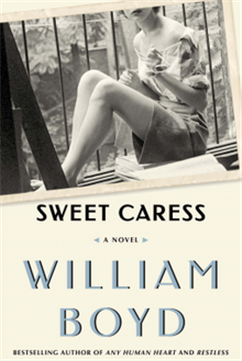
Day 764: Sweet Caress

Cover for Sweet CaressAlthough I have by no means read everything by William Boyd, Sweet Caress reminds me most of his Any Human Heart, perhaps because it’s the story of one person’s life. This novel is about Amory Clay, a photographer born in 1908. Boyd creates the impression that Amory is a real person (so much so that I googled her twice) by interjecting photos of her life into the novel.

Amory leads an unusual life almost from the start of the novel. Although her father suffers from depression and other problems as a result of World War I, she is so content with her home life that she is upset when her parents send her away to school. Her parents are not well off, but Amory learns later that a legacy from an aunt is dedicated to her education.

Her mother wants her to attend university, but she decides early that she doesn’t want to go. Her favorite uncle, Greville, gave her a camera on her 10th birthday, and she wants to be a professional photographer.

Then a violent incident brings her home. Her father arrives at school unexpectedly to take her to tea. But his intention is to commit suicide, and he doesn’t want to go alone. Amory survives the drive into the lake and even saves her father, who is committed to an institution for a long time.

Soon after, Amory becomes Uncle Greville’s assistant. He is a society photographer, and although Amory does not enjoy this type of work, she must start somewhere. But she takes a risk with an unusual betrothal photo, and its reception ruins her chances. Soon Amory is off to capture the decadent night life of Berlin.

Amory leads an extraordinary life that contains many sorrows and triumphs. She is a war correspondent for both World War II and the Vietnam War, she is attacked by fascists rioting in London, she travels with lesbians to Mexico, she encounters a Charles Manson-like figure in 1960’s California. She almost unwittingly marries a lord and has a family. These are just some of the events of her life, its story punctuated with paragraphs from the “present time” of 1978, when Amory is an old woman.

link to NetgalleyI found this novel involving, although not as much as I did Any Human Heart. For one thing, I wasn’t always convinced I was hearing a woman’s voice, and in no way was this because of Amory’s adventurous life. Also, Amory’s voice is a reserved one, with certain exceptions. Still, it is a fascinating story that manages to cover a great deal of modern history.

Related Posts

The All-True Travels and Adventures of Lidie Newton

The Signature of All Things

The Lacuna

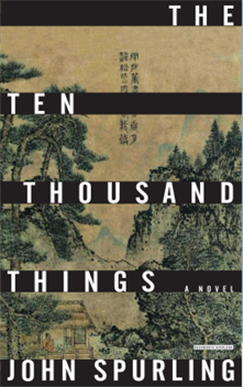
Day 758: The Ten Thousand Things

Cover for The Ten Thousand ThingsIn keeping with my goal to read all of the finalists and winners of the Walter Scott Prize, here is my review of the winner for 2015. The Ten Thousand Things is John Spurling’s novel about a turbulent period in Chinese history. It is written from the point of view of Wang Meng, an actual artist of the time, and inspired by Wang’s paintings of the ten thousand things, all of creation.

This novel is related by Wang from his prison cell, where he chooses to tell about his past in the third person. He has been arrested on charges of conspiracy because he accepted an invitation to view the art collection of the disgraced Chancellor Hu.

Wang’s story begins in a mountain retreat when he is already a grown man. He has resigned his minor government post to pursue his art, although strictly as an amateur. This action has disappointed his more ambitious wife, but she is barely a character in the novel.

China is uneasy under the Yuan dynasty, which is dominated by the Mongols. The Chinese upper class resent the fact that the powerful jobs go to Mongols. Taxes are heavy, and men are restricted to following the professions of their fathers. Wang’s own grandfather, General Meng, was controversial because of having decided to support the Yuan government instead of retiring from his government post as many of his peers did. In Wang’s time, revolts are underway under several different war lords and groups of bandits.

When Wang withdraws to his retreat, he has three fateful encounters. He meets Ni on the way there when he is forced to share a room in an inn. Ni is a great artist whose work affects how Wang views his own. Next, when Wang’s cousin Tao asks him to a nearby village to meet a woman he is thinking of marrying, Wang and Tao are just in time to witness a demand from the Red Scarf Bandits that she marry their chief. When her father asks Wang’s advice, he suggests that she choose for herself. She decides to marry the bandit, and soon becomes a bandit queen named the White Tiger. Finally, Wang meets Zhu, a would-be monk from a nearby monastery who asks Wang to take him as his servant. Wang politely explains he can’t afford to and advises him to join the bandits if he wants to learn about the world. Later, Zhu becomes a powerful war lord and then an emperor.

This novel documents the turbulent period of the overthrow of the Yuan dynasty and the establishment of the even more repressive, but Chinese-lead, Ming dynasty under the paranoid Emperor Hongwu. It moves a little slowly and is told in a detached way from the point of view of an artist who attempts to stay away from the seats of power. It also spends a good deal of time describing Wang’s paintings. The novel reflects a sophisticated and intellectual culture, although it certainly concentrates its story in the upper realms of this society.

link to NetgalleyI think it was this detached viewpoint that kept me from enjoying the novel more. The subject matter is interesting, as I know little of Chinese history and have long thought it was a ridiculous bias that we didn’t learn any history of the Far East in school except when it intersected with Western history. Yet most of the characters seem only sketchily drawn, and I didn’t fully engage. The novel is said to illustrate the principles of Daoism, but since my brief reading on that subject left me completely clueless, I did not understand in what way the philosophy is reflected, except perhaps in the perceptions of the narrator.

Related Posts

River of Smoke

The Blazing World

The Thousand Autumns of Jacob de Zoet

Day 756: Z: A Novel of Zelda Fitzgerald

Cover for ZTo write a novel about Zelda Fitzgerald, Therese Anne Fowler had to make many decisions between competing sources. Historians and biographers are sharply divided between those who think Zelda ruined Scott’s life and those who think Scott ruined Zelda’s life. Fowler ends up coming in pretty firmly on Zelda’s side. Ernest Hemingway’s A Moveable Feast said nasty things about both of them, but many of those things have been found to be exaggerations or outright lies. In any case, I’ve always thought Hemingway was a jerk.

This novel begins when Zelda, fresh out of high school and a popular debutante, meets Fitzgerald, at that time in the army and due to ship out to Europe and World War I. It ends shortly after Fitzgerald’s death. It paints a vivid portrait of Zelda, a woman trying to find a purpose in her life beyond being a wife.

If Fowler has made the right choices, the novel creates a devastating idea of Fitzgerald, insecure, unfaithful, controlling, and alcoholic. He undercuts Zelda in every way possible, publishing her stories under his own name, taking control of her published novel in the editing stage and butchering it, being generally nasty, and threatening to take away her daughter Scottie when she wanted to accept a solo role in the ballet in Naples. His friendship with Hemingway especially drove them apart, as Hemingway was relentless in accusing her of being selfish and ruining Scott’s career, and Scott began to believe it. Note that Hemingway is the same person who did all he could to halt his own wife’s career as a war correspondent.

I was completely absorbed by the novel, which strongly characterizes Zelda and to a lesser extent, Scott. My only criticism, besides a few too many descriptions of clothes, is that most of the other characters are only sketchily drawn. A great many characters appear in these pages, and I can’t say that I had much of an impression about any of them, to the point where I couldn’t remember whether some were friends or relatives. With such vivid personalities as Cole Porter, Gertrude Stein, H. L. Mencken, and Hemingway appearing in the novel, more could have been done with them.

Related Posts

Circling the Sun

The Happy Foreigner

The Other Daughter