Day 699: Rustication

Cover for RusticationBest Book of the Week!
I was captured by this dark, twisty novel from the moment I started reading it. I only feared it may eventually disappoint, but it does not.

In winter 1863, Richard Shenstone, 17, appears without warning at his mother’s new home, a large dilapidated house on the southern coast of England. He has been rusticated, sent down from Cambridge for reasons not immediately explained.

Having received word of his father’s death too late for the funeral, he is surprised to find his mother and sister living in apparent poverty. Furthermore, although he doesn’t at first tell them he’s been sent down, his arrival is met by a surprising lack of welcome, indeed hostility on the part of his sister Effie.

There is some mystery about his father’s death, that is clear. His father’s pension has been denied to the family, and Richard’s mother is suing for her father’s estate as well. Effie is also up to something, for he twice sees her out accompanied only by a tall man, not proper behavior for a lady.

Richard is not a pleasant person, obsessed as he is by desire for every girl or young woman he meets and also addicted to opium. The novel is told as excerpts from his journal, interrupted by copies of a series of hateful letters that soon begin arriving at the homes of various people in the district. It is also clear from the beginning that some crime has been committed and the journal is a look back into the past. It is not clear to readers, however, how reliable a narrator Richard is or what’s going on when he roams the countryside at night in his opiated state. Soon the letter writer begins leaving corpses of mutilated sheep behind him.

This novel is atmospheric in the extreme and completely absorbing. As Richard begins trying to figure out who the letter writer is, he finds the finger pointed toward himself. He takes unwarranted leaps of logic that cause him to make many mistakes and ignores some clues that he has. Still, exasperating and unlikable as the main character is, you are urged along to the end of the novel.


Related Posts

Stone’s Fall

The Séance

The Darkest Room

Day 694: The Paying Guests

Cover for The Paying GuestsSarah Waters builds on some of her themes from Affinity in the post-World War I novel The Paying Guests. Frances Wray lives with her mother in the family home, a large house that is getting a little seedy. Since the death of Frances’ father, they have had to dispense with servants, and Frances does all the housework herself. Now they have been forced to take in “paying guests,” giving up most of the top floor of their house to be their lodgers’ apartment. The lodgers are a young couple, Leonard and Lilian Barber.

Frances did not see her life like this. Not so long ago, she was in love with a friend, Christina, and they planned to make a home for themselves. But after the death of her father, Frances discovered he had lost all his money, leaving her mother nearly destitute, and she decided to stay to help her mother. Now she feels as if Christina and her new friend Stevie are leading the life she and Christina planned.

Class is an important issue in this novel and comes up constantly. Frances and Mrs. Wray feel they’ve been deceived when they take stock of their new guests, who are considerably less genteel than they thought. Frances often refers to them as being in the clerk class, but Lilian’s family is considerably more common. On the other end of the class scale, Frances has to wait to do her housework when her mother is out, because it appalls her so to see her daughter doing physical work. Her mother herself does none.

Different classes or not, Frances and Lilian tentatively develop a friendship. Soon, though, their relationship becomes a love affair. Frances wants them to run away to lead their own lives, but Lilian thinks she is fantasizing. Soon, their plans put them into peril.

This novel creates a fully realized time and place, with reference to many of Britain’s post-war issues. Unemployed soldiers on the streets are a problem as well as a growing sense of a less-ordered society.

I found Frances to be an interesting character but was less interested in Lilian, who seems more formless. I found the story compelling, though, wondering how the women would get through a difficult situation.

Related Posts

Affinity

Practical Magic

Trick of the Dark

Day 692: The Devil in the Marshalsea

Cover for The Devil in the MarshalseaTom Hawkins has been leading a dissolute life ever since his ordination ceremony was sabotaged by his stepbrother’s reports of his behavior at school. In a desperate attempt to save himself from debtor’s prison, he goes out gambling with his disapproving friend Charles and manages to win enough money to save himself. But on the way home, he is attacked and robbed of everything. Soon, he is on his way to the Marshalsea.

In 1727, the Marshalsea is not the place Dickens described in Little DorritAlthough Dickens’ prison was a place of lost hope, in the early 18th century, the Marshalsea is a hell-hole run by a venal and vicious governor, Mr. Acton. Hawkins is astounded to find that it costs more to live in the Marshalsea than it does outside, and if you can’t pay your lodging you will be banished to the horrors of the Common Side, from which bodies are brought out daily. Hawkins has no money at all except what he gets for pawning his mother’s cross and a bit of money from Charles.

To support himself, Hawkins takes on the job of investigating the death of another debtor, Captain Roberts. Although Roberts’ death was deemed a suicide, it was almost certainly a murder, and his ghost is reported as roaming the prison.

Hawkins has taken Roberts’ room, so his roommate is Samuel Fleet, whom all of the prison inhabitants fear. Fleet claims to have been asleep when Roberts’ body was dragged from the room that night. But Hawkins soon observes that Fleet never sleeps.

This novel is terrific. It is thoroughly researched and richly imagined so that both the setting and characters come to life. Hodgson explains at the back of the book that many of the characters are based on actual historical figures. This is Hodgson’s first book, and I’ll be looking for more.

Related Posts

Jack Maggs

Great Expectations

The Solitary House

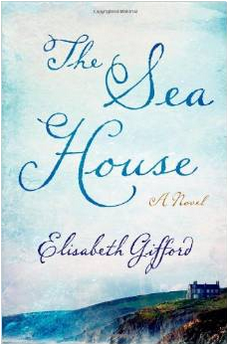
Day 682: The Sea House

Cover for The Sea HouseAn atmospheric novel set on the Scottish isle of Harris, The Sea House offers a fascinating story split between two times, the 1990’s and the early 19th century.

In 1992, Ruth and Michael have purchased a ramshackle Georgian house on the island, intending to fix it up and open a bed and breakfast. The house used to be the manse long before a new modern house was built. In tearing up the floorboards in the study, Michael finds the small corpse of a baby, although its legs are unfinished, looking more like a fish tail.

The body is at least 100 years old and its death is found to be of natural causes, but Ruth becomes interested in finding out more about the long-ago occupants of the house, hoping to identify the baby. She begins looking into the house’s history.

Ruth also knows very little about her own history. When she was 10, her mother’s death by drowning was found to be suicide, and she grew up in a series of foster homes. She knows nothing about her father, and all her mother told her was that they came from the islands and were descended from selkies. Her last name was Macleod, which she finds is a very common name there, but when she consults a genealogist, the woman can find no trace of a woman of her mother’s name and age born on the islands, leading them to guess that she was using a false name.

In 1860, Alexander Ferguson is the new curate at the manse. He is serious and eager to serve god and his parishioners. He is also interested in the new discoveries about evolution and studies fossils looking for new species. His family legend also holds that he is descended from selkies, and he is fascinated when he hears that a mermaid was discovered on the beach after a storm. He would like to examine her, but she has already been buried and the authorities won’t dig her up. He becomes interested in the idea that selkies might actually exist and could be a cross-species between man and fish.

Alexander has also taken in a new maid, a girl found running wild. Moira’s family was moved off their island along with all the other families so that Lord Marston could put sheep on it. The families were allocated the worst piece of land and all of them except Moira got sick and died. Moira was away from the house when Lord Marston’s men came and burned it down, and she was living wild until the reverend took her in. She loves the reverend but has vowed to kill Lord Marston.

This novel is well written and interesting. I was engrossed in both the modern and historical stories. The novel is particularly interesting for those who like Celtic legends and folk tales.

Related Posts

Galore

Remarkable Creatures

The Forgotten Garden

Day 678: Castle Dor

Cover for Castle DorIt is clear from the number of books Daphne du Maurier set in Cornwall that she found the region inspiring. In the case of Castle Dor, a book I had not heard of until recently, she actually finished a book begun by Sir Arthur Quiller-Couch, which is a retelling of the ancient Cornish legend of Tristan and Iseult. The novel also features another interest of du Maurier’s, the unexplained.

Dr. Carfax is the observer of this story set in the early 1800’s. He has a theory that he shares with a French visitor, elderly Monsieur Ledru, that the events of the old legend took place in the area of Cornwall where he lives. Monsieur Ledru has in fact traveled there to investigate just that subject. Ledru has also taken an interest in a young French onion-seller named Amyot Tristane and helps him free himself from his abusive ship’s master and get a job on the Bosanko’s farm.

It is the doctor who begins to feel an eerie familiarity in the behavior of Amyot once he unfortunately encounters Linnet Lewarne. Linnet is the most beautiful woman in the region, and she has at 18 married a much older man, the innkeeper Mark Lewarne. After Amyot meets Linnet, he seems to be aware of the history of the area in a way that is unlikely for the unsophisticated foreigner that he is. As Dr. Carfax views certain events and sees in them the similarities to the legend, he begins to fear the same fatal result for Amyot.

Linnet, although she is also presumably taken over by the strong forces of the past, is depicted unsympathetically, as ambitious and remorseless. As in the legend, there is a potion, but instead of being a love potion, it is poisonous.

The characters in this novel are rather one-sided, but it is the atmosphere and the legend that are important in the novel, set in the vicinity of the legendary Castle Dor. However, this is not one of du Maurier’s best, and for a retelling of the legend, I prefer Dorothy Robert’s The Enchanted Cup.

Related Posts

Daphne Du Maurier: The Secret Life of the Renowned Storyteller

Neverland: J. M. Barrie, the du Mauriers, and the Secret Life of Peter Pan

Bellman & Black

Day 676: The She-Wolf

Cover for The She-WolfThe fifth novel in Maurice Druon’s wonderful Accursed Kings series begins where the first one did, with the problems of Isabella of France, unhappy queen of England and sister to Charles IV of France. While Charles IV’s administration is being ably handled by his uncle Charles of Valois, the same cannot be said for that of Isabella’s husband, Edward II. He is completely under the sway of Hugh Despenser the Younger, his rapacious lover. At the beginning of the novel, Despenser has taken everything from Isabella’s dowry for himself and forces her to give him the valuable book she is reading.

Roger Mortimer is the only person to have ever escaped from the Tower of London, and he soon arrives in France. He too has been a victim of the greedy Despensers. He has a fateful meeting with Isabella when she arrives to broker a treaty. Soon their actions will cause the overthrow of a king.

The powerful Countess Mahaut of Artois still remembers Isabella’s testimony, which condemned her daughter and cousin to prison in the first book. She will make it her business to cause trouble for Isabella. And we know what trouble can mean, for in The Poisoned Crown, Mahaut had Charles’ oldest brother murdered so that her daughter could be queen of France.

Druon’s knowledge of medieval history, customs, and architecture is especially noticeable in this book, with its extensive historical notes. This fantastic series continues, with Druon specializing in snark.

The sixth book in this series will soon be available in paperback while the last is soon to be published in hardcover. Years ago, I read all but the last book, which I was unable to find, so I am looking forward to finally being able to read the entire series.

Related Posts

The Iron King

The Strangled Queen

The Poisoned Crown

The Royal Succession


Day 673: The Illuminator

Cover for The IlluminatorIt is the 14th century, and Lady Kathryn finds herself in a precarious position. She is a widow and owner of Blackingham Manor, the mother of 15-year-old twin sons. The church has been incessant in its demands for tithes, and there are also the king’s taxes. She suspects her overseer of being dishonest, and he is certainly disrespectful, but she has no one who could replace him.

When Father Ignatius makes yet another demand of her, she has nothing to give him but her mother’s pearls. Still, the church could make trouble for her, so she gives them up. Later Brother Joseph arrives with a message from the Abbott. If Lady Kathryn will house an illuminator who is working for the abbey, along with his daughter, the abbey will let up on its demands for tithes. For the price of food, Kathryn thinks this is a bargain.

Soon the artist Finn arrives, along with his beautiful daughter Rose. Lady Kathryn is immediately worried about her son Alfred, who likes to dally with the serving maids. Finn’s arrival is made more chaotic because of the news that Father Ignatius was murdered. Although this happened after he left her house, Kathryn doesn’t want to draw attention to herself, so she lies to the sheriff, Sir Guy, and tells him she hasn’t seen the Father recently. This of course turns out to be a lie she regrets.

Sir Guy, being the rapacious type, has his eye on Lady Kathryn and her estate, which is her own and does not go to her son. But Kathryn and Finn are soon drawn to each other. To get Alfred away from Rose, Kathryn asks him to supervise the overseer. Soon involved with Finn herself, she does not notice the depth of Rose’s friendship with Colin, the younger twin.

Other important characters in the novel are Half-Tom, a dwarf who befriends Finn, and the anchorite Julian of Norwich, a real woman famous for her writings about religion, reflecting unusual views.

I wanted to like this novel more than I did. Overall, my impression could be summed up as meh. At first I was worried that it was going to be a historical romance, which I usually do not enjoy, but it was not. It shows a solid grounding in the time period, with convincing detail. I think I was turned off by the depiction of the church. This was a violent time in history, and the Catholic Church was in a period of corruption, but I don’t think that is a good reason for depicting every representative of the church (except Julian of Norwich) as a cartoonish villain. It is clear that the author’s sympathies lay with the Reformation, but that movement had its own abuses. In fact, in the 14th century, it is doubtful that many people in England would have even envisioned a Reformation. Martin Luther didn’t put up his theses until 1517.

I think that my biggest problem with the novel is that only a few characters were at all developed. The others were simply villains. I also had problems with the situations created in the novel simply by both Kathryn’s sons departing without notice. Alfred pulls a nasty trick on Finn before leaving—one that endanger’s Finn’s life and leaves Kathryn open to blackmail. Both sons behave like spoiled adolescents instead of the young men they would have been considered at the time, and Kathryn makes several poor or dishonest decisions regarding them.

There is also a theme of Kathryn’s changing religious beliefs, but I found this decision sudden and unlikely. I would have liked to see more about Finn’s art, but there was very little.

Related Posts

Cathedral of the Sea

Grave Goods

Who Murdered Chaucer? A Medieval Mystery

Day 671: Lila

Cover for LilaBest Book of the Week!
In Lila, wonderful writer Marilynne Robinson returns to the small Iowa town of Gilead, the setting of her previous novels Gilead and Home. In these novels Lila Ames is not much of a presence. She is referred to as the surprising choice of a wife for the elderly, gentle, and educated pastor John Ames—much younger, rough, and uneducated.

Lila has lived almost her entire life on the tramp, ever since Doll stole her away, a neglected, starving, feverish little mite who lived mostly under the table or was locked out of the house. Doll and Lila joined up with a group of travelers lead by Doane, wandering from job to job, and life was just fine until the long, dark days of the Depression and the Dust Bowl. Years later, Lila has stopped outside Gilead and is living in a shack, walking to nearby farms and houses and asking for work.

Lila knows nothing about religion, but on occasion she has been curious about it and was warned away by Doane, who claims all preachers are charlatans. So, one day she ventures into the church. There she sees and is drawn to John Ames, and he to her. Eventually, they marry.

The action of this novel is mostly interior. Lila is tormented by some of the memories of her previous life and feels unworthy of Ames. She is afraid that he may ask her to leave at any minute. All the same, she occasionally wants to return to the freedom of her old life.

Ames, on the other hand, is happy to have Lila’s company, for he has lived alone ever since the death of his wife in childbirth, years ago. He is afraid she will decide to leave him one day.

As with Gilead and Home, this is a quiet novel, characterized by religious discussions as Lila tries to read and understand the Bible. She has no prior relationship to religion, but she has vowed that John Ames’s son will be brought up praying, as his father does. The discussions in Gilead between the two pastors were way over my head, but these are more fundamental.

I am not particularly interested in religion, but what I like about Robinson’s books is that they are about good people trying to be good. That is a refreshing theme these days. And the writing is superb, the subject matter approached with delicacy. I can’t recommend any book by Marilynne Robinson strongly enough.

Related Posts

Gilead

Home

Housekeeping


Day 667: Alias Grace

Cover for Alias GraceBest Book of the Week!
Most of what I have read by Margaret Atwood has been futuristic and dystopian, so I was quite surprised to find that Alias Grace is an apparently straightforward historical novel. But then, nothing with Atwood is exactly straightforward.

The novel is based on a notorious Canadian murder, in which two servants were found guilty of murdering their master and his paramour housekeeper. The man was hanged, but there continued to be debate about the extent of the guilt of the woman, Grace Marks.

The novel begins some years after the event, when Dr. Simon Jordan, studying new discoveries in the field of mental illness, is hired by a group trying to gain Grace a pardon. Grace has always claimed she cannot remember the crimes, and he hopes to revive her memory. He begins in a way meant to slyly nudge a modern sense of humor, by bringing her an apple followed by a series of root vegetables he hopes will remind her of a cellar, where the bodies were discovered.

Grace, who was very young at the time of the crime, eventually tells him what she can remember, beginning with her early life. She relates her story in a simple way, conveying the persona of a proper young girl.

Dr. Jordan appears as if he is going to be the hero of this novel, but he has his own obsessions and difficulties.

As Grace tells her story, we are drawn slowly in, waiting to learn what really happened. This novel is rich in detail and beautifully written, but it is also slyly humorous and dark.

Related Posts

Stone Mattress

Corrag

Burial Rites


Day 662: The Mermaid’s Child

Cover for The Mermaid's ChildI was really delighted with Longbourn, Jo Baker’s twist on Pride and Prejudice. I have more mixed feelings about The Mermaid’s Child, Baker’s latest.

Malin Reed is raised by her father, who tells her she is the daughter of a mermaid. Her father, the ferry operator, is affectionate, but everyone else in town treats her with disdain. Malin herself is an odd mixture, a girl naive enough to believe in mermaids but hard schooled, bullied by the village boys and by her teacher. But she has seen a mermaid herself, when the circus was in town.

When her father dies, her grandmother tells her she can’t control her (although we see little evidence that she is uncontrollable) and sends her to “Uncle George” to be a skivvy and bar maid. There she is mistreated and learns to service more than the bar.

Then one night she walks off with a stranger, a man who has given her a smile. He has promised to deliver a rain machine to the village, which is in a terrible drought. With her myopic naivety, she hasn’t even realized he is a con artist.

So begins a picaresque journey for Malin that eventually becomes a search for her mermaid mother. This search takes her to many unlikely places.

I wasn’t sure how I felt about this novel. Were it not for the realism of Malin’s situation, I would take it more for a fantasy, and that is how it is being marketed. But it isn’t really a fantasy except possibly in the narrator’s mind, nor is it magical realism. Unlikely is the word to apply to her adventures but then again, I’m not sure we’re supposed to take Malin’s story that literally. She tips us off in the first few pages that she may be an unreliable narrator.

Still, there is not much to anchor this book except Malin’s character. Most of the other characters are one-dimensional, and anyway we don’t spend much time with them.

This is just an observation, but I don’t think I’m giving away too much when I say this is the fourth historical novel I’ve read this year in which a girl is disguised as a boy. So, what’s up with that? Are historical novelists bothered by the restrictions a woman was subject to in the past?

http://www.netgalley.comI guess I would sum up by saying I found the novel mildly entertaining. It starts out fairly believably and quickly becomes rather grim but with each adventure also becomes less likely. It’s as though it wants to be closer to something like The Rathbones but doesn’t quite manage to push out the boat.

Related Posts

Longbourn

The Rathbones

Ahab’s Wife Or, the Star-Gazer