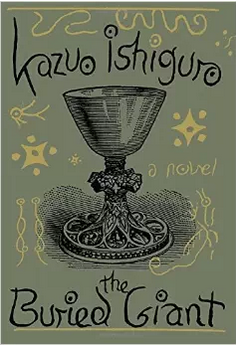
Day 742: Witch of the Glens

Cover for Witch of the GlensKelpie is about fourteen or fifteen and only remembers a gypsy life traveling with Mina and Bogle. They use her to steal and read the crystal, for she has second sight. Mina keeps promising to teach her witchcraft without actually showing her any. Still, they are often accused of being witches and hounded out of town.

Then one day she pretends to fall in front of a party of young men only to find she has actually injured herself. Although they catch her stealing from them, they are amused by her and take her home with them. The young men are Ian, Cameron, and Alex, returning from Oxford to their home north of Inverlochy.

Kelpie stays at Glenfern with Ian’s family, eventually as a servant, but they treat her kindly. She begins to feel affection for the children, especially little Mairie, and is dismayed when Mina and Bogle reappear. Mina threatens to curse the family if Kelpie refuses to come with them, and since Kelpie believes in Mina’s power, she goes.

The Highlands are in turmoil because Argyll has been commissioned to secure the area for the Calvinist Covenant against King Charles. Argyll’s troops are more prone to burn villages and murder innocents than to fight armies. But Montrose is trying to raise men to fight for the king. Mina sends Kelpie on a perilous task, to steal some hair or a personal possession from Argyll so he can be hexed.

Kelpie’s adventures take her all over the Highlands. When she joins the followers of Montrose’s army, she is happy to meet Ian and Alex again, but she has seen Alex strike Ian down in the crystal, so she is wary of him.

This is an enjoyable novel for tweens and teens full of likable characters and nasty villains, some history, lots of adventure, and another feisty Watson heroine. Kelpie begins re-evaluating her moral choices through the examples of others and the kindnesses she receives during her travels.

Related Posts

Lark

The Loon Feather

Treasure Island

Day 736: Circling the Sun

Cover for Circling the SunPaula McClain’s novel about Beryl Markham begins with her historic flight over the Atlantic from east to west—and then flashes back to cover her life until then. Of course, the story of her life is interesting because she was a fascinating person.

Beryl is raised in Kenya, and after her mother leaves the family to return to England when Beryl is four, Beryl is allowed to run around freely for years. She befriends the local natives and plays with the boys until she is almost a teenager. At that point, her father hires a series of governesses in an attempt to civilize her, an effort not entirely successful.

Beryl’s father is a horse trainer, and she works with him up to the point where her last governess, by then her father’s mistress, decides she should prepare for husband-hunting. She makes a marriage of convenience when her father is forced to sell their farm and take a job in Capetown, but soon she is separated from her husband and seeking a job as a horse trainer. She becomes the first woman licensed horse trainer.

The novel follows Beryl through her introduction to the Happy Valley set, her friendships with Karen Blixen (Isak Dinesen) and Denys Finch-Hatton, and her second marriage to Mansfield Markham.

Although this material is certainly interesting, I was never convinced that the character McLain presents us with is the true Beryl. This interpretation of Beryl’s character doesn’t match the one presented by other sources. My feelings made me wish I had read a biography of Markham before reading this novel, so I could be surer of these statements.

link to NetgalleyI feel as if Beryl’s character and other facts are somehow sanitized for our easier acceptance. Although some expression is given to her impatience of convention and yearning for freedom, McLean still portrays her as a woman who wants acceptance and love. I’m guessing, for example, that her abandonment by her mother at a young age left her with few mothering skills and her lifestyle left her with little desire to be a mother. Some sources I consulted said she willingly abandoned her son to her mother-in-law, but in McLain’s book, she is grief-stricken when the child is taken away from her. That tells me that McLain can’t imagine a different reaction to motherhood than the typical one. I think McLean mentions the qualities that made Markham different without really understanding them.

As another example of what I called sanitization, let’s not forget Karen Blixen’s illness, referred to briefly a couple of times, but never explained as syphilis, given to her by her husband Bror.

Related Posts

Love in a Cold Climate

The Signature of All Things

Savage Beauty: The Life of Edna St. Vincent Millay

Day 734: The Sun Is God

Cover for The Sun Is GodI have just become aware of the work of Adrian McKinty, said to be one of the best Irish crime novelists. The Sun Is God is set in New Guinea in 1906 and is based on an unsolved true crime.

Will Prior is a failing plantation owner in German New Guinea when his friend Lieutenant Kessler comes to request his assistance. Will is a former British military police officer who left the service after a massacre of rioting prisoners in South Africa. Kessler has come to ask him to help investigate a possible murder on a nearby island.

The island is occupied by a cult of mostly German nudists who call themselves Cocovores. They eat only coconuts and bananas and are sun worshippers. The pilot who brought Max Lutzow’s body back to Herbertshöhe, the regional capital, was told Lutzow died of malaria. But an autopsy reveals that he drowned.

Prior and Kessler are dismayed to find that they are expected to take a woman along with them on the investigation, Bessy Pullen-Burry, a travel writer. She is coming as a representative for Queen Emma.

The investigation seems to go nowhere almost immediately. Although the autopsy indicates otherwise, all the Cocovores tell the same story of malaria. The only discrepancy is whether Ann Schwab was with Lutzow right until he died. Yes, the investigators are surprised to find three women among the nudists, whom they had understood were all men.

Even though the investigation seems to stall, hampered by the islanders’ consumption of high-grade Bayer heroin, which they believe to be nonaddictive, Will grows worried about his party’s safety. They are not finding any evidence, but something is wrong, and they only have one opportunity a day to leave the island.

This novel is very well written and compelling, although it suffers from the feeling that no investigation is going on. So many men are on the island that I had difficulty keeping track of them and didn’t get much of a sense of their personalities. Still, the setting and situation are atmospheric and there’s a surprising shift of point of view at the end.

Related Posts

The Luminaries

The Bone People

Arcadia

Day 730: The Sea Captain’s Wife

Cover for The Sea Captain's WifeSince she was a little girl, Azuba has wanted to marry a sea captain and leave her home on the Bay of Fundy to live with him at sea. Although such arrangements are not usual, they are also not unheard of. She envisions a life of romance and adventure, traveling to the distant realms of the earth.

This is the life she plans with her suitor Nathaniel Bradstock, but once they are married, he changes his mind. Azuba is bored and discontented at home for years alone and feels he will be a stranger to their daughter Carrie. After a traumatic miscarriage, she decides to insist he take them with him on his next voyage.

In her loneliness, Azuba has befriended the young Reverend Walton. Just before Nathaniel is due to return, carelessness and misjudgment result in a scandal for the two of them. When Nathaniel learns about it, he decides she cannot be trusted home alone and makes immediate plans to leave instead of staying ashore awhile as planned, taking along Azuba and Carrie.

Azuba has got her way, but she is not happy. Aside from the misunderstanding with her husband, she has not realized the dangers and inconveniences of the voyage. To make matters worse, Nathaniel sees her and Carrie as more burdens among the many he must juggle as captain. The terrifying voyage around the Horn is the first in a series of mishaps that endanger them all.

I found this a fascinating book in its knowledge of sea lore and the ports of the time. The main characters are complex, the novel focused on Azuba and Nathaniel’s struggle to design the conditions of their marriage. I have one plot quibble when Mr. Walton reappears in Belgium, where he is studying to be a photographer. After booking Azuba and Carrie on a relatively safe journey home by steamship, Nathaniel suddenly decides to keep them with him. There is no explanation of this decision, and we don’t even see the scene where it is made. It seems awkward, as if Powning made the decision just to further the plot.

Finally, Nathaniel and Azuba don’t actually work out their conflict. Instead, the decision that resolves it is forced on Nathaniel. Still, I found this novel of absorbing interest. But one more quibble. Sometimes stopping to explain what Azuba or other female characters are wearing actually interferes with the story-telling.

Related Posts

Ahab’s Wife: or, The Star-Gazer

Galore

We, The Drowned

Day 728: The Wake

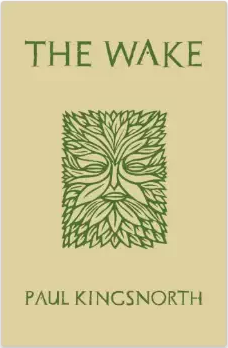
Cover for The WakeBest Book of the Week!
The Wake was one of the most unusual reading experiences I have ever had. The closest I can come to it is the revelation of reading Benjy’s sections of The Sound and the Fury. What Paul Kingsnorth has done is write a novel about the aftermath of the Norman Conquest entirely in a “shadow language” that approximates and gives the flavor of Old English while being understandable to the modern reader.

Buccmaster is a socman of Holland in the Lincolnshire fens. A socman, Kingsnorth’s glossary explains, owns his land and owes allegiance only to the king under Danelaw. At the beginning of the novel, Buccmaster is a well-off man who has a large house and about 90 acres of land, servants, and a seat on the Wapentec, the local court of justice. Buccmaster is a proud and angry man, and we find, not always a reliable narrator.

Soon word comes that King Harald is calling up the army against the invasion of Harald Hardrada, the King of Norway. Buccmaster owes King Harald six weeks’ service a year, but he refuses to go. His sons do, however. Of course, while Harald and his army are repelling Hardrada, William the Bastard (William the Conqueror) attacks.

Buccmaster soon finds his world destroyed. His sons never return from Hastings. The Normans arrive claiming all of the hamlet’s land. Buccmaster’s home is burned to the ground and his wife murdered one day while he is out eeling.

Buccmaster was raised by his grandfather to believe in the old ways, not the newer ones of the White Christ. He decides to take his great sword, which his grandfather told him was given to him by Welland the Smith, and raise a troop of Green Men, essentially guerilla fighters, to ambush the Normans.

This novel is as much about the conflict between the old Germanic-Norse ways of the English and Christianity as it is about the little-known war of resistance against the Normans after the conquest. Buccmaster makes a complex and troubled main character.

Kingsnorth has said that he chose his approach for the novel because he doesn’t like historical novels written in modern language. I am torn about that, because I would rather see modern language than clunky fake archaic language. But Kingsnorth has done a fantastic job of steeping himself in the time, and his goal of conveying the alienness of the 11th century English through language is certainly achieved.

The Wake is an enormously powerful novel. It is probably not for everyone. You have to be willing to invest yourself in it enough to tolerate some early slow going. There is a glossary, but it doesn’t include all the words. You can figure most of them out by sound or context. Still, I strongly believe it is worth the effort, and after awhile, I think I was reading almost as quickly as usual.

It may be hard to find this book. I had to order it from England. But if you are interested, you’ll find it very much worth the effort. I read it because it was long-listed for the Booker Prize. Frankly, I think it was better than the winner.

I’ll end with this quote, which begins the book:

I have persecuted the natives of England beyond all reason.
Whether gentle or simple I have cruelly oppressed them.
Many I unjustly disinherited, innumerable multitudes perished through me by famine or the sword.

Having gained the throne of that kingdom by so many crimes,
I dare not leave it to anyone but God.

Deathbed confession of Guillaume le Bâtard, 1087

Related Posts

King Hereafter

The Long Ships

The Adventure of English: The Biography of a Language

Day 726: The Other Daughter

Cover for The Other DaughterRachel Woodley has been working in France as a governess when she receives a telegram informing her that her mother is ill. Although she returns home immediately, the telegram was delayed, and she finds her mother dead, the funeral over, and the landlord giving her two weeks to vacate her home.

While she is going through her mother’s things, she finds a recent newspaper photo of the Earl of Ardmore with his daughter, Lady Olivia Standish. The Earl looks exactly like her father would have looked had he not died on a botanical expedition when she was four. But it’s not just a resemblance. He is the same man, with the same scar on his face.

Rachel goes to Oxford to see her Cousin David, who she’s sure would know the truth. David explains that her father was the second son and that he and her mother were forced to part after her father’s older brother died and her father became heir to the estate.

Rachel is furious to hear that her father left them, that she has been lied to, and that she is illegitimate. The thought of all the times she missed her father also makes her angry. She is expressing her displeasure when they are interrupted by Simon Montfort, Cousin David’s neighbor in rooms. He takes Rachel away to calm her down.

link to NetgalleyAlthough Simon is a social columnist for the Daily Yell, he promises to keep private what he has overheard. Soon, he is helping her get an opportunity to meet her father. After a makeover of a new haircut and his sister’s fashionable clothes, he lends her his mother’s apartment and presents her to young London society as the chic Vera Merton, his cousin. Rachel is not entirely sure of her own motives but is soon positive that Simon is doing this for his own purposes, especially when she learns her sister Olivia was once his fiancée.

This novel is sheer frivolity, set as it is in the 1920s among the wild young things. It is certainly a bit predictable—soon we guess Rachel will end up with either her sister’s current fiancé or her previous one. But it has lots of snappy dialogue and enough twists to keep things interesting. Although I’m not generally fond of this genre, I enjoyed The Other Daughter.

Related Posts

Lucky Us

Empire Girls

The Secret Keeper

Day 722: The Narrow Road to the Deep North

Cover for The Narrow Road to the Deep NorthDon’t expect good cheer and humor from The Narrow Road to the Deep North. It is the often harrowing novel based on the experiences of Richard Flanagan’s father as a POW during World War II, one of the hundreds of thousands of Australian soldiers forced to build a railroad through Burma with not much more than their bare hands. A much-sanitized version of this story was the basis for The Bridge on the River Kwai.

Dorrigo Evans is the main character of the novel, a surgeon who ends up being in charge of the prisoners simply by virtue of not having died. We meet him first as an older man, one of Australia’s greatest war heroes, feeling no self-worth, unhappily married, and unfaithful to his wife. The novel moves back and forth in time between the days when he is waiting to be shipped overseas at the beginning of the war until his death years later. In the summer before he went to war, we learn, he fell madly in love and had an affair with his uncle’s young wife Amy.

I think it is interesting that the New York Times reviewer thought this affair was a huge flaw in the novel while the Washington Post reviewer thought it was beautiful. I agree with neither of them (although I lean more toward the Times reviewer’s opinion) but think the Times reviewer was off base in blaming the affair for keeping Dorrigo from pulling his life together after the war. It wasn’t the affair at all but the memory of the decisions Evans was forced to make during the war. At one point, he must decide whether to try to save Darky Gardiner an undeserved beating or try to save another man’s leg. Both die, and the later revelation of Darky’s true identity makes this more painful. At another point Dorrigo is made to decide which of his starving, disease-ridden men must march 100 miles north of the camp. He picks the men with boots, reasoning they might have a chance of making it alive.

Occasionally, we see the thoughts of the men’s captors, the Japanese officers or Korean guards. In all his life after, only for a moment does the Japanese Major Nakamura have the slightest doubt of his behavior during the war. To him, the Australian soldiers had shamed themselves by surrendering and were being given a chance to redeem themselves by serving the Emperor. We occasionally also get glimpses of the brutality of mind that characterizes the Japanese military.

Whether you like this book or not, it is not one you will soon forget. This novel won the Booker Prize last year. Although I preferred several of the other short- and long-listed books for the prize, I still found it compelling reading.

Related Posts

Unbroken: A World War II Story of Survival, Resilience, and Redemption

Life After Life

A God in Ruins

Day 720: Galway Bay

Cover for Galway BayGalway Bay is fiction based on the stories of Mary Pat Kelly’s great-great grandmother about leaving Ireland in the first half of the 19th century to come to America. The novel covers a lot of ground—the iniquities of Ireland’s Anglo-Irish landlords, the Great Famine, early Chicago, the American Civil War, the Fenian Brotherhood—and ends with the Chicago World’s Fair.

Honora Keeley is a young girl living in a fishing village on Galway Bay when she meets Michael Kelly and they fall in love at first sight. They want to marry, but they have to convince Honora’s family, because Michael owns nothing but his horse. However, he earns enough to marry by winning a horse race in Galway.

Honora’s sister Maire, who was married the day Honora met Michael, is soon a widow after her husband dies in a fishing accident. On Honora’s wedding night, Maire saves Honora from the landlord’s droit du seigneur by volunteering in her stead. I’ll say something about this later.

Michael is no fisherman. Honora and Michael have a tough enough time of it farming but are making out okay when the potato blight hits. The behavior of the landlords and the British government during this time is shameful, and Kelly depicts it vividly. After several years of the blight and other misfortunes, Honora finally is able to convince Michael to leave for America, to Chicago, where his outlawed brother Patrick is said to reside.

Although this novel has a fairly good story, there is something about the narrative style that bothered me. It is told in first person, but in a modern style that is not convincing. Many things happen, but I didn’t ever feel as if I understood much about the characters’ personalities. Especially early on, when we are getting to know the main characters, often opportunities for revealing dialogue turn into storytelling episodes, where we hear another Irish legend. Everyone has one or two identifying characteristics, but they don’t feel like real people. I think the novel may have been more successful in the third person.

Finally, I was highly skeptical of whether droit du seigneur would have occurred in the 19th century, as it is usually associated with Medieval times. I’m sure this event is based on family legend, but I think Kelly could have treated this one with a little skepticism, especially as the lord’s behavior is abetted by a priest. I attempted some research on the topic and was surprised to find a lot of discussion about whether it was ever actually practiced at all. But with one exception, the references were to Medieval mainland Europe, not the British Isles. That exception was a Facebook page about Ireland, but I was unable to find the actual reference on the page to see if it cited any sources. I have read several history books about Ireland and took a graduate course in Irish history, and I have never heard anything about this, although the other abuses are well known. (I have since found one source for this alleged practice, Arthur Young, the author of a book called Tour of Ireland in 1780, who stated it was commonly practiced in rural Ireland. He is listed in Wikipedia as an agriculturalist who traveled to observe agricultural practices. Still, with this little information, we have no idea if his statement is based on rumor or fact, and this report is 50 years or so before the time of this novel.)

Related Topics

The Sea House

Troubles

Giants in the Earth

Day 718: A God in Ruins

Cover for A God in RuinsBest Book of the Week!
In my opinion, Kate Atkinson’s Life After Life was absolutely the best book I read in 2013. It is the story of Ursula Todd, who dies and comes back to life until she accomplishes her goals. A God in Ruins is about her beloved brother Teddy. Atkinson describes it as a companion piece rather than a sequel.

Like Life After Life, Teddy’s story dwells on the effects on his life of World War II, during which Teddy is an RAF bomber pilot. Although the novel covers his entire life in a nonsequential, rambling order, clearly the events of the war are a major focus to which he keeps returning.

During the war he makes himself a promise that if he lives through it, he will always be kind. And he is, to his sisters, his matter-of-fact scientist wife, and his unlikable daughter Viola. When his daughter fails spectacularly at child-rearing, his home is a harbor for his two grandchildren.

Although Teddy does not have Ursula’s ability to shape her own future, during the war he flies so many missions without being killed that his comrades deem him invincible. And in later life his daughter comes to fear he will live forever.

I can’t explain why A God in Ruins is such a wonderful follow-up to Life After Life without giving too much away. Its focus is on the bombing campaign against Germany, and it explores the ethical issues of that campaign, which killed many German civilians. It also shows the waste of the  young men sent to pursue it, sometimes in conditions almost guaranteeing they won’t return. And the terror of these young men.

Atkinson is deft in her depiction of believable characters and is also a beautiful, inventive writer. It’s quite possible that A God in Ruins may be my favorite book of 2015.

Related Posts

Life After Life

Started Early, Took My Dog

The Greatcoat

Day 716: The Siege of Krishnapur

Cover for The Siege of KrishnapurThe Siege of Krishnapur, the second in J.G. Farrell’s trilogy about the British Empire, is a novel of ideas, full of the mordant humor and irony that characterizes the first book, Troubles. Farrell based his novel on the true-life 1857 siege of Lucknow, during which British residents held out for five months against attacks from Indian sepoys.

As author Pankaj Mishra explains in the introduction, this siege and similar incidents generated at the time a popular romantic genre of fiction, wherein two young English people meet in India just before the rebellion and bravely withstand privation to prevail in the end. In The Siege of Krishnapur, Farrell is among other things satirizing this genre.

George Fleury arrives in Calcutta with his sister Miriam just before news of the first sepoy rebellions. Like Farrell’s protagonist of Troubles, Fleury is an unformed young man, and worse, he tends to the pedantic. He is inclined to the romantic and likes to lecture about the supremacy of feelings and ideas over the new plethora of objects and inventions resulting from the current Industrial Revolution.

In Calcutta, Fleury and Miriam meet another brother and sister, Harry and Louise Dunstable, offspring of one of Krishnapur’s doctors. Harry is a young lieutenant, and Louise is thought to be the prettiest (English) girl in India. Fleury is taken by her, but she spends her time flirting with the young soldiers.

Once the young people reach Krishnapur, it is not long before the rumors of trouble turn into reality. The Collector, who is in charge of the district, has been paying attention, though. The others have been ridiculing him for surrounding the Residency with trenches and sending his wife home to England.

The Collector can’t quite comprehend why the natives would want to attack the British, who in his mind are bringing them the wonderful benefits of civilization. He himself attended the Great Exhibition and has filled his house with some of the marvels exhibited there, including electroplated busts of some of the great poets. (Shakespeare’s head turns out later to make a great cannonball; Keats’ does not.)

Once the British are under attack, there are thrilling yet funny descriptions of the fighting, bravely and innovatively conducted by Harry and the other soldiers, who have limited resources, and incompetently assisted by Fleury. Fleury is continually arming himself with some bulky and impractical weapon. Inside the Residency, the British begin by maintaining strict social levels and having tea parties. Once Fleury and Harry have rescued Lucy, a suicidal fallen woman, from her bungalow outside the compound, the other ladies are horrified at having to share quarters with her, even though they are sleeping on billiard tables.

Many vibrant characters inhabit this novel. The Padre is an Anglican clergyman who endlessly tries to convert his flock’s thoughts into more pious channels, haranging them even in the midst of battle. Dr. Dunstable is so incensed by the more modern treatments of his rival, Dr. McNab, that he challenges him to verbal debates and eventually gets himself killed trying to prove Dr. McNab is wrong about the cause and treatment of cholera. Even when Dr. Dunstable’s death proves Dr. McNab is right, the supposedly rational and enlightened British still somehow believe he is wrong. The Magistrate is so interested in phrenology that he shocks everyone by feeling the back of Lucy’s head to determine its amativeness and is slapped for it.

As conditions in the Residency deteriorate, the true nature of the British rulers of India emerges, petty, jingoistic, and chauvinistic, caring little for the natives, who do not appear much in the novel except as servants or attackers. In one revealing speech, an opium grower rejoices at how much money has been made by forcing the Indians to grow opium and then using it to addict the Chinese. In fact, it was just at this time that the 8th Earl of Elgin stopped to hear about the rebellion in northern India while he was on his way to China to force the Chinese emperor to admit British opium dealers.

The novel tells a great story, while still being full of wit and philosophy.

Related Posts

Troubles

Sea of Poppies

River of Smoke