Day 572: Lisette’s List

Cover for Lisette's ListIn 1937, Lisette and André Roux are on their way to Provence. Lisette has abandoned the opportunity to become an apprentice at the Galerie Laforgue and André his job as the frame builder for famous artists. They have left their beloved Paris to take care of André’s grandfather Pascal, for Pascal has written to say that he is dying.

When they arrive in Pascal’s village of Rousillon, however, they find Pascal has been out playing boules. Lisette is horrified at leaving her life behind on a false pretense. Pascal is sometimes ill, but he is mostly lonely.

He also has a legacy he wants to pass down. Pascal owns seven paintings by masters that he traded for picture frames back when the painters were struggling. He wants to pass to Lisette the stories about these paintings, three by Pisarro and three by Cézanne and one study of heads by an unknown artist. Pascal is also proud of Rousillon, where workers have dug ochre out of the ground for centuries to make the paints used in these paintings.

Although Vreeland’s descriptions of Provence and Rousillon are evocative, I feel that the first part of the novel gets bogged down in these teaching moments of Pascal’s. Even though I am interested in art, these conversations are too didactic to come across as authentic.

There are other moments like this farther into the novel, but it picks up during and after World War II in Lisette’s efforts to survive as a Parisienne alone in the village. André leaves to fight at the beginning of the war. Before he leaves, though, he hides the paintings because he has heard that the Germans will search out art and either take it or destroy it because of decadence.

http://www.netgalley.comI was mildly interested in this novel. It is clear that Vreeland loves art, and she does a fine job of evoking the paintings and the gorgeous landscapes of Provence. She is so interested in these subjects, though, that we get a much sketchier idea of the character of Pascal, for example, or André.

Day 567: Jack Maggs

Cover for Jack MaggsBest Book of the Week!
Jack Maggs belongs in a growing genre of fiction that reinterprets a classic novel. In this case, the novel works in two ways: as another look at Great Expectations from the point of view of a different character and as a loose work of metafiction.

Jack Maggs is a convict illegally returned from Australia when he arrives at the door of a gentleman named Henry Phipps, only to find no one at home. The maid from a neighboring house, Mercy Larkin, thinks he has come to the wrong house as an applicant for a footman position in her own. Maggs decides to take the position so that he can watch the neighboring house for Phipps’ return.

Maggs’ employer is Percy Buckle, once a grocer, who inherited some money and fancies himself a patron of the arts. That night Buckle entertains at dinner a famous author, Tobias Oates, who dabbles in mesmerism. During dinner, Maggs is attacked by a horrible pain in his face, which makes him collapse. Oates hypnotizes him in an attempt to cure him but also gets him to tell some of his secrets.

Soon the two are locked in a struggle. Oates has mentioned knowing of a thief-taker, whom Maggs wants to employ to find Phipps. Oates only agrees to give him the name in exchange for two weeks of allowing him to mesmerize Maggs. Oates, who has realized quickly that Maggs is a fugitive, wants to learn about the criminal mind for an upcoming book. But Maggs becomes dangerous when he learns Oates has found out his secrets.

This tale is really gripping and ultimately suspenseful. It is also very Dickensian in nature—in its storytelling, its empathy for the poor, its dark London atmosphere, its character names, and its rather convoluted but satisfying plot. Our sympathy is all for Maggs, who has built up in his mind a fantasy about Phipps, whom he educated and made a gentleman, and who he does not realize is hiding from him in dread.

Oates is meant to be Dickens himself, and he is depicted less sympathetically. He misuses Maggs in service of his writing, but he is not much more responsible toward members of his own family.

Although Carey won a Booker prize for Oscar and Lucinda, I think Jack Maggs is much more powerful.

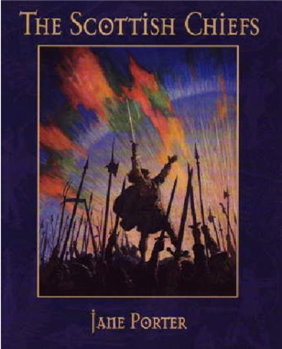
Day 563: The Scottish Chiefs

Cover for The Scottish ChiefsWritten in 1810, The Scottish Chiefs tells the romanticized story of William Wallace, the Scots hero we know today as Braveheart. Jane Porter was a contemporary and acquaintance of Sir Walter Scott, who deemed her the first author of historical fiction, then went on to write some himself.

The novel begins in 1296 and covers roughly eight years. After the untimely death of Alexander III, Scotland could not decide between two claimants to the throne—Robert Bruce or John Baliol—and called upon its neighbor, Edward of England, to adjudicate. He chose the weakest candidate, Baliol, and shortly afterwards seized the country for England. At the start of the novel, his governors have been mistreating Scotland for two years by imprisoning its leaders and taking their property for themselves.

William Wallace has been minding his own business and trying to stay out of trouble when he is summoned to meet with Sir John Monteith. Monteith passes him a metal box given to him by Lord Douglas before Douglas was kidnapped by the English. Monteith’s home is overrun by English soldiers, and he is afraid someone will discover the box, so he asks Wallace to remove it. However, the soldiers glimpse it under his plaid, and assuming it is treasure, they soon arrive at his home to take it. Wallace escapes, but his wife Marion is murdered by the dastardly Heselrigge, English governor of Lanark.

After his wife’s murder, Wallace vows to devote his life to freeing Scotland from the English. The novel follows his adventures and his defeats of the English in battle. Wallace’s victories are muddied by the jealousy and treachery of many of the Scottish chiefs, who refuse to believe the purity of his motives and fear his growing power over the populace.

The novel is written in the overblown style of Romanticism. It features a godlike Wallace, heroic figures like beautiful and saintly Helen Mar and faithful Edwin Ruthven and villains such as the perfidious Lady Mar and vicious Heselrigge. The dialogue is florid. However, the deeds described are truly exciting, and Porter manages at times to build quite a lot of suspense. The introduction by Kate Douglas Wiggan, educator and author of Rebecca of Sunnybrook Farm, relates how her copy of the novel was in tatters from re-reading when she was a child and how she would beg for ten more minutes of reading time when called to supper.

While reading this novel, I was trying to decide whether a modern youngster would love it or be bogged down by its style and length. I am not sure, but children read for plot, and there is much in this tale to make it a page-turner. That it is about a man who was truly a hero should make it even more exciting to them. In any case, if the writing style of early 19th century Romanticism doesn’t bother you, I think anyone might enjoy reading this novel.

Day 561: Lucky Us

Cover for Lucky UsI was enchanted by Away, so I was excited to find that Amy Bloom had another book out. This novel is good but does not live up to the other.

Eva Acton has not met her older half-sister Iris until Eva’s mother dumps her on the front porch of her father’s home. Up until then, Eva worshipped her father, but she begins to see that he has his flaws, a second family being a major one of them. Another is stealing the money Iris wins in talent competitions.

Once Iris has managed to hide enough money from her father, she and Eva take off for Hollywood, where Iris is determined to make it big. At that point, Eva’s formal education comes to a halt, when she is 14.

Iris is beginning to have some success when her chances are ruined by betrayal and scandal. The girls, their friend Francisco, and their father, who has joined them upon premature news of Iris’ success, set off for New York.

This Depression-era novel is written in a light, jaunty tone, narrated mostly from Eva’s point of view punctuated by letters. For after a lot has happened, the girls are eventually separated.

The conflict of the novel is around some choices Iris makes, causing Eva to take on responsibilities and struggles that Iris has initiated. Iris commits several unconscionable acts.

http://www.netgalley.comI cared about what would happen to Eva and some likable friends, but I felt that the end of the novel was too easy on Iris. I also felt that this novel lacked the originality of Away. It is interesting, though, because I was never sure what would happen next, and the narrative style has its charms.


Day 558: La Reine Margot

Cover for La Reine MargotIf you’ve been following my reviews of Maurice Druon’s Accursed Kings series about medieval France, you’ve probably seen me use the phrase “nest of vipers.” La Reine Margot, set a couple of centuries later, is just as full of intrigues, infidelities, betrayals, and even poisonings.

It is 1572, and the French court is celebrating the inexplicable marriage of Marguerite of Valois (Margot) to Henry of Navarre. France is at the height of the wars between Catholic and Huguenot, and Charles IX has proposed the union between his sister and the leader of the Huguenots purportedly to further peace.

Soon, though, we find out that the wedding is a trap for the leading Huguenots planned by Charles and his evil mother Catherine de Medicis. (Note that throughout I spell names as they were in the book.) For that evening of St. Bartholomew’s Day, troops are sent out all over Paris to massacre the Huguenots, who are in town for the wedding.

Thinking to rid himself of an enemy in Henry of Navarre, Charles has not considered his sister. Even though she and Henry are not romantically attached, the two have sworn to support each other. When Henry is trapped in the Louvre with the royal family, a combination of Margot’s support and his recanting saves his life. Margot has also rescued a young wounded Huguenot, La Mole, from the slaughter, providing a romantic subplot for the novel.

So begins the novel about how Henry of Navarre, aided by Margot, survives the machinations of the Valois family. The rumor is that Catherine recently murdered Henry’s mother by poisoning her, and Catherine also works in charms and horoscopes. Charles IX is unstable, first mistrusting Henry and then treating him like a brother. Henry d’Anjou, Charles’ brother, detests Henry of Navarre and thinks he is a threat to d’Anjou’s own right to the throne after his brother. François d’Alençon, the other brother, wavers in his decision to ally with Navarre.

Dumas was a writer of the Romantic movement, which de-emphasized rationality and emphasized emotion. The romantic plot involves the love affair between Margot and the naive and gallant La Mole, who is drawn into danger because of his love and religion.

My Oxford World Classics edition was fortified with copious notes, including information about which events were true and which were invented. Dumas is prone to using real people in his historical romances, and it was just a little off-putting to discover, for example, that the real La Mole was not a gallant Huguenot but a fundamentalist Catholic who was responsible for many murders during the massacre. Still, I found the real stories as fascinating as the novel.

If you like a fast-moving adventure that also involves political maneuvering, this is a good book for you. I was more interested in the nerve and political agility of Navarre than I was in the romance, but I still enjoyed the novel.

One caution—an abbreviated version of this novel is available as Marguerite of Valois. I have not read it, but if you want the more complete novel, look for La Reine Margot. (Yes, it is in English but also in French, so be careful if you order it online.)

Just a side note. I have written much about Dorothy Dunnett’s excellent historical novels. One of her Crawford of Lymond novels, Queen’s Play, is also partially concerned with the massacre.

Day 554: The Testament of Mary

Cover for The Testament of MaryIt is years after the crucifixion. Mary is living a quiet life in Ephesus, visited by two of her son’s disciples. It is clear their visits are unwelcome, as they have been trying to force her memories to agree with the documents they’re writing. But Mary has always seen her son’s followers as men with something lacking in them, and she insists on telling her her own truths.

This provocative novella takes the position that Mary was not a believer but was simply trying to save her son from his fate. She grieves his loss and regrets that at the end her courage failed her. While the disciples try to place her and Mary (Toíbín does not name anyone Mary Magdalene, but that is whom he means, I assume) at the grave witnessing a resurrection, they were actually fleeing for their own lives.

While the novella seems to accept some of the miracles, the raising of Lazarus is more of a horror than a wonder. Mary also notices that the jugs of water are brought forward quickly at the wedding at Cana and that only one of them was opened beforehand. Toíbín evokes an atmosphere of feverish excitement and hard fanaticism during these scenes, wherein both Jesus’ enemies and his followers push her son toward his fate.

This novella, which was shortlisted for the Booker Prize, is thought-provoking in its exploration of cult-like origins for Christianity and the shaping of Christian myth after Jesus’ death. As always with Toíbín, it is meticulously and beautifully written.

Day 548: The Good Lord Bird

Cover for The Good Lord BirdBest Book of the Week!
Henry “Onion” Shackleford is a boy working with his father in a barber shop when John Brown and his followers ride into town. He relates his story many years later when he is more than 100 years old.

Henry and his father are African-American slaves living in the Kansas Territory near Laurence, a hotbed during the Border Wars, referred to as Bleeding Kansas. Brown has come to help the Free Staters, those who want Kansas to be free of slavery. But Brown’s ultimate goal is to rid the country of slavery, and he doesn’t care how he does it. In the resulting fight, Henry’s father is killed, and Brown “frees” Henry by kidnapping him.

Because, as Henry points out several times in his narrative, John Brown sees only what he wants to see, he mistakes Henry in his potato sack clothing for a girl. From then on, Henry is a girl as far as Brown’s followers are concerned, and Brown calls him Onion.

What follows is an an account of the deeds of John Brown, leading up to the assault on Harper’s Ferry. This tale is often cynical or ironic, boundlessly energetic, irreverent, and funny as well as touching. Brown is depicted as a sort of half-crazed, raggedy zealot, who is capable of stopping midway across a stream while being pursued by his enemies to pray for half an hour. Only his son Owen is brave enough to interrupt him and try to get him on his way.

Onion and other slaves they encounter are reluctant to be freed, afraid they’re going to end up in hotter water than they started. They have some cause. Onion, in fact, is almost always planning how he’ll escape the group and does so several times. But he always ends up back with Brown. His adventures lead him to residence in a whorehouse, a visit with Frederick Douglass (who gets drunk and tries to seduce “Henrietta”), and a more impressive meeting with Harriet Tubman in Canada. All the while, Brown attempts to “hive the Negroes” to revolt at the appropriate time.

The wonder is that with all this poking fun, McBride somehow manages to make us care deeply for John Brown and to honor his place as a trigger for the Civil War. This is an unusual novel—highly entertaining yet also deeply serious.

Day 545: Twelfth Night

Cover for Twelfth NightFans of the Lady Julia Grey mystery series will probably enjoy this novella, which seems as if it was written for Christmas even though published in June. It is a simple little holiday story, a bagatelle.

The Marches, Lady Julia’s family, have gathered together during the holidays to celebrate Twelfth Night. Every decade the family itself performs the Revels, which are attended by the countryside around. During the rehearsals, an abandoned baby is found in the stables.

Lady Julia’s father asks her husband Brisbane to try to find the mother, but Brisbane’s initial inquiries turn up nothing. Lady Julia has heard her young niece and nephew buzzing about a witch living in an abandoned cottage, and then Lady Julia catches her niece Perdita sneaking out at night to see the witch.

http://www.netgalley.comThis short piece doesn’t involve much of a mystery, but it is always enjoyable to spend time with Julia and Brisbane.

Day 543: The Royal Succession

Cover for The Royal SuccessionThe recently married Queen Clémence of France is already a widow and expecting a child at the beginning of this fourth book of The Accursed Kings series, The Royal Succession. Her husband Louis X reigned for only 18 months and in that short time managed to create chaos in France and impoverish the country.

Louis’ older brother, Philippe of Poitiers, is occupied in Lyons with the problem of the election of a pope when he hears of his brother’s death. The cardinals seem to be hopelessly deadlocked, and France wants a pope who will be friendly to its interests. Philippe is caught between his desire to finish his mission and his ambition to be appointed regent to the unborn child. Finally, he locks all the cardinals inside the Church of the Jacobins, telling them they will not be freed until they elect a pope. Then he rides to Paris to claim the regency.

Philippe is unaware that he has come into power with the help of his mother-in-law Mahaut of Burgundy, who had his older brother poisoned. Hugue de Bouville, the queen’s protector, is keenly aware of the threat to the queen and her child. Later in the novel, his and his wife’s fears cause them to make a fateful decision.

As usual, Robert of Artois is creating as much havoc as possible for his aunt Mahaut. He is supported at a distance by Philippe’s uncle Charles of Valois, who wanted the regency for himself.

Although Guccio Baglioni spends most of the novel locked up with the cardinals, the Cressay brothers bring his wife Marie to Guccio’s uncle in disgrace. They do not believe the couple is married, and in any case won’t accept their sister’s marriage to a merchant. Marie is expecting, so Uncle Spinello Tolomei takes her to a convent. A twist of fate makes her the wet nurse to the baby King Jean.

Druon relates the story of complex politics, venality, chicanery, and outright evil in his usual acid tones. We sympathize with Philippe, who is plainly more able and upright than his brother, but he is already finding that the path to power corrupts, even those with the best intentions. This series continues to be terrific.


Day 540: Empire Girls

Cover for Empire GirlsRose and Ivy Adams are stunned by the death of their father, but his will astonishes them. He has left the house that Rose loves to a brother the girls did not know existed. He has also left them in heavy debt. His attorney, Mr. Lawrence, explains that if they can’t find their brother Asher to clear up the will and pay off the taxes within three weeks, the bank will repossess their beautiful house in upstate New York. All the sisters have to go on is a postcard from a place called Empire House in New York City.

The two sisters make an uncomfortable team. Rose has always been the caretaker, treated by their father as the plain sister who takes care of the house. Ivy he thought beautiful and talented. Ivy is thrilled to go to New York, envisioning a brilliant future for herself as an actress. Rose, who is a homebody, only goes to save the house. The two are almost always at odds—Rose prim and disapproving, Ivy spoiled and childishly complaining that Rose ruins everything.

The girls go to stay at Empire House, a rooming house in Greenwich Village, hoping to find Asher. No one there admits to knowing him, but the girls think they are all lying.

After some initial coolness, Rose begins to fit into the household. She accepts a job doing housework from Nell, the owner of Empire House, and sews for Cat LeGrand, who owns a dress shop and speakeasy. She also almost immediately falls in love with the Empire House cook, Sonny Santino. Although Ivy at first seems to be in her element of 1920’s gaiety and gets a job as a waitress at Cat’s, she does not adjust as easily.

Written in alternating chapters by each sister, the novel doesn’t really evoke a colorful picture of the 20’s. Only the amount of drinking seems to reflect the time period.

The characters of the two sisters are almost cartoonish at first—they are so polarized. Yet at the same time their voices are indistinct enough that when I was reading a chapter, I would often forget which sister was speaking.

http://www.netgalley.comThe reasons the inhabitants are lying to the girls and what they are lying about seem contrived. The timeline of the novel is absurdly short and yet the girls only make a few feeble attempts to find Asher. Although Asher’s situation has some secrets, too, the ultimate fate of the  sisters is perfectly predictable. I found this novel lightweight and silly.