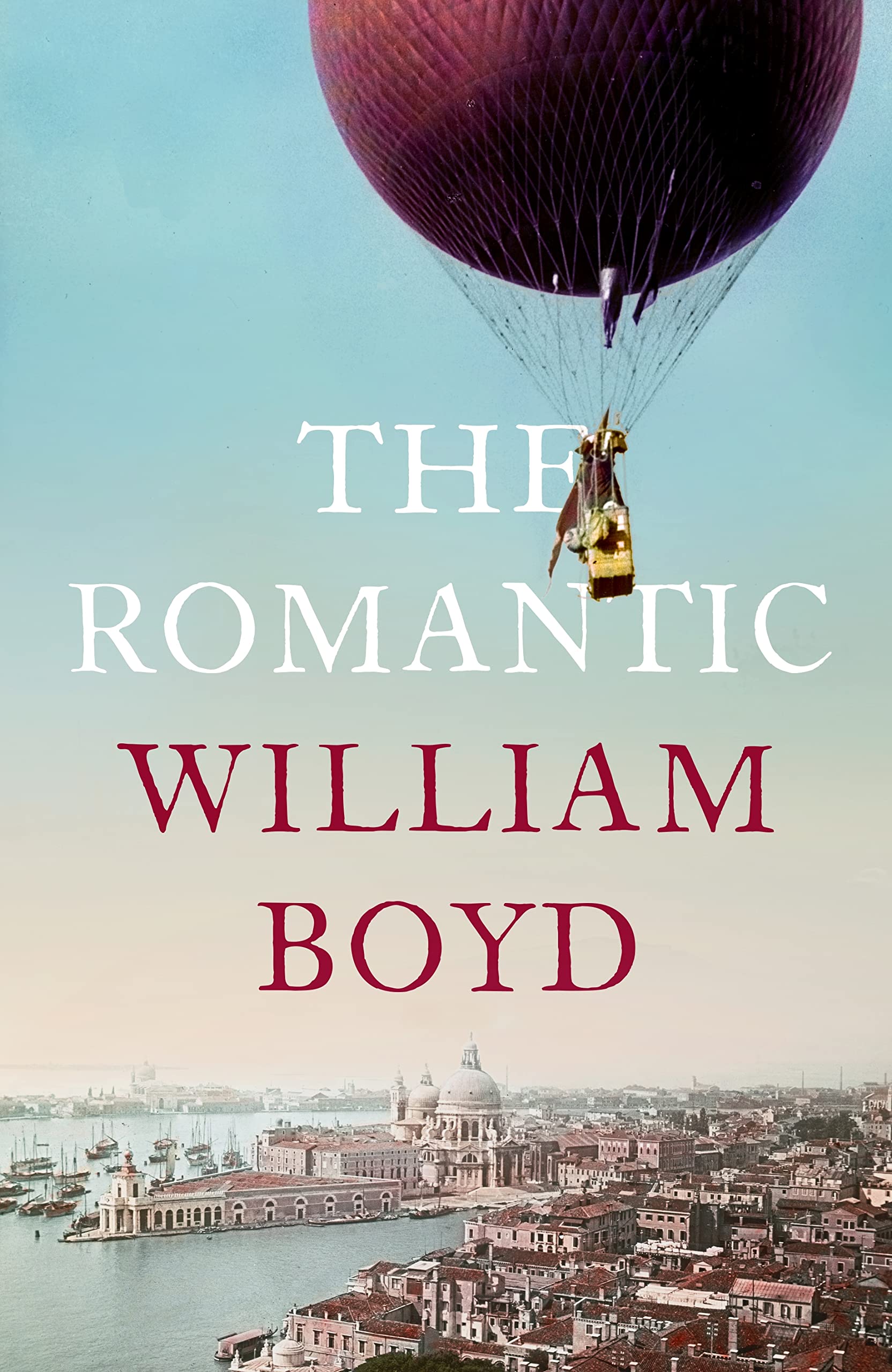
Review 2278: The Romantic

In the 19th century, Cashel Greville grows up in Ireland under the care of his aunt, who is governess to Sir Guy Stillwell’s family. But it’s clear to the reader, if not to Cashel, that all is not what it seems. Sure enough Cashel’s aunt moves them to Oxford, where they take up residence with Sir Guy under the name of Ross, and Cashel’s aunt Elspeth gives birth to twins, Hogan and Buckley. It is not until Cashel is 15 that Elspeth reveals she is his mother and Sir Guy his father.

Outraged, Cashel runs away from home and joins the army as a drummer boy. If you think I’m giving too much away, this all happens within the first 50 pages of this 450-page book, in which Cashel is on the field at Waterloo, hangs out with the Shelleys and Lord Byron, writes a best-selling novel but is cheated by his publisher and ends up in the Marshalsea, attempts to form a commune in Massachusetts, and so on. Oh yes, he also meets the love of his life in Ravenna, Italy, but she is married to a rich old man.

Cashel’s eventful and perhaps not altogether believable life (he claims to have discovered the source of the Nile before Speke and to have thwarted an antiquities smuggling scheme with the help of Sir Richard Burton) is supposedly documented by an autobiography and other papers that came into Boyd’s possession. With this claim, Boyd begins another of his “whole life” novels, maybe the most picaresque and least believable.

I usually like Boyd’s novels—in fact, some of them I have loved—but I had trouble connecting with this one. I’m not sure why, especially since it received uniformly positive reviews. It is fast moving despite its length. Maybe too fast. I didn’t feel like I got to know Cashel or really any of the characters. All of the women are ciphers, even Cashels’ great love. Boyd spends more pages on a sexual encounter with her than on Cashel’s marriage and its subsequent breakup.

Given Boyd’s plans for the adventures in this novel, maybe he needed to make it a lot longer.

Related Posts

Love Is Blind

Sweet Caress

Passion: A Novel of the Romantic Poets

Review 2277: Literary Wives! Hamnet

Today is another review for the Literary Wives blogging club, in which we discuss the depiction of wives in fiction. If you have read the book, please participate by leaving comments on any of our blogs.

Be sure to read the reviews and comments of the other wives!

My Review

Hamnet is a reread for me for Literary Wives, so if you would like to revisit my original review, including the synopsis of the plot, it’s at this link. Let me also comment that it was one of my Top Ten Books two years ago.

What does this book say about wives or about the experience of being a wife?

Literary Wives logo

There are several reasons why people assume that William Shakespeare’s marriage to Anne Hathaway (whom O’Farrell calls Agnes) was not a happy one. She was several years older than he and pregnant when they married; they lived apart most of the time; he left her his second-best bed (which is misunderstood). But Maggie O’Farrell chooses to take another point of view, that it was a love match.

The novel alternates chapters between the history of their relationship and their son Hamnet’s last days. Then it switches gears to show the aftermath of his death. By the way, Shakespeare is never mentioned by name.

In this novel, Agnes is a wise woman who knows all the healing herbs and can see into a person’s mind by grasping the muscle between their thumb and forefinger. She is thought to be strange and a witch. When she grasps Will’s hand for the first time, she sees vastness.

But Will has a hostile relationshp with his father and dreams of other things than being a glover. When he becomes depressed because he has no work, Agnes puts her head together with her brother Bartholomew, who suggests he be sent to London to sell gloves for his father. Will soon finds his element in London and plans to move the family there when he can afford it. But because of Judith’s poor health, the family can’t follow him there.

But the novel sticks at home, where he visits when he can, sometimes as long as a month—until Hamnet dies.

The novel depicts an Agnes otherworldly but confident in her relationship with Will until Hamlet’s death creates a break. Her grief is so excessive and he can’t bear to be reminded of his son, while she wants only to remember him.

This novel paints a moving depiction of grief and of how Shakespeare’s play eventually creates a mutual understanding. It’s a powerful novel, and there is probably a lot more to say about it, but I find myself unable to convey much more.

Related Posts

The Marriage Portrait

The Secret Life of William Shakespeare

The Marriage Game

Review 2275: The Books of Jacob

The Swedish Academy that awarded Olga Tokarczuk the Nobel Prize for Literature called The Books of Jacob her magnum opus. It is certainly a stupendous novel at almost 1000 pages, carefully researched, minute in detail, taking on such subjects as the nature of religion, forgiveness, the interconnectedness of things. It is a dense historical novel about a real figure in history, Jacob Frank, the head of an odd religion, a Jewish heresy.

Frank emerges from another Jewish heresy, a group called the Shabbatians, who believe the Messiah has already come and therefore according to teachings, the Mosaic law is broken. The new law, according to Frank, is whatever he says to do. This story is told from multiple perspectives, notably that of Nahman, one of his earlier followers, who attempts to document his life and beliefs.

The movement, which begins in the mid-18th century, is formed mostly of Shabbatians, some of whom are merchants but others of whom are very poor. Frank’s teachings seem to consist mostly of story telling, but as with other cult leaders, one big feature is the sexual exploitation of women, first by all of them sucking a woman’s breast and later by Jacob assigning men partners even from the unmarried girls. You can guess that Frank is charismatic.

This fantastic story follows this group of people, which gets larger and larger, first from southeastern Poland down to Turkey, where Jacob briefly converts to Islam, then back to Lwow in Poland. There, they are attacked by the Talmudic Jews until from revenge they tell the authorities that it’s true that Jews use Christian blood in their rites, a lie that ends in the execution of 14 Jews, including rabbis.

After fleeing Poland again, Jacob decides that their route lies with conversion to Christianity, an act that he can justify with teachings but that also has the end goal of the members being allowed to own land and gain other honors denied them as Jews. Although the path is not always smooth and a lot more traveling ensues, the upward mobility of the group after that decision is phenomenal. Ultimately, Jacob becomes an intimate of the King of the Habsburg Empire.

The research that this novel reflects is phenomenal. As a reader, I was often enthralled but reluctantly had to put up with some deep philosophical discussions, including deeply confusing ones about numbers, since some of the members are kabbalists. The most difficult part of it, though, was the sheer number of characters, especially Frank’s followers. I was keeping up okay until they converted and all changed their names. Then I was usually lost.

I wouldn’t recommend this book as the first you read by Tokarczuk, and it’s certainly not an easy read, but it’s a fascinating story.

Related Posts

Drive Your Plow over the Bones of the Dead

Flights

Zealot: The Life and Times of Jesus of Nazareth

Review 2263: The Shadows of London

Cat Lovell and her partner Brennan have a commission to build a new almshouse and some houses where the old almshouse burnt down in 1666. However, workmen find a body in a rubbish pile on the site. Not only does the body need to be identified because it has no face, but a magistrate named Rush closes down the entire site until the inquest. This is unnecessary, but Cat’s employer Mr. Hadgraft, says that Rush originally was a partner in the undertaking and pulled out, so he is trying to get back at Hadgraft. For Cat and Brennan, the situation is urgent, because they only have a few months before winter closes the work down.

Cat’s friend James Marwood now works entirely for Lord Arlington, who assigns him the task of discovering the corpse’s identity. He finds there are two missing men who might be the victims. One is John Ireton, a civil servant who has disappeared. The other is a Frenchman, Monsieur Pharamond (a pseudonym). Both were involved in fleecing a young French lady-in-waiting in Dieppe.

This novel also tells the true story of that lady-in-waiting, Louise de Keroualle, who has attracted the attention of Charles II. Both Lord Arlington and the King of France see a benefit in having a young French, Catholic girl in the King’s bed. But Louise herself is hoping for a way out.

Marwood’s investigations indicate that his and Cat’s old nemesis, Roger Durrell, a tough for Buckingham, might have killed the dead man. Another issue is that James has become infatuated with Hadgraft’s daughter, and Hadgraft seems unexpectedly eager for the marriage. Cat finds herself surprisingly jealous.

This is an excellent series, and another exciting entry in it. I especially liked the ending.

Related Posts

The Royal Secret

The Last Protector

The King’s Evil

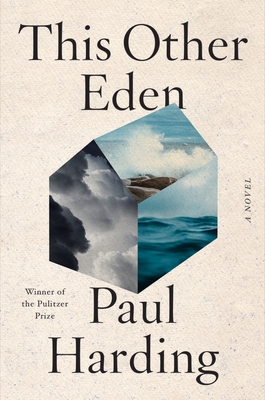
Review 2258: This Other Eden

This Other Eden is based on a true event, when the State of Maine evicted the entire mixed-race community of Malaga Island, people whose forefathers had lived there since the 18th century, and placed 11 of them in a home for the feeble-minded.

It’s no coincidence that a conference on Eugenics takes place just before the committee of the Governor’s Council of the State of Maine begins considering the fate of the occupants of Apple Island, a fate the occupants have no say in. It’s the turn of the 20th century, but Benjamin Honey arrived on the island in 1793 with his pockets full of apple seeds, bringing his wife Patience.

Now four small families live on the island, the Honeys, the McDermotts, the Proverbs, and the Larks, along with the abandoned Sockalexis children, all guilty only of being dirt poor and mixed race. They live by subsistence fishing and gathering the fruits of the forest. The winters are brutal. In the spring, the schoolteacher/preacher Matthew Diamond settles in his house across the bay and rows over daily to teach the children. The mainlanders consider the islanders inbred and sub-intelligent, but Matthew Diamond knows that Esther Honey, the matriarch, can recite Shakespeare from memory, that he has to teach himself algebra to stay ahead of Emily Sockalexis, that Tabitha Honey has a gift for Latin, and Ethan Honey is a talented artist.

The fate of the islanders is already decided when the Governor’s Council arrives and starts measuring their heads with calipers and asking them idiotic “intelligence” questions. Matthew Diamond decides to try to save Ethan, so he writes a letter to his friend Thomas Hale in Enon, Massachusetts, asking him to sponsor Ethan at an art school. Soon, Ethan leaves the island.

Harding’s writing is sometimes poetic, and he likes to pursue extended metaphors. Sometimes I liked this, and other times I didn’t have the patience for it. However, I found this novel less obscure than the other two of his I have read, touching, and ultimately with a more positive ending than was probably the case with the actual inhabitants of Malaga Island.

I read this book for my Booker Prize project.

Related Posts

Enon

Tinkers

The Stars Are Fire

Review 2249: Murmur

When the cover of a book calls it “hallucinatory,” I know it’s not going to be a good fit for me. However, since Murmur is part of my James Tait Black project, I felt compelled to read it.

The novel aims to portray the mindset of an Alan Turing-like scientist named Alec Pryor after he is undergoing chemical castration because of a homosexual encounter. Aside from making his body more feminine, the chemical makes him dream and eventually induces wakened dream states, including ones where he fantasizes letters from his friend June, whom he hasn’t seen in years, and relives events of his boyhood.

Those who have been reading my reviews know how much I hate reading about dreams. Since it is difficult to know some of the time whether he is dreaming or remembering, this was a novel I found it hard to stick with, despite it being very short.

The rest of the novel is filled with philosophical musings about whether machines could have consciousness and other subjects. I felt that either I didn’t want to follow his thoughts or they were too hard for me to grasp. The journal section at the end is the most accessible part of the novel.

Related Posts

Crudo

Umbrella

Outline

Review 2238: Castle Rackrent

Castle Rackrent is a novel I picked for my Classics Club list. Published in 1800 although set before 1782, it is an early example of the use of an unreliable narrator.

That narrator is Thady Quirk, a servant to the ancient Irish Rackrent family, but the novel is also annotated by a scholarly character called the Editor. Thady informs us in the first paragraph that he’s known as “Honest Thady,” a phrase that puts us on the alert.

Thady quickly runs through the older history of the family and then tells in greater detail the story of the last three owners of the Castle, Sir Murtagh, Sir Kit, and Sir Condy. These are satirical tales of mismanagement either by penny pinching and bleeding the tenants or by wasteful consumption. Thady is vehement in his avowals of support for the family and in this role makes some astonishing assertions, such as, about Sir Kit who married a woman for her money and then locked her away for seven years because she refused to give him her jewels, “He was never cured of his gaming tricks, but that was the only fault he had, God bless him.”

This novel is a light commentary on the class system and its abuses, as the series of barons get up to all manner of hijinks while the servants (particularly Thady and his son) arrange to purchase assets at low prices. It is moderately funny but is considered by critics to be an astonishing first novel by a woman at this period.

Related Posts

Evelina

A Double Life

The Good People

Review 2236: The Sun Walks Down

In 1883 Australia, the Wallace girls are at a wedding and Mathew Wallace is out working. Only six-year-old Denny and his mother are home when she sends him out to gather fuel. A huge dust storm comes up, and instead of staying where he is, he goes in the direction he thinks is home. And he is lost.

The family doesn’t realize he is lost right away, but when they do, Mathew takes off in the direction Denny went, along with Billy, his Aboriginal farmhand. Soon, almost everyone in the area is searching for Denny.

This novel doesn’t have a strong plot. Instead, it follows a mixture of characters during the search. There is Cissy, Denny’s headstrong sister, who joins the search; Constable Robert Manning, newly married, and his wife Minna; Foster, Manning’s superior officer, who ignores his trackers’ advice and follows the wrong trail; Karl and Bess Rapp, two painters who are traveling in the Australian bush looking for subjects to paint; and so on.

This is a beautifully written novel that shows insight into human nature and powerfully describes the Australian landscape. I read it for my Walter Scott prize project.

Related Posts

Homecoming

The Secret River

Salt Creek

Review 2235: News of the Dead

One of the things I like about my shortlist projects is that they bring me into contact with books and authors I probably wouldn’t encounter otherwise. Certainly, I would never have run into News of the Dead if not for my Walter Scott Historical Fiction Prize project.

News of the Dead tells the story of one remote, secluded place—fictional Glen Conach—over the ages, mostly through a set of documents. The oldest is a book written in the middle ages about a Christian hermit the locals call St. Conach even though he’s not recognized as such by any authority. The Book of Conach tells the stories of lessons and miracles performed by the man, who died around 770 AD.

Another narrative is set in 1809 from the diary of Charles Gibb. Gibb is an antiquarian who has wangled himself an invitation to Glen Conach House ostensibly to study and translate The Book of Conach. His real goal, however, is to sponge off the Milnes, the current owners of Glen Conach House, for the summer. He rather cynically observes Glen Conach and his lady and daughter as they do him, at first. But slowly the situation changes.

The third narrative begins slightly pre-Covid and mostly concerns an elderly woman named Maja and her eight-year-old neighbor, Lachie, who likes to visit her. When Covid sets in, she decides to write him a letter telling the story of a girl who came to the glen as a child after World War II.

I did not have much patience for the stories about St. Conach, although it was clever how Robertson used variations of the stories to show how they change. It also, frankly, doesn’t reveal much about daily life except for superstition and wildness.

The other two narratives were a lot more interesting. Gibbs’s began at a fairly cynical level yet what we learn after it stops is surprisingly touching. And Maja’s story had me on the edge of my seat.

There were times when I wondered where this novel was going, but ultimately I found it a lovely examination of refuge. I also want to point out that all three narratives sound like they were written by different people, which they should in good fiction, and which is too often not the case.

Related Posts

Rose Nicolson

Luckenbooth

Ulverton

Review 2234: The Shadow King

All I can say is, this is a powerful and eloquent book. It took me a while to get into it, but it was worth the wait.

In 1975, Hirut, an older Ethiopian woman, is on the way to meet a former enemy, Ettore, an Italian photographer who was part of Mussolini’s invading army in 1935.

In 1935, the great Ethiopian warrior Kidane has taken orphaned Hirut into his household. However, his wife Aster is almost insane with jealousy of her and thinks Hirut has stolen a necklace Aster gave Kidane at their marriage. In searching for it, she finds Hirut’s rifle, the only possession she still has of her father’s. Kidane, coming upon the incident, confiscates it for the poorly equipped Ethiopian army, for they know the Italians will soon invade, eager to be avenged for their 19th century humiliation.

Although Hirut’s personal situation worsens, all of them are caught up in the war. The household flees to the highlands, where Kidane and his men carry on guerilla attacks against the army of Colonel Fucelli.

Meanwhile Emperor Haile Selassi is ineffective, spending most of his time listening to the opera Aida. When he finally leaves the country, his troops are discouraged until Hirut notices how much the musician Minim looks like the Emperor. Kidane sets him up as a shadow king to help inspire his people, and his guards are the warrior girls Hirut and Aster.

In the Italian camp, Fucelli forces the photographer Ettore to record his cruelties, including the innocent people he has hurled off the cliffs. At the same time, Ettore is worried about what he is hearing about the treatment of Jews in Italy, as his father is Jewish.

I was a little confused about the women warrior theme, as at first it doesn’t look like Hirut is going to do much actual fighting. Also, it seems to be the fashion now to write about war from both sides, as though some sides hadn’t done things that were unforgivable, and I don’t have much sympathy with that. However, ultimately I was carried along by this novel and felt it was powerful. I was unaware before that the behavior of the Italians in Ethiopia was so brutal.

This was a novel I read for my Booker Prize project.

Related Posts

Cutting for Stone

Life and Fate

The Invisible Bridge