Review 2540: Elizabeth and Essex

Years ago, I read Lytton Strachey’s Eminent Victorians and found it both informative and entertaining—full of scandalous information about some of the Victorian age’s most prominent citizens. I was hoping for something similar from this book, but it is a little more serious, although Strachey gets some zingers in.

The book is the 1928 version of history written for the general public. There are a very few footnotes and a couple of pages of bibliography at the end. It is written in Lytton’s liquid, sometimes sardonic style.

This book is about Queen Elizabeth and her last favorite, Robert Devereaux, Earl of Essex. He was more than 30 years younger than she and the stepson of her earlier favorite, Robert Dudley, Earl of Leicester. Elizabeth’s relationships with her favorites, at least with this one, seemed more like volatile love affairs than anything else, with fulsome compliments expected and fiery spats, which usually resulted in Essex stomping out and being forgiven after an apology. In fact, considering her own temper, I’m surprised that Elizabeth put up with him, because he certainly treated her less respectfully than he would if his sovereign was a man.

You have to get used to Strachey, because he starts out right away by making assertions about Elizabeth’s character without giving examples or showing how he is right, as a modern historian would do. And his depiction seems pretty sexist. Over time, he demonstrates some of these characteristics, though. Still, Elizabeth’s main problem with Essex seemed to be that he didn’t behave as if she was his sovereign. I think he had an inherent assumption that he was superior because he was a man, not surprising in that time.

Without going into all the details of the story, which Strachey labels “tragic,” I’ll say that it boils down to temperaments. Essex was proud and fiery, and he valued his family name. He had poor judgement about who to take advice from and was actually incapable of taking any that involved caution and circumspection. He was brave in battle and pictured himself as a great war commander, but he was not. In fact, he seemed to me like a charismatic, well-liked bear of little brain. But he wrote wonderful letters.

Strachey clearly didn’t like Sir Walter Raleigh, but I don’t know why. He just hinted around about him. According to Strachey, no one liked him.

Essex was a loyal friend to many, among them Francis Bacon. It was Bacon’s Machievellian advice that Essex was unable to follow. Despite Essex having supported him for several positions, Bacon did his best to put the nail in Essex’s coffin when he was tried for treason.

This is an interesting book and even though Essex seemed to me like a spoiled baby most of the time, I saw by the end that indeed it was a tragic story.

Related Posts

The Marriage Game

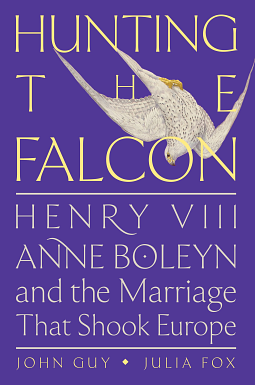
Hunting the Falcon: Henry VIII and Anne Boleyn and the Marriage That Shook Europe
Mary Boleyn

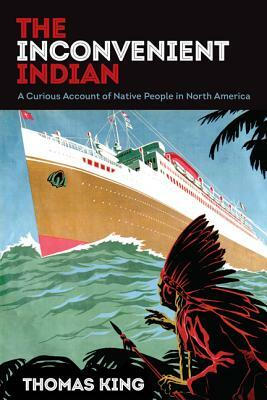
Review 2526: The Inconvenient Indian

For some reason when I bought this book, I thought it was fiction. It’s not, nor is it a history of the relationship between native peoples and the various entities that have ruled Canada and the United States. (King repeatedly calls these two countries North America. He doesn’t deal with the inequities and atrocities of Mexico, which of course is also in North America and probably has committed plenty.) It is a series of chapters on such topics as residential schools, government attempts at assimilation and allotment, treaties that have been ignored, and inequities under law.

Thomas King is a writer, speaker, and activist who is part Cherokee. Born in California, he is now a citizen of Canada and has won, among other awards, the Order of Canada.

His writing style is acerbically funny and more personal than you’d expect. He reminds me of Bill Bryson with more sarcasm.

This book is an eye opener for anyone who thinks that our native populations are no longer oppressed. It didn’t make me cry like Bury My Heart at Wounded Knee did when I read it years ago, but it gave me a lot to think about. King’s main message is that all government programs for our natives amount to land grabs.

Related Posts

Killers of the Flower Moon: The Osage Murders and the Birth of the FBI

Mayflower

There, There

Review 2520: Hunting the Falcon

I have read quite a bit about the Tudors, fiction and nonfiction. This book deals especially with the relationship between Henry VIII and Anne Boleyn, although it starts earlier in their lives.

A strong theme in the book is Anne’s formative time spent at the court of France. There she witnessed a different kind of court than that in England, one in which powerful women discussed politics and were forces behind the throne and in which court was gay and flirtatious. As queen and as a woman who had worked in tandem with Henry on their cause for six years before marriage, she tried to create that sort of court.

In addition, her leanings toward France helped incline Henry toward an alliance with Francis of France, despite a long history of enmity between the two countries, rather than one with Charles, the Holy Roman Emperor and his first wife Katherine’s nephew. Francis had his own agenda, though, that did not always match Henry’s.

All-in-all, the book paints Anne in a more positive light than I’ve seen, emphasizing her true piety and her generosity to the poor. However, she also clearly got caught up in her own power and was sometimes rapacious and unforgiving.

Recent programs about the Tudors are notoriously inaccurate, but we are sometimes affected nonetheless. Used to thinking of Jane Parker, wife of Anne’s brother George, as someone who betrayed her, I now find she was one of the people who had the nerve to speak up for her.

Biographers and historians can err by including too much information on a subject. Although this book was written for a general audience in an entertaining style, it occasionally has that fault, for example, describing every detail of Anne’s coronation, including her outfits and the themes of the spectacles presented. However, in general, I found it interesting and illuminating.

Related Posts

The Last Wife of Henry VIII

Mary Boleyn

Wolf Hall

Review 2320: The Haunting of Alma Fielding

The two previous books I’ve read by Kate Summerscale were Victorian true crime stories. In The Haunting of Alma Fielding she changes genres (slightly) and periods to write about the spate of supernatural cases, and one in particular, that hit England when World War II was threatening in 1938.

The principal figure in the book is Nandor Fodor, a Hungarian emigré who studied the supernatural but also had an interest in Freudian psychology. When the Fielding case cropped up, he was in a difficult position, because although his mission was to prove whether there were legitimate supernatural occurrences, when he tried to use somewhat scientific methods of observation, he was accused of being unfriendly to mediums. His role at the Society for Psychical Research was contradictory at best and his notion of the scientific not very well developed.

The Fielding case began with a frightened family haunted by a poltergeist that hurled dishes and toppled furniture. Fairly quickly, it became clear that the activity centered around Alma, who lived in the house with her husband and lodger, and the spirits began to branch out by producing objects from her clothes at séances.

Fodor seemed so happy to have found what looked like legitimate supernatural activity that he believed everything he was told and actually encouraged the “spirits.” When later he found evidence that Alma deceived him, he still believed that some of the events were real and continued his investigation.

I found this book less interesting than the true crime books because I became so impatient with the gullibility of the investigators. And the medium tricks! After all, even if a spirit could produce small objects (called apports) from a person’s body, why would it want to? Obviously, because it’s an effect that can be faked.

Related Posts

The Suspicions of Mr. Whicher

The Wicked Boy: The Mystery of a Victorian Child Murderer

The Burning of Bridget Cleary

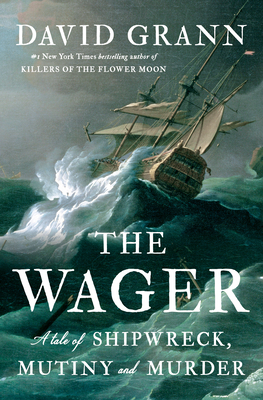
Review 2290: The Wager: A Tale of Shipwreck, Mutiny, and Murder

In 1740, a small fleet of ships set out from Portsmouth on a mission to try to capture Spanish ships laden with treasure in the Pacific Ocean. This poorly conceived and executed mission was part of the War of Jenkin’s Ear, essentially an excuse to try to gain wealth by pillaging Spanish ships.

Because of delays in refurbishing and equipping the ships, they left late. They were trying to round Cape Horn during the southern hemisphere’s summer, which they thought was the calmest time to venture through those dangerous waters. By the time they got to the Horn, the Wager, the smallest ship, had already experienced a bout of typhus and another of scurvy. The loss of officers to illness had given them a new leader, newly promoted Captain David Cheap. They made it around the Horn but lost contact with the other ships and then were shipwrecked.

Nearly a year after they were last sighted at the tip of South America, a few of the sailors made it back to England. Six months after that, a few more appeared, including Captain Cheap, accusing the first group of mutiny and other crimes. Two more appeared even later, accusing the first group of abandoning them on the coast of Patagonia.

Using the widely varying accounts in the journals and memoirs of some of the survivors, David Grann has attempted to reconstruct a fair account of what happened. One of these survivors was the sixteen-year-old midshipman, John Byron, who became the grandfather of the poet, Lord Byron. It’s a fascinating account, with some of the thrills of fictional naval adventure. Yet its all true.

Related Posts

Killers of the Flower Moon: The Osage Murders and the Birth of the FBI

The Lost City of Z

Fatal Journey: The Final Expedition of Henry Hudson

Review 2218: Romney Marsh

I’m not quite sure what possessed me to look for this little book. I guess it looked interesting on someone ‘s review blog, although I’m not sure whose. It is a short, descriptive book about Romney Marsh as it appeared in 1950 with a little history and some drawings.

After a descriptive section about the marsh and the towns on the coast, it has a section of drawings with short descriptions of the churches on the marsh. Finally, there are a few drawings of marsh features, towns, and more churches. I would have liked the drawings from the final section to have been placed near the appropriate text, but I understand that placement of all the drawings at the back allowed them to be printed on finer paper. It seemed as if the church section might be useful on a tour of churches of the area.

Although I have never been to Romney Marsh, if I ever went there, I would be sure to take this little book along, if only to see how much it has changed in 70 years.

Related Posts

The Rural Life

Notes from a Small Island

Vanishing Cornwall

Review 2100: Mistress of the Monarchy: The Life of Katherine Swynford, Duchess of Lancaster

I looked for a biography of Katherine Swynford after reading Anya Seton’s Katherine, a novel about her life. I had a suspicion that the story was greatly romanticized, and acclaimed biographer Alison Weir agrees with me.

The bare bones of Katherine Swynford’s story are dramatic. Of undistinguished foreign parentage, Swynford was married to a low-ranking knight in the army of John of Gaunt, the Duke of Lancaster and son of Edward III. John was the most wealthy and powerful noble of his time except for the King. Katherine was attached to the Duke’s household as sort of a governess for his children with his duchess, Blanche of Lancaster, to whom he was devoted. Katherine’s husband served overseas. (Weir has him dying of illness rather than being murdered by a servant faithful to the Duke.)

After Blanche’s death, John married Constance, titular Queen of Castile and tried for years to take back her country from usurpers. This marriage was not successful, and soon the Duke began an affair with Katherine that lasted for years. The couple parted then reunited, but Lancaster astounded everyone by marrying her after Constance’s death. Amazingly, Katherine was the ancestress of every king of England since 1399 and of six American presidents.

Although Katherine’s story is an intriguing one, there is so little historical information available about her that the biography is mostly about her husband and sons, with information derived from records of grants and budgets. This is the kind of research that is probably fascinating to the writer but not so interesting to the reader.

Related Posts

Katherine

Queens of the Conquest: England’s Medieval Queens

The Wars of the Roses

Review 2085: The Suspicions of Mr. Whicher

Last summer, my husband and I watched a set of programs on BritBox—not a series but separate movies each with the title “The Suspicions of Mr. Whicher” and a different subtitle. When I looked at the credits, the name Kate Summerscale rang a bell, and I realized I had read her book The Wicked Boy about a Victorian true crime. The Suspicions of Mr. Whicher is also nonfiction, about a famous Victorian murder and the detective whose career was nearly destroyed by the case.

In June 1860, the Kent family awakened to find three-year-old Saville Kent missing. Searches of the property eventually located him under the seat of an outside privy with his throat cut. A window of the dining room was ajar.

The initial investigation was botched, with local police assuming the crime was committed by a servant or outsider, and even hiding some potential evidence. John Whicher, a top detective in the newly formed detective department, was assigned to the case after two weeks, as a result of reported bungling.

Mr. Whicher was thorough in his investigation despite lack of cooperation and even obstruction by the local officials. He concluded that Saville was murdered by his 16-year-old sister, Constance (this is not a spoiler because this information comes out fairly early in the book), but felt he didn’t have enough proof to make an arrest. However, the local magistrates pushed him into it.

It is the national reaction to the crime and Mr. Whicher’s suspicions that Summerscale concentrates on, as well as telling what happened to the principals later. This is a really interesting book, relating how Mr. Whicher was a model for early fictional detectives and how this case affected early crime fiction.

Related Posts

The Wicked Boy: The Mystery of a Victorian Child Killer

The Invention of Murder: How the Victorians Revelled in Death and Detection and Created Modern Crime

Famous Trials

Review 1856: Zealot: The Life and Times of Jesus of Nazareth

First, let me say that I am not a religious person, furthermore, that I have a big problem with how many people practice their religion, especially if it involves war. I believe one of my brothers feels the same, so I was surprised when he recommended Zealot to me.

Reza Aslan is not so much interested in Jesus Christ as in Jesus of Nazareth, that is, not in the ministry of Jesus or the beliefs about him, but the actual man—what can be found about him from the earliest and most reliable sources. This examination involves placing utterances and events in their proper context, not as we understand them today.

The result is eye-opening, starting with the story of his birth, for example. For Aslan reveals this story as a construct by the writers of the gospels—all written well after his death—to support messianic claims. The messiah was supposed to be a descendant of David, which meant he had to be born in Bethlehem. There was indeed a tax levied, but on Judea, and it would never have required the populace to travel to pay it, as taxes were levied in the place of residence. Jesus’s parents lived in Galilee and so were not subject to that tax. Jesus was known as Jesus of Nazareth all his life, as he was born in Nazareth.

One by one Aslan knocks down the myths that have risen around the life of Jesus and explains why these myths were created. Instead of the gentle soul that emerges from the gospels, we get a fighter for the poor and a strong supporter of the laws of Moses who never intended his teachings for anyone but Jews.

One of the myths is that Jews killed Jesus, not the Romans. Aslan explains that after his death, the new religion shifted from being a sect that was always meant to be a form of Judaism to one that began to recruit gentiles. As Rome was the base of many of these activities, the writers of the gospels had to find a way to appease Rome. They couldn’t come out and say Jesus was killed by Rome. So, to quote Aslan, “Thus, a story concocted by Mark strictly for evangelistic purposes to shift the blame for Jesus’s death away from Rome is stretched with the passage of time to the point of absurdity, becoming in the process the basis for two thousand years of Christian anti-Semitism.” And wait until you read what this book says about Paul.

This book is an eye-opener, written by an acclaimed scholar of religion.

Related Posts

The Testament of Mary

Go Tell It on the Mountain

Religion and the Decline of Magic

Review 1720: Lyndon Johnson and the American Dream

As a young adult in the late 60’s and 70’s, I did not have a high opinion of Lyndon Johnson. Although I was not political, like many people, I was against the Vietnam War. It wasn’t until I lived in Texas that I saw another side to Johnson, who was revered for, among other things, bringing electricity to rural Texas to ease the work of women.

Doris Kearns Goodwin worked in the White House in the late 60’s, and when Johnson asked her to help him write his memoirs, she declined because she also was against the war. However, Johnson was a master of persuasion, and she finally agreed. The memoir never got written, but Goodwin had unprecedented access to Johnson because of it and eventually used her notes to write this biography.

Goodwin is obviously interested in the pursuit and use of power, and Johnson is a perfect subject for that interest. She depicts a man who did not pursue power for itself but for the good he could do with it. I failed to mark them in the text, but many of his comments about the presidency and the use of power contrast starkly with the thinking of our last regime, which was fizzling out as I read this book.

Goodwin paints a picture of a complex man, brilliant but at times crude, organized, manipulative, a consummate negotiator, but a man with good intentions. It’s a pity that the war overshadowed and overwhelmed the other accomplishments of his presidency. Because of it, we forget that he put into process programs to help the needy and people of color. Medicare and the Voting Rights Act are down to him as well as other programs that were not handled as well because of his preoccupation with the war or that were gutted by Richard Nixon.

I did get a little bogged down in the chapter about the war, and it being a different time, today’s readers may have problems with how Johnson and others refer to minority groups. Still, I found this book really insightful and interesting, as it explores the reasons for some of his controversial decisions.

Related Posts

The Bully Pulpit: Theodore Roosevelt, William Howard Taft, and the Golden Age of Journalism

No Ordinary Time: Franklin & Eleanor Roosevelt: The Home Front in World War II

JFK: Coming of Age in the American Century: 1917-1956