Review 2641: #1925 Club! #HYH25! Bread Givers

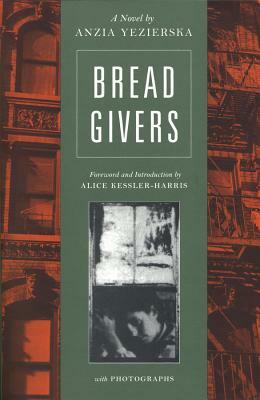
The last book I selected for the 1925 Club is Bread Givers. It is the mostly autobiographical novel about poor Jewish immigrants living in New York.

The novel opens with the Smolinsky family not having enough money for the rent. Reb Smolinsky spends all of his time studying the Torah and depends on his wife and daughters to support him. Bessie, the oldest daughter, earns the most and willingly hands over every penny to her family, but she is getting a little old to attract a husband. Mashah, the beautiful next sister, takes all her money to spend on finery, buying a new trinket when her family doesn’t have enough money to eat. Fania, the third sister, is still fairly young. Sara, the narrator, is only ten, but she goes out to buy some herring and then sells it on the street for twice as much, coming back with the rent and enough for some food. The father, of course, gets all the good parts of the food and any meat. After this incident, the family takes in lodgers and begins to do better.

Sara begins to form her own opinion of her father and their lives through the experiences of her mother and sisters. Her father takes any extra money for his charities and clubs, so her mother never has anything nice.

Bessie gets a boyfriend. Berel Bernstein is a hard-working tailor who plans to open his own shop and wants to marry Bessie because she is a hard worker and will make a good wife. So, he is willing to overlook the absence of a dowry. But their father tells Berel he wants money from him to make up for losing Bessie’s wages. He says he must have new clothes for the wedding, never mentioning a dress for Bessie. Berel doesn’t accept this or their father’s hostile attitude and leaves angrily. Weeks later, Bessie hears he is engaged to another girl. The light goes out of her.

Then Mashah begins to behave in a less selfish way. It turns out she is in love, with concert pianist Jacob Novak. Jacob is supported by a wealthy father, and when Mr. Novak comes to meet the family, it’s clear that he views them like dirt under his feet. Jacob doesn’t have the courage to stand up to him. He eventually returns, but Mashah has lost her faith in him and in love, so she sends him away.

Then Fania falls in love with Morris Lipkin, a journalist and poet. But the holy Reb Smolinsky thinks Lipkin isn’t good enough. After a big argument with his family about how he’s been driving off his daughters’ suitors, he claims he can find them better husbands. He brings home a flashy diamond merchant on the night Lipkin comes to ask for Fania in marriage and ignores Lipkin, who then leaves.
Like everything her father does, his matches end in unhappiness for his daughters. Sara begins to hate him and decides her life will not depend on a man. She is working in a box factory, but she decides she is going to college to become a teacher. And at every step she has to navigate a different foreign culture.

Written in the vernacular, this novel is a personal story of struggle against poverty and ignorance. Of course, Sara’s family think that education isn’t for women, but only submission to a husband is. I found this work really gripping. I read it in one day. My Persea Books edition is illustrated by photos from a film based on Yezierska’s short stories.
Related Posts

Brooklyn

Americanah

The Weight of Ink

Review 2640: #1925Club! #HYH25! The Painted Veil

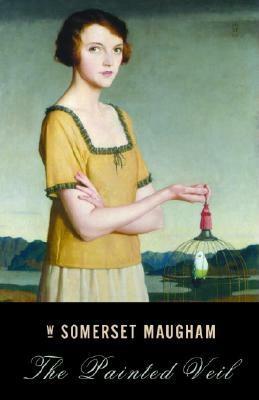
At the beginning of The Painted Veil, Kitty Fane is a beautiful but shallow woman. At 25, she had turned down some opportunities for marriage and finally realized she must do it soon. She actually accepted Walter Fane because he had to return to Hong Kong, so she was able to miss her younger sister’s more suitable wedding.

And in fact, the book begins with her affair with a married man, Charlie Townsend, being discovered by Walter when they’ve been married less than a year. She is infatuated by Townsend, who is handsome, polished, popular, everything that Walter is not.

Walter doesn’t say anything at first. Then he gives her a choice—either come with him into the interior of China to an area rife with cholera or if Townsend’s wife will give him a divorce, he will let Kitty go. Kitty is sure that Townsend will divorce and marry her, but it is clear he won’t and that he isn’t the man she thought he was.

Kitty is convinced she will die, but she sets off with Walter for the interior where, as a doctor and bacteriologist, he thinks he can help. On this journey, Kitty begins to grow up. She finds that Walter is highly regarded because of his untiring work with the ill, and she herself begins helping out by working in an orphanage run by French nuns.

Although I disliked Kitty at the beginning of this novel, as she becomes more aware and empathetic, I began to like her. At first heartbroken, she begins to see both men for what they are—Townsend selfish and irresponsible, Walter much more estimable. I ended up liking the novel quite a bit.

Related Posts

The Constant Wife

Cakes and Ale

The House of Doors

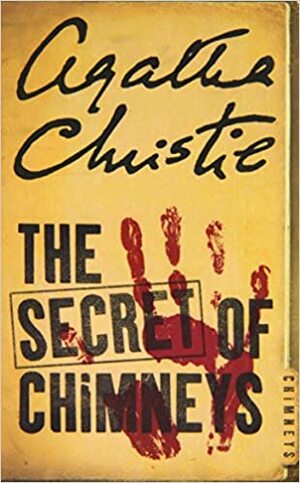
Review 2639: #1925Club! #RIPXX! #HYH25! The Secret of Chimneys

My second book for the 1925 Club is The Secret of Chimneys. I usually don’t enjoy Christie’s political mysteries as much, but this one is a romp. It’s got everything—a missing jewel, impersonations and secret identities, secret passages, an arch-criminal, Italian gangsters, kidnapping, and Balkan assassinations.

In Zimbabwe, Anthony Cade is leading a bunch of old ladies on a guided tour when he runs into Jimmy McGrath, an old friend. Jimmy is about to depart on a gold-mining expedition, so he asks Anthony to do two favors for him. Jimmy once saved the life of Count Stylptitch, prime minister of Herzoslavakia, and the Count had his memoirs shipped to Jimmy after his death with a promise of £1000 if he gets them to the publisher before a specific date. Jimmy offers Anthony a cut if he will take them to England for him. Jimmy also came by a collection of letters that someone has kept with the idea of blackmailing the writer. He wants to return them so that the writer, Virginia Revel, addressing the letter from Chimneys, will feel safe. Anthony takes on both tasks and returns to England, traveling under Jimmy’s name.

It turns out that lots of parties want the memoirs. England is about to help the heir to the throne of Herzoslavakia, Prince Michael, ascend to the throne after a period of anarchy. As a friend to the monarchy, England will get an important oil concession. But perhaps the memoirs say something embarrassing about Prince Michael. Anthony is approached by Baron Lolopretjzyl asking to buy them. Anthony refuses. Then he hands them on to a man who says he’s a representative of the publisher.

Next thing he knows, the Italian waiter at his hotel has stolen the packet of letters, along with the newspaper clipping he found about Virginia Revel. He goes to see her and gets to her house just after she discovers the body of the Italian waiter in her study. She explains that he had come the day before and even though she knew the letters weren’t hers, she gave him some money just to see what it would feel like and told him to come back the next day. She is due at Chimneys, so Anthony disposes of the body for her and follows her.

The reluctant Lord Caterham and his daughter Bundle, who also appear in The Seven Dials Mystery, are entertaining important political guests at Chimneys—Prince Michael and Count Lolopretjzyl; the millionaire Herman Isaacstein, who is involved in the oil deal; Mr. Fish, an American collector of books; and Virginia. Anthony arrives late at night and approaches the house only to hear a gun shot. The next morning, Prince Michael is found dead. Inspector Battle has been summoned, and Anthony recognizes the prince as the man he handed the manuscript to. Anthony’s boot prints have been found outside, so he has some explaining to do.

And in all this, I forgot about the jewel, the Koh-i-noor, which King Nicholas last had at Chimneys and hid somewhere before he returned to Herzoslavakia and was killed.

The novel has two engaging protagonists in Anthony and Virginia and is lots of fun. There are several characters in disguise, and although I guessed the identity of one of them as soon as I heard of that person, the others fooled me. I also didn’t guess at all who killed Prince Michael.

This is a ridiculously unlikely but entertaining early book by Christie. Note, though, that there are several anti-Semitic comments as unfortunately isn’t unusual for the time.

Related Posts

The Seven Dials Mystery

The Secret Adversary

Destination Unknown

Review 2638: #1925Club! #HYH25! The Informer

Twice a year, Simon of Stuck in a Book and Kaggsy of Kaggsy’s Bookish Ramblings host a year club, and this October the year is 1925. For this club, participants read a few books from that year and all post their reviews on the same week. Just by coincidence, this year the books also qualify for Neeru’s Hundred Years Hence Club.

Previous Books from 1925

As usual for my first post for the year club, I’ll start out by listing books I have already read for that year with links to my reviews, if I read them while blogging:

My Review

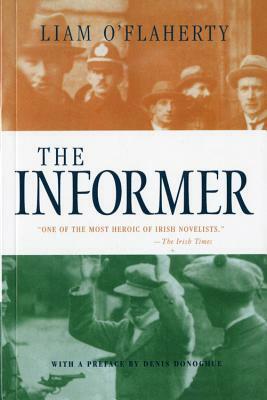
I picked The Informer for the 1925 Club without knowing anything about it or about Liam O’Flaherty. It was a winner of the James Tait Black award, written in the style of Naturalism and set after the Irish Civil War.

Francis Joseph McPhillip is a wanted man. He was a member of the Revolutionary Organization when he murdered the president of the Farmer’s Union during a strike. He and his friend, Gypo Nolan, were booted out of the Organization as a result, and Frankie has been on the run with a price on his head. But he has become tired of running and has returned to Dublin. The first thing he does is search out Gypo to ask if his parents’ house is being watched, and then he goes home.

Gypo is a brute—huge, strong, ugly, and very stupid. He has always done what Frankie told him to do. But ever since he got thrown out of the Organization, he can’t get work. He has no home, and no one will help him. He doesn’t have anywhere to sleep that night. He gets an idea. If he turns Frankie in to the police, he’ll have the reward money. So, he does.

The word is soon out that Frankie is dead, shot by the police at his parents’ home. Being an idiot, Gypo is running around town spending money on liquor and women. He just manages to come up with a story that he robbed an American sailor.

Even as an ex-member of the Organization, Frankie is still in its sights, as it is clear someone informed against him. Commandant Dan Gallagher is already looking at Gypo, because Frankie told his parents he had seen Gypo. Gypo is not very good at thinking, but he makes up a story that he saw Rat Mulligan skulking after Frankie in the street. But Rat has an alibi.

Naturalism isn’t my thing, and true to the literary movement, many of these characters are the dregs of society. It’s hard to empathize with a stupid fool who turns in his friend for a few bucks. Other characters are mostly street people—hookers, addicts, and so on—and those in the Organization who have a philosophy spit out half-digested rhetoric. Also, the ending of the book is over the top. A powerful book in its time, but not my thing.

Related Posts

Troubles

Last September

The Islandman