If I Gave the Award

With my review of English Magic, I have completed reading the shortlist of the 2022 James Tait Black Fiction Prize. That means it’s time for my feature, where I decide whether the judges got it right. This year is particularly difficult for me, because none of the books really clicked with me.

I’ll start with the winner, A Shock by Keith Ridgway. In my review, I quoted its pretentious back cover: “a rondel of interlocking stories . . . both deracinated and potent with place, druggy but shot through with a terrifying penetration of reality.” I reviewed this book two years ago, and frankly, I can’t remember a thing about it. It is a collection of short stories that I did not find engaging, centered around a pub.

English Magic by Uschi Gatward is another collection of short stories. I found it a mixed bag, although all of its details are minutely observed. Again, I didn’t connect with many of the stories, several of which were about political activism. Unlike A Shock, they didn’t seem to have any common themes or settings.
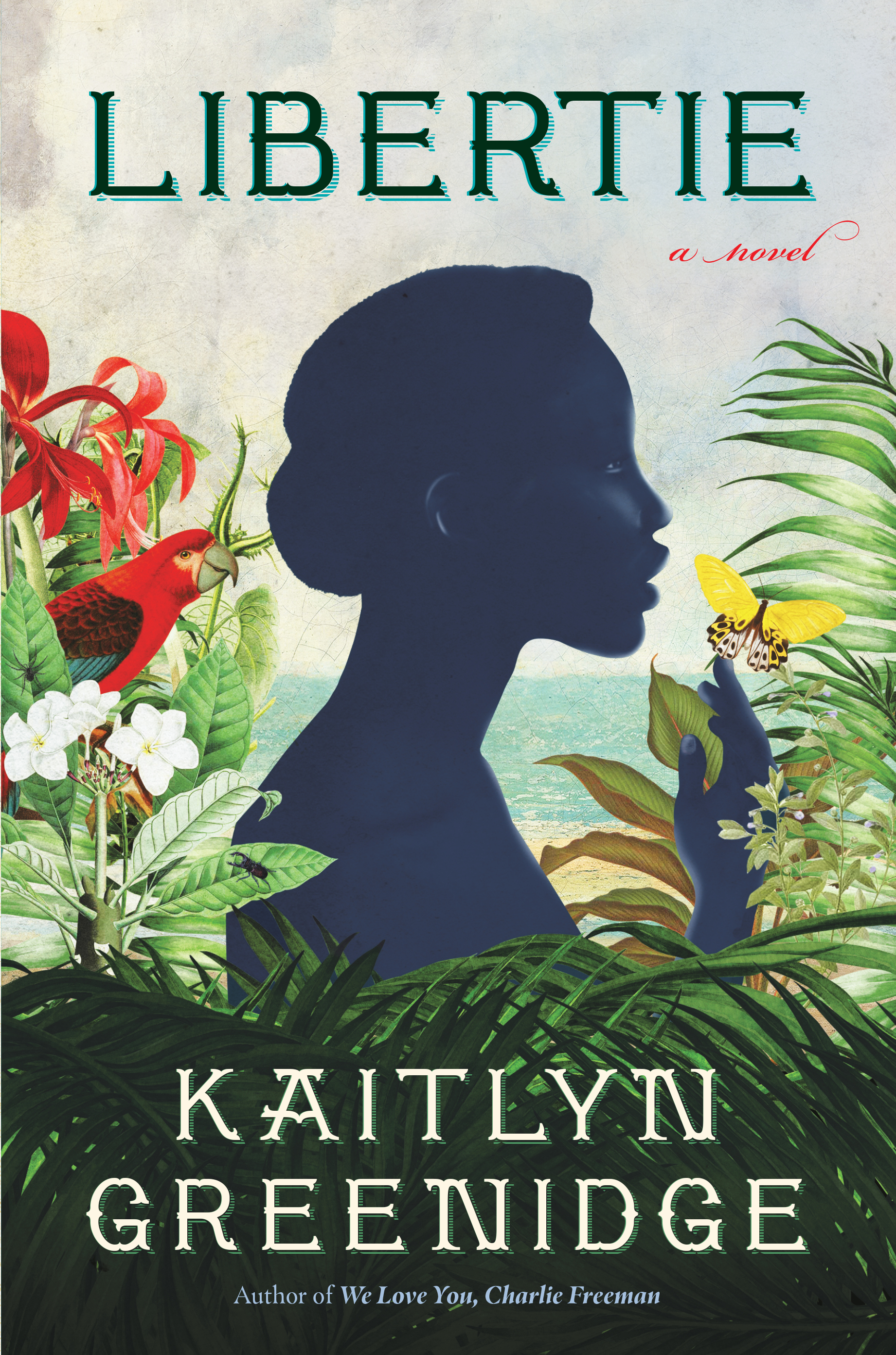
Libertie by Kaitlyn Greenidge would seem to be more my style, about a black young woman in pre-Civil War Brooklyn whose mother wants her to become a doctor. However, Libertie behaves like a spoiled modern young woman, and one of my pet peeves is a historical novel that has its characters behave out of their time. Libertie makes one bad decision after another, wasting her opportunities.

That leaves Memorial by Bryan Washington, about the relationship between two gay young men, one a black American and one Japanese, and their relationships to their families. Although its humor went over my head and I don’t like explicit sex, I found it perceptive and sometimes touching.

I am winding up this project, and I think I only have three books to read for the 2021 shortlist. My library hasn’t had any of them.
If I Gave the Award

With my review of Absolutely & Forever, I have finished the shortlisted books for the 2024 Walter Scott Prize for Historical Fiction. That means it’s time for my feature, where I decide whether the judges got it right.

This year was quite an international event, with books set in England, Trinidad, Italy, Malaysia, and Canada making the shortlist. As has become my usual approach, I’ll start with the books I liked least.

It’s almost a toss-up between two books as to which I should start with, but I think that will be Hungry Ghosts by Kevin Jared Hosein, which for this year was the winning novel. Although I was interested in the setting, the brutality in the book made me comment that if I wasn’t reading it for the prize, I wouldn’t read it at all. This was a novel about a young boy growing up in 1940s Trinidad, his feud with town boys and his father’s affair with a rich woman.

The other book I didn’t like as well was The New Life by Tom Crewe. I thought the subject matter was interesting, loosely based on the lives of two collaborators on a book about sexuality, but I don’t really like explicit sex scenes, and this book had lots of them.

In the Upper Country by Kai Thomas is about Canada’s history with slavery and treatment of indigenous peoples. I commented that Thomas’s approach of telling stories to fit in as much information as possible didn’t work very well for me. I thought there were too many characters, and he was trying to fit in so much in that it got confusing.

My Father’s House by Joseph O’Connor is about a real group of people in Rome during World War II who helped Allied soldiers escape from Nazi-occupied Italy. Although the subject matter was interesting and I enjoyed the book, I commented that as the first of a trilogy, I wondered where the material was going to come from for two more books.

Now, I have got to my two favorites, and I am having a hard time deciding which one to pick. Absolutely & Forever by Rose Tremain is a coming-of-age story, sort of, set in 1960s England. I just loved the voice of its narrator and was captivated by it (although since the 15-year-old heroine was the same age as Tremain in the 1960s, it doesn’t really fit my definition of a historical novel). However, I think I’m going to pick The House of Doors by Tan Twan Eng about, among other things, Somerset Maugham’s visit to Malaysia in the 1920s.

If I Gave the Award

Having read all of the shortlisted books for the 2022 Booker Prize, I see that it is time for my feature in which I decide whether the judges got it right. For this year the choice is difficult for me because I didn’t like many of the books.

As I sometimes do, I’ll start with the book I liked least. That is Glory by NoViolet Bulawayo. Bulawayo’s intent was to explain events in the recent history of Zimbabwe, but her choice to make the characters animals did nothing for me. In fact, it made the characters flat. I also had little tolerance for all the religious and political speeches, and the book’s repetition. I did not finish this book after reading more than half of it.

There was something strange to me also about the approach Percival Everett takes with The Trees. This novel is about the lynching of Black people that took place for centuries in the American South and in particular, the murder of Emmett Till. However, Everett makes it a mystery about some grotesque murders and creates Southern white characters who are almost caricatures of themselves. On reflection, for such a serious subject it seems to indicate an odd sense of humor.

The winner for this year was The Seven Moons of Maali Almeida, about a dead man who is trying to reveal photographs he has taken of the Sri Lankan civil war. I was very interested in the history of Sri Lanka, which is not a country I know about, but I didn’t enjoy his depiction of a grotesque afterlife. (The book reminded me a bit of the afterlife depicted in George Saunders’s Lincoln in the Bardo, although I found that book ultimately more touching.)

Alan Garner’s Treacle Walker is a fantasy novella about a boy left alone in an unusual world. It was interesting and imaginative, a fast read that resembled a fairy tale, but it didn’t do much for me.

I always like a book by Elizabeth Strout because of the writing and the gentleness with which she treats her characters. However, Oh, William!, about Lucy Barton’s ex-husband and his family secrets, seemed slight to me when compared to some of the other books.

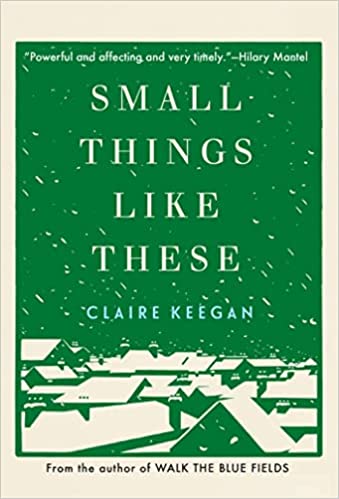
The book I enjoyed most for its writing and its theme was Small Things Like These by Claire Keegan, about the Magdalen laundries. Keegan is another excellent writer. I guess I’ll pick it for its beautiful, pared-down prose.

If I Gave the Award

Now that I have posted my review of the last of the shortlist for the 2020 Pulitizer Prize for Fiction, it’s time for my feature in which I decide whether the judges got it right. The Pulitzer Prize tends to choose only three books for its shortlist, so in some ways the choice is easier, in some ways more difficult. In this case, two of the choices were ones I really liked.

Let’s start with the one I didn’t like as much, The Topeka School by Ben Lerner. Now, there is nothing intrinsically unlikable about Lerner’s books, it’s just that they’re all about himself, as evidenced by his alter ego, Adam Gordon, being the protagonist for all and having a biography very similar to his own. I’m saying this on the basis of two books, but I think it’s true. The novels are somewhat funny, poking subtle fun at himself, and he is obviously into wordplay, but I guess I just don’t like him very much. In this case, the novel focuses on Adam’s high school years, his relationships with his friends and girlfriend, and his prowess on the debating team.

The choice between the other two novels is difficult for me. The Dutch House was my favorite Ann Patchett novel until she wrote Tom Lake, and frankly, they’re pretty much a tie for me. It’s about the disastrous effects on his children of a father’s lack of understanding, almost a willful blindness, of both his first wife, the children’s mother, and his second. It’s about the consequent loss of his children’s inheritance, the Dutch house, and their fascination with it. And it’s about the closeness of siblings who only had each other to rely on. I really love this book.

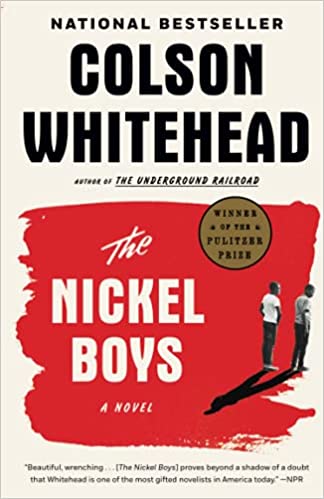
I was gripped, though, by The Nickel Boys by Colson Whitehead, the winning book. It’s a historical novel about the mistreatment and even murder of black boys in a Florida school for boys, aka, a detention center, based on the true history of the Dozier School for Boys. Its protagonist, Elwood Curtis, is a right-minded boy who makes the mistake of accepting a ride from a stranger in what turns out to be a stolen car. Once incarcerated in the school, he begins collecting a record of the abuses he sees.

It’s not hard to see why the judges picked The Nickel Boys over The Dutch House, a more personal novel. But that’s what I like about it. Both novels touched me emotionally, so I guess this time I declare a tie. I didn’t love The Nickel Boys as I loved The Dutch House, but it is extremely powerful. They are both very good novels.

If I Gave the Award

Cover for The Thousand Autumns of Jacob De Zoet

I’m way behind on finishing the shortlisted books for the 2011 James Tait Black prize, but now that I have, it’s time for my feature, where I say whether the judges got it right. This year’s shortlist is unusual, because it contains three historical novels out of the four. It’s also going to be difficult from my perspective because I loved two of the books on the shortlist, but I haven’t read one of them since 2012.

Let’s start with my least favorite book. That one is La Rochelle by Michael Nath. This novel has a vestigial plot about a missing girlfriend and a friend’s obsession with her. But mostly it is about the main character, whom I found unpleasantly fascinated with women’s anatomy and not afraid to say so. The novel deals with nights of drinking too much with the missing women’s partner until the main character finally does something different, ending a labyrinthine scheme that I thought was silly and absolutely unnecessary.

Next is my second least favorite of the four, which was the winner for that year, The Lotus Eaters by Tatjana Soli. When I originally started to read it, I had forgotten why I was reading it and took it for a standard historical novel about a woman photographer’s affairs with a married man and then with his assistant. However, it turned out to really be about the experience of being a war correspondent during the Vietnam War and the main character’s growing love for the country. After giving it a second try, I finished it, but I still felt quite a bit of distance from the characters.

Now we get to two favorite books. The first one was the book I read long ago and for which I wrote my fifth review for this blog, The Thousand Autumns of Jacob De Zoet by David Mitchell. Although it had hints of the sci-fi time travelers that he incorporates into most of his novels, at that time I had only read one other book by him, and the focus on historical fiction was so strong that I didn’t notice them. The main character is an employee of the Dutch East Indies company in 18th century Japan. He is fascinated by the culture, even though the Dutch are restricted to one island off the coast and the Japanese are generally not allowed on the island. He falls in love with a Japanese girl who is allowed on the island as the student of a Swedish physician. When he refuses to participate in his boss’s graft, he is deserted on the island and makes his way to the main island. I found the descriptions of the customs and laws of Japan at the time really interesting, and the book becomes an adventure.

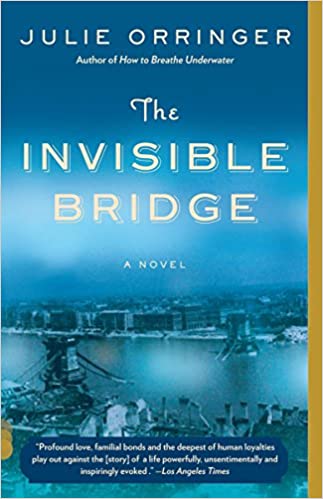
But another type of adventure is experienced by the main characters of The Invisible Bridge by Julie Orringer. This novel was based on the experiences of her grandparents during World War II. The main character, a Hungarian Jew, arrives in Paris in 1937 to study architecture, but he soon loses his scholarship because of anti-Semitism. He also meets an older woman with whom he falls in love. This novel becomes one of great breadth, covering events of World War II, the Hungarian Holocaust, life in work camps, and the siege of Budapest.

I so much enjoyed both of these last two novels that it’s hard to pick, but I choose The Invisible Bridge, simply because of its depth and breadth, and also just slightly because I have a vague recollection that The Thousand Autumns of Jacob de Zoet eventually goes to some places that were a bit unbelievable.

If I Gave the Award

Having reviewed the last of the shortlisted books for the 2023 James Tait Black Award, I am ready for my regular feature, in which I decide whether the judges got it right. I have to say that in terms of my own reading enjoyment, the 2023 shortlist was a tough one.

Bolla by Pajtim Statovci, set in Kosovo before and during the Balkan War, is about a love affair between two male students, one Serbian and one Albanian. Although it was beautifully written and ultimately touching, I so disliked its main character that I had difficulty reading it.

Indifference to the main character was my problem with Bitter Orange Tree by Jokha Alharthi. In this dreamy novel, the main character, an Omani student in England, contemplates the life of the woman she considered her grandmother and finds parallels with her own. I was more interested in the historical parts of this novel than in the contemporary ones.

I found the histories of lesbian women in After Sappho by Selby Wynn Schartz to be interesting. However, there were just too many characters for me to keep track of, and the vignettes about the women were too short for me to really feel like I could differentiate the women from each other.

The winner of the award for this year was Barbara Kingsolver’s Demon Copperhead, a modern retelling of Dickens’s David Copperfield set in rural Southwestern Virginia. Although I had problems with this novel as well, it was certainly a spellbinding tale. So, this time I have to say that the judges got it right. Although they don’t seem to publicize the longlist, this selection makes me wonder what was on it.

If I Gave the Award

Real Life by Brandon Taylor was the last of the books shortlisted for the 2020 Booker Prize that I had to review, so having done that, it’s time for my feature where I decide if the judges got it right. For 2020, the shortlist included one dystopian novel, one historical novel, and four that are more or less contemporary. One of the novels was set in Zimbabwe, one in India, one in Ethiopia, and one in Scotland, the others in the United States. Two involve unlikable heroines.

I didn’t dislike any of these novels, but there were a couple I didn’t actually like that much, either. These were two quite different novels, The New Wilderness by Diane Cook and This Mournable Body by Tsitsi Dangarembga. The New Wilderness is a dystopian novel about people who go to live in the wilderness after climate change leaves their city air too dangerous to breathe. They are forced to leave no trace, and the living conditions are brutal, but it was the lack of character development and what I felt was unlikely behavior of the people that left me cold. I was most interested in the character of Bea, but she disappears from the novel early on and it centers on her daughter, whom I didn’t find interesting.

As far as This Mournable Body is concerned, I think part of my problem is that it is the third in a series, which I didn’t know before reading it. So, I found it difficult to follow at times. It is about Zimbabwe during the rule of Mugabe, but it is mostly concerned with Tambudzai, an embittered and unlikable woman who always thinks, because of her education, that she deserves more than she is getting. Yet when she does get a job, she does poorly because she thinks she deserves more.

I find myself grouping these novels in pairs this time. The next two I liked better. Real Life was written with a morose atmosphere that was hard to get past. It’s about a young Black gay man trying to work in a graduate program in science at a university where almost everyone else is White. Although the main character has a lot to put up with, peers who are trying to sabotage him and his experiments and lots of slights and racist comments, I found it frustrating that instead of explaining things to his friends or standing up for himself, he kept telling people everything was fine. He seemed to think this was a way to fit in, but instead he undercut himself. Also, I am not a fan of explicit sex scenes of any kind.

Burnt Sugar by Avni Doshi follows the activities of a woman who grows up to be an artist from her girlhood days when her mother moves into an ashram to be the lover of the guru. There, she was alternately neglected and mistreated, brought up mostly by another woman. Now her mother is beginning to experience dementia so is left to the care of her daughter. I found the main character unlikable, but I also said I found the novel fascinating, which I don’t remember in retrospect.

I have to put The Shadow King by Maaza Mengiste and Shuggie Bain by Douglas Stuart in my last and best group. The Shadow King is a historical novel about Ethiopia’s war with Italy just before World War II. It follows the fate of Hirut, a young girl who belongs to the household of Kidane, a leader in the revolt against the Italians. Although I was slow to warm to the novel, I came to feel that it was powerful and effective.

As for Shuggie Bain, which was the 2020 winner, about a young poor gay Scottish boy, well, I feel the judges got it right this time. The Bains are deserted by their father, and their elegant mother becomes an alcoholic. One by one, Shuggie’s older siblings leave, and he is left to try to care for his mother. I found this novel moving, gripping, and heart-breaking.

If I Gave the Award

Since I just reviewed the last book on the shortlist for the 2023 Pulitzer Prize for Fiction, it’s time for me to evaluate whether I think the judges got it right. That year was an unusual one, because they awarded it to two of the three novels on the shortlist, Trust by Hernan Diaz and Demon Copperhead by Barbara Kingsolver. I felt that there were flaws in all three novels.

I think I’ll start where I often do, with the book I liked the least. That is with The Immortal King Rao by Vauhini Vara. It may be that I’ve just read too many dystopian novels this season, and they are not my favorite. But I also thought Vara tried to tackle too many subjects. This impressed some of the newspaper and magazine reviewers, but it made me feel the novel was too all over the place. It hits runaway technology, social networking dangers, climate change, the disintegration of national governments, not to mention dysfunctional families.

It’s harder for me to evaluate the other two. Although I am not a fan of novel rewrites, Demon Copperhead was a clever rewrite of David Copperfield, placing the old classic in a modern framework. However, Barbara Kingsolver is not really good at funny, which is one of Dickens’s hallmarks, and I missed the innocence of the original character. The story is gripping, however.

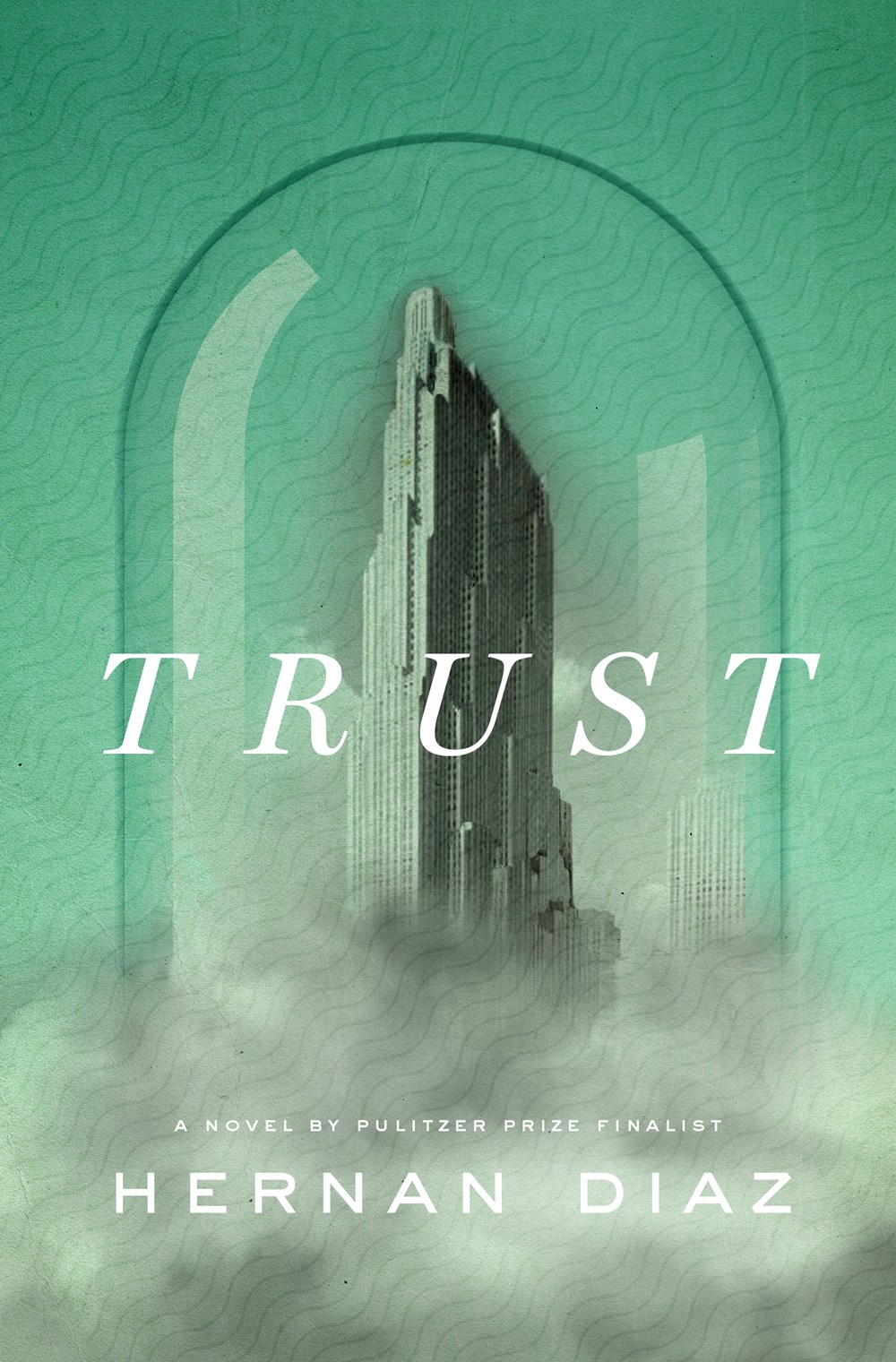
I think I’m going to go with Trust as the most ambitious of the three novels in terms of structure. Trust presents the story of a wealthy early 20th century tycoon and his wife three times. Although the first time, a novel about the couple, was commonplace, and the second retelling, an “autobiography,” by the tycoon, was so megalomaniacal that it was hard to read, the third section by the tycoon’s ghost writer is where the meat and the surprise of the novel lie. I likened this novel to Russian nesting dolls, and it’s the one that has stuck with me longest.

If I Gave the Award

As I just posted my review for the last short-listed book for the 2019 James Tait Black Award for Fiction, it is now time for my feature where I decide whether the judges got it right. This time the choice is difficult for me, because I didn’t really like any of the shortlisted books. Most of them share a strong intellectualism, although that’s not why I felt so-so about them.

It’s kind of a toss-up which of the books I liked least. I remarked in the review of Murmur by Will Eaves how much I dislike books with dreams in them. In this novel about an Alan Turing-like figure, the main character eventually experiences wakened dream states as a side-effect from chemical castration. It’s ironic that the other book I disliked, Crudo by Olivia Laing (the winning entry), is also a fictional character study of a real person, a woman very much like the poet Kathy Acker, with whom I was completely unfamiliar. In this case, I found Kathy really annoying in her neuroticism and use of crude language. Both of these books were extremely well written, but I had difficulties with them.

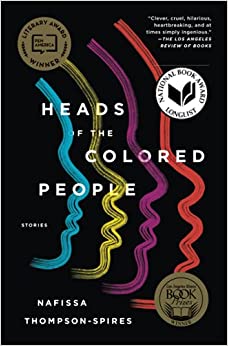
Heads of the Colored People by Nafissa Thompson-Spires was probably the least intellectually removed of the four books. It’s a collection of short stories linked by common characters that explores black identity in the California middle class. The stories are insightful and original, and some of them are bizarre.

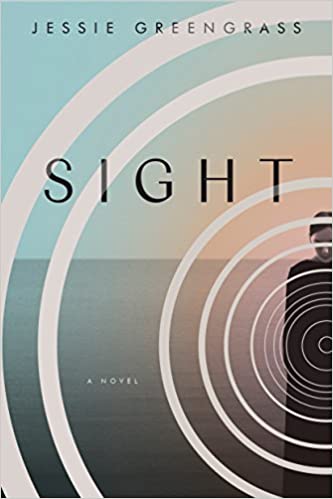
That leaves me not quite knowing what to do with Sight by Jessie Greengrass. It’s about seeing below the surface, narrated by a woman who is conflicted about her own pregnancy. It combines her ruminations with stories about scientists whose discoveries also have to do with seeing below the surface. I found it to be written in meticulous prose but also to be distanced from the reader, and I didn’t like the main character’s neuroticism.

I guess I’m going with Sight, but this one was a tough choice.

If I Gave the Award

As I have just posted my review of News of the Dead, the last of the shortlisted books for the 2022 Walter Scott Prize for Historical Fiction, it is now time for my feature where I decide whether the judges got it right. The shortlisted books are set in 16th century Scotland; 8th, 19th, and 20th century Scotland; 20th century Trinidad, and 20th century Germany, California, and Switzerland. For this year, most of the entries were strong ones.

The book set in 20th century Trinidad, Fortune by Amanda Smythe, is the fictionalized story of a true one, a love triangle that resulted in a disaster. I felt that the characters in this novel were not very interesting and the setting not vividly described. Also, the writing was rather mundane. However, this book was the weakest entry on the shortlist.

The writing in The Magician by Colm Tóibín was not at all mundane. This novel is more difficult to evaluate in the context of my having to pick the best one, because I said only good things about it in my review, but it didn’t make as much of an impression on me as some of the others. A biographical novel about the writer Thomas Mann, the book was intuitive and meditative in tone and Tóibín’s writing is always excellent.

The winner this year was News of the Dead by James Robertson, and I’m guessing it was picked because of its scope. It tells the story of a remote Scottish glen through manuscripts written about a figure in the 8th century, a family in the 19th century, and an individual in the 20th, and how these people found refuge. It was well written, and I certainly found it involving and was unexpectedly touched by the second and third narratives. However, I wasn’t very interested in the first, about a supposed local saint.

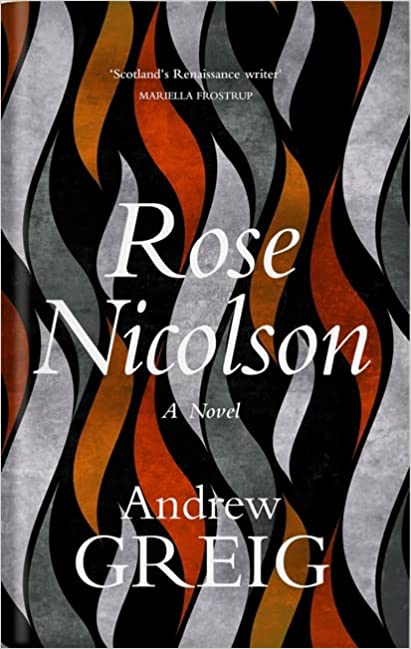
Despite the three really good books in this year’s shortlist, it wasn’t difficult for me to pick my favorite because of the lasting impression it gave me despite being the book I read first, in August 2022. That is Rose Nicolson by Andrew Greig. It is set in the difficult times of 16th century Scotland, when people are still fighting about religion, about a young man’s love for an extraordinary young woman who is in danger of being thought a witch just because of her intelligence. I am a big Greig fan, and this was one of his best (although I might put in a word for his Fair Helen).