If I Gave the Award

Cover for Jamrach's MenagerieYesterday, I posted my review of the last of the 2011 shortlisted books for the Man Booker Prize, so it’s time for my feature where I decide whether the judges got it right. The 2011 shortlist offers a lot to like, although I found a bit to dislike in it, too.

It’s easy for me to dismiss one of the books. I did not like Patrick DeWitt’s The Sisters Brothers, an ironic, superviolent Western, at all.

I was a little more interested in Half-Blood Blues, Esi Edugyan’s dual time-frame story about how jealousy affects an American blues band hiding in Nazi-occupied Germany and Paris. However, I didn’t really like most of the characters and I wasn’t in love with the vernacular used to narrate the novel, which I believed was probably not historically accurate.

Snowdrops by A. D. Miller paints a chilling picture of life in post-Cold War Russia. I felt this was an engaging thriller and character study with a narrator made unreliable by his willful ignorance.

I was enchanted by the narrator of Stephen Kelman’s Pigeon English, a naive 11-year-old boy from Ghana, and the novel invoked in me a growing dread. However, I felt that the role of the pigeon didn’t really work.

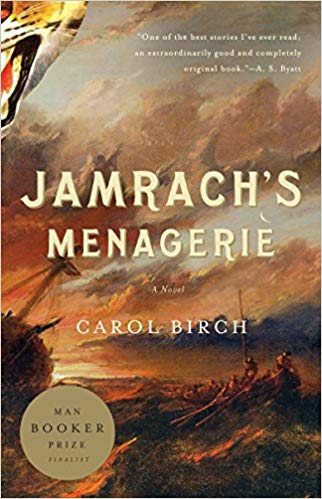
Cover for The Sense of an EndingJamrach’s Menagerie just plain tells a fascinating story, about a 19th century boy who is rescued from poverty by a menagerie owner and who sails off on a mission to find a dragon. This novel features wonderful storytelling.

The winning novel was Julian Barnes’s The Sense of an Ending. Barnes is a master of the unreliable narrator, and this novel is no exception. Through reading the diary of a friend who committed suicide, the narrator learns that everything he remembers about the key relationships in his life is wrong.

Although this time it was a tough decision, I have to agree with the judges. Barnes’s book is short but psychologically fascinating and complex. I would also pose that it is the novel that is the most literary of the shortlisted books. I strongly recommend some of the other books, however, particularly Jamrach’s Menagerie.


If I Gave the Award

Cover for We Are Not OurselvesSince I just reviewed Fourth of July Creek by Smith Henderson, the last of the shortlisted novels for the 2015 James Tait Black Fiction Prize, it is time for my feature, where I give my opinion about whether they got it right or not. The 2015 list is a difficult one, because I didn’t love any of the shortlisted novels, but I thought all of them were excellent in different ways.

I read We Are Not Ourselves by Matthew Thomas the longest ago, in the same year that it was published. I recollect that, while I stayed interested in the novel, it was a long time before I was very vested in this story about a family coping with Alzheimer’s.

Fourth of July Creek was another novel with a more straightforward narrative. It focuses on people on the fringes of society in Montana. It is interesting and involving and ultimately touching as it explores the stresses upon an already fanatical man being pressured by the government.

Dear Thief by Samantha Harvey uses a more inventive approach to narrative, it being a long love/hate letter from a woman to her former best friend. While it recounts the reasons for the destruction of their friendship, it reveals how the woman yearns to see her friend again.

Cover for Dear ThiefAlso a novel about a friendship and the winning entry, In the Light of What We Know by Zia Haider Rahman is the most ambitious of the novels and also the one least likely to appeal to some readers. It is a tour de force in narration, consisting mostly of a long series of narratives by one character on a wide variety of subjects. It is the most thought-provoking of the shortlisted books and the most difficult.

I can understand why the judges chose In the Light of What We Know, but as I think about it, I have to choose the book that I connected with most. Although I enjoyed the winning novel, I also was just on the edge of irritation with it as I read it. So, for its slightly inventive approach and the connection I felt to the material, I am picking Dear Thief with a strong nod to Fourth of July Creek.


If I Gave the Award

Cover for Parrot and OlivierHaving finally posted my review of The Finkler Question, I see that it is time again for my feature “If I Gave the Award,” in which I evaluate the shortlist I have just read and say which book I think deserves the award.

The winning book for the 2010 Man Booker Prize was Howard Jacobson’s The Finkler Question, but if you read my review on Tuesday, you’ll know I’m not going to pick that one. I found most of the characters unbelievable, the humor not funny, the tone irritating, and the preoccupations of the characters kind of ridiculous. In fact, it was my least favorite of the shortlisted books.

I felt too much distance from the action and characters of C, by Tom McCarthy, to pick it. Similarly, I felt that the narrative style of The Long Song by Andrea Levy distances the reader from its characters.

Room by Emma Donoghue was a compelling read, so I can’t complain that I felt distanced by it. However, I don’t think it is in the same league as the other books. It employs an imaginative approach by narrating a difficult situation from the point of view of an innocent boy, but this approach is not always convincing, and it is essentially just a thriller. I almost feel that its selection on the short list was an effort to attract more readers to the prize by selecting a popular novel.

Cover for In a Strange RoomIt has been a very long time since I read Parrot and Olivier in America by Peter Carey, but I still have fond memories of its sly humor. It is my second favorite of the nominated books.

So, we get to the novel that I think should have won the award, In a Strange Room by Damon Galgut. This book is not only beautifully written, but it is affecting and insightful in the behavior of its characters. Although it purposefully keeps some distance from the readers at times, I found it powerful and touching.

If I Gave the Award

Cover for The Garden of Evening MistsHaving posted my last review of the shortlisted books for the 2013 Walter Scott Historical Fiction Prize, it is time for my feature in which I give my opinion of the books on the shortlist. I have to say that 2013 is another difficult year with several excellent historical novels on the list.

Let’s begin with the ones I didn’t like as well. Although The Daughters of Mars by Thomas Kenneally tells an interesting story about nurses in World War I, it keeps such a distance from its characters that you lose some interest in what happens to them. Merivel: A Man of His Time by Rose Tremain accomplishes the same thing with its semi-comic, mocking tone.

I became more involved in Toby’s Room by Pat Barker. An important consideration for this prize is how fully realized the period and place seem to be, and in this novel that goal was accomplished. It was also accomplished in The Streets by Anthony Quinn. These were both good, solid, and interesting historical novels.

Cover for Bring Up the BodiesBy far the two best novels, though, were the winning book, The Garden of Evening Mists by Tan Twan Eng, and Bring Up the Bodies by Hilary Mantel. They both created an entrancing world for their characters and were beautifully written. When I sat down to write this feature, my intention was to choose The Garden of Evening Mists, probably because I had read it more recently. I posted my review of that book a few months ago and of Bring Up the Bodies way back in 2012. However, rereading my original review of that book made me remember how much I was impressed by it. Therefore, I find myself unable to choose between these two books. For this year, with quite a few good books to chose from on the list, I find that the most impressive were The Garden of Evening Mists and Bring Up the Bodies.

If I Gave the Award

Cover for The Long SongHaving finally reviewed the last book on the shortlist for the 2011 Walter Scott Prize for Historical Fiction, it is time to write this recurring feature, where I give my opinion about which book I feel deserved the award.

This was a year with several entries that were unusual and one that I felt was not actually a very good novel. Let’s start with that one, To Kill a Tsar by Andrew Williams. This novel about a plot to assassinate Tsar Alexander II was presented wrapped around an unlikely and uninteresting love story. I was never sure whether I was supposed to feel sympathy for the plotters or not. I didn’t.

The winner for that year was The Long Song by Andrea Levy. Although this is an interesting novel about the last days of slavery in Jamaica, I felt it was somewhat distancing from its characters. However, this sad story is told with humor and lightness.

Heartstone by C. J. Sansome is an entry in his Matthew Shardlake series set in Tudor England. Although this series is outstanding for its thorough immersion in the Tudor world, this novel was impeded in its effectiveness, I thought, by the subplot involving Ellen Fettiplace.

Cover for The Thousand Autumns of Jacob De ZoetC by Thomas McCarthy is an unusual story of the life of a young man, set in the early 20th century and ending during World War I. Again, this novel, which wanders about among many different pursuits of its main character, was interesting but seemed detached from its subject, as was I.

One of the most beautifully written entries for that year is Ghost Light by Joseph O’Connor. This is the story of the poet John Millington Synge and Molly Allgood. Characterization is more important in this novel than the historical setting, which I think is vital for a novel considered for an award for historical fiction.

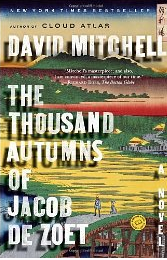
That leaves one of my favorite books of all time, The Thousand Autumns of Jacob de Zoet by David Mitchell. This novel is set in 18th century Nagasaki, Japan, during the first opening of Japan to the West. Jacob de Zoet becomes one of the first Europeans to be allowed to set foot off the island called Dejima where all the Europeans are restricted to live. This novel was full of the flavor and customs of 18th century Japan as well as a good story about corruption in the Dutch East India Company.

Although several of the books on this year’s list are worthy of the award, my personal choice is The Thousand Autumns of Jacob de Zoet.

If I Gave the Award

Cover for HarvestWhen I began my James Tait Black Fiction Prize project late last year, I had, just coincidentally, already read three of the four shortlisted books for 2014. Having finally posted my review for the fourth, it is time for my feature where I give my opinion about which book I would have voted for.

The year 2014 has some strong entries, the weakest of which, in my opinion, is The Flamethrowers by Rachel Kushner. Although it skillfully depicts two vibrant cultures in the 1970’s, to me there seemed to be something about the main character that was not convincing, and the relationship that the novel pinned its major events on was unexplored.

Cover for All the Birds, SingingI don’t think very many writers can beat Kent Haruf as a prose stylist and was happy to see his Benediction on the list. I also very much enjoyed the winning book, Harvest, by Jim Crace. It was dark and powerful. I strongly recommend both of them.

So, my opinion is simply based on the feeling that All the Birds, Singing by Evie Wyld made the biggest impression on me. Although I read it long ago, in the fall of 2014 (as I did Harvest), it is the one that sticks with me the most and that I find the most haunting. So, All the Birds, Singing is my pick for 2014.

If I Gave the Award

Cover for The Ten Thousand ThingsLast week I posted my last review of the shortlisted books for the 2015 Walter Scott Historical Fiction Prize. That means it’s time for this feature, where I give my opinion about whether the judges got it right.

The shortlist for 2015 is a tough one to like. There were seven books on the shortlist, but for various reasons, four of them just didn’t float my boat at all: Zone of Interest by Martin Amis, In the Wolf’s Mouth by Adam Foulds, Arctic Summer by Damon Galgut, and A God in Every Stone by Kamila Shamsie.

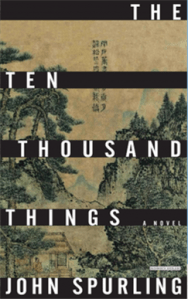
Cover for Viper WineOf the other three nominations, Viper Wine by Hermione Eyre is the most inventive in approach and is well grounded in its historical background. Looking back at my review, I think I enjoyed it more than I remembered. The Ten Thousand Things, that year’s winner by John Spurling, is probably the book that most qualifies as literary fiction, and it certainly conveys both a historical context and a sense of time and place. It had such a detached viewpoint, however, that I was never fully engaged with it. For me, The Lie by Helen Dunmore was the most engaging, but of these three, it conveyed the least about its historical time. So, for this year’s prize, taking into consideration both how involving the book was and its reflection of its time and place, I guess I would have picked Viper Wine, with a plus for its wildly inventive approach.

If I Gave the Award

I recently posted my last review of the books on the shortlist for the 2010 Walter Scott Prize for Historical Fiction. So, as usual, it’s time for my feature, If I Gave the Award, when I tell you if I think the jury got it right.

Cover for Conspirata2010 was a strong year for historical fiction, and the shortlist reflects that. Of the seven books on that year’s list, I really enjoyed four of them, liked one other, and didn’t enjoy two others as much. Of the weakest entries, I felt that The Glass Room by Simon Mawer was cold and withdrawn, and I did not enjoy the subject matter of Hodd by Adam Thorpe, although it was effective at evoking the historical period. The Quickening Maze by Adam Foulds was interesting, but I still felt removed from the subject.

Cover for Wolf HallThe strongest entries, in my opinion, were Sacred Hearts by Sarah Dunant, Lustrum by Robert Harris (published as Conspirata in the U.S.), Stone’s Fall by Iain Pears, and the winner, Wolf Hall by Hillary Mantel. Sacred Hearts, Lustrum, and Wolf Hall were best at evoking a sense of period and place, while Stone’s Fall had a great mystery.

If you follow my blog closely, however, you can probably guess which one I will pick. Wolf Hall was on my Best Books list for the year 2012. It is, in fact, one of my favorite books ever. So, I agree with the jury this time.

If I Gave the Award

Cover for How to Be BothSince I’ve just posted my last review of books on the shortlist for the 2014 Booker Prize, it’s time for my feature, If I Gave the Award. In my opinion, many of the books on the 2014 shortlist are overrated. The winner, The Narrow Road to the Deep North by Richard Flanagan, is sidetracked by a deeply uninteresting illicit love affair, while J by Howard Jacobson is overwhelmed by its obfuscation and sly jokiness and a deeply uninteresting licit love affair. Neel Mukherjee’s The Lives of Others is more powerful than either one of those novels.

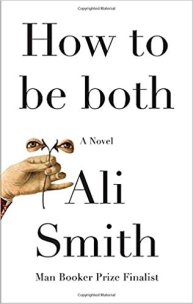
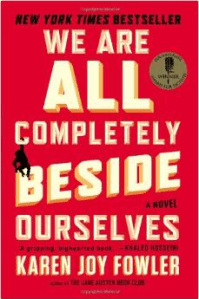
Cover for We Are Completely Beside OurselvesHowever, my preference goes to one of the other two novels. How to Be Both by Ali Smith is more inventive than the other novels in its structure and more subtle in its message. But for its ability to keep me glued to the page, I have to say that over all the others, I preferred We Are All Completely Beside Ourselves by Karen Joy Fowler.

If I Gave the Award

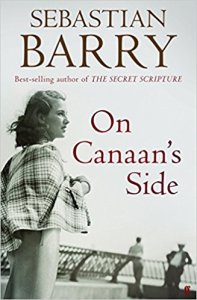
Cover for On Canaan's SideHaving reviewed the last book on the Walter Scott Prize shortlist for 2012, it is time for me to give my opinion on whether the judges got it right. Of all the books in the shortlist, would I have picked On Canaan’s Side to be the winner?

For me, this is a much more clear-cut decision than for my last feature, where I compared the books on the shortlist for 2014. For that list, I felt that all the books were excellent, but I chose Life After Life for its combination of inventiveness and sense of history, acknowledging that the winner, An Officer and a Spy, was an excellent historical novel.

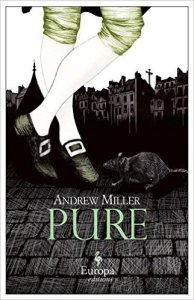
Cover for PureFor 2012, however, I can honestly say that I didn’t enjoy most of the books on the shortlist, or I enjoyed them only mildly. The one book that I enjoyed wholeheartedly was that year’s winner, On Canaan’s Side by Sebastian Barry, about an Irish woman emigrating to the United States during the Troubles. I also thought that Pure was very interesting and showed a strong sense of the period. The books I enjoyed least were The Stranger’s Child and The Sisters Brothers.

So, for 2012, I agree with the judges. If I had picked the winner from this group, it would be On Canaan’s Side.