Review 2638: #1925Club! #HYH25! The Informer

Twice a year, Simon of Stuck in a Book and Kaggsy of Kaggsy’s Bookish Ramblings host a year club, and this October the year is 1925. For this club, participants read a few books from that year and all post their reviews on the same week. Just by coincidence, this year the books also qualify for Neeru’s Hundred Years Hence Club.

Previous Books from 1925

As usual for my first post for the year club, I’ll start out by listing books I have already read for that year with links to my reviews, if I read them while blogging:

My Review

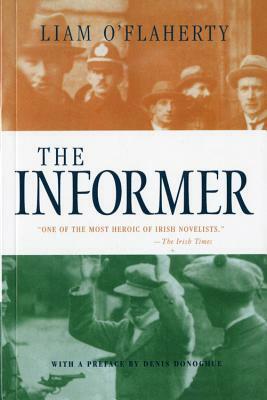
I picked The Informer for the 1925 Club without knowing anything about it or about Liam O’Flaherty. It was a winner of the James Tait Black award, written in the style of Naturalism and set after the Irish Civil War.

Francis Joseph McPhillip is a wanted man. He was a member of the Revolutionary Organization when he murdered the president of the Farmer’s Union during a strike. He and his friend, Gypo Nolan, were booted out of the Organization as a result, and Frankie has been on the run with a price on his head. But he has become tired of running and has returned to Dublin. The first thing he does is search out Gypo to ask if his parents’ house is being watched, and then he goes home.

Gypo is a brute—huge, strong, ugly, and very stupid. He has always done what Frankie told him to do. But ever since he got thrown out of the Organization, he can’t get work. He has no home, and no one will help him. He doesn’t have anywhere to sleep that night. He gets an idea. If he turns Frankie in to the police, he’ll have the reward money. So, he does.

The word is soon out that Frankie is dead, shot by the police at his parents’ home. Being an idiot, Gypo is running around town spending money on liquor and women. He just manages to come up with a story that he robbed an American sailor.

Even as an ex-member of the Organization, Frankie is still in its sights, as it is clear someone informed against him. Commandant Dan Gallagher is already looking at Gypo, because Frankie told his parents he had seen Gypo. Gypo is not very good at thinking, but he makes up a story that he saw Rat Mulligan skulking after Frankie in the street. But Rat has an alibi.

Naturalism isn’t my thing, and true to the literary movement, many of these characters are the dregs of society. It’s hard to empathize with a stupid fool who turns in his friend for a few bucks. Other characters are mostly street people—hookers, addicts, and so on—and those in the Organization who have a philosophy spit out half-digested rhetoric. Also, the ending of the book is over the top. A powerful book in its time, but not my thing.

Related Posts

Troubles

Last September

The Islandman

Review 2599: The Lonely Girl

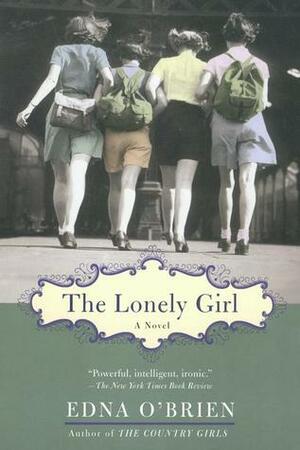
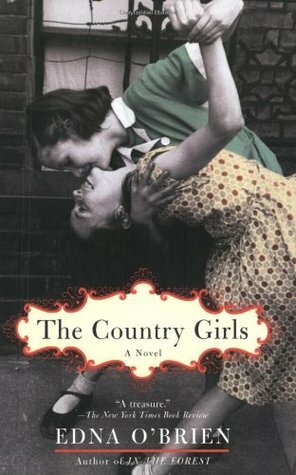
The Lonely Girl is the second novel in Edna O’Brien’s The Country Girls trilogy. The trilogy is quite autobiographical without matching the details of O’Brien’s life exactly. I did a little reading about O’Brien lately and was interested to learn that her books were originally banned in Ireland because of their frankness about sex and other women’s issues.

If you haven’t read the first volume, you may not always understand what’s going on at first. It is very short, so I recommend it.

Caithleen and her friend Baba are still living in a rooming house in Dublin at the beginning of the novel. I was happy to learn that Caithleen has broken with Mr. Gentleman. However, the girls are living a giddy life, crashing parties, trying to find men to buy their drinks, and hanging out with people Caithleen disapproves of. They are happy to be thought fast but still very innocent and silly.

We saw in the first novel that Caithleen is attracted to older men, and early in the novel, she meets Eugene Gaillard, a documentary film maker, who is older. He is obviously attracted to her, but it is she who takes the initiative to see him. Although he is attracted by her freshness and innocence, he doesn’t understand how innocent she is. Eventually, she finds out that he has been married, and although they are separated, they are not divorced. Caithleen is still very Catholic, so there would be a problem even if he were divorced.

Some ill-wisher gets involved and sends anonymous letters around, including to her father, which makes a difficult situation even worse. I was struck by how everyone assumes these letters are true (they are not) without asking her.

Although I think Caithleen is very silly at times, she is struggling with a lot considering her total ignorance of sex, her uncertainty with Eugene, her jealousy of Eugene’s wife, and so on. She is kind of a wet noodle in this one, always in tears, but I still want to find out what’s next.

Related Posts

The Country Girls

Wild Decembers

A Girl Is a Half-Formed Thing

Review 2584: Walk the Blue Fields

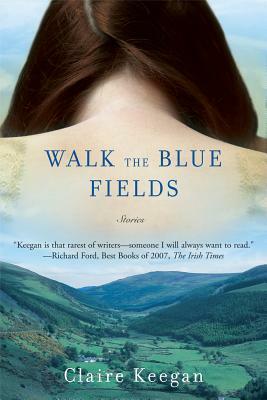
Walk the Blue Fields is a collection of short stories by Claire Keegan that I think was published earlier than another collection I read. It contains seven stories, one of which I already read.

In “The Parting Gift,” a girl is leaving home for the first time, headed to New York. She is leaving an unhappy life with dark secrets, but she wishes for some indication of affection.

In “Walk the Blue Fields,” a priest presides at a wedding and goes through his daily business. But the bride was a girl he loved.

Brady’s behavior has caused a split with his wife in “Dark Horses.” Still, he tries to believe she will come back.

In “The Forester’s Daughter,” Deegan cares more for the lands and his old house than he does for his family. Before he married, he talked about the house to Martha as if it were a castle, but it is dark, crumbling, and damp. She considers leaving but stays, even after he does an unforgivable thing to her daughter—gives away her dog for money.

“The Long and Painful Death” is the story I read before, about a writer whose stay in a revered writer’s home is interrupted by an unwelcome visitor.

“Surrender” is about an IRA man, a sergeant, a man who other men fear. He receives a letter from his girlfriend calling it off because of his delays in marrying her.

“Night of Quicken Trees” starts out realistically enough, about an older woman who has inherited a cottage on the west coast of Ireland from her cousin, a priest. She is entirely alone, and her story is a sad one, but then it slowly becomes a mythic one.

I liked most of these stories very much. Keegan is a fluid writer. Her stories are spare without being bone bare. You never quite know where they are going.

Related Posts

Antarctica

Small Things Like These

So Late in the Day

Review 2560: #ReadingIrelandMonth25! The Country Girls

I have read many very long books lately, so I was relieved when I realized that I could read the first novel, The Country Girls, in my big volume of The Country Girls Trilogy for 1960 for my A Century of Books project. Not only that, but it would qualify for Reading Ireland, too! I will certainly read the other two novels at some time after I finish my project.

Just as another indication of the unreliability of Goodread’s list of books published for specific years, it had listed the trilogy for 1960, but all three novels as a single volume were not published until 1986.

Caithleen is 14 at the beginning of the novel, a naïve, gawky girl from Western Ireland. She adores her mother, but they both fear her father when he is drunk. Their house is falling apart, because her father routinely blows all their money when he is drunk and returns angry and violent.

The other girl is Baba, Caithleen’s frenemy, who bullies her in public and pulls nasty tricks on her but sometimes shows she likes her. Otherwise, her friends are older men—Hickey, who has worked for the family for years; the inappropriately behaving Jack, a pub owner; and Mr. Gentleman, who is middle aged and married but whom she likes.

Caithleen has won a scholarship to a convent school and is dismayed to learn that Baba is going, too. She tells Caithleen that scholarships are stupid, and her parents are paying her way, which obviously is better. Both girls are dreading going. Caithleen is suffering through a party at Baba’s house when People come to tell her that her mother is dead, having drowned crossing the Shannon when a boat sank.

The novel follows the two girls until they are 18 and get a room together in Dublin. All the while, Baba specializes in talking the more sensible and cautious Caithleen into situations where she gets into trouble.

This novel is a bit sad, a little funny, and true-to-life, as the naïve Caithleen follows more worldly Baba in their unusual friendship. Some tension is evoked by Caithleen’s continued friendship with Mr. Gentleman. I liked the novel very much and intend to read the other two of the trilogy.

Related Posts

Girl

Wild Decembers

A Girl Is a Half-Formed Thing

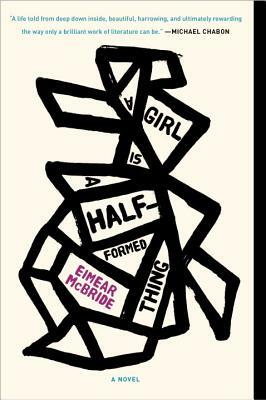
Review 2551: #ReadingIrelandMonth25! A Girl Is a Half-Formed Thing

I was going to review this book in February, but then I decided to hold it a few weeks so it could be part of #ReadingIrelandMonth25 hosted by 746 Books. This may be my only contribution, because I’m busy finishing my A Century of Books project. And now for my review.

When he was two, the unnamed narrator’s brother had brain cancer. To her mother’s mind, her praying rather than the surgery saved him, and she became extremely religious. Her father left, saying he couldn’t take it. So, she, the younger child, her brother, and her mother grew up in a sort of microcosm.

When she isn’t praying, their mother is full of anger, which is expressed at them, particularly at her. Their classmates think they are weird—he because he is slow and has a scar across his head, she because she scorns them and is intelligent. She doesn’t care, but he wants to fit in.

Then at 13, she begins a sexual relationship with an older relative that forms her later relationships with men around violence and mistreatment.

This book isn’t for everyone. For one thing, it is written in an experimental, half-incoherent style. It takes a while to get used to it. However, it is bold and bleak and ultimately it made me cry, which to me means it’s very good. It’s ground-breaking.

It contains scenes of verbal and physical abuse, sexual violence, and rape. Also, suicide and death. So be warned.

Related Posts

The Lesser Bohemians

Milkman

The Virgin Suicides

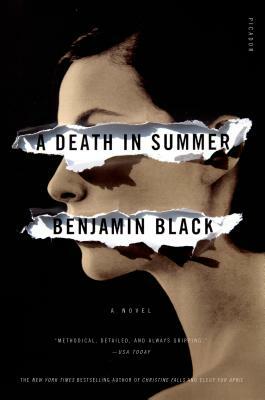
Review 2535: A Death in Summer

A Death in Summer is the fourth of Black’s series about Quirke, an Irish pathologist in the 1950s who helps his friend Inspector Hackett in some investigations. Although these are interesting mysteries, I’m beginning to be irritated by the cliché of Quirke’s drinking problem. This is the second book in a row where Quirke dries out or is already dried out at the beginning and then falls off the wagon.

Wealthy and powerful Richard Jewell is found dead in his home office. It is supposed to look like he committed suicide by blowing his head off with his shotgun, but it is obvious to both Quirke and Hackett that the man wouldn’t be still holding the gun if he had done it himself.

Jewell’s sister Dannie was at home as were some servants, but no one heard the shot. Mrs. Jewell, a French woman, says she arrived home after the house manager discovered the body. Françoise thinks her husband’s only enemy is another wealthy man, a Canadian named Carlton Sumners. Quirke attended university with both these wealthy men.

At this point, I began to wonder if Quirke was related to Inspector Morse (apparently the TV version only), because he immediately falls in love with Françoise, dumps his friend Isabel, and begins to have an affair with F. And by the way, you wonder how these male authors think, because the way Black describes Quirke, you wouldn’t think an elegant, wealthy Frenchwoman would want to jump into bed with him.

Quirke invites his assistant, David Sinclair, to dinner with his daughter Phoebe. Although both resent what they see as a clumsy attempt to pair them up, they begin seeing each other. David is a friend of Dannie Jewell, quite a disturbed young woman, and through him Phoebe meets Dannie.

As in a previous case, Quirke is warned off his investigations by a thug, Costigan. In the previous instance, when Quirke ignored him, he was badly beaten. This time, Sinclair begins receiving threatening phone calls.

Of course, there is a big secret that I personally didn’t find hard to guess once some of the pieces were in place. I might read the last book, but I am not sure if I will. Black is an excellent writer, but to have Quirke behave so stupidly in this one turned me off a little.

Related Posts

Elegy for April

The Silver Swan

Christine Falls

Review 2530: The Islandman

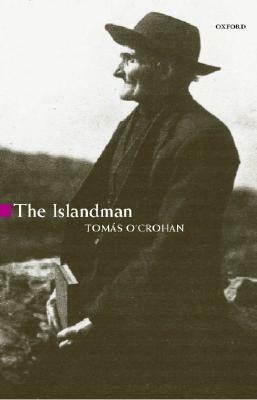
I read The Islandman to fill a hole in my Century of Books project. It is the memoir of a man who was born in the Blasket Islands in far Southwest Ireland, in 1856. The Irish edition of this book was a big seller in Ireland after it was published in 1929. The islands are now unpopulated as the government removed the last inhabitant in the 1950s.

The memoir is written as a series of anecdotes but in order of time. The existence of the inhabitants was a difficult one of mostly subsistence living. The people worked hard. Fishing was a major source of food, but scavenging shipwrecks was a source of subsistence and some income (money wasn’t much in use). Most families had a cow or two, hens, maybe pigs, and a donkey for hauling peat and seaweed. Patches of land were cultivated for potatoes and grain.

Although the people were poor, because of the fishing, they did well enough during the potato famine. However, they had many more difficult periods.

O’Crohan took to schooling but only had six years of school because there was no teacher on the island the other years. He of course spoke Irish but didn’t write it well until later in his life, when people started coming to him to learn the language.

This is an interesting account, especially as I’ve been interested in life on remote islands for some time.

Related Posts

A Stranger Came Ashore

The Unseen

This Other Eden

Review 2523: The Bee Sting

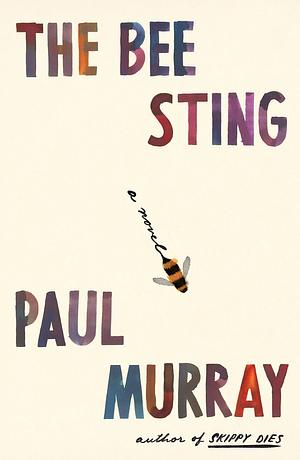
The Barnes family is having a difficult time. On the surface is a monetary issue because in the downturn no one is buying cars from the family dealership. But actually, each family member has been making poor choices.

The novel starts with Cass, the oldest child, who in the beginning is in the final year of school before starting university. She has long been best friends with Elaine, on whom she has a crush, but there are indications that Elaine is not as good a friend to her. Elaine gets interested in boys, and the two girls begin drinking at bars every night instead of studying for their leaving exams. Suddenly, Cass is sure she’s flunked her exams. If that’s not enough, she learns that her mother, Imelda, was engaged to her father’s brother and married her father soon after his brother was killed in an accident. The timing shows that her mother was pregnant for the wedding, so whose daughter is she?

The next section is about PJ, Cass’s preteen brother. He is disturbed because his parents seem to be always arguing since the business got into trouble, with his mother blaming his father. His friends have been dropping him, and a bully tells him his father ripped off his mother, so he owes him €163. PJ tries to collect the money while his attempts to talk about it to his family members are cut off by their preoccupations with their own problems.

Next is Imelda’s turn, in an unpunctuated section. Now that her husband, Dickie, is having financial problems, she begins to dwell on the past. Dickie’s brother Frank had been a golden boy—rich, handsome, good at sports, and charismatic—liked by everyone. But Imelda, although she comes from an impoverished, abusive background, didn’t love his money. She was madly in love with him. This section is more revealing about the circumstances that led to her wedding with Dickie. Now, she is furious, blaming Dickie’s poor salesmanship for their problems.

Finally, there is Dickie’s point of view. A family story that he went to Trinity only to be hit by a car on the first day and return home turns out to be completely fictitious. He had been a serious scholar and was happy in his university life. But then he was called home by his brother’s death. Now after acting the upstanding citizen for nearly 20 years, he begins to make some serious missteps.

Each section reveals more about the family secrets and the problems ensuing from this misguided marriage. This doesn’t necessarily sound like gripping material, but it really is. I was fascinated immediately. And the last 50 or so pages are unexpectedly suspenseful. Finally, the ending blew my mind. Not everyone will like it, but to me it is a great book.

I read this for my Booker Prize project.

Related Posts

Faith Fox

The Birds of the Innocent Wood

The Weird Sisters

Review 2484: The Heather Blazing

Eamon Redmond is a judge in Ireland’s high court. When the novel opens, he is reconsidering his decision in a complex case and at the same time getting ready to leave for his summer house in Cush. The novel follows him back and forth in time as he examines his relationships with his deceased father and his wife.

His wife Carmel complains twice in the novel that he is distant, and she finds him unknowable. Toíbín presents us with a description of his everyday actions and key moments in his life, but we never understand how he feels about these things. However, there is a warmer ending to this novel, in which there seems to be human interaction in his future.

The descriptions of the Irish coastline, where Toíbín himself spent every summer, are beautiful. And sad, because the landscape is changing—the cliffs are being eaten by the sea.

This is Toíbín’s second novel. It is moody, sometimes a little funny, but mostly sad. As with Toíbín’s character, I felt a bit removed from it.

Related Posts

The Empty Family

Nora Webster

Brooklyn

Review 2467: The Birds of the Innocent Wood

Jane has grown up with no one to love or to love her, which has made her have difficulties relating to others even though she is lonely. Her parents died when she was very young, leaving her to an unloving aunt, who put her in convent school when she was five. When she left school, her aunt only wanted her to take care of her in her old age. But Jane meets James, a young farmer, and hopes to make her own family.

Years later, Jane has died and her twin daughters, Sarah and Catherine, each have a secret that involves the other. They live with their bereft father on the farm, Sarah doing most of the work because Catherine is ill.

This is a beautifully written novel about people’s essential loneliness and unknowability. Madden is not a revealing writer. Rather, she offers glimpses into her character’s minds. This is a novel to ponder.

Related Posts

The Wren, The Wren

Faith Fox

Sight