Review 2638: #1925Club! #HYH25! The Informer

Twice a year, Simon of Stuck in a Book and Kaggsy of Kaggsy’s Bookish Ramblings host a year club, and this October the year is 1925. For this club, participants read a few books from that year and all post their reviews on the same week. Just by coincidence, this year the books also qualify for Neeru’s Hundred Years Hence Club.

Previous Books from 1925

As usual for my first post for the year club, I’ll start out by listing books I have already read for that year with links to my reviews, if I read them while blogging:

My Review

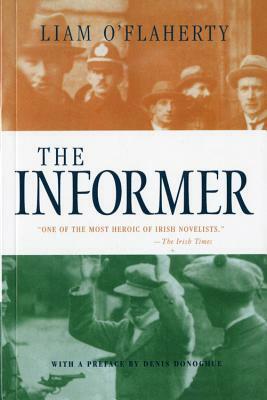
I picked The Informer for the 1925 Club without knowing anything about it or about Liam O’Flaherty. It was a winner of the James Tait Black award, written in the style of Naturalism and set after the Irish Civil War.

Francis Joseph McPhillip is a wanted man. He was a member of the Revolutionary Organization when he murdered the president of the Farmer’s Union during a strike. He and his friend, Gypo Nolan, were booted out of the Organization as a result, and Frankie has been on the run with a price on his head. But he has become tired of running and has returned to Dublin. The first thing he does is search out Gypo to ask if his parents’ house is being watched, and then he goes home.
Gypo is a brute—huge, strong, ugly, and very stupid. He has always done what Frankie told him to do. But ever since he got thrown out of the Organization, he can’t get work. He has no home, and no one will help him. He doesn’t have anywhere to sleep that night. He gets an idea. If he turns Frankie in to the police, he’ll have the reward money. So, he does.

The word is soon out that Frankie is dead, shot by the police at his parents’ home. Being an idiot, Gypo is running around town spending money on liquor and women. He just manages to come up with a story that he robbed an American sailor.

Even as an ex-member of the Organization, Frankie is still in its sights, as it is clear someone informed against him. Commandant Dan Gallagher is already looking at Gypo, because Frankie told his parents he had seen Gypo. Gypo is not very good at thinking, but he makes up a story that he saw Rat Mulligan skulking after Frankie in the street. But Rat has an alibi.
Naturalism isn’t my thing, and true to the literary movement, many of these characters are the dregs of society. It’s hard to empathize with a stupid fool who turns in his friend for a few bucks. Other characters are mostly street people—hookers, addicts, and so on—and those in the Organization who have a philosophy spit out half-digested rhetoric. Also, the ending of the book is over the top. A powerful book in its time, but not my thing.
Related Posts

Troubles

Last September

The Islandman

If I Gave the Award

With my review of English Magic, I have completed reading the shortlist of the 2022 James Tait Black Fiction Prize. That means it’s time for my feature, where I decide whether the judges got it right. This year is particularly difficult for me, because none of the books really clicked with me.

I’ll start with the winner, A Shock by Keith Ridgway. In my review, I quoted its pretentious back cover: “a rondel of interlocking stories . . . both deracinated and potent with place, druggy but shot through with a terrifying penetration of reality.” I reviewed this book two years ago, and frankly, I can’t remember a thing about it. It is a collection of short stories that I did not find engaging, centered around a pub.

English Magic by Uschi Gatward is another collection of short stories. I found it a mixed bag, although all of its details are minutely observed. Again, I didn’t connect with many of the stories, several of which were about political activism. Unlike A Shock, they didn’t seem to have any common themes or settings.

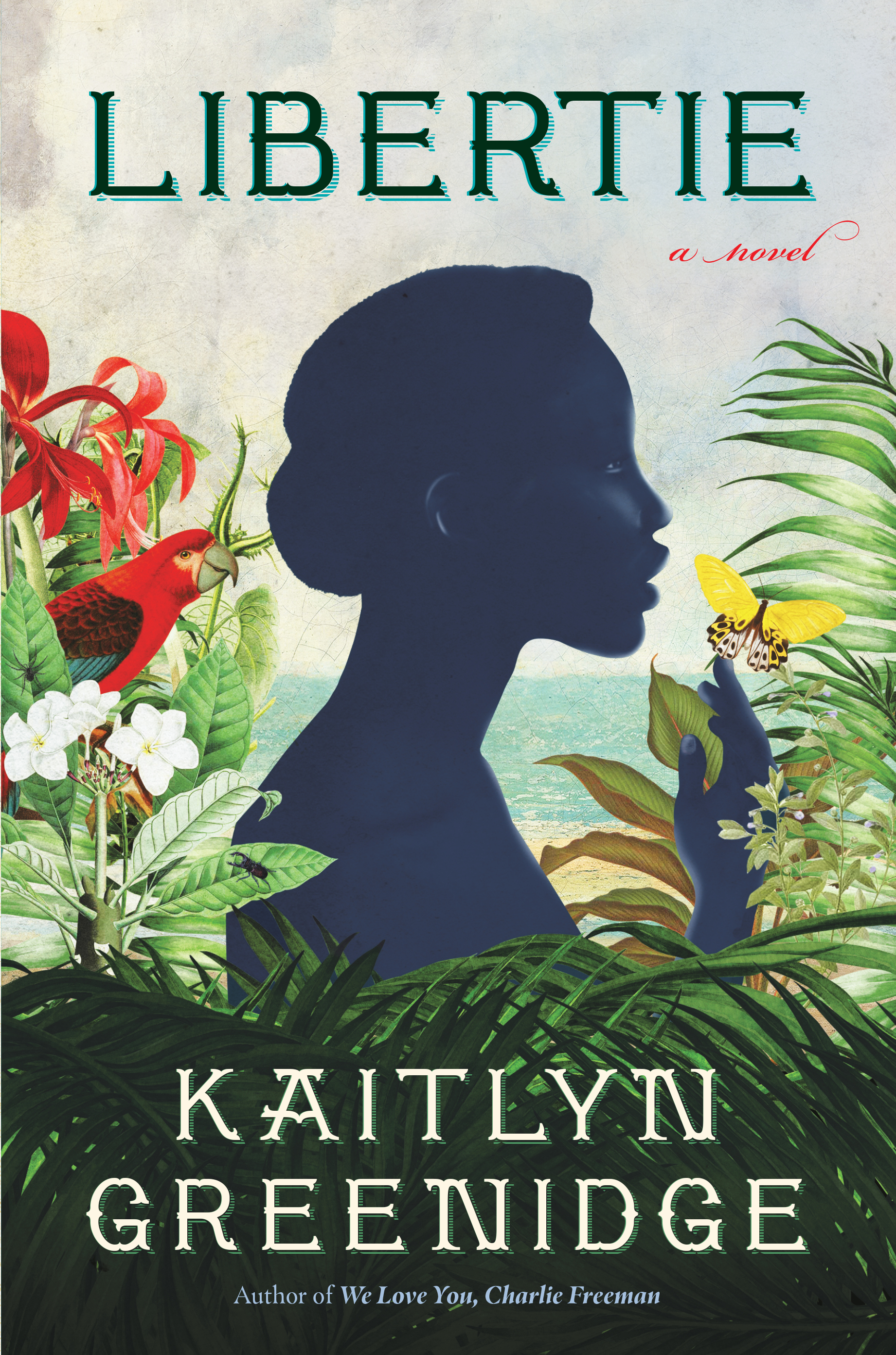
Libertie by Kaitlyn Greenidge would seem to be more my style, about a black young woman in pre-Civil War Brooklyn whose mother wants her to become a doctor. However, Libertie behaves like a spoiled modern young woman, and one of my pet peeves is a historical novel that has its characters behave out of their time. Libertie makes one bad decision after another, wasting her opportunities.

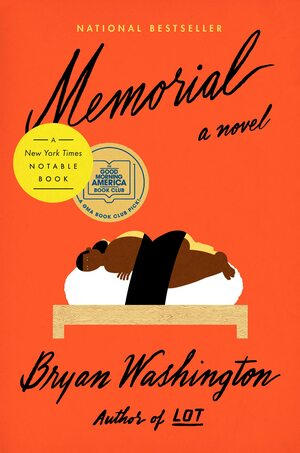
That leaves Memorial by Bryan Washington, about the relationship between two gay young men, one a black American and one Japanese, and their relationships to their families. Although its humor went over my head and I don’t like explicit sex, I found it perceptive and sometimes touching.

I am winding up this project, and I think I only have three books to read for the 2021 shortlist. My library hasn’t had any of them.

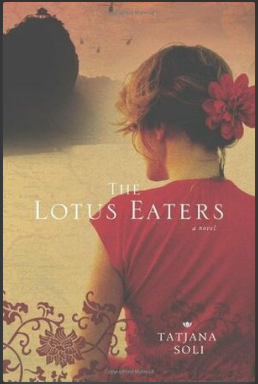
Review 2450: The Lotus Eaters

I’ve had The Lotus Eaters on my TBR list for a long time, so I finally decided to get a copy. Unfortunately, it turned out to be a DNF for me the first time. (But read on, because I eventually finished it. My review is in two parts.)

The novel begins with the fall of Saigon in 1975. War photojournalist Helen has left it late to try to get herself and her wounded husband, Linh, out of the country. Torn between trying to get photos of the fall and getting out safely, after a long, dangerous struggle to get to the American embassy, Helen gets Linh into a helicopter and then returns to the city.

The novel then moves back in time to 1965, when Linh has just been forced to rejoin the South Vietnamese army. On his first day back, he meets photographer Sam Darrow, who gets him appointed as his assistant. But on the same day, friendly fire destroys his village, including his parents and his pregnant wife. Linh deserts.

After months in Saigon, Linh gets a job with Life magazine by claiming to be Darrow’s friend. He ends up being Darrow’s assistant again. Then the focus of the novel shifts back to Helen and her arrival in Saigon as an inexperienced photographer.

First Review

I gave this novel 100 pages, but although I was interested in the setting, I just didn’t care about these characters. And although Soli does a good job of describing some things, I just wasn’t feeling the setting or getting engaged in the story. This seemed like a mediocre attempt at historical fiction. Things didn’t come to life.

I realized later that this book was part of my James Tait Black project, so I should have tried to finish it, but I didn’t.

Second Review

I gave The Lotus Eaters another try after I realized it was not only part of my James Tait Black project, but it had won the award that year. When I quit reading, it was because I assumed that the novel was mostly going to be about Helen’s romantic relationships with married photographer Sam Darrow and then with Vietnamese photographer Linh, and I wasn’t at that point that interested in them. However, it turned out to be more about Helen’s growing love for the country and whatever it is that makes people risk their lives to get photos of dangerous events.

Soli is good at evoking the landscapes and scents of Vietnam, as well as the dangers. Although I became interested enough in the story to finish it, I still felt a considerable distance from the characters. I was most interested in Linh, but we only see from his point of view briefly at the beginning and end of the novel, and after all he goes through, his most defining characteristics are loyalty and love for Helen.

So, I still only liked this novel somewhat. I couldn’t help contrasting it with the recent movie Civil War, also about photojournalists and much more gut-wrenching.

Related Posts

Lyndon Johnson and the American Dream

In the Lake of the Woods

Perfume River

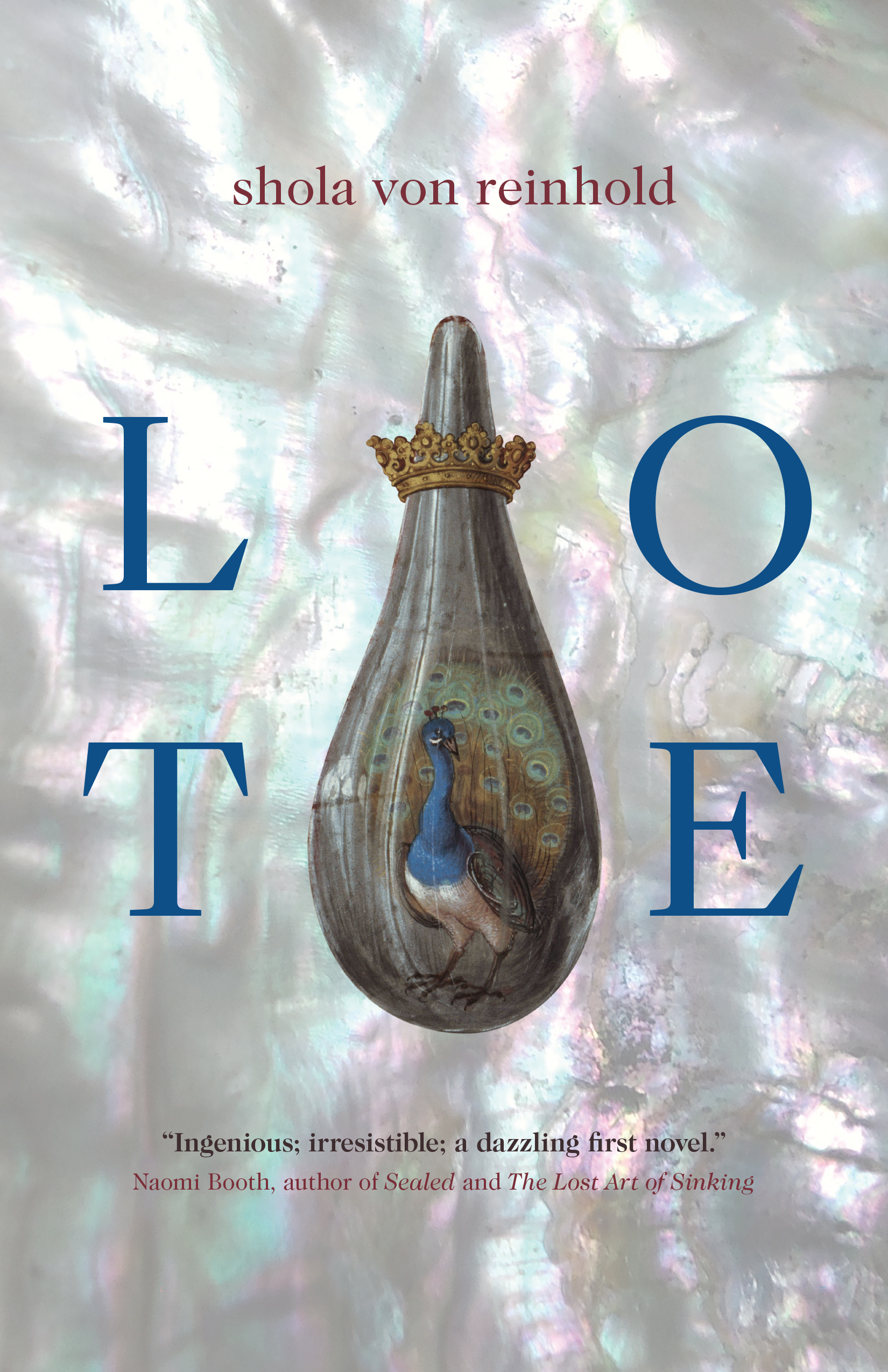
Review 2245: LOTE

This is a very unusual book, and von Reinhold has created an unusual protagonist in Mathilda.

Mathilda worships beauty, a particular baroque, florid kind of beauty. Black, gay, and from a poor background, she is trying to work her way into higher echelons of society to live an opulent life. She periodically becomes obsessed with different figures from the 20s and 30s, Black artists in the periphery of the Bloomsbury Circle, and doesn’t so much research them as immerse herself in them. She calls them her Transfixions. The latest is a Black poet named Hermia Druitt.

Because Mathilda does not always earn her money honestly, she has to sometimes change her identity. She’s been staying in a vacant flat of a friend who is away when her host returns and meets neighbors who know her as Sadie. She has just lost a job at an archive because it wasn’t an official position. She needs somewhere to live and some money, so she thoughtlessly applies for an artists residency that she sees is located in Dun, a town in Europe where Hermia lived. To her surprise, she gets it.

When she arrives in Dun, she finds the town enchanting but the residency dire. The other residents seem to be uniformly drab, so much so that at first she fears she has unwittingly applied for a business residency. They always carry around textbooks written in incomprehensible jargon and speak in that jargon. Mathilda continues her search for evidence of Hermia while pretending to do her work on the residency.

Behind the bemusing and sometimes funny portrait, von Reinhold has a serious theme—the erasure of Black European culture from the public consciousness. A good deal of Hermia’s story is told by excerpts from Mathilda’s Bible, a book called Black Modernisms. Sometimes this novel was a bit esoteric for me, but it was always interesting. I read it for my James Tait Black project.

Related Posts

Heads of the Colored People

The Hours

How to Be Both

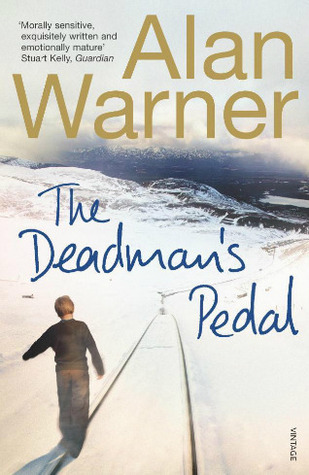
Review 2168: The Deadman’s Pedal

I had a few thoughts when I began reading this novel that weren’t necessarily connected with how well I liked it. One was how much male writers and critics love coming of age stories, at least if they’re about boys. If they’re about boys, they’re literary fiction (hence the James Tait Black prize win). If they’re about girls, they’re women’s fiction. Take Philip Roth, for example. He’s written the same novel over and over, and back at the turn of the century, he was the only writer who appeared twice in Time magazine’s list of the 100 Best Books of the 20th century. This coming of age novel was one I read for my James Tait Black prize project.

My second observation was more personal. In the beginning of the novel there is some joking around between 15-year-old Simon Crimmons and his friends. Now, I know that at this age a lot of things are said between boys to impress each other, but I found the way they talked about girls disturbing. I actually asked my husband if when he was this age, boys talked this way, and he said no. But he would have been about ten years older than these boys at the time these scenes are set in 1973. Everything they said was so objectifying, it’s no wonder young girls have image problems.

Anyway, Simon is nearly 16 at the beginning of the novel and wants to quit school and get a job. His father owns a fleet of trucks, but Simon can’t work for him until he is 18, so he ends up accidentally applying for a railroad job. His parents are very much against his quitting school, but he is headstrong. Another title for this book might be “Adolescents Making Poor Decisions.”

Simon seems to be a grounded individual who knows who he is, but even as he is getting sexually involved with his girlfriend, Nikki, he meets Alexander and Varie Bultitude and is fascinated by them. They are the teenage children of the area aristocrats, and they seem much more fluid in nature, trying on the hippie look of the times. Simon and Alexander have books and music in common, but we get the sense that to Alexander, Simon is just a way to spend time while he’s home from school. Simon and Varie, on the other hand, have little in common. She’s interested in horses, geology, and the occult. But she is beautiful and he’s fascinated by her.

Much of the novel is about class. Simon complains once that he is too middle class for his fellow railroad workers and too working class for the Bultitudes. Varie is surprised to find he lives in the largest house in his village, and she mistakes his mother for the gardener. His parents have worked their way up from the working class and are dismayed to see him going back down.

Warner seems to have captured the banter of the railway men and the dynamics of small-town Scotland, remote Scotland, too, where they are nearly at the end of the railway line.

I became more interested in this novel when it moved away from Simon’s school friends, especially the frightful Galbraith, to the working world of the railroad. However, I wasn’t much interested in the adolescent obsession with sex.

Related Posts

The Rehearsal

Young Mungo

The Bass Rock

If I Gave the Award

Having posted my review of the last shortlisted book for the 2018 James Tait Black Fiction Prize, I think it’s time for my feature where I discuss whether the judges got it right. The four entries for this year are disparate and for each of them, I have both positive and negative reactions. In fact, this is so much the case that I hardly know which book to start with or to pick. I’ll just work my way toward the winner.

I guess I’ll start with First Love by Gwendolyn Riley, because I’m still not sure what Riley meant by the title. The novel depicts the main character’s two abusive relationships, one with her older, ill husband and the other with her first boyfriend. Although these depictions are realistic, the theme doesn’t give the reader much to like.

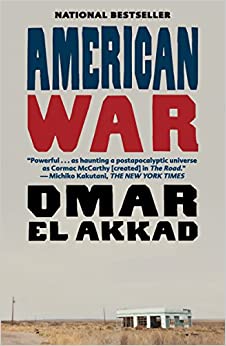
American War by Omar Al Akkad was not my genre, being a dystopian novel about the results of climate change and about how young people are radicalized for war. However, I found it completely engrossing, despite disliking its themes.

White Tears by Hari Kunzru is about a relationship between two young men in college who form a friendship and a company based on a mutual fascination with sound. However, it turns out that that neither the narrator nor the reader understands what is going on, and the novel gradually moves from complete realism to having a strong supernatural bent. Although this novel flagged for me at times, its ending was so unexpected that Kunzru was the only author of these four from whom I wanted to look for more to read. (Although this reminds me that I have not yet done that.)

The winner of the award that year was Attrib. and Other Stories by Eley Williams. I can understand the judges’ choice, because this collection is so playful with language. Still, I only had a strong reaction to a couple of the stories and felt that its playfulness was beyond me at times. Also, I often struggle with short fiction.

So, which book did I think should get the award? I had the biggest reaction to White Tears, but didn’t think I should give the honor to a book that flagged for me at times. American War was the only one I called engrossing, but it was also really not the kind of thing I like to read. Attrib. and Other Stories was way above my head at times, but at other times it was funny and endearing. I think for this shortlist, I’ll recommend that, if you want to read one, pick the one that sounds most interesting to you. That’s right. I am totally copping out.

If I Gave the Award

Having just posted the review for the last of the shortlisted books for the 2020 James Tait Black Award, I find it is time for my feature, where I decide if the judges got it right. This time it’s going to be a hard one, for none of the nominated books struck much of a chord with me. Usually, I judge the books by how I reacted to them, as most people would do, I think.

Often, I start with the book I liked least, but I am not even sure which one that is. So, I guess I’ll start with the winner, Ducks, Newburyport by Lucy Ellman. This book is by far the most experimental of the four shortlisted books, which I’m guessing is why it’s the winner. It is mostly one 1000-page sentence—except for short passages of regular narrative—and it breaks just about every rule of fiction I can think of. I felt that Ellman got details wrong for her character, a middle-aged American Midwestern housewife. She seemed too old and too British. The novel was compelling enough in an odd way for me to finish (that is, I kept wondering why I was still reading it), but didn’t have much of a payoff.

A lot of people are calling linked short stories novels these days. The James Tait Black award is for fiction, but almost every entry I have read so far has been a novel or a novel of linked stories, so Sudden Traveler by Sarah Hall is an anomaly. That is, it is definitely a collection of short stories rather than linked stories making a novel. Some of these stories are slice of life and some quite fantastical. Although I liked another book I read by Hall, I am not generally so comfortable with short fiction (although I like the linked story novels) or with the fantastic, and I found some of the stories perplexing. If this book had any overarching theme, I guess it might be girl power.

Although I liked Girl by Edna O’Brien, it is definitely the least experimental of all the entries. It is a very short, straightforwardly told story about a young Nigerian girl who is kidnapped and the results of that even after she is returned to her family. O’Brien’s writing is beautiful and the novel is affecting.

I’m ending with Travelers by Helon Habila, a novel of linked short stories about the plight of African refugees in Europe. Does that mean I liked it best? I’m not even sure. If I had to pick a winner, I guess it would be either Girl or Travelers. I had more of a response to Girl but think it is slighter than Travelers. Do I think the judges got it right this time? If they are awarding for experimentalism, maybe, but I’m not even sure whether Ducks, Newburyport deserves all the accolades it got. I think that sometimes reviewers in any genre of media get excited because something is different, and this may be a case of that.

Review 1759: White Tears

You may think you know what’s going on in White Tears, but you don’t. Kunzru provides a few clues to that effect, but it’s easy to glide right over them.

Seth is a nerdy outcast in college when he meets Carter Wallace, a good-looking, popular rich kid. The two bond over sound and music. Seth has been immersing himself in techno when Carter introduces him to the gritty sounds of old-time Black country soul on vinyl and even older 45s.

After college, the two form a recording company, with Carter as the face and Seth doing the creative work and sound engineering. They are beginning to become famous for an old-fashioned sound, produced entirely by analog instruments. But Seth notices Carter losing focus and becoming more engaged with collecting.

One day, Seth is indulging his hobby of walking around New York recording noises when he catches someone singing part of a blues song, “Believe I buy me a graveyard of my own.” He plays it for Carter, who becomes obsessed with it. Carter uses the fragments from Seth’s recording to make what sounds like an old-time record, complete with cracking noises. Then he mocks up a picture of a 45, invents a singer, Charlie Shaw, and advertises the fake record on a collectors’ website.

What starts out as a seemingly harmless prank has serious consequences. Soon, apparently meeting a collector who wants to buy the fake record, Carter is severely beaten and left in a coma. Seth finds out his company and their apartment are both owned by the family corporation, and he is immediately dispossessed, the family claiming he is just a hanger-on. But Seth and Carter’s sister Leonie want to know what happened to Carter.

This novel is dark and unexpected. At first, I wasn’t so interested in the story about Carter and his fanboy Seth, neither of whom are that likable, but eventually I got sucked in. Again, it’s a novel I wouldn’t have chosen for myself, but I read it for my James Tait Black project.

Utopia Avenue

Telegraph Avenue

Mortal Love


If I Gave the Award

Having just posted my review of the last book on the shortlist for the 2016 James Tait Black fiction prize, I am now posting my feature wherein I examine whether I think the judges got it right. In this case, of the four nominees, I liked two and disliked two.

I’ll start with the winner of that year’s prize, You Don’t Have to Live Like This by Benjamin Markovits. I felt that it handled its themes of racism and gentrification poorly and employed constructs of magazine writing that don’t really work in fiction. It also seemed bogged down by lots of ineffective and inconclusive conversations between characters and by an ineffectual main character.

The other book I didn’t really enjoy that much was Beatlebone by Kevin Barry, a fantasy about John Lennon visiting Western Ireland. Not much happens in this book, and what does happen, I didn’t find interesting. Although the novel is very well written, I thought it seemed like fanboy fiction.

The First Bad Man by Miranda July tickled my funny bone, with its plethora of eccentric characters. I found this novel bizarre but touching.

I would have given the prize to The Wolf Border by Sarah Hall. It’s about the isolation of an emotionally detached woman and events that allow her to open the door to the people in her life. I found it thoughtful and vital.

Review 1591: Ducks, Newburyport

The unnamed narrator of Ducks, Newburyport is a 40-something Ohio housewife who works from home making pies and cinnamon rolls for restaurants. She is a survivor of cancer, and she and her husband Leo are both working very hard to pay off her medical bills. She has four children, a sulky teenager, Stacy, from her first marriage and three young children from her second.

Ducks, Newburyport consists mostly of her mental ramblings as she goes about her day, a timid woman who rarely speaks her mind and is obsessed by her failures as a parent and daughter and by violent incidents in the news. The book almost completely consists of one 1,000-page sentence, if you can call a bunch of phrases beginning with “the fact that” or sometimes just lists of words a sentence. Periodically, this monologue is broken by a few paragraphs about a female cougar and her cubs.

Ducks, Newburyport breaks just about every rule connected with literature. It breaks the Strunk and White rule about not using “the fact that” about 50 times per page. It uses no traditional sentence structure or paragraphing except in the lion sections. It breaks notions of narrative. (It’s not stream-of-consciousness.) And it has a plot, sort of, but not in the traditional sense. I’m not sure if the novel is an elaborate joke or just Ellman thumbing her nose at the rules and winning awards while she does it. Lots of people have compared it to Ulysses, but Ulysses is more poetic. The narrative style alone may drive you nuts.

I noticed that Ellman gets a few things wrong. Some are to do with the age of her character, who makes lots of cultural references, many of which are too old for her. Certainly, the narrator is interested in old movies and songs, but the mistakes I’m talking about have more to do with Ellman being closer to my age than her narrator’s. She talks about everyone having their tonsils out when she was young, but that’s a 50’s or early 60’s thing rather than an 80’s. And similarly, she says just about every woman in America is on hormone replacement therapy, but that wasn’t even being prescribed as much when I was hitting menopause, and I’m older than Ellman. Some of her verbal habits, like calling underwear me-oh-mys just seem ridiculous and old-fashioned. Of course, this last could be characterization.

I also thought Ellman has been living in the U. K. too long to get an American housewife quite right. Just a small example is her repeated references to Bath Oliver biscuits. I doubt if many Americans know what those are, even if they’ve eaten them. I had to look them up, and I have eaten them. In general, as well, Americans don’t eat beans on toast, a phrase that she repeats excessively. Of course, again, that could just be a phrase that’s lodged in her head.

These are small things that you’d think her editor would have caught, if editors even edit anymore.

Did I like it? As soon as I got a feel for what the novel would be like, I assumed I wouldn’t finish it and kept waiting to decide to stop reading. But I found it oddly hypnotic, and I finished it. I found the narrator annoying as well as unreliable. She says she doesn’t remember things, but 80% of the novel is her memories. She also says she doesn’t remember her dreams and then relates them to the tune of several a page sometimes—another rule broken—which I found irritating, because I don’t like reading about dreams in fiction.

Would I read it again? No way. Does it deserve two (at least) prestigious literary awards? I have no idea.

Related Posts

4321

Milkman

The Lesser Bohemians