Wrap-Up for My James Tait Black Project

Announcement of a Review-Along!

Before I plunge into my topic, FictionFan and I are announcing a Review-Along of the works of Henrik Pontoppidan, the Danish Nobel Prize for Literature winner (1917). We both chose his most famous book to read, A Fortunate Man (also known as Lucky Per), but readers are welcome to choose any of his works that are available. We’re aiming for March, as A Fortunate Man is a real doorstopper! See the details at FictionFan’s announcement post here!

James Tait Black Fiction Prize Wrap-Up

A few years ago, I decided to add the James Tait Black Fiction Prize to my shortlist projects. However, after a while I felt like I was reading too much British fiction as opposed to American or fiction from other countries, since all my prize projects were Brit-based and I also read a lot of reprinted British fiction. So, I dropped the James Tait in 2023 and added the Pulitzer Prize for Fiction. For the James Tait, I started my list back a few years, at 2010.

When I was just trying to wrap up this project by finishing the few books I had left to read, some fellow bloggers asked me if I would provide a wrap-up post for my reading. So, here it is, for the shortlisted books from 2010-2023, I know I’m finishing a few years later, but many of the books for this project were never available from my library, so I waited to see if they would become available and at the end, had to buy them. That hasn’t been a problem with my Booker or Pulitzer projects, although it has sometimes affected my Walter Scott Fiction Prize project.

The Data

Thanks to a request by FictionFan, I am providing data about my project. I am not a data person, so bear with me.

I began this project October 6, 2017, and decided to wrap it up in 2023. I finished reading on October 4, 2025, but it’s taken me this long to schedule the final two reviews. I posted my last review last Thursday, November 20, 2025.

Number of books read for project: 57

Ratings in The StoryGraph

Keep in mind that until 2025, I stored this data in Goodreads, which does not allow fractional ratings. There were only two books in the list that had fractional ratings, so I rounded them down. I am not really happy with 1-5 ratings, because to me, a 3.25 rating (a little bit better than 3, which is my meh rating), for example, is a lot different than a 3.75 rating (almost a 4).

Yes, I made some charts! It’s been a long time since I used Excel, so pardon me for any awkwardness. As you can see below, most of the books were rated either 3 (green) or 4 (blue).

Author Information

Number of female authors: 34; Number of male authors: 22

Note that one author made the shortlist twice.

I made a chart for author nationality. This chart is off by one because Sarah Hall is listed twice in my data, and I couldn’t figure out how to exclude one of her from this chart. So, there is one extra count for “English.” I used nationality as listed in Wikipedia, which for some authors listed two. Where are the Canadian authors, guys?

Settings

This answer was difficult, because some settings were unspecified while other books were set in several places, and one was just “Europe.” The chart I generated was unpleasing, so here is the data entered by hand for number of books in a setting:

U. S.: 17
England: 13
Ireland: 2
Scotland: 2
Multiple countries: 9
Unspecified: 5

Only one novel is set in each of the following countries: Kosovo, Bulgaria, Italy, Spain, Nigeria, Russia, Japan, Uganda, and Vietnam.

Genres

This section is problematic, I know, but I decided to add it at the last moment. The problem is that genres are so fluidly described these days that I could have a different list for each book! I tried for broader categories and used a search when I needed to, but sometimes I got as definitive a genre as “novel.” I also realize that short fiction could also fit into one or more of these genres, but I didn’t go there. I didn’t want to deal with specifying more than one genre per book. So, I did my best. Here is the genre breakdown I came up with. I was surprised by how many of the novels were historical, although I know it has recently become a very popular genre.

How Much I Liked Them

I wasn’t sure how to organize this section, so I decided to break it up into categories by how much I enjoyed the book. So, with no more adieu . . . These books are ordered by year of the prize, with the earliest first. For the most part, you will see that the category I put a book in has no relationship to whether it won that year or not. Winners are marked in red.

Books I Loved

Books I Highly Recommend

Books I Moderately Recommend

So-So or Even Meh or Some Good Stuff

Books I Actively Disliked or That Annoyed Me

Best and Worst

The best book choice is tough, but I pick Wolf Hall by Hilary Mantel. It captured me every second and was minutely researched.

The worst book choice is easy, the only one I didn’t finish, You & Me by Padgett Powell. Who needs to rewrite Waiting for Godot anyway? And so unfunny.

Review 2652: Alligator & Other Stories

Alligator & Other Stories is the last book I had to read to wrap up my James Tait Black project. It is a collection of nine stories by Syrian-American writer Dima Alzayat, all with a theme of dislocation.

I was nearly brought to tears by the first one, “Ghusl,” about a woman preparing the body of her younger brother for burial, against tradition. The woman’s name is Zaynab, and I believe she is the same woman we read about in later stories.

“Daughters of Manät” (does it mean “destiny”? all I could find was a definition of the word without the diacritical mark) also brings in Zaynab as the aunt of the narrator, but it begins with a woman stepping out of a window, presumably committing suicide. This act indicates a shift of point of view between telling the story of Zaynab and whatever else is going on, but that’s just it. The rest is beautifully written, but I found it a bit opaque.

“Disappearance” is the only story that doesn’t seem to contain characters of Middle East origin unless one is Etan, a boy who has disappeared. The story is written from the point of view of a young boy who is not allowed to leave his New York apartment building during the summer that Etan disappeared.

In “On Those Who Struggle Succeed,” a young college graduate makes compromises, including hiding her Lebanese ethnicity, to try to succeed at a company.

In “The Land of Kan’an” an Egyptian man living in Los Angeles tries to overcome his predilection for men as sexual partners.

“Alligator” is a long story that shows America’s history of racism through newspaper clippings, interviews, and testimony, reverting many times to the killing of a Syrian grocer and his wife in Florida by the police in 1929. Although it employs the technique, becoming more common, of using documents to tell its story, I think it is overly long and a bit redundant. I hadn’t realized until reading it, though, that there was a large emigration of Syrians in the early 20th century and that they were treated like my Irish ancestors were in the late 19th century.

“Summer of the Shark” is from the point of view of a young man of Jordanian descent working in a call center on 9/11.

In “Once We Were Syrians,” Zaynab makes another appearance as a grandmother tries to explain to her granddaughter what her Syrian heritage means.

In “A Girl in Three Acts,” a teenage girl in foster care reconnects with the Christian Syrian family that ostracized her branch of the family when her grandfather converted to marry a Muslim girl.

I found the first and last stories most affecting. The stories are beautifully written, but since short stories are not really my thing, I’d like to see a novel by Alzayat.

Related Posts

Travelers

Unaccustomed Earth

In the Eye of the Sun

Review 2650: The First Woman

The First Woman is one of two books left in my James Tait Black Prize project, which I began winding up in 2023. I’ll come right out and say that although I’m sure many people will enjoy reading the book, it was not really for me at times. I had trouble getting through it, although I found the end more interesting.

First, I don’t really enjoy dreams in novels, and at the beginning there are plenty of them. Also, although I may read a volume of folk tales, I don’t always like them mixed in with my fiction. However, I understand that here, they are a strong part of the culture portrayed.

At the beginning of the novel, Kirabo is a thirteen-year-old Ugandan girl. She is just beginning to enter womanhood even though she and her best friend Giibwa are still playing with dolls. Perhaps it is the upcoming passage that has made her wonder about her mother. All she knows is that her father, Tom, brought her home to his parents when he was attending university, and they raised her. When she asks about her mother, no one tells her anything, so she decides to consult Nsuuta, the witch.

Nsuuta and Kirabo’s grandmother, Alikisa, don’t speak, so Kirabo is surprised to find out that once they were best friends. Nsuuta is reluctant to talk to Kirabo, but she is plainly lonely and blind, so she agrees to talk to her if she will come for lunch. But she mostly tells her folk tales with a feminist bent.

I have to say that at this part of the story I was a bit shocked by Kirabo’s immersion into sexual considerations. Not that she does anything sexual, but, for example, as soon as she has her first period, she is told how to stretch her labia so she’ll have more pleasure from sex—about a week after she had her baby doll out! I read more about labia in this section than I have in any book except one by Simon Mawer.

Kiribo is about to have a shock. Tom has been telling her he is going to take her to the city to live with him. One day shortly before she is to start school at a secondary boarding school, he tells her to pack and takes her away. But when they arrive at his house, she finds he is married with two children she never met before and her stepmother doesn’t want her in the house.

The novel follows Kirabo for several years in the 1970s and 80s while she tries to reconcile the demands of her patriarchal culture with her desire to be educated and have a career. It also covers the effects of the reign and overthrow of Idi Amin, when, for example, Kirabo’s boyfriend Sio’s father is murdered because he has a Tanzanian wife.

After the almost purely sex- and marriage-related first half of the novel, I was more interested in the second half. However, about 75 pages go back in time to when Kirabo’s grandmother was a girl, to explain what happened between her and Nsuuta. I thought this material could have been covered more effectively in a story lasting a few pages.

Related Posts

Girl

Something to Hide

An Orchestra of Minorities

Review 2618: English Magic

I read English Magic for my James Tait Black prize project, which I have been trying to wrap up—or let’s say intending to wrap up but not doing much about it. The book is a slim volume of 12 short stories.

Repeat readers of my blog may know that I sometimes have problems with short stories. Generally, this is because if I am enjoying something, I want it to last. I had problems with some of these stories for other reasons.

“The Clinic” is a mysterious story. It seems to be set in a dystopian future. A couple has a baby who is very advanced, and they are trying to hide that from the clinic at which they apparently have mandatory visits. Their plan is to run away and hide somewhere in the woods. I think this story was intentionally written to leave readers with lots of unanswered questions, but I found it frustrating, and I can handle a lot of ambiguity.

“My Brother Is Back” continues the air of mystery. It’s about a Muslim being returned to England after years of imprisonment in the U. S. It’s written like a snapshot of time.

I stopped reading “Oh Whistle And” because of its style. It’s a fairly long story written in snippets of reports about surveillance of unions and socialists and about whistle blowing, mentioning Edward Snowden. All the characters, if you can call them that, are referred to by single letters of the alphabet. I lost track of who was who almost immediately, and the snippets were driving me crazy.

And skipping way ahead, Gatward uses almost the same approach for “Lammas,” except the snippets are pieces of conversations. This story is about a man’s long life in activism. It was difficult for me to track what I took to be real events, but I think it went back and forth in time. I finished this story.

“Beltane” is a slightly surreal story about a couple who join a Beltane ceremony, and related to that is the story “Samhain,” about a woman’s unique way to celebrate Halloween. Or is it a sinister way? I found both stories interesting.

“The Bird” is about a bird trapped in a couple’s chimney. Both it and “On Margate Sands” are vivid snapshots again, just capturing small events.

I won’t cover all the stories, but I will mention two that feature the same character. In “Lurve,” Ollie is an artist, not a successful one, who hangs out with Lottie and Jeanie, two party girls, and occasionally writes art reviews. He and his friends live in squalor. He is in love with Jeanie, but she doesn’t care.

We meet Ollie again in “Backgammon,” in which he is hanging out with his old girlfriend Ria. Ria used to be an addict, but she is getting her act together. Ollie is not an addict, but he realizes his act is not together.

Overall, I felt indifferent to many of the stories, although they are minutely observed and well written. I’m guessing the title is ironically intended.

Related Posts

The Candy House

In a Strange Room

Sudden Traveler

Review 2481: Memorial

Benson is a young Black gay man living in Houston with his Japanese boyfriend Mike. When Mike’s mother is due to arrive for a visit for the first time in years, Mike tells Benson that his father is dying and he’s going to Osaka to be with him, leaving his mother with Benson, who has never met her before.

While Benson navigates the situation with Mitsuko, Mike’s mother, he also considers his relationship with Mike, which has been deteriorating lately. For his part, Mike must work through his resentment that his father deserted him and his mother when he was a teen. That, and Eiju’s general prickliness.

This novel explores the difficulties both men have had with their families and their relationships with each other. Each man also tentatively begins getting to know another gay young man.

Although this novel is supposed to be funny, the humor went right over my head. I found it perceptive and sometimes touching, although I am not a fan of explicit sex scenes. I read it for my James Tait Black project.

Related Posts

Real Life

Edinburgh

Murmur

If I Gave the Award

Cover for The Thousand Autumns of Jacob De Zoet

I’m way behind on finishing the shortlisted books for the 2011 James Tait Black prize, but now that I have, it’s time for my feature, where I say whether the judges got it right. This year’s shortlist is unusual, because it contains three historical novels out of the four. It’s also going to be difficult from my perspective because I loved two of the books on the shortlist, but I haven’t read one of them since 2012.

Let’s start with my least favorite book. That one is La Rochelle by Michael Nath. This novel has a vestigial plot about a missing girlfriend and a friend’s obsession with her. But mostly it is about the main character, whom I found unpleasantly fascinated with women’s anatomy and not afraid to say so. The novel deals with nights of drinking too much with the missing women’s partner until the main character finally does something different, ending a labyrinthine scheme that I thought was silly and absolutely unnecessary.

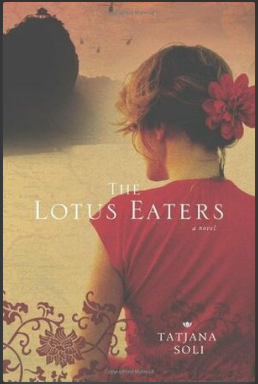
Next is my second least favorite of the four, which was the winner for that year, The Lotus Eaters by Tatjana Soli. When I originally started to read it, I had forgotten why I was reading it and took it for a standard historical novel about a woman photographer’s affairs with a married man and then with his assistant. However, it turned out to really be about the experience of being a war correspondent during the Vietnam War and the main character’s growing love for the country. After giving it a second try, I finished it, but I still felt quite a bit of distance from the characters.

Now we get to two favorite books. The first one was the book I read long ago and for which I wrote my fifth review for this blog, The Thousand Autumns of Jacob De Zoet by David Mitchell. Although it had hints of the sci-fi time travelers that he incorporates into most of his novels, at that time I had only read one other book by him, and the focus on historical fiction was so strong that I didn’t notice them. The main character is an employee of the Dutch East Indies company in 18th century Japan. He is fascinated by the culture, even though the Dutch are restricted to one island off the coast and the Japanese are generally not allowed on the island. He falls in love with a Japanese girl who is allowed on the island as the student of a Swedish physician. When he refuses to participate in his boss’s graft, he is deserted on the island and makes his way to the main island. I found the descriptions of the customs and laws of Japan at the time really interesting, and the book becomes an adventure.

But another type of adventure is experienced by the main characters of The Invisible Bridge by Julie Orringer. This novel was based on the experiences of her grandparents during World War II. The main character, a Hungarian Jew, arrives in Paris in 1937 to study architecture, but he soon loses his scholarship because of anti-Semitism. He also meets an older woman with whom he falls in love. This novel becomes one of great breadth, covering events of World War II, the Hungarian Holocaust, life in work camps, and the siege of Budapest.

I so much enjoyed both of these last two novels that it’s hard to pick, but I choose The Invisible Bridge, simply because of its depth and breadth, and also just slightly because I have a vague recollection that The Thousand Autumns of Jacob de Zoet eventually goes to some places that were a bit unbelievable.

Review 2452: La Rochelle

Mark Chopra is a neurologist who lives alone and has apparently never had a partner. He also seems at first to have no friends except a much younger couple, Ian and Laura. The draw there is Laura, with whom he is in love. As for friends, it gradually becomes clear that he has other friends, but he disregards them.

Mark judges the stories Laura has told him and his own observations and thinks that Ian doesn’t treat Laura the way she deserves. At the pub at the start of the novel, Ian tells Mark that Laura has left him to think about their future. He doesn’t know where she is and doesn’t look for her, saying she’ll come back when she’s ready.

Mark is a highly intelligent person who tends to overthink things. He starts worrying about Laura, thinking she could have had an accident or even have been kidnapped. But he does nothing except hang out with Ian every night, getting so drunk that he can’t remember things and smells like booze at work. He ignores the warnings of coworkers (his other friends that he doesn’t seem to recognize) about his job.

Toward the end of the novel, Mark finally does something, but the trip there wasn’t pleasant for me. Mark is not a reliable narrator. He knows more than he tells until toward the end of the novel. But I also found him an unpleasant person. Despite being, he finally claims, willfully abstinent, he seems to think of women only in terms of sex. He meets a couple and immediately wonders how often they have sex. He makes constant demeaning comments about female anatomy. He expresses his gratitude toward a female friend and coworker by mentioning her bra size! Is this supposed to be a side effect of Mark’s lifestyle choice? Is it supposed to be funny? I have no idea. I found this character to be deeply unpleasant despite his desire to be a knight errant for Laura. It was no surprise at all to me to find him ultimately having no interest in what he finally gets, even though it’s what he wanted.

The plot eventually has some surprises, but after a labyrinthian scheme finally reveals itself, the whole idea just seemed stupid to me. The characters go to all kinds of trouble instead of speaking a single sentence. (I think Roger Ebert used to call that the “idiot plot,” in reference to movies.) I really wouldn’t have finished this book if it hadn’t been part of my James Tait Black project.

Related Posts

Amsterdam

The Sense of an Ending

Eileen

Review 2450: The Lotus Eaters

I’ve had The Lotus Eaters on my TBR list for a long time, so I finally decided to get a copy. Unfortunately, it turned out to be a DNF for me the first time. (But read on, because I eventually finished it. My review is in two parts.)

The novel begins with the fall of Saigon in 1975. War photojournalist Helen has left it late to try to get herself and her wounded husband, Linh, out of the country. Torn between trying to get photos of the fall and getting out safely, after a long, dangerous struggle to get to the American embassy, Helen gets Linh into a helicopter and then returns to the city.

The novel then moves back in time to 1965, when Linh has just been forced to rejoin the South Vietnamese army. On his first day back, he meets photographer Sam Darrow, who gets him appointed as his assistant. But on the same day, friendly fire destroys his village, including his parents and his pregnant wife. Linh deserts.

After months in Saigon, Linh gets a job with Life magazine by claiming to be Darrow’s friend. He ends up being Darrow’s assistant again. Then the focus of the novel shifts back to Helen and her arrival in Saigon as an inexperienced photographer.

First Review

I gave this novel 100 pages, but although I was interested in the setting, I just didn’t care about these characters. And although Soli does a good job of describing some things, I just wasn’t feeling the setting or getting engaged in the story. This seemed like a mediocre attempt at historical fiction. Things didn’t come to life.

I realized later that this book was part of my James Tait Black project, so I should have tried to finish it, but I didn’t.

Second Review

I gave The Lotus Eaters another try after I realized it was not only part of my James Tait Black project, but it had won the award that year. When I quit reading, it was because I assumed that the novel was mostly going to be about Helen’s romantic relationships with married photographer Sam Darrow and then with Vietnamese photographer Linh, and I wasn’t at that point that interested in them. However, it turned out to be more about Helen’s growing love for the country and whatever it is that makes people risk their lives to get photos of dangerous events.

Soli is good at evoking the landscapes and scents of Vietnam, as well as the dangers. Although I became interested enough in the story to finish it, I still felt a considerable distance from the characters. I was most interested in Linh, but we only see from his point of view briefly at the beginning and end of the novel, and after all he goes through, his most defining characteristics are loyalty and love for Helen.

So, I still only liked this novel somewhat. I couldn’t help contrasting it with the recent movie Civil War, also about photojournalists and much more gut-wrenching.

Related Posts

Lyndon Johnson and the American Dream

In the Lake of the Woods

Perfume River

If I Gave the Award

Having reviewed the last of the shortlisted books for the 2023 James Tait Black Award, I am ready for my regular feature, in which I decide whether the judges got it right. I have to say that in terms of my own reading enjoyment, the 2023 shortlist was a tough one.

Bolla by Pajtim Statovci, set in Kosovo before and during the Balkan War, is about a love affair between two male students, one Serbian and one Albanian. Although it was beautifully written and ultimately touching, I so disliked its main character that I had difficulty reading it.

Indifference to the main character was my problem with Bitter Orange Tree by Jokha Alharthi. In this dreamy novel, the main character, an Omani student in England, contemplates the life of the woman she considered her grandmother and finds parallels with her own. I was more interested in the historical parts of this novel than in the contemporary ones.

I found the histories of lesbian women in After Sappho by Selby Wynn Schartz to be interesting. However, there were just too many characters for me to keep track of, and the vignettes about the women were too short for me to really feel like I could differentiate the women from each other.

The winner of the award for this year was Barbara Kingsolver’s Demon Copperhead, a modern retelling of Dickens’s David Copperfield set in rural Southwestern Virginia. Although I had problems with this novel as well, it was certainly a spellbinding tale. So, this time I have to say that the judges got it right. Although they don’t seem to publicize the longlist, this selection makes me wonder what was on it.

Review 2443: After Sappho

I read After Sappho for my James Tait Black project. It is experimental, written in short vignettes that jump around in time and from person to person. It tells the stories of lesbian women, mostly literary figures, trying to make a place for themselves. It begins in the late 19th century with women fascinated by the poet Sappho. Some of them study Ancient Greek, some dress like ancient Greeks or re-enact ancient plays, some travel to Greece.

The novel is vividly written in first person plural or in third person, at times slyly ironic, sometimes engaged in word play, often invigorating and with lots of sexual metaphors. It is interesting, telling of repressive laws against women, particularly in Italy, and reporting actual aggressively misogynistic “scientific” or political statements by men. It goes on to tell of the accomplishments and tragedies and love affairs of its protagonists, largely ignoring the men in their lives. For example, from this novel, you wouldn’t know there was a Leonard Woolf, just a Vita Sackville-West.

Although I found the novel very interesting at first, there were so many characters that I couldn’t keep track of them or remember which events happened to which ones. I could only track the ones I was already familiar with. For example, the novel begins and ends with Lina Poletti, even though she disappears about halfway through, so she is obviously important to Schwartz, but by the end I couldn’t remember her. I felt like I needed a chart.

And yet, I feel that with more character definition, I might have remembered all of them, but these short vignettes that tell of an activity or something they said didn’t really provide a cohesive picture to me of what the women were like.

So, I applaud this novel’s daring devices, but they didn’t really work for me.

Related Posts

The Hours

Crudo

LOTE