WWW Wednesday

You might be wondering why I’m not posting as often as I used to. Well, the answer is that I got caught up with myself in reading, and instead of being several months of books ahead of myself, I’m only about two weeks ahead, so I decided first not to post on Wednesdays except for special reasons, and then a little later, when the situation did not improve, not to post on Fridays. This situation will be fluid, like it has been since I started blogging. If I get way ahead of myself again, I’ll start posting on Fridays. I like being ahead on my reading, because it allows me to choose more carefully the order of books instead of having to review the next book I read.

Anyway, the Chocolate Lady is always doing bloggy type activities where she joins with other folks, and I don’t usually have time. Plus some of them take some planning. But she is occasionally doing WWW Wednesdays (I don’t know what WWW stands for, and she doesn’t explain), which seemed like an easy thing to take part in. If you want to take part, you just have to answer three questions: What are you reading now? What did you recently finish reading? What will you read next?

What am I reading now?
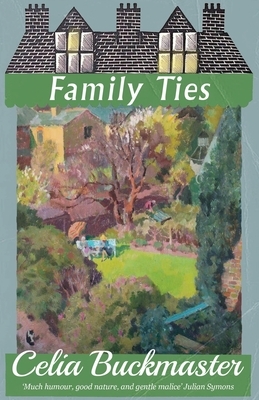
Right now, I am reading a Dean Street book from their Furrowed Middlebrow imprint, Family Ties by Celia Buckmaster. This gives me an opportunity to lobby for Dean Street publishing more Furrowed Middlebrow books. I know they are tied up in estate issues now, but I hope they will reconsider closing down this imprint. If you want them to continue with Furrowed Middlebrow maybe send them a message on their Facebook page, and please comment here! I am only a few pages into this book, and so far it seems to be about eccentric family life in a village. I always enjoy relaxing with a Furrowed Middlebrow book!
Technically speaking, I am also reading Ferdydurke by Witold Gombrowicz. I chose this book to read for the 1937 Club (coming up next week), but so far I just haven’t been able to hack it. It is supposed to be his masterpiece, and it is about a grown man who gets turned into an 11-year-old boy and put back in school. If that sounds juvenile, it is. I got into it about 70 pages and put it aside. Every time I finish another book, I look at it and say “Nah!”

What did I recently finish reading?
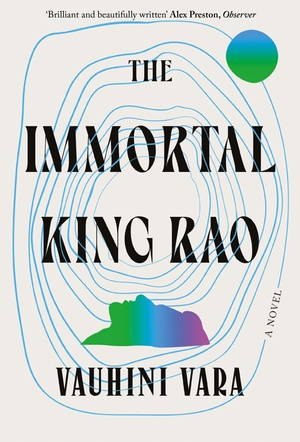
The last book I read was The Immortal King Rao by Vauhini Vara, which is part of my Pulitzer Prize project. One of my habits, maybe it’s a foible, is just to check the library periodically to see which books in my projects are available and get them without reading what they’re about. And in fact, I do the same thing with all the books in my stack. At some point I have usually read what they are about but I don’t do that right before I begin reading them. Well, for this book, the timing was unfortunate, because it is a dystopian novel, and not only do I not usually read dystopian novels, but it seems like recently everyone is writing them. And, in fact, I had read three just in the past few weeks. Now, don’t get me wrong, one of them was wonderful, as you’ll find out when I review it. I didn’t have as positive of an experience with The Immortal King Rao, although I didn’t dislike it. You’ll have to wait for my review, which should be coming up in a couple of weeks.

What will I read next?

When I troll the libraries for my project books (online, of course), I usually try to get one for each of my projects, although often I cannot find the Walter Scott Historical Fiction project books there and have to buy them. (That means they go into my pile and I get to them a lot later. I should do something about that. The Bee Sting has been there for quite a while.) Last time I trolled, I ended up with The Immortal King Rao for my Pulitzer project and Real Life by Brandon Taylor and Prophet Song by Paul Lynch for my Booker Prize project. (I am still waiting for After Sappho by Shelby Wynn Schwartz to arrive for my James Tait Black Project.) I have read Prophet Song, so after I finish my current book, I’ll read Real Life. As usual, I have no idea what it is about. I hope it’s not dystopian.

Have you read any of these books? What did you think?
Review 2298: Libertie

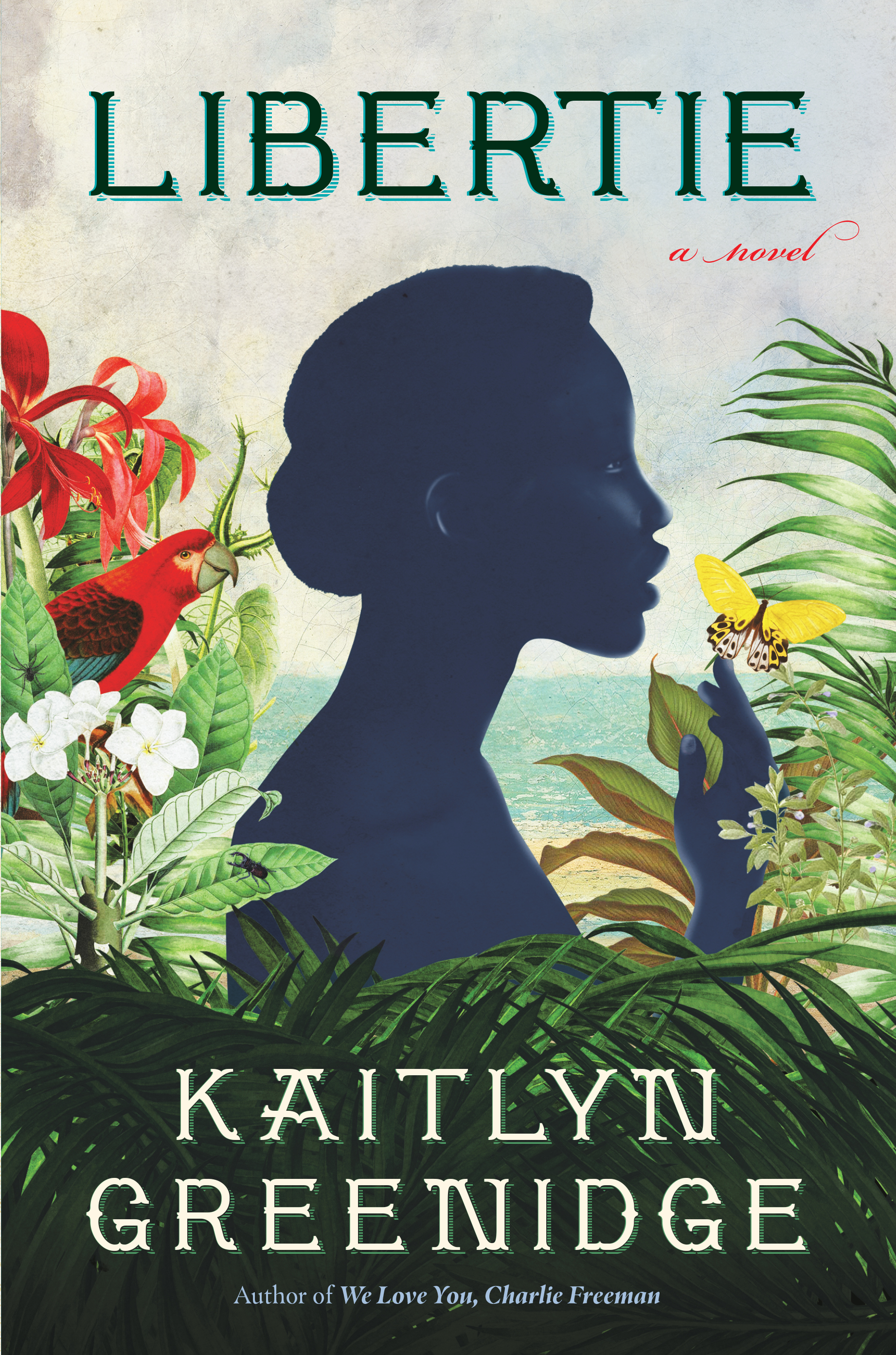
Libertie is an African-American girl growing up in pre-Civil War Brooklyn. Her mother, Mrs. Sampson, practices as a homeopath and has been training Libertie in the use of plants. Her great desire is for Libertie to study medicine and become the first African-American woman doctor.

But Libertie seems to be a person who only knows what she doesn’t want. She doesn’t want to study medicine, but her mother arranges a course of study for her at a college in Ohio for African-American students, without consulting her. She is the only girl in the science department. There she decides to punish her mother for sending her away by neglecting her studies. She spends her time trying to figure out how to fit in with one group or another and finally settles on girls nicknamed the Graces, two women with beautiful singing voices.

The novel is mostly concerned with the relationship between the two women—the mother constantly pushing, disapproving, eaten up with ambition for her daughter but with no regard for what her daughter wants, the daughter seeking approval but rebelling at the same time, with no ambitions for her own life. This relationship becomes even more difficult when Libertie comes home after a year at college, lying about her results, and meets Emmanuel Chase, her mother’s protégé from Haiti.

I was uncomfortable with this book, I think, partly because of its first-person point of view. I don’t like historical fiction that makes its heroines modern, and there is nothing 19th century about Libertie’s narrative, especially when it comes to sex. But even more than that, it didn’t help that neither Libertie nor her mother is a particularly appealing character or that all of Libertie’s life decisions are poor ones. A 21st century young person might fritter away the opportunity that her mother is struggling to provide her, for example, but I can’t imagine a 19th century one, with her knowledge of what her people have been through, would. Libertie behaves more like a spoiled 21st century child than someone who in the 19th century would be considered a young woman.

Finally, Greenidge says this novel was inspired by the first African-American woman doctor in the States, but I kept wondering who it was meant to be. Mrs. Sampson herself is not a qualified doctor, and Libertie purposefully sabotages her opportunity in pre-med.

I read this novel for my James Tait Black project.

Related Posts

The Underground Railroad

Beloved

Washington Black

If I Gave the Award

As I just posted my review for the last short-listed book for the 2019 James Tait Black Award for Fiction, it is now time for my feature where I decide whether the judges got it right. This time the choice is difficult for me, because I didn’t really like any of the shortlisted books. Most of them share a strong intellectualism, although that’s not why I felt so-so about them.

It’s kind of a toss-up which of the books I liked least. I remarked in the review of Murmur by Will Eaves how much I dislike books with dreams in them. In this novel about an Alan Turing-like figure, the main character eventually experiences wakened dream states as a side-effect from chemical castration. It’s ironic that the other book I disliked, Crudo by Olivia Laing (the winning entry), is also a fictional character study of a real person, a woman very much like the poet Kathy Acker, with whom I was completely unfamiliar. In this case, I found Kathy really annoying in her neuroticism and use of crude language. Both of these books were extremely well written, but I had difficulties with them.

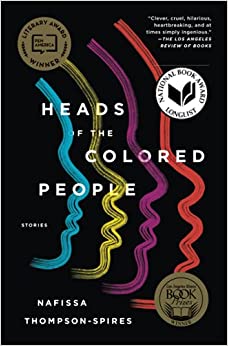
Heads of the Colored People by Nafissa Thompson-Spires was probably the least intellectually removed of the four books. It’s a collection of short stories linked by common characters that explores black identity in the California middle class. The stories are insightful and original, and some of them are bizarre.

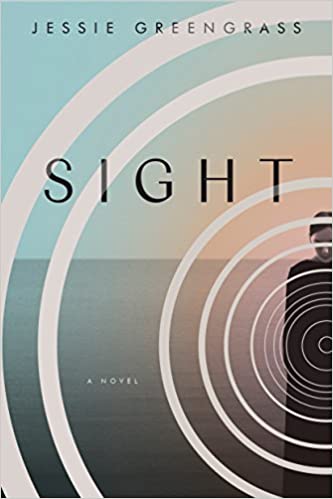
That leaves me not quite knowing what to do with Sight by Jessie Greengrass. It’s about seeing below the surface, narrated by a woman who is conflicted about her own pregnancy. It combines her ruminations with stories about scientists whose discoveries also have to do with seeing below the surface. I found it to be written in meticulous prose but also to be distanced from the reader, and I didn’t like the main character’s neuroticism.

I guess I’m going with Sight, but this one was a tough choice.

Review 2249: Murmur

When the cover of a book calls it “hallucinatory,” I know it’s not going to be a good fit for me. However, since Murmur is part of my James Tait Black project, I felt compelled to read it.

The novel aims to portray the mindset of an Alan Turing-like scientist named Alec Pryor after he is undergoing chemical castration because of a homosexual encounter. Aside from making his body more feminine, the chemical makes him dream and eventually induces wakened dream states, including ones where he fantasizes letters from his friend June, whom he hasn’t seen in years, and relives events of his boyhood.

Those who have been reading my reviews know how much I hate reading about dreams. Since it is difficult to know some of the time whether he is dreaming or remembering, this was a novel I found it hard to stick with, despite it being very short.

The rest of the novel is filled with philosophical musings about whether machines could have consciousness and other subjects. I felt that either I didn’t want to follow his thoughts or they were too hard for me to grasp. The journal section at the end is the most accessible part of the novel.

Related Posts

Crudo

Umbrella

Outline

Review 2222: Bitter Orange Tree

As Omani university student Zuhour pursues studies and friendships in England, she is haunted by thoughts about the woman she considered her grandmother, whom she neglected and avoided before her death. She revisits her family history, from the time when Bint Aamir, an impoverished relative taken in by her grandfather, was ejected, along with her young brother, from their father’s house at the urging of his new wife.

Back in England, Zuhour befriends Suvoor, a wealthy girl of Pakistani heritage brought up in England. Suvoor is devastated because her sister, Kuhl, has chosen a young man who she deems socially unworthy of their family. But Zuhour grows closer to Kuhl instead of Suvoor.

This novel is a poetic examination of the past and future of this character, where her contemplation of Bint Aamir’s life—in which her father did not permit the only marriage she was asked for—seems to predetermine her own—in which she is in love with her friend’s husband. The most interesting parts for me were the historical ones. The novel refers often to Zuhour’s dreams and sometimes seems dreamlike itself, but I didn’t feel touched by it. I read this book for my James Tait Black project.

Related Posts

A Thousand Splendid Suns

And the Mountains Echoed

In the Shadow of the Crescent Moon

Review 2215: Demon Copperhead

Everyone has been raving about Demon Copperhead, but I’ve had a more mixed reaction to it. This is because the novel is an update for Dickens’s David Copperfield, which is one of my favorite books.

In one way, this is a good match, because both Dickens and Kingsolver are political writers with social consciences. Dickens’s target was the effects of industrialization on poor children. Kingsolver’s in this novel is the effects on the people of Appalachia of what she sees as a war on agriculture.

Damon Fields, named Demon Copperhead because of his red hair, is a young Melungeon (I had to look it up) boy at the start of the novel. His father died before he was born, and his teenage mother has a very weak control of her sobriety. Residents of Lee County in Southwestern Virginia, they live in a single-wide mobile home owned by the Peggots next door. The kindly Peggots provide most of the stability in young Demon’s life.

Readers familiar with David Copperfield will be familiar with the plot, for it follows that book almost exactly. Although they are very poor, things are going fairly well and Demon’s mother has been sober for two years when she meets Stoner, soon to become Demon’s abusive stepfather. It goes mostly downhill from there, with Demon, after a brief career as a high school football hero, becoming addicted to oxy after an injury.

I couldn’t help noticing differences from Dickens, though. For one thing, the McCob family, Kingsolver’s equivalent of the Micawbers, are not the feckless, lovable, comic characters of Dickens, but a couple who, as Demon’s foster family, illegally send him to work instead of school, illegally charge him rent, and steal his money. (The Micawbers send David to work, too, but that assumed to be at the behest of his stepfather.) That leads to the biggest difference. Although Kingsolver can depict sympathetic characters, she doesn’t really do funny ones, Dickens’s gift. Further, the very young Demon at the beginning of the novel lacks the absolute innocence of young David that makes him so endearing. Demon’s narrative is too cynical.

Finally, Dickens is more willing than Kingsolver to let his story make his political points. Still, it’s a gripping novel with a serious message about the rural addiction problem, the lack of services for rural citizens, and the mistreatment of the poor. Although I read this novel before it made the list, Demon Copperhead is part of my James Tait Black project.

Related Posts

Unsheltered

David Copperfield

The Lacuna

Review 2193: A Children’s Bible

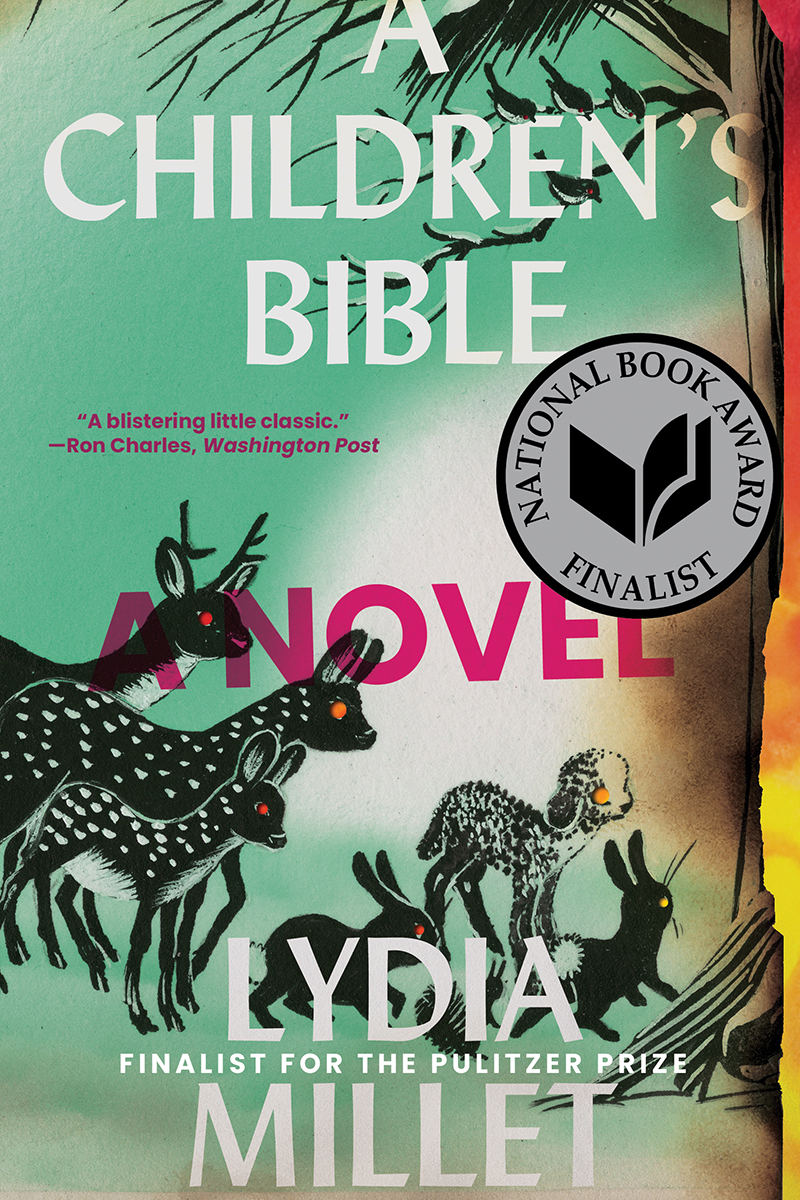
The children are a group of mostly young teenagers, but they are aged from nine to seventeen. They have been brought along by their parents on a reunion vacation to a mansion on a lake by the seashore, but they are mostly let alone while their parents drink, do drugs, and generally misbehave. Evie, the narrator, does her best to take care of her brother Jack, a sensitive nine-year-old.

The children, who have never met before, disdain their parents, and they have a game going in which the winner is the last child to be matched with a parent. The kids all sleep together in an attic and at first their vacation is idyllic because they can do what they want.

Things begin to go wrong, though, when a huge storm rolls in that wreaks a lot of damage and disrupts services. The story begins to move away from reality after the house is partially destroyed and the parents insist that they can’t leave because they signed a lease. The kids do leave, though. Burl, the caretaker for the property, is worried about possible disease from the mosquitos on the now unsanitary property, so he takes them to a compound that has clearly been prepared for Armageddon.

From here, the novel slides in dystopia, fantasy, and even fable as civilization begins to break down.

This novel is fast moving and well written. Although I certainly found it interesting, it ultimately evolved into something that was not quite my thing, especially the religious overtones injected when one of the parents gives Jack a book of Bible stories, which he, having no religious upbringing at all, struggles to understand.

I read this book for my James Tait Black Prize project.

Related Posts

The Children’s Crusade

The New Wilderness

The Year of the Flood

Review 2179: A Shock

If I hadn’t been reading A Shock for my James Tait Black project, I certainly would not have picked it out based on its description on the back cover: “a rondel of interlocking stories . . . both deracinated and potent with place, druggy but shot through with a terrifying penetration of reality.” How pretentious.

The stories are unusually linked, by characters but also by stories told in a pub. Although I found some of them interesting, I did not find them emotionally engaging, and the explicit sex in some of them is not my thing.

Notice that I haven’t said what they are about. That’s because it’s hard to describe, and a short recap of each story wouldn’t help. Although not exactly magical realism, some of the stories, while apparently set in reality, become a little fantastical.

And that’s what I have to say about that.

Related Posts

In a Strange Room

Sudden Traveler

Thunderstruck and Other Stories

If I Gave the Award

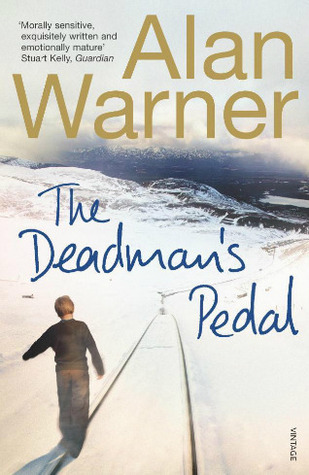
With my review of The Deadman’s Pedal, I have finished reading the shortlisted books for the 2013 James Tait Black Fiction Prize. Therefore, it is time for my feature, where I decide whether the judges got it right. This year the shortlisted choices couldn’t be more different. They range from a very cerebral novel that traces a family history by imitating a classical bagpipe musical form to a less cerebral depiction of a deceptive personality to two novels about young people trying to find their way. Although all of these novels are about personal topics, I have ordered them in this paragraph from the most intellectually removed to the least.

The most cerebral of these novels is The Big Music by Kirsty Gunn. This novel traces relationships between fathers and sons by using a classical form of bagpipe music as its organizing structure. It is a form dependent on repetition and embellishment, so although I found this novel high in concept, it was also a bit fascinating. Still, the repetitions proved a bit much for me.

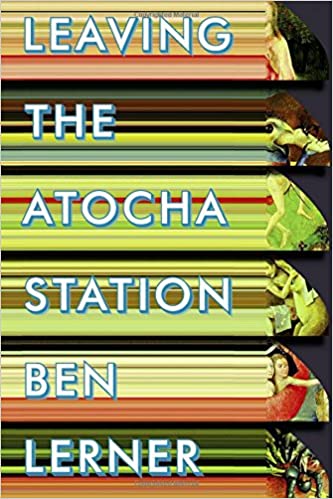
The next most cerebral of the novels is Leaving the Atocha Station by Ben Lerner. This is a novel about a poet who considers himself a fraud and spends his time arranging his face to look intelligent or thinking of profound things to say. The novel is funny at times, but I found myself getting lost in its logical circumlocutions and I strongly disliked the main character (not that that is necessarily bad).

At the beginning of the award-winning The Deadman’s Pedal, I found myself heartily disgusted by teenage boys and the love critics have for coming-of-age novels, those about boys, anyway. Then as the young Scottish protagonist went to work for the railroad, I got more interested until the book became mostly about adolescent sex.

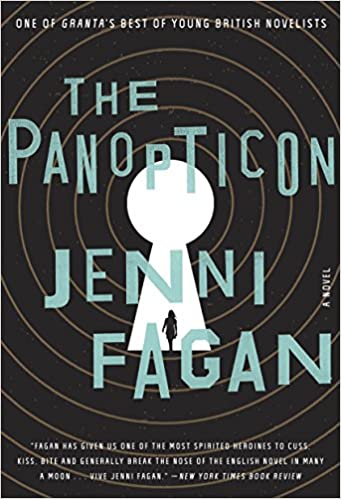
That leaves me with The Panopticon by Jenni Fagan, although I am not entire satisfied with my choice. I was absolutely rivetted by this story of a vivid young girl who has been failed by the system. However, I also believe that in some ways this book is slighter than some of the others. I will say, though, that of these four authors, Fagan is the only one whose other books I have looked for.

Review 2168: The Deadman’s Pedal

I had a few thoughts when I began reading this novel that weren’t necessarily connected with how well I liked it. One was how much male writers and critics love coming of age stories, at least if they’re about boys. If they’re about boys, they’re literary fiction (hence the James Tait Black prize win). If they’re about girls, they’re women’s fiction. Take Philip Roth, for example. He’s written the same novel over and over, and back at the turn of the century, he was the only writer who appeared twice in Time magazine’s list of the 100 Best Books of the 20th century. This coming of age novel was one I read for my James Tait Black prize project.

My second observation was more personal. In the beginning of the novel there is some joking around between 15-year-old Simon Crimmons and his friends. Now, I know that at this age a lot of things are said between boys to impress each other, but I found the way they talked about girls disturbing. I actually asked my husband if when he was this age, boys talked this way, and he said no. But he would have been about ten years older than these boys at the time these scenes are set in 1973. Everything they said was so objectifying, it’s no wonder young girls have image problems.

Anyway, Simon is nearly 16 at the beginning of the novel and wants to quit school and get a job. His father owns a fleet of trucks, but Simon can’t work for him until he is 18, so he ends up accidentally applying for a railroad job. His parents are very much against his quitting school, but he is headstrong. Another title for this book might be “Adolescents Making Poor Decisions.”

Simon seems to be a grounded individual who knows who he is, but even as he is getting sexually involved with his girlfriend, Nikki, he meets Alexander and Varie Bultitude and is fascinated by them. They are the teenage children of the area aristocrats, and they seem much more fluid in nature, trying on the hippie look of the times. Simon and Alexander have books and music in common, but we get the sense that to Alexander, Simon is just a way to spend time while he’s home from school. Simon and Varie, on the other hand, have little in common. She’s interested in horses, geology, and the occult. But she is beautiful and he’s fascinated by her.

Much of the novel is about class. Simon complains once that he is too middle class for his fellow railroad workers and too working class for the Bultitudes. Varie is surprised to find he lives in the largest house in his village, and she mistakes his mother for the gardener. His parents have worked their way up from the working class and are dismayed to see him going back down.

Warner seems to have captured the banter of the railway men and the dynamics of small-town Scotland, remote Scotland, too, where they are nearly at the end of the railway line.

I became more interested in this novel when it moved away from Simon’s school friends, especially the frightful Galbraith, to the working world of the railroad. However, I wasn’t much interested in the adolescent obsession with sex.

Related Posts

The Rehearsal

Young Mungo

The Bass Rock